





How Sensory Play Boosts Language Development in Early Childhood | Activity Plan Inside
Table Of Contents
- Understanding Sensory Play and Language Connection
- The Science Behind Sensory Play and Language Development
- Age-Appropriate Sensory Activities for Language Enrichment
- The Powerful Role of Music in Sensory-Rich Language Learning
- 7-Day Sensory Play Activity Plan for Language Development
- How to Observe and Measure Language Progress Through Play
- Conclusion: Creating a Language-Rich Sensory Environment
When a child squishes colorful playdough between their fingers while learning words like “soft,” “squeeze,” and “flatten,” they’re not just having fun—they’re building crucial neural pathways that support language development. Sensory play—activities that stimulate a child’s senses of touch, smell, taste, sight, hearing, balance, and body awareness—creates rich experiences that become the foundation for vocabulary growth, communication skills, and cognitive development.
At The Music Scientist, Singapore’s specialist in developmental music enrichment, we’ve observed how intentionally designed sensory experiences dramatically enhance language acquisition in children aged 4-47 months. The connection is powerful: when multiple senses are engaged simultaneously during play, children develop stronger, more diverse neural connections that support language learning at an accelerated pace.
In this comprehensive guide, we’ll explore the fascinating relationship between sensory play and language development, provide age-appropriate activity suggestions, and share a ready-to-implement 7-day activity plan that parents can use immediately. Whether you’re nurturing an infant’s first words or expanding a preschooler’s expressive language skills, you’ll discover how sensory-rich experiences can transform your child’s language journey.
Understanding Sensory Play and Language Connection
Sensory play encompasses any activity that stimulates a child’s senses. While we commonly think of the five primary senses—touch, taste, smell, sight, and hearing—comprehensive sensory play also addresses the vestibular sense (movement and balance) and proprioception (body awareness). When children engage in sensory play, they receive and process multiple streams of information simultaneously, creating rich experiences that their developing brains eagerly absorb and categorize.
Language development is intrinsically tied to these sensory experiences. Children need concrete, multisensory encounters with their environment to develop the mental concepts that words represent. Before a child can meaningfully use words like “sticky,” “rough,” or “melodic,” they need to experience these sensations firsthand. These experiences become the foundation upon which vocabulary is built.
Consider a simple water play activity: as a child pours water between containers, they experience concepts like “empty,” “full,” “pour,” and “splash.” When parents or educators provide these words during play, they’re creating powerful associative learning moments. The sensory experience of feeling water flow through fingers becomes linked with specific vocabulary, making the learning process more effective and memorable than flashcards or passive instruction could ever be.
This connection explains why children in sensory-rich environments typically demonstrate stronger language skills. Research shows that children who regularly engage in diverse sensory play activities develop larger vocabularies, more complex sentence structures, and better narrative abilities than peers with limited sensory experiences.
The Science Behind Sensory Play and Language Development
The neurological basis for sensory play’s impact on language development is fascinating. When children engage in sensory-rich activities, multiple areas of the brain activate simultaneously. This cross-activation strengthens neural pathways and creates new connections between brain regions—a process called neuroplasticity.
Specifically, sensory play stimulates the cerebral cortex, which processes sensory information, and Broca’s and Wernicke’s areas, which are responsible for language production and comprehension. As different brain regions work together during sensory play, the neural connections between them become stronger, creating an integrated network that supports language acquisition.
Research from developmental neuroscience confirms that multisensory learning experiences are more effective than single-sensory instruction. For example, when children learn new words while simultaneously seeing, touching, and manipulating related objects, they demonstrate significantly better vocabulary retention than when they merely hear the words. This multisensory approach activates more neural networks, creating redundant memory pathways that enhance recall and application.
Additionally, sensory play stimulates the release of dopamine, a neurotransmitter associated with pleasure and learning. This neurochemical response makes sensory learning experiences inherently rewarding, increasing a child’s motivation to engage and explore—a key factor in sustained language development.
Age-Appropriate Sensory Activities for Language Enrichment
Sensory play should evolve with your child’s developmental stage. Here are tailored activities that support language development across different age groups:
Infants (4-12 months)
During this foundational stage, infants are building basic sensory awareness that will later support language. Our Tenderfeet program for infants focuses on gentle sensory experiences that introduce fundamental concepts while stimulating language-processing centers in the brain.
Effective sensory activities for infants include:
Texture Exploration: Create a texture board with different fabrics (velvet, satin, burlap) and describe the sensations as your baby touches each one. Use descriptive language: “This is smooth silk. Feel how slippery it is!” These concrete sensory experiences form the foundation for understanding adjectives and descriptive language.
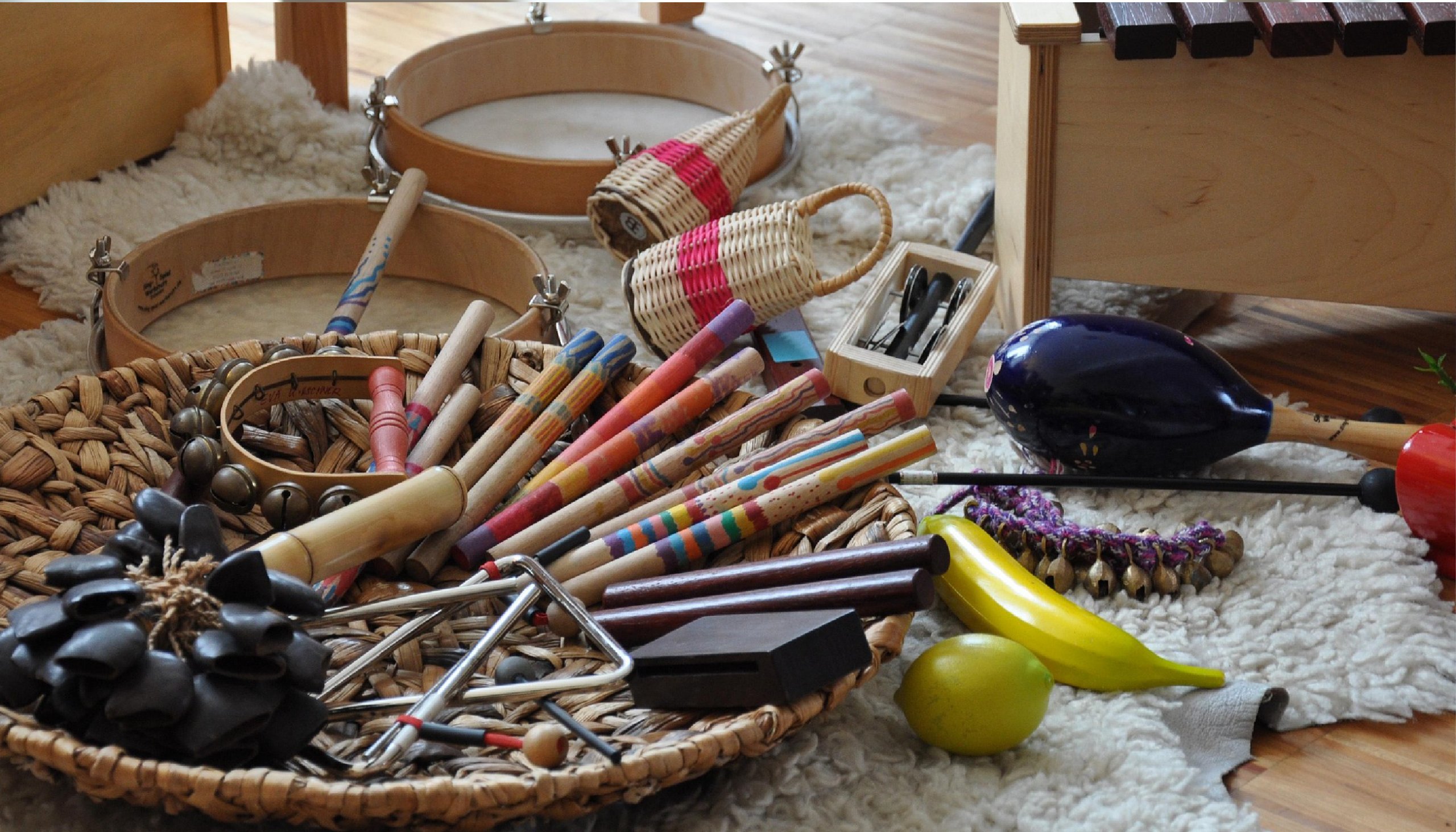
Musical Conversations: Introduce shakers, bells, and drums that produce different sounds when manipulated. Mirror your baby’s sounds and actions, creating a turn-taking pattern that mimics conversation. This back-and-forth exchange builds pre-verbal communication skills that later support dialogue.
Scented Playtime: During tummy time, place scented items like cinnamon sticks or vanilla beans in sealed, sensory-safe containers near your baby. Name each scent as your baby explores, building olfactory vocabulary that’s often overlooked in language development.
Toddlers (12-24 months)
Toddlers are experiencing a vocabulary explosion, making this an ideal time for sensory play that introduces new words and concepts. Our Happyfeet program harnesses this developmental window through activities that combine movement, sensory exploration, and language development.
Sensory Bins with Narration: Create themed sensory bins filled with rice, beans, or water beads along with related objects. For example, a “farm” bin might include toy animals buried in colored rice. As your toddler discovers each item, provide vocabulary: “You found a cow! Cows say ‘moo’ and give us milk.” This combines tactile exploration with vocabulary building.
Action Songs with Sensory Props: Enhance familiar songs like “Itsy Bitsy Spider” or “Wheels on the Bus” with sensory props that children can manipulate. For example, use a spray bottle for “rain” during the spider song. The combination of movement, sensory input, and language reinforces vocabulary through multiple pathways.
Taste Exploration with Description: During snack time, introduce varied flavors and textures while providing descriptive language: “This apple is crunchy and sweet. The yogurt is smooth and tangy.” These sensory-rich eating experiences build vocabulary for taste, texture, and preferences.
Preschoolers (24-47 months)
Preschoolers are developing complex language skills and benefit from sensory activities that encourage conversation, questioning, and storytelling. Our Groovers and Scouts programs build on these emerging skills with activities that challenge children’s sensory processing and language expression.
Science Sensory Stations: Create exploration stations focusing on scientific concepts like magnetism, buoyancy, or light refraction. As children experiment, engage them in discussion using open-ended questions: “What happened when you put the metal clip near the magnet? Why do you think some objects float while others sink?” These conversations build scientific vocabulary and complex sentence structures.
Sensory Storytelling: Provide sensory props that correspond to elements in a favorite story. As you read “We’re Going on a Bear Hunt,” for example, offer mud (chocolate pudding), grass (shredded paper), and water (blue water beads) for children to touch at appropriate moments. After reading, encourage children to retell the story using the sensory props, building narrative skills through multisensory engagement.
Emotion-Based Sensory Play: Create activities that connect sensory experiences with emotional vocabulary. Scented playdough in calming lavender might be “peaceful,” while a crunchy cornstarch mixture could be “exciting” or “surprising.” These connections help children develop emotional intelligence alongside sensory vocabulary.
The Powerful Role of Music in Sensory-Rich Language Learning
Music deserves special attention in any discussion of sensory play and language development. As specialists in music-based learning at The Music Scientist, we’ve observed the remarkable impact of musical activities on children’s language acquisition. Music engages multiple sensory systems simultaneously—auditory (hearing the melody and lyrics), kinesthetic (moving to the rhythm), visual (watching demonstrations), and sometimes tactile (playing instruments).
This multisensory nature makes music particularly effective for language learning. Research shows that musical training enhances phonological awareness—the ability to recognize and manipulate the sounds of language—which is a critical precursor to reading. Children who participate in regular musical activities typically demonstrate stronger vocabulary development and better grammatical understanding than peers without musical exposure.
Music supports language development in several key ways:
Rhythm and Timing: The rhythmic patterns in music mirror the prosodic features of speech (stress, intonation, and timing). When children engage with musical rhythm, they’re practicing the timing patterns essential for fluid speech.
Phonological Processing: Singing songs helps children distinguish between similar sounds and practice articulating specific phonemes, building the phonological processing skills essential for both spoken language and later reading ability.
Memory Enhancement: The melodic and rhythmic structure of songs makes information more memorable. Children often learn vocabulary, sequences, and concepts more easily when they’re embedded in songs, which is why our SMART-START English and SMART-START Chinese programs use originally composed music to enhance memory and language learning.
7-Day Sensory Play Activity Plan for Language Development
Implementing consistent sensory play opportunities doesn’t have to be complicated. Here’s a week-long plan featuring simple, effective activities that promote language development through sensory engagement:
Day 1: Texture Treasure Hunt
Hide objects with contrasting textures around a room. Guide your child to find each item, encouraging them to describe how it feels: “Is it rough or smooth? Soft or hard?” Extend the activity by categorizing objects by texture and creating texture-based stories: “The fuzzy teddy bear walked across the bumpy bridge.”
Day 2: Sound Exploration Station
Gather household items that make distinctive sounds—keys, paper to crumple, containers filled with rice or beans. Encourage your child to experiment with creating sounds, then introduce vocabulary like “jingling,” “crinkling,” “rattling,” and “chiming.” Play sound-matching games where you make a sound behind a screen and your child identifies which object produced it.
Day 3: Scented Art Experience
Add food extracts or spices to paint or playdough. As your child creates, discuss the scents, their intensity, and personal preferences: “The vanilla smells sweet and reminds me of ice cream. Does it remind you of something?” This activity builds sensory vocabulary while encouraging comparative language and personal narratives.
Day 4: Taste Adventure
Prepare a tasting tray with small portions of foods representing different taste categories: sweet (honey), sour (lemon), salty (pretzel), and umami (cheese). As your child tastes each item, introduce relevant vocabulary and encourage descriptions: “The lemon makes my mouth pucker because it’s so sour!” Discuss how different tastes make us feel and which combinations are enjoyable.
Day 5: Visual Patterns and Predictions
Create a simple pattern using colored blocks, beads, or drawings. Describe the pattern together, then ask your child to predict “what comes next.” This activity builds pattern recognition skills while encouraging the use of sequential language (“first,” “next,” “then”) and color vocabulary.
Day 6: Movement Story
Create a “movement story” where different actions represent characters or events. For example: “Tip-toe like a mouse, stomp like an elephant, twirl like falling leaves.” As your child performs each movement, describe how their body is moving, building kinesthetic vocabulary and narrative skills simultaneously.
Day 7: Water Play with Purpose
Fill a container with water and provide measuring cups, funnels, and containers of different sizes. Introduce vocabulary related to capacity (“full,” “empty,” “half”), movement (“pour,” “drip,” “splash”), and comparison (“more than,” “less than”). Ask prediction questions like “What will happen if we pour this tall container into these two smaller ones?”
How to Observe and Measure Language Progress Through Play
Parents often wonder how to track their child’s language development through sensory play. While professional assessments have their place, daily observation can provide valuable insights. Here are key indicators to watch for as your child engages in sensory activities:
Vocabulary Growth: Notice whether your child is using new words introduced during sensory play in other contexts. For example, if you introduced “squishy” during playdough time, do they later describe their stuffed animal as “squishy”?
Sentence Complexity: Track how your child’s descriptions evolve from single words (“wet”) to phrases (“very wet water”) to complete sentences (“The water feels cold and wet on my hands”). Sensory play typically accelerates this progression as it provides concrete experiences to describe.
Question Formation: Notice whether sensory experiences prompt your child to ask questions. Curiosity-driven questions like “Why does the ice melt?” or “How does the magnet stick?” indicate cognitive engagement and language development.
Narrative Skills: Observe whether your child begins to tell stories about their sensory experiences. Can they sequence events (“First I mixed the colors, then it turned green”) or create imaginative scenarios based on sensory play?
Conversational Turn-Taking: During sensory play, note whether your child engages in back-and-forth conversation, building on your comments and questions with relevant responses. This turn-taking is a crucial language skill that often develops naturally during engaging sensory activities.
Keep a simple journal noting new words, concepts, or language structures your child uses during and after sensory play sessions. Over time, you’ll see clear patterns of growth that validate the impact of these enriching experiences.
Conclusion: Creating a Language-Rich Sensory Environment
The relationship between sensory play and language development offers a powerful insight for parents: children learn language best when they experience the world through multiple senses. By creating opportunities for rich sensory exploration, you’re not just entertaining your child—you’re building the neural architecture that supports a lifetime of effective communication.
At The Music Scientist, our developmental approach emphasizes this sensory-language connection across all our programs. From the gentle sensory awakening in our Tenderfeet infant classes to the complex, music-enhanced learning in our SMART-START preschool readiness programs, we intentionally create environments where children develop language through meaningful multisensory experiences.
As you implement sensory play at home, remember that consistency matters more than complexity. Simple activities repeated regularly will have a greater impact than occasional elaborate experiences. Focus on engaging with your child during these activities—asking questions, providing vocabulary, and following their lead—rather than worrying about creating Pinterest-perfect sensory bins.
By integrating sensory play into your daily routines, you’ll create a language-rich environment where your child naturally absorbs vocabulary, grammar, and communication skills through joyful exploration. The words they learn through touching, tasting, hearing, seeing, and moving become not just vocabulary to memorize, but concepts deeply understood through direct experience—the strongest foundation for language development we can provide.
Want to experience how The Music Scientist enhances language development through music-based sensory learning? Book a trial class or contact us to learn more about our developmental programs for children aged 4-47 months. Our specialized curriculum is designed to nurture your child’s language skills alongside cognitive, physical, and social development.
Contact us today to discover how our uniquely designed music and movement classes can enhance your child’s language journey!
Table Of Contents
- Introduction to Baby Music Classes
- Developmental Benefits of Music for Babies
- Age-Appropriate Music Education: What to Expect
- Types of Baby Music Classes in Singapore
- How to Choose the Right Music Class for Your Baby
- Preparing for Your Baby’s First Music Class
- The Music Scientist’s Specialized Programs
- Frequently Asked Questions
- Conclusion
Have you ever noticed how your baby responds when music plays? That captivated look, the rhythmic movements, or perhaps even attempts to vocalize along—these aren’t merely cute reactions. They’re early indicators of how deeply music resonates with developing minds. In Singapore’s education-focused landscape, baby music classes have emerged as a powerful tool for early childhood development, offering more than just entertainment.
Music education for babies isn’t about creating the next Mozart (though that would be a delightful bonus!). Instead, it’s about harnessing music’s unique ability to stimulate multiple areas of brain development simultaneously. From enhancing neural connections to fostering social skills and emotional regulation, the benefits extend far beyond simple musical appreciation.
As parents navigating Singapore’s competitive educational environment, understanding how music classes can give your child developmental advantages is crucial. This comprehensive guide will walk you through everything you need to know about baby music classes in Singapore: their developmental benefits, what to expect at different age stages, how to choose the right program, and how to prepare for your baby’s musical journey.
Let’s explore how the right music education can harmonize with your child’s natural development, creating a foundation for lifelong learning and appreciation of music.
Developmental Benefits of Music for Babies
The science behind music’s impact on infant development is both fascinating and compelling. When babies engage with music, their brains light up in remarkable ways, activating multiple areas simultaneously—a process that few other activities can match.
Cognitive Development
Research shows that musical experiences stimulate neural pathways associated with spatial-temporal reasoning, pattern recognition, and mathematical thinking. When babies listen to different melodies and rhythms, they’re actually exercising their cognitive muscles, learning to identify patterns and predict what comes next—skills that form the foundation of logical thinking.
At The Music Scientist, this cognitive development is intentionally fostered through carefully composed music that incorporates patterns and variations designed to engage babies’ developing minds. Each musical experience becomes a cognitive workout disguised as play.
Language Acquisition
The connection between music and language development is particularly striking. Both music and speech are auditory forms with rhythm, tone, and patterns. When babies participate in music classes that incorporate singing, they’re simultaneously developing phonological awareness—the ability to recognize and work with sounds in spoken language.
Exposure to varied musical tones helps babies distinguish speech sounds, while rhythmic patterns in songs help them segment words within the flow of speech—critical skills for language acquisition. This is why programs that combine music with verbal cues and vocabulary building, like those offered at The Music Scientist, can significantly enhance early language development.
Physical and Motor Skills
From grasping instruments to clapping along with rhythms, music classes offer numerous opportunities for developing fine and gross motor skills. When babies attempt to move to music, they’re building coordination, balance, and spatial awareness. Even simple activities like reaching for instruments or swaying to music help strengthen muscles and refine motor control.
Movement-based musical activities create neural connections between the auditory system and motor control, a connection that supports not just physical development but cognitive processing as well.
Social and Emotional Benefits
Perhaps one of the most valuable aspects of baby music classes is the social-emotional learning they facilitate. Group music-making fosters turn-taking, sharing, and cooperation. The consistent routines of music classes provide security and predictability for babies, while the joy of musical expression helps them develop emotional regulation.
Music classes also strengthen the parent-child bond through shared experiences, synchronized movements, and emotional connection—a benefit that extends well beyond the classroom.
Age-Appropriate Music Education: What to Expect
Music education for babies isn’t one-size-fits-all. As children grow and develop, their musical needs and abilities evolve, requiring different approaches at various developmental stages.
4-12 Months: Sensory Exploration
Babies in this age range are sensory explorers, absorbing the world primarily through their senses. Music classes for this age group, like The Music Scientist’s Tenderfeet program, focus on rich sensory experiences: feeling vibrations, watching colorful visual aids that correspond with sounds, and experiencing different textures of musical instruments.
At this stage, expect classes to include simple, repetitive songs with clear rhythms, gentle movement activities often led by caregivers, and extensive use of props like scarves, bells, and soft shakers. The emphasis is on exposure rather than performance, allowing babies to absorb musical elements through multisensory experiences.
12-24 Months: Active Participation
As babies become toddlers, they develop greater independence and a desire to actively participate. Programs designed for this age group, such as the Happyfeet classes, incorporate more interactive elements that allow children to explore cause and effect through music.
Classes typically feature action songs with simple movements toddlers can imitate, basic instrumental play with age-appropriate instruments, and activities that encourage following simple directions through musical cues. You’ll notice toddlers beginning to anticipate familiar parts of songs and showing preferences for certain musical activities—early signs of musical memory and preference developing.
24-36 Months: Emerging Independence
Two-year-olds bring enthusiasm and emerging independence to music classes. At this stage, children benefit from programs that honor their growing autonomy while providing appropriate structure, like The Music Scientist’s Groovers program.
Classes for this age group typically introduce more complex rhythms and musical concepts, incorporate imaginative play elements that connect music to other concepts, and begin basic musical turn-taking. Children start to internalize rhythm and might spontaneously create their own musical expressions. The social aspect becomes increasingly important as children become aware of and interested in their peers’ musical activities.
36-47 Months: Conceptual Understanding
Preschoolers are ready for more structured musical learning that incorporates conceptual understanding. Programs like Scouts and SMART-START English or SMART-START Chinese build on earlier musical experiences while preparing children for more formal learning environments.
At this stage, music classes often introduce basic musical notation concepts through visual aids, encourage longer attention spans through extended musical activities, and incorporate more complex songs with verses and choruses. Children begin to match pitch more accurately and can follow more complex musical instructions, showing a growing understanding of musical concepts like fast/slow, loud/soft, and high/low.
Types of Baby Music Classes in Singapore
Singapore offers a diverse range of music education approaches for babies and toddlers. Understanding the different methodologies can help you find a program that aligns with your parenting philosophy and your child’s learning style.
Developmental Music Classes
Developmental programs, like those offered by The Music Scientist, are designed around child development milestones. These classes strategically integrate musical activities with age-appropriate developmental goals, using music as a vehicle to enhance multiple intelligences and skills.
The focus extends beyond musical skills to include cognitive development, language acquisition, motor skills, and social-emotional learning. These programs often feature original music composed specifically to support developmental objectives and incorporate elements from educational psychology and neuroscience research.
Traditional Method-Based Classes
Several established music education methodologies have adapted their approaches for very young children. These include:
Kodály-inspired programs: These emphasize singing and use of folk music, with a focus on developing internal hearing and musical literacy from an early age. Even for babies, these programs begin building a foundation of musical concepts through singing games and movement.
Orff Schulwerk approaches: These integrate music, movement, drama, and speech into lessons that feel like play. For babies and toddlers, Orff-inspired classes focus on exploration of sounds, rhythmic movement, and simple percussion instruments.
Dalcroze Eurhythmics: This approach emphasizes experiencing music through movement. Baby classes might focus on having caregivers move infants’ bodies to music or encouraging toddlers to move freely in response to musical elements.
Bilingual Music Programs
Singapore’s multilingual environment has given rise to bilingual music programs that combine musical education with language exposure. These classes, like The Music Scientist’s SMART-START Chinese program, use songs, chants, and musical activities in multiple languages to support both musical development and language acquisition.
For many Singaporean parents looking to give their children advantages in both musical aptitude and language proficiency, these programs offer an efficient way to develop both skill sets simultaneously during the critical period of early brain development.
Sensory-Focused Music Classes
With increasing awareness of sensory processing and integration, some music programs specifically emphasize the sensory aspects of musical experiences. These classes feature varied textures, visual stimuli, and movement activities designed to engage multiple sensory systems simultaneously.
Programs like Tenderfeet incorporate elements that stimulate the vestibular system (balance), proprioceptive sense (body awareness), and tactile system alongside auditory processing, providing a rich sensory diet through musical activities.
How to Choose the Right Music Class for Your Baby
With numerous options available in Singapore, selecting the right music program for your baby can feel overwhelming. Here are key factors to consider when making this important decision:
Educational Philosophy
Each music program operates from a specific educational philosophy that influences teaching methods, class structure, and goals. Take time to understand the underlying approach of any program you’re considering:
Is the focus primarily on musical skills, or does it take a more holistic developmental approach? Are classes highly structured or more exploratory? Does the program emphasize parent involvement or independent participation? Does the teaching methodology align with your values and your understanding of how your child learns best?
The Music Scientist, for instance, bases its curriculum on multiple intelligences theory and developmental milestones, using music as a tool for holistic development rather than focusing solely on musical skills.
Teacher Qualifications
The quality of early childhood music education depends significantly on teacher expertise. Inquire about:
Teachers’ training in both music and early childhood education, their experience working specifically with babies and toddlers, ongoing professional development requirements, and their approach to managing classroom dynamics with very young children.
Qualified teachers should demonstrate not just musical proficiency but also an understanding of child development and the ability to adapt activities to meet the needs of different children.
Curriculum Progression
Quality music programs for babies should offer clear developmental progression:
Look for programs that adjust content as children grow, building on previously developed skills rather than merely repeating the same activities across age groups. The curriculum should reflect an understanding of developmental stages and offer appropriate challenges for each age level.
Ask whether the program offers continuity as your child grows—can they progress within the same school from baby classes to toddler and preschool programs? This continuity can provide stability and allow for deeper skill development over time.
Class Environment and Size
The physical and social environment significantly impacts young children’s learning experiences:
Consider the ideal class size for your child’s temperament and needs—some children thrive in larger, more energetic groups while others may benefit from smaller, more intimate settings. Evaluate the physical space: Is it clean, safe, and appropriately stimulating without being overwhelming? Are materials and instruments high-quality and well-maintained?
Observe the social atmosphere during a trial class: Do children and parents seem engaged and comfortable? Is there an appropriate balance between structure and flexibility to accommodate young children’s varying needs?
Location and Schedule Practicality
Even the best program won’t benefit your child if attendance becomes a logistical burden:
Consider the commute time to the class location and how it aligns with your baby’s optimal alert times. Evaluate class duration—typically 30-45 minutes for babies and toddlers is appropriate for their attention spans. Check whether make-up options are available for missed classes, as young children’s illnesses and scheduling conflicts are inevitable.
Preparing for Your Baby’s First Music Class
Setting the stage for a positive music class experience begins before you ever enter the classroom. Here’s how to prepare for this exciting step in your baby’s development:
Before the First Class
Start creating positive associations with music at home by incorporating simple musical activities into your daily routine. Sing during diaper changes, play gentle music during playtime, or dance together to different rhythms. This familiarizes your baby with musical experiences in a comfortable environment.
Talk about the upcoming music class with enthusiasm, even with very young babies. Your positive tone and excitement communicate to your baby that this will be a pleasant experience. If possible, visit the location beforehand during a quiet time to familiarize your baby with the new environment without the stimulation of a full class.
What to Bring
Pack a small bag with essentials: a change of clothes, diapers, wipes, and a comfort item if your baby uses one. Some classes may request that babies wear specific clothing that allows for freedom of movement, such as comfortable pants instead of dresses. Check with the program about their specific recommendations.
Consider bringing a familiar blanket to place on the floor if your baby will be participating in floor activities. This creates a sense of personal space and comfort in the new environment. If your baby uses a pacifier, bring it along—but have a container to store it during singing activities.
Managing Expectations
Understand that babies and toddlers engage with music differently than older children. Your baby might observe intently without visible participation, wander around exploring the environment, or show interest in only certain portions of the class. All of these responses are normal and valuable parts of the learning process.
Expect some settling-in time. Many babies need 3-4 classes to become comfortable with the routine, environment, and expectations. Consistency in attendance helps babies develop familiarity and comfort with the class structure. During this adjustment period, focus on supporting your baby’s comfort rather than worrying about “performance” or participation levels.
Your Role as a Parent
In most baby music classes, you’ll be an active participant, not just an observer. Be prepared to sing, move, and engage with the activities alongside your child. Your participation models enthusiasm for music and provides security for your baby to explore new experiences.
Focus on your baby’s experience rather than comparing them to other children in the class. Each child engages with music differently based on temperament, developmental stage, and personal preferences. Trust that learning is happening even when it’s not visible in the way you might expect.
The Music Scientist’s Specialized Programs
The Music Scientist offers a progressive curriculum that grows with your child, providing developmentally appropriate musical experiences from infancy through preschool readiness. Each program is designed with specific developmental milestones in mind, using original music composed to support learning objectives.
Tenderfeet (4-12 months)
The Tenderfeet program creates a gentle introduction to the world of music for Singapore’s youngest learners. Designed specifically for babies from 4-12 months, this program emphasizes sensory development through musical experiences.
Classes incorporate specially composed lullabies and stimulating rhythms that support auditory development, along with tactile exploration of baby-safe instruments and sensory props that connect sound to touch. Activities include gentle movement facilitated by caregivers that helps babies experience rhythm physically, and visual tracking exercises set to music that strengthen visual development and attention.
Happyfeet (12-24 months)
As babies transition into toddlerhood, the Happyfeet program harnesses their growing mobility and curiosity. This program balances structure with freedom for exploration, perfect for the developmental needs of 12-24 month-olds.
Classes feature movement-based activities that develop gross motor coordination while building musical awareness, simple songs with repetitive lyrics that support language acquisition, and turn-taking activities that introduce early social skills through musical games. The curriculum also includes early instrument play that develops fine motor skills and cause-effect understanding.
Groovers (24-36 months)
The Groovers program capitalizes on two-year-olds’ growing independence and language capabilities. This program introduces more complex musical concepts while supporting children’s natural desire for autonomy.
Activities include rhythmic chants and songs that enhance phonological awareness and speech development, creative movement exercises that allow children to express their understanding of musical concepts physically, and more sophisticated instrument play that develops coordination and pre-reading skills through pattern recognition. The program also incorporates musical story-telling that connects narrative comprehension with musical elements.
Scouts (36-47 months)
For preschoolers ready for more conceptual learning, the Scouts program integrates music with early science concepts. This innovative approach uses catchy melodies to embed knowledge about the natural world.
The curriculum features songs that teach scientific vocabulary and concepts through memorable musical phrases, movement activities that physically demonstrate scientific principles like fast/slow or heavy/light, and exploratory sound activities that help children understand sound as a scientific phenomenon. Classes also include collaborative musical projects that develop teamwork alongside musical and scientific learning.
SMART-START Programs
As children approach formal education, The Music Scientist’s SMART-START English and SMART-START Chinese programs provide a music-based bridge to preschool readiness. These programs are available in both English and Chinese, supporting Singapore’s bilingual educational approach.
The curriculum includes songs and chants that reinforce alphabet and number concepts, musical games that develop listening skills and direction-following crucial for classroom success, rhythmic activities that enhance phonological awareness for early reading skills, and social musical activities that prepare children for classroom dynamics and peer interactions.
Frequently Asked Questions
Is my baby too young for music classes?
Research shows that babies can benefit from musical experiences even before birth. Programs like Tenderfeet are specifically designed for infants as young as 4 months, with activities that support their developmental needs. Even very young babies absorb musical information and benefit from the sensory stimulation, parent bonding, and neural connections formed during music classes.
My baby doesn’t seem to participate actively. Are they benefiting?
Absolutely! Young children often engage in “observational learning” before active participation. Your baby may be intently watching and listening, absorbing information even when not visibly participating. This is a normal and valuable part of the learning process. Many children will observe for several weeks before beginning to show outward signs of engagement, and some naturally express their musical interest more subtly than others.
How can I extend learning at home?
Quality music programs like those at The Music Scientist provide resources for home practice, such as recordings of class songs or suggested activities. Incorporate music into daily routines—sing during bath time, play instruments during playtime, or dance while preparing meals. The most effective extension happens when musical activities become a natural, joyful part of family life rather than a formal “practice time.”
How do music classes compare to other enrichment options?
Music education is unique in its ability to simultaneously develop multiple areas of the brain and various skill sets. While other enrichment activities may focus on specific domains like physical development or language, music naturally integrates cognitive, physical, linguistic, and social-emotional learning in one experience. This makes music classes a particularly efficient and holistic choice for early enrichment in Singapore’s education-focused culture.
When should we expect to see results?
The benefits of music education unfold over time. You might notice immediate effects in your baby’s engagement or mood during and after classes, while other benefits like enhanced language development or cognitive processing may become evident over months or years. Rather than focusing solely on measurable outcomes, consider your child’s enjoyment, comfort with musical activities, and gradual integration of musical elements into their play and communication as meaningful indicators of progress.
Conclusion
The journey through baby music education in Singapore offers far more than just cute moments of babies shaking maracas or tapping drums. It represents an investment in your child’s neurological development, cognitive capabilities, and social-emotional growth during a critical period of brain development.
High-quality music programs like those offered by The Music Scientist leverage the power of music as a multifaceted learning tool, creating experiences that simultaneously develop multiple skills and intelligences. From the sensory-rich environments of infant classes to the more structured learning of preschool preparation programs, each stage builds upon the previous, creating a seamless developmental progression.
In Singapore’s competitive educational landscape, giving your child early exposure to quality music education provides advantages that extend well beyond musical ability. The cognitive flexibility, creative thinking, language proficiency, and social confidence developed through music classes prepare children not just for academic success but for life in our complex, rapidly changing world.
As you consider the musical journey for your little one, remember that the most important elements are joy and connection. The technical skills and cognitive benefits flow naturally when children experience music in a positive, developmentally appropriate environment. The right music program will honor your child’s unique developmental timeline while providing experiences that nurture their innate musical capabilities.
Whether your baby is just starting their musical journey or transitioning between developmental stages, Singapore’s diverse music education landscape offers options to support every child’s growth. By understanding the different approaches, knowing what to look for in quality programs, and recognizing how to support your child’s musical development at home, you can make informed choices that harmonize with your family’s values and your child’s needs.
Ready to Start Your Child’s Musical Journey?
Experience the difference of developmentally-designed music education at The Music Scientist. Our age-appropriate programs nurture your child’s natural development through the power of music.
Book a trial class today and see how our unique approach can benefit your child’s cognitive, physical, and social-emotional development.
Table Of Contents
- Introduction
- Benefits of DIY Rhythm Instruments for Early Development
- Common Household Materials for Instrument Making
- Shakers and Maracas
- DIY Drums and Percussion
- Simple Stringed Instruments
- Basic Wind Instruments
- Musical Activities to Enhance Learning
- Safety Tips and Best Practices
- Conclusion
Music makes magic happen in young minds. As parents and educators, we’ve witnessed countless moments where a simple rhythm transforms a child’s face with wonder and joy. At The Music Scientist, we believe that musical exploration forms a fundamental building block of early childhood development—and it doesn’t require expensive instruments to begin this journey.
Creating DIY rhythm instruments from recycled materials offers a perfect opportunity to introduce babies, toddlers, and preschoolers to the world of sound, rhythm, and musical expression. These homemade instruments not only promote sustainability by repurposing items that might otherwise end up in landfills but also provide rich sensory experiences that stimulate cognitive development during the crucial early years from 4 to 47 months.
In this comprehensive guide, we’ll explore how to craft ten simple yet effective musical instruments using materials you likely already have at home. Beyond the crafting instructions, we’ll delve into the developmental benefits each instrument provides, from enhancing fine motor skills to promoting logical thinking and early mathematical concepts through rhythm patterns. Let’s embark on a musical adventure that transforms everyday items into tools for learning and joy!
Benefits of DIY Rhythm Instruments for Early Development
Before diving into our DIY projects, it’s important to understand why musical play with homemade instruments is so valuable for young children. At The Music Scientist, our curriculum is built around the understanding that music engages multiple intelligences simultaneously.
Cognitive Development Through Musical Play
When babies and toddlers experiment with rhythm instruments, they’re developing crucial neural connections. Simple activities like shaking a maraca or tapping a drum help children understand cause and effect—one of the earliest scientific concepts they grasp. This process supports logical intelligence development, as children learn that different actions produce different sounds.
Pattern recognition, essential for mathematical thinking, develops naturally through rhythm play. When children tap out patterns or repeat simple musical phrases, they’re engaging with fundamental mathematical concepts through an enjoyable, hands-on medium. Our Scouts program leverages this connection between music and science, using catchy melodies to foster early scientific understanding.
Motor Skills Enhancement
DIY instruments provide excellent opportunities for developing both fine and gross motor skills. The precise movements required to shake a shaker, bang a drum, or pluck a string help develop hand-eye coordination and dexterity. For our youngest musicians in the Tenderfeet program, these activities are carefully calibrated to match their developmental stage, building confidence through successful interaction with their environment.
Language and Social Development
Making music is inherently social. When families create music together, children develop turn-taking skills and non-verbal communication. Rhythm instruments also support language development as children learn to match sounds and words, recognize rhythmic patterns in speech, and express themselves through sound. This forms the foundation for the verbal intelligence we cultivate in our SMART-START English and SMART-START Chinese programs.
Common Household Materials for Instrument Making
The beauty of making musical instruments from recycled materials lies in their accessibility. Here’s a collection of common household items that can be transformed into sound-making tools:
For containers and sound chambers:
- Plastic bottles of various sizes
- Metal and plastic food containers
- Cardboard tubes from paper towels or toilet paper
- Shoeboxes and cardboard packaging
- Tin cans (with edges carefully covered for safety)
For fillers and sound-makers:
- Dried beans, rice, or pasta
- Small pebbles or marbles (for supervised play with older toddlers)
- Bottle caps
- Paper clips or keys
- Sand or salt
For connecting and decorating:
- Rubber bands of different sizes
- String or fishing line
- Masking or decorative tape
- Non-toxic paint and markers
- Fabric scraps
Remember that safety comes first when selecting materials. Always supervise young children during both the creation and play phases, and ensure all materials are age-appropriate. For our Happyfeet program participants (18 months and older), we gradually introduce more complex instruments as their coordination improves.
Shakers and Maracas
Shakers are often the first rhythm instruments introduced to babies because they’re intuitive to use and provide immediate auditory feedback. Here are three simple DIY shakers that grow with your child’s development:
1. Sensory Discovery Bottles (4-12 months)
Perfect for our youngest musicians in the Tenderfeet program, these bottles engage multiple senses while being completely sealed for safety.
Materials needed:
- Clear plastic bottles with secure lids
- Colored rice or beans
- Small, bright objects that won’t pose a choking hazard
- Strong glue to seal the lid
Creation process: Fill the bottle about 1/3 full with colored rice or beans. Add a few small objects that will create visual interest when the bottle is shaken. Secure the lid with strong glue to ensure it cannot be opened. For extra security, wrap decorative tape around the seal.
Developmental benefits: These bottles help develop visual tracking as babies follow the moving objects. The gentle sounds introduce cause and effect relationships, and grasping the bottle builds fine motor skills.
2. Egg Shakers (12-24 months)
Egg shakers fit perfectly in small hands and introduce toddlers to the concept of controlling sound volume.
Materials needed:
- Plastic Easter eggs or similarly shaped containers
- Various fillings: rice, small dried pasta, sand
- Strong tape to seal
Creation process: Fill each egg with a different material. Secure the egg halves together with strong tape, creating a seal around the middle. Create multiple eggs with different fillings to produce a variety of sounds.
Developmental benefits: These shakers allow toddlers to experiment with different sounds and develop auditory discrimination. The small size encourages wrist movement control, supporting the development of fine motor skills crucial for activities in our Happyfeet program.
3. Decorated Maracas (24-47 months)
These more sophisticated shakers allow preschoolers to express creativity through decoration while creating more controlled sounds.
Materials needed:
- Empty plastic bottles with secure lids
- Dried beans or rice
- Wooden dowels or sturdy sticks
- Decorative materials: paint, stickers, fabric
Creation process: Fill bottles about 1/4 full with beans or rice. Secure the lid and attach a handle using a wooden dowel and strong tape. Allow children to decorate their instruments, encouraging self-expression.
Developmental benefits: Creating and playing maracas encourages rhythmic coordination and self-expression. Following patterns demonstrated by adults builds memory and concentration, skills we emphasize in our Groovers program where music and dance combine to develop coordination.
DIY Drums and Percussion
Drums are universally appealing to young children and offer tremendous developmental benefits through both their creation and use. Here are two age-appropriate percussion instruments:
4. Sensory Drum (8-18 months)
This simple drum introduces babies to cause and effect while providing tactile exploration.
Materials needed:
- Plastic container with a lid (like a coffee can)
- Various textured materials (bubble wrap, fabric, etc.)
- Strong tape
Creation process: Cover the outside of the container with different textured materials, securing them with tape. Ensure the lid fits tightly. For added sensory experience, place a small amount of rice inside to create a subtle sound when moved.
Developmental benefits: The varied textures stimulate tactile exploration while the drum surface introduces cause-and-effect relationships. Babies learn that hitting the drum creates sound, a foundational concept in our Tenderfeet program’s sensory development approach.
5. Box Drums and Rhythm Sticks (18-47 months)
These more sophisticated drums introduce concepts of different tones and volumes.
Materials needed:
- Various sized boxes (shoe boxes, oatmeal containers)
- Rubber bands of different widths
- Decorative materials
- Wooden spoons or dowels for drumsticks
Creation process: Remove lids from boxes and stretch rubber bands around them in different configurations. For younger children, secure the rubber bands with tape to prevent snapping. Decorate the drums and create simple drumsticks from wooden spoons or dowels with soft fabric wrapped around one end.
Developmental benefits: These drums help children develop rhythmic awareness and control of movement force. The ability to create different sounds by striking different areas of the drum introduces the scientific concept that size and tension affect sound pitch, a principle we explore in our Scouts program.
Simple Stringed Instruments
While stringed instruments are typically introduced to slightly older children, simplified versions offer unique developmental benefits for preschoolers:
6. Box Guitar (30-47 months)
This simple stringed instrument introduces cause and effect in a new dimension.
Materials needed:
- Tissue box or small shoe box
- 4-6 rubber bands of different widths
- Cardboard tube
- Decorative materials
Creation process: Cut a circular hole in the center of the box. Stretch rubber bands of different widths around the box, positioning them over the hole. Attach a cardboard tube to one end as the neck of the guitar. Allow children to decorate their instrument.
Developmental benefits: The box guitar introduces concepts of tension and vibration in sound production. Children develop fine motor control as they learn to pluck individual strings, and the different pitches created by various rubber band widths introduce early concepts of musical scales that form the foundation of our SMART-START programs.
7. Harp from Recycled Plastic (36-47 months)
This slightly more advanced instrument introduces the concept of graduated tones.
Materials needed:
- Plastic container with one open side (like a milk jug with the top cut off)
- 5-7 rubber bands of identical size
- Wooden skewer or thin dowel
Creation process: Cut a plastic container to create an open side. Make small, evenly-spaced notches along one edge. Stretch identical rubber bands across the opening, securing each in a notch. Place a skewer or dowel under the bands on the opposite side, lifting them at different heights to create graduated tension.
Developmental benefits: This instrument helps children understand how changing tension affects pitch, introducing basic physics concepts. The precise movements required to pluck individual strings enhance fine motor control and hand-eye coordination, skills emphasized in our Groovers program.
Basic Wind Instruments
Simple wind instruments introduce the concept that moving air creates sound, a fascinating discovery for young children:
8. Straw Pan Pipes (30-47 months)
These graduated pipes create different tones through length variation.
Materials needed:
- 5-8 plastic straws
- Tape or glue
- Scissors
- Cardboard strip
Creation process: Cut straws into graduated lengths, with each straw about 1cm shorter than the previous one. Arrange them in order from longest to shortest and secure them side by side on a strip of cardboard. Ensure the tops of the straws are aligned at one end.
Developmental benefits: Blowing across the top of each straw produces different notes, introducing children to the concept that length affects pitch. This activity develops breath control and oral-motor skills while reinforcing mathematical concepts of measurement and sequence that we integrate into our SMART-START English program.
9. Kazoo (24-47 months)
This simple instrument introduces the concept of voice amplification and vibration.
Materials needed:
- Cardboard tube (toilet paper roll)
- Wax paper
- Rubber band
- Decorative materials
Creation process: Cover one end of the tube with wax paper, securing it with a rubber band. Poke a small hole about 2cm from the covered end. Decorate the tube with non-toxic paints or markers.
Developmental benefits: Children learn that humming into the open end while covering the wax paper creates a buzzing sound. This introduces the scientific concept of vibration and sound production while developing oral-motor control. The musical exploration supports language development as emphasized in our SMART-START programs.
Musical Activities to Enhance Learning
Creating instruments is just the beginning. Here are activities to maximize developmental benefits:
10. Sound Exploration Station
Create a dedicated space where children can freely explore their homemade instruments.
Materials needed:
- All previously created instruments
- Comfortable seating
- Optional: recording device to capture musical creations
Activity process: Arrange instruments in an accessible area where children can freely experiment. Rotate available instruments regularly to maintain interest. For older preschoolers, introduce simple notation using colors or shapes to represent different sounds.
Developmental benefits: Free exploration builds confidence and creativity while developing auditory discrimination. This station encourages the multi-sensory engagement that characterizes our approach at The Music Scientist.
Beyond this station, try these structured activities with your homemade instruments:
- Sound matching games: Create two of each shaker with identical fillings. Challenge older toddlers to find the matching sounds.
- Musical storytelling: Use instruments to represent characters or events in a story.
- Rhythm copying: Create a simple rhythm and have your child echo it back, gradually increasing complexity as skills develop.
- Musical movement: Combine instrument play with movement, encouraging children to move differently to different rhythms and tempos, similar to our Groovers program activities.
Safety Tips and Best Practices
When creating DIY instruments, safety must always be the priority:
- Always supervise: Never leave young children unattended with homemade instruments, especially those containing small parts.
- Age-appropriate design: For babies under 12 months, ensure all materials are securely sealed. For toddlers who might still mouth objects, avoid small parts and ensure all edges are smooth.
- Sturdy construction: Regularly check instruments for wear and tear. Repair or replace any that show signs of breaking down.
- Non-toxic materials: Use only non-toxic paints, markers, and glue. When using recycled containers, ensure they’re thoroughly cleaned.
- Hearing protection: Some homemade percussion instruments can be quite loud. Teach children appropriate playing volumes and ensure instruments aren’t played directly next to the ears.
Conclusion
Creating DIY rhythm instruments from recycled materials offers a wealth of benefits for young children’s development. Beyond the obvious environmental advantages, these homemade musical tools provide rich opportunities for cognitive growth, motor skill development, and early music appreciation that align perfectly with developmental milestones from 4 to 47 months.
At The Music Scientist, we’ve witnessed how musical exploration forms the foundation for learning across multiple domains. The simple act of creating and playing with homemade instruments builds neural connections that support mathematical thinking, scientific understanding, language acquisition, and physical coordination. More importantly, these activities forge joyful connections between parents and children, creating positive associations with learning that last a lifetime.
We encourage you to start with just one or two instrument projects that match your child’s developmental stage and interests. Observe how they engage with these musical tools and follow their lead in extending the exploration. Music-making should always remain playful and pressure-free, allowing natural curiosity to flourish.
Remember that while these DIY instruments provide wonderful at-home learning opportunities, structured music programs offer complementary benefits through expert guidance and peer interaction. Whether through homemade music exploration or formal early childhood music education, you’re giving your child a priceless gift that will resonate throughout their development.
Want to further enhance your child’s musical journey? The Music Scientist offers developmentally-appropriate music enrichment classes for children from 4 to 47 months. Our expert educators combine music, movement, and sensory play to promote holistic development through carefully crafted curriculums.
Contact us today to learn more about our programs and schedule a trial class!
Table Of Contents
- Introduction: The Power of Music in Infant Development
- Benefit 1: Enhanced Neural Connections and Brain Development
- Benefit 2: Accelerated Language Acquisition and Processing
- Benefit 3: Improved Memory Formation and Recall
- Benefit 4: Strengthened Emotional Regulation and Social Bonding
- Benefit 5: Advanced Motor Skills Development
- Benefit 6: Enhanced Spatial-Temporal Reasoning
- Benefit 7: Established Foundation for Lifelong Learning
- Incorporating Music into Your Infant’s Daily Routine
- Conclusion: Nurturing Your Child’s Development Through Musical Experiences
The first years of a child’s life represent an extraordinary period of brain development. During this critical window, more than one million neural connections form every second, laying the foundation for all future learning and growth. As parents, we naturally seek the most effective ways to support this remarkable developmental journey.
Music, it turns out, is one of nature’s most powerful tools for nurturing infant brain development. Far beyond mere entertainment, research consistently shows that musical experiences create unique and profound impacts on the developing brain. From enhanced neural connectivity to accelerated language acquisition, the benefits of introducing music early in life are both extensive and well-documented.
At The Music Scientist, we’ve dedicated ourselves to understanding and applying these principles through carefully designed programs that harness the developmental power of music. Our approach combines scientific research with engaging musical experiences tailored specifically to each developmental stage from 4 months to 6 years old.
In this article, we’ll explore seven evidence-backed ways that music benefits your infant’s brain development and provide practical suggestions for incorporating music into your daily routines. Whether you’re a new parent curious about musical enrichment or seeking to optimize your child’s developmental potential, understanding these benefits will help you make informed choices about your infant’s early experiences.
Benefit 1: Enhanced Neural Connections and Brain Development
When your infant listens to or engages with music, something remarkable happens in their brain. Research using advanced neuroimaging techniques has shown that musical experiences activate multiple brain regions simultaneously, creating what scientists call a “full brain workout.”
A landmark study published in the Journal of Neuroscience found that infants exposed to musical activities showed increased brain plasticity—the brain’s ability to form new connections and reorganize itself. This heightened plasticity was particularly evident in areas responsible for auditory processing, attention, and cognitive control.
Unlike many other stimuli, music engages both hemispheres of the brain simultaneously. The left hemisphere typically processes rhythm and lyrics, while the right hemisphere responds to melody and harmony. This dual-hemisphere activation strengthens the corpus callosum, the bridge connecting both sides of the brain, promoting more efficient communication between brain regions.
In our Tenderfeet infant care classes, we’ve observed how even the youngest babies demonstrate remarkable neural responses to musical stimulation. Activities that combine gentle melodies with rhythmic movements create multiple sensory pathways, maximizing the formation of these crucial neural connections during this highly receptive developmental window.
Benefit 2: Accelerated Language Acquisition and Processing
The connection between music and language development is particularly profound. Both music and speech rely on similar acoustic features—pitch, timing, and timbre—and are processed in overlapping brain regions. When infants engage with music, they’re simultaneously developing critical pre-linguistic skills.
Research published in the Proceedings of the National Academy of Sciences demonstrated that 9-month-old infants who participated in interactive musical play showed enhanced brain responses to both music and speech sounds compared to control groups. These infants displayed improved ability to detect pitch changes and rhythmic patterns in language—fundamental skills for speech recognition and language acquisition.
Music also exposes infants to a wider range of sounds than typical speech alone. This expanded acoustic experience helps babies develop more nuanced phonological awareness, the ability to recognize and manipulate the sound structures of language. Infants who receive musical exposure typically demonstrate larger vocabularies and more advanced sentence structure when they begin speaking.
In our Happyfeet enrichment classes for 18-month-olds, we incorporate specially composed songs that emphasize phonemic awareness, rhythmic patterns of language, and vocabulary development. Parents often report accelerated language development after consistent participation in these musically-rich environments.
Benefit 3: Improved Memory Formation and Recall
The human brain is naturally wired to remember musical information with remarkable efficiency. This is why we can often recall song lyrics more easily than prose text. For infants, this memory-enhancing quality of music creates powerful learning opportunities.
Studies from the Memory and Cognition journal have shown that information presented in a musical context is more readily encoded in both short-term and long-term memory. The melodic and rhythmic structures provide a framework that helps organize information, making it easier to store and retrieve.
When infants experience the same songs repeatedly, they develop predictive abilities as they anticipate familiar musical patterns. This prediction-confirmation cycle strengthens neural pathways associated with memory formation. Moreover, the emotional components of music activate the limbic system, which plays a crucial role in converting short-term memories into long-term ones.
Our curriculum at The Music Scientist leverages this connection by integrating core knowledge concepts into original musical compositions. In our Scouts program, we use catchy melodies to help children remember scientific concepts, demonstrating how music can serve as a powerful mnemonic device from the earliest stages of development.
Benefit 4: Strengthened Emotional Regulation and Social Bonding
Music profoundly influences the emotional centers of the brain, even in infants. Research published in the Frontiers in Psychology shows that infants as young as 5 months can distinguish between happy and sad musical expressions and respond accordingly with their own emotional states.
This emotional responsiveness to music helps infants develop emotional regulation—the ability to understand and manage their feelings. Lullabies and gentle melodies can activate the parasympathetic nervous system, reducing stress hormones like cortisol and promoting feelings of security and comfort. Conversely, upbeat, rhythmic music can stimulate positive arousal and engagement.
Beyond individual emotional development, music creates powerful opportunities for social bonding. When parents and infants engage in musical activities together—singing, swaying, or clapping—they experience synchronized neural activity. This neural synchronization releases oxytocin, often called the “bonding hormone,” strengthening attachment relationships.
In group settings like our Groovers music and dance classes, infants and toddlers learn to coordinate their movements with others, laying the groundwork for social skills like turn-taking, joint attention, and cooperation. These early musical interactions form the foundation for more complex social relationships as children develop.
Benefit 5: Advanced Motor Skills Development
The intrinsic connection between music and movement provides exceptional opportunities for motor skill development in infants. Rhythm, in particular, has a profound effect on the motor systems of the brain, activating areas like the cerebellum, basal ganglia, and motor cortex.
Research published in the Journal of Motor Learning and Development demonstrates that infants who participate in music and movement activities show accelerated development of both fine and gross motor skills compared to control groups. The temporal structure of music provides an external scaffold that helps babies organize and coordinate their movements more effectively.
When infants engage with percussion instruments, they develop fine motor precision and hand-eye coordination. Activities like clapping, tapping, or shaking instruments to a beat help establish timing mechanisms in the brain that transfer to other motor tasks. Similarly, dance-like movements to music promote balance, spatial awareness, and cross-body coordination.
Our developmental approach at The Music Scientist carefully sequences motor challenges according to age-appropriate milestones. From the gentle guided movements in our Tenderfeet program to the more complex choreographed activities in our Groovers classes, each experience is designed to progressively build motor competence through musical engagement.
Benefit 6: Enhanced Spatial-Temporal Reasoning
One of the most fascinating benefits of early musical exposure is its impact on spatial-temporal reasoning—the ability to visualize patterns, transform mental images, and understand relationships between objects in space and time. This cognitive skill set underlies mathematical thinking and problem-solving abilities.
The groundbreaking research known as the “Mozart Effect” has evolved into more nuanced understanding of how musical training enhances spatial reasoning. Studies from the Journal of Research in Music Education show that infants and young children who receive regular musical instruction demonstrate superior performance on spatial-temporal tasks compared to peers without musical experiences.
Music inherently requires processing sequential patterns over time, strengthening the brain’s ability to organize information chronologically and spatially. When infants track melodic contours (the ups and downs of a melody) or follow rhythmic sequences, they’re developing the same neural networks used for understanding mathematical patterns and relationships.
Our SMART-START English and SMART-START Chinese preschool readiness programs incorporate activities that specifically target spatial-temporal reasoning through musical patterns, laying crucial groundwork for later success in mathematics and logical thinking.
Benefit 7: Established Foundation for Lifelong Learning
Perhaps the most enduring benefit of early musical experiences is how they establish fundamental learning patterns and attitudes that persist throughout life. Research from longitudinal studies published in the Journal of Educational Psychology demonstrates that early musical engagement predicts academic achievement and cognitive abilities well into adolescence and beyond.
Music naturally stimulates curiosity and intrinsic motivation—the desire to explore and learn for the joy of the experience itself. When infants engage with music in supportive, playful environments, they develop positive associations with the learning process. These positive early learning experiences create a template for approaching future challenges with confidence and enthusiasm.
Additionally, musical activities develop executive function skills—including working memory, cognitive flexibility, and inhibitory control—that form the foundation for all academic learning. The structured yet creative nature of musical engagement helps infants develop the ability to focus attention, follow sequential instructions, and persist through challenges.
At The Music Scientist, our progressive curriculum across all age groups is designed to cultivate these learning dispositions. From our infant programs through our preschool readiness courses, we intentionally foster the metacognitive skills and learning attitudes that will serve children throughout their educational journeys and beyond.
Incorporating Music into Your Infant’s Daily Routine
Understanding the benefits of music is just the beginning. Implementing musical experiences consistently and meaningfully in your infant’s life is how these benefits are realized. Here are practical ways to incorporate music into your daily routines:
Create a Diverse Musical Environment
Expose your infant to various musical styles, instruments, and cultural traditions. This diversity creates a rich acoustic environment that stimulates neural development. Include classical compositions, folk songs, world music, and contemporary children’s music in your playlist. The varied tonal qualities, rhythmic patterns, and instrumental timbres provide a comprehensive auditory experience that broadens your child’s musical vocabulary.
Sing Together Daily
Your voice is the most powerful musical instrument for your child, regardless of your singing ability. Infants prefer their parents’ voices to recorded music because of the emotional connection and familiar tonal qualities. Create simple songs for daily routines like diaper changes, bath time, or getting dressed. These “ritual songs” help infants anticipate and transition between activities while strengthening your bond and their language development.
Incorporate Movement with Music
Add gentle movements that correspond to musical elements—swaying with the melody, bouncing to the beat, or raising arms during ascending notes. These movement-music connections strengthen neural pathways between auditory and motor systems. For younger infants, guided movements (moving their arms or legs to the music) helps establish these connections, while older babies benefit from freedom to create their own movement responses.
Provide Age-Appropriate Instruments
Offer safe instruments that your infant can explore—soft shakers, fabric drums, or bells attached to wrist bands or ankles. These tactile musical experiences connect sound production with physical movement, enhancing cause-and-effect understanding. As infants develop, graduate to more complex instruments that require different manipulations and produce varied sounds.
Join Structured Musical Programs
While home-based musical activities are valuable, professionally designed developmental music programs like those at The Music Scientist offer comprehensive, research-based approaches that systematically target specific developmental domains. These structured environments provide expert guidance, peer interaction, and carefully sequenced activities that maximize developmental benefits.
Whether you choose Tenderfeet classes for your infant, Happyfeet enrichment for your 18-month-old, or Groovers classes for your active toddler, professional programs complement your home musical environment with structured, developmentally appropriate experiences.
Conclusion: Nurturing Your Child’s Development Through Musical Experiences
The scientific evidence is clear: music profoundly impacts infant brain development in ways that extend far beyond simple entertainment. From enhancing neural connections and language acquisition to promoting emotional regulation and establishing foundations for lifelong learning, musical experiences offer comprehensive developmental benefits during this critical period of brain growth.
What makes music particularly powerful as a developmental tool is its holistic nature. Unlike narrowly focused activities, musical engagement simultaneously activates multiple brain regions and developmental domains. A single musical activity can simultaneously support cognitive, linguistic, motor, emotional, and social development—an efficiency that few other experiences can match.
As parents and caregivers, we don’t need to choose between making development fun or effective—music naturally achieves both. The joy and connection that come from shared musical experiences create the emotional foundation that optimizes learning, while the structured elements of music provide the cognitive scaffolding that supports developmental progress.
At The Music Scientist, we’ve witnessed countless children flourish through thoughtfully designed musical experiences that align with their developmental needs and natural curiosity. We invite you to explore how our specialized programs can complement your home musical environment and support your child’s unique developmental journey.
By intentionally incorporating music into your infant’s daily life—whether through singing together, moving to rhythms, exploring instruments, or participating in structured programs—you’re providing one of the most powerful, evidence-backed gifts for their developing brain: the transformative power of music.
Want to discover how our specially designed music programs can support your child’s development? The Music Scientist offers age-appropriate classes that harness the power of music for optimal brain development.
Contact us today to learn more about our Tenderfeet, Happyfeet, Groovers, Scouts, and SMART-START programs, or to schedule a trial class.