





Family Jam Night: 20 Easy Songs & Musical Roles for Every Family Member
Table Of Contents
- Why Family Jam Sessions Matter for Child Development
- Setting Up Your Family Jam Night
- Age-Appropriate Musical Roles
- Songs for Toddlers and Preschoolers (Ages 2-5)
- Songs for Elementary-Age Children (Ages 6-10)
- All-Ages Family Favorites
- Making Your Jam Session a Success
- Building Musical Skills Over Time
Picture this: your living room filled with laughter, the rhythmic shake of tambourines, and your preschooler’s delighted giggles as they bang a wooden spoon against a pot. This isn’t chaos—it’s a family jam session, and it’s one of the most powerful ways to bond with your children while nurturing their developing minds.
Family jam nights offer far more than entertainment. When you make music together, you’re activating multiple areas of your child’s brain simultaneously, supporting cognitive development, motor skills, language acquisition, and emotional intelligence. At The Music Scientist, we’ve seen firsthand how structured musical experiences transform young learners, building neural pathways that support everything from mathematical reasoning to social confidence.
Whether you have a crawler who’s just discovering rhythm or a school-age child ready to learn simple melodies, this guide provides 20 carefully selected songs and age-appropriate roles that turn your home into a developmental playground. You don’t need expensive instruments or musical training—just enthusiasm and the willingness to explore sound together. Let’s discover how to create magical musical moments that your family will treasure for years to come.
Family Jam Night Guide
20 Easy Songs & Musical Roles for Every Age
🎵 Why It Matters
🧠
Brain Development
Activates multiple learning areas
🤸
Motor Skills
Develops coordination & control
💪
Confidence
Everyone contributes & succeeds
🎸 Age-Appropriate Roles
👶 Babies & Young Toddlers (6-18 months)
Role: Sensory Explorer • Safe shakers, soft drums, bouncing to rhythm
🎵 Active Toddlers (18 months – 3 years)
Role: Rhythm Keeper • Shakers, tambourines, learning loud/soft & fast/slow
🎤 Preschoolers (3-5 years)
Role: Lead Vocalist & Percussion Player • Multiple roles, song structures, coordination
🌟 School-Age (6+ years)
Role: Song Selector & Conductor • Leadership, simple melodies, teaching siblings
🎼 Song Categories
👧👦
7 Songs
Toddlers & Preschoolers
Ages 2-5
📚
6 Songs
Elementary Age
Ages 6-10
👨👩👧👦
7 Songs
All-Ages Favorites
Mixed groups
✨ Quick Start Essentials
🥁 Instruments
Shakers, tambourines, drums, bells, xylophone
⏰ Duration
15-20 min (young) to 30-45 min (older)
📅 Consistency
Same time weekly builds anticipation
🎯 Success Tips
1
Start with a Musical Hello – Same welcome song signals transition into music time
2
Follow the Energy – Flexibility beats rigid timing; end on positive notes
3
Rotate Leadership – Let kids choose songs and assign instruments
4
Focus on Joy – Imperfect moments are authentic learning opportunities
Remember: Every family’s jam night looks different. There’s no single right way to make music together—only the way that works for your unique family! 🎶
Transform your living room into a music studio and watch your children’s confidence grow with every beat.
Why Family Jam Sessions Matter for Child Development
Music isn’t just a pleasant background to daily life—it’s a fundamental learning tool that engages multiple intelligences simultaneously. When your family gathers for a jam session, you’re creating an environment where musical intelligence develops alongside kinesthetic learning (through movement and instrument handling), logical-mathematical thinking (via rhythm and pattern recognition), and verbal-linguistic skills (through lyrics and vocal exploration).
Research consistently shows that children exposed to regular musical experiences demonstrate enhanced memory retention, improved focus, and stronger motor skill development. These sessions also provide something equally precious: quality time where every family member contributes meaningfully. Your toddler shaking maracas isn’t just making noise; they’re developing fine motor control, understanding cause and effect, and learning to participate in group activities. Your older child keeping a steady beat is mastering self-regulation, timing, and the discipline of ensemble playing.
Perhaps most importantly, family jam sessions build confidence through success. Unlike many activities where children must meet specific performance standards, music-making allows everyone to participate at their current developmental level while still contributing to something beautiful. This inclusive approach mirrors the philosophy we embrace in our Happyfeet enrichment classes, where toddlers explore music through age-appropriate activities that celebrate their unique abilities.
Setting Up Your Family Jam Night
Creating a successful jam session doesn’t require a music room or professional equipment. Start with what you have, then gradually add instruments as your family’s musical journey evolves. The key is accessibility—instruments and items should be easy for small hands to grasp and manipulate safely.
Essential Items for Getting Started
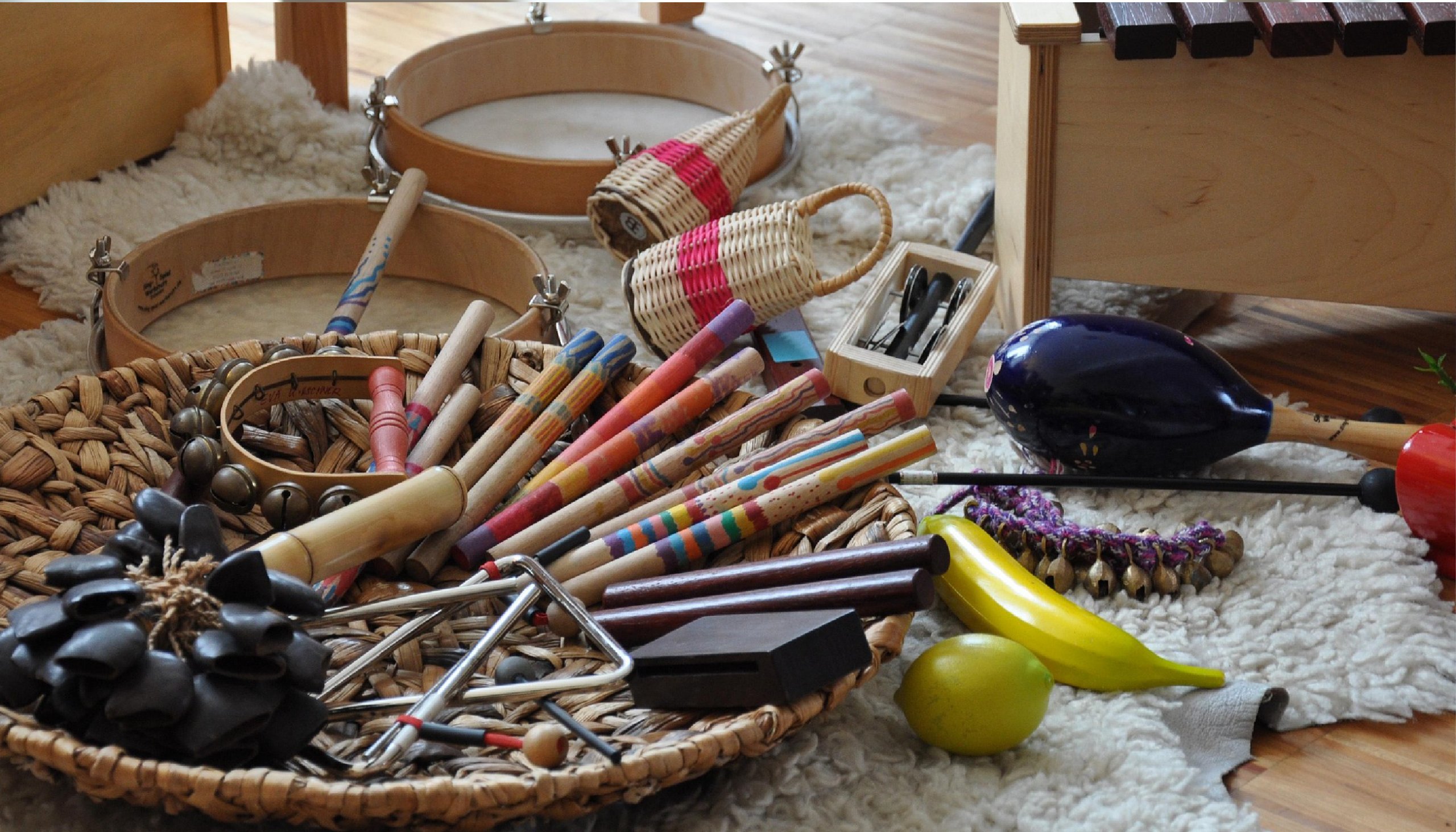
- Rhythm instruments: Shakers, tambourines, rhythm sticks, or homemade alternatives like rice-filled containers
- Percussion basics: A drum (or overturned pot), wooden spoons, bells
- Melodic options: A xylophone, keyboard, or simple recorder for older children
- Scarves or ribbons: Perfect for movement activities and visual representation of tempo
- Music player: For backing tracks or learning new songs together
Designate a specific time each week for your jam session—consistency helps children anticipate and prepare for the activity. Many families find that early evenings, before the bedtime routine begins, work beautifully. Start with 15-20 minutes for younger children, extending to 30-45 minutes as attention spans grow and engagement deepens.
Age-Appropriate Musical Roles
Matching roles to developmental capabilities ensures everyone experiences success while being gently challenged. Just as our Tenderfeet infant care classes adapt activities to babies’ sensory development stages, your home jam sessions should honor each child’s current abilities while creating pathways for growth.
Babies and Young Toddlers (6-18 Months)
At this stage, your little one is absorbing everything—rhythms, melodies, and the social dynamics of music-making. Their role is primarily sensory exploration. Provide safe shakers they can grasp, soft drums they can pat, and plenty of opportunities to bounce and sway in your arms. They’re building neural connections with every rhythmic movement and melodic phrase they hear. Even if their contribution seems minimal, they’re developing the foundational understanding that music is interactive and joyful.
Active Toddlers (18 Months – 3 Years)
Toddlers are ready for more active participation. Assign them the role of rhythm keeper with simple shakers or tambourines. They can practice starting and stopping on cue (impulse control), loud and soft dynamics (self-regulation), and fast and slow tempos (cognitive flexibility). This age group thrives in our Groovers music and dance classes, where movement and music combine to develop gross motor skills and spatial awareness.
Preschoolers (3-5 Years)
Preschoolers can handle multiple roles within a single session. They might be lead vocalists for songs they know well, percussion players maintaining steady beats, or movement directors showing everyone how to dance to the music. They’re developing the cognitive capacity to follow song structures, remember lyrics, and coordinate movements with sounds. This developmental stage aligns perfectly with our Scouts program, where catchy melodies teach broader concepts while reinforcing musical skills.
School-Age Children (6+ Years)
Older children can take on leadership roles as song selectors, arrangement creators, or even conductors who guide tempo and dynamics. They can learn simple melodies on xylophones or keyboards, create harmony parts, and help teach younger siblings new songs. This is when children begin understanding music’s organizational structures and can benefit from the literacy and cognitive skills developed in programs like our SMART-START English curriculum.
Songs for Toddlers and Preschoolers (Ages 2-5)
The best songs for young children combine repetitive lyrics, clear melodies, and opportunities for movement. These selections include actions that develop motor skills while reinforcing the musical elements.
1. “If You’re Happy and You Know It”
Roles: Everyone claps, stomps, or shouts together. Add instruments for clapping sections.
Developmental benefit: Following multi-step directions, body awareness, impulse control.
2. “The Wheels on the Bus”
Roles: Different family members can be assigned different sounds (horn, wipers, babies).
Developmental benefit: Sound differentiation, sequencing, memory development.
3. “Shake Your Sillies Out”
Roles: Everyone shakes instruments or body parts to release energy.
Developmental benefit: Gross motor development, energy regulation, following directions.
4. “Five Little Monkeys Jumping on the Bed”
Roles: Use fingers for counting, drum for “bumped his head,” descending xylophone notes as numbers decrease.
Developmental benefit: Number recognition, subtraction concepts, narrative understanding.
5. “Twinkle, Twinkle, Little Star”
Roles: Bell players for “twinkle,” gentle shakers for background, singers for melody.
Developmental benefit: Melodic awareness, gentle dynamics, wonder and imagination.
6. “Old MacDonald Had a Farm”
Roles: Different instruments represent different animals; older children can choose which animals to include.
Developmental benefit: Sound imitation, pattern recognition, creative choice-making.
7. “Head, Shoulders, Knees, and Toes”
Roles: Touch body parts while singing; try different tempos (slow and fast).
Developmental benefit: Body part identification, coordination, tempo awareness.
Songs for Elementary-Age Children (Ages 6-10)
As children develop greater musical sophistication, they can handle songs with more complex rhythms, longer phrases, and multiple parts. These selections offer opportunities for harmonization and instrumental accompaniment.
8. “This Little Light of Mine”
Roles: Simple three-chord progression on keyboard, steady beat on drums, vocals with dynamics.
Developmental benefit: Chord awareness, message interpretation, building confidence.
9. “You Are My Sunshine”
Roles: Lead vocalist, harmony singers, ukulele or guitar for older children.
Developmental benefit: Emotional expression, harmony concepts, melodic phrasing.
10. “Home on the Range”
Roles: Melody singers, rhythm section, simple descant for advanced singers.
Developmental benefit: Lyrical interpretation, sustained singing, dynamic expression.
11. “Do-Re-Mi” (from The Sound of Music)
Roles: Each family member can “own” a solfege syllable; play on xylophone or bells.
Developmental benefit: Scale understanding, pitch discrimination, musical literacy foundation.
12. “When the Saints Go Marching In”
Roles: Marching percussion section, simple melody on instruments, call-and-response vocals.
Developmental benefit: March rhythm, jazz introduction, ensemble playing.
13. “She’ll Be Coming ‘Round the Mountain”
Roles: Add cumulative sound effects (whoa back, toot toot, etc.) with different instruments.
Developmental benefit: Cumulative memory, sequencing, comedic timing.
All-Ages Family Favorites
These versatile songs work beautifully for mixed-age groups, with each family member contributing at their own level. They’re perfect for building family traditions and musical memories.
14. “Boom Chicka Boom” (Call and Response)
Roles: Leader calls out lines in different voices; everyone echoes.
Developmental benefit: Listening skills, vocal experimentation, turn-taking.
15. “Three Little Birds” by Bob Marley
Roles: Reggae rhythm on shakers, simple bass line, optimistic vocals.
Developmental benefit: Reggae rhythm exposure, positive messaging, cultural awareness.
16. “Happy Birthday”
Roles: Practice throughout the year with different arrangements; everyone knows this one!
Developmental benefit: Shared cultural knowledge, celebration rituals, harmonic singing.
17. “Let It Go” (from Frozen)
Roles: Dramatic vocals, building dynamics from quiet to powerful.
Developmental benefit: Emotional expression, dynamic range, contemporary musical theater.
18. “A Million Dreams” (from The Greatest Showman)
Roles: Gentle accompaniment, expressive vocals, movement interpretation.
Developmental benefit: Emotional storytelling, hope expression, melodic phrasing.
19. “Count on Me” by Bruno Mars
Roles: Steady beat keepers, melodic singers, friendship celebration.
Developmental benefit: Relationship values, contemporary pop structure, harmony opportunities.
20. “What a Wonderful World” by Louis Armstrong
Roles: Soft accompaniment, expressive vocals, gratitude focus.
Developmental benefit: Appreciation cultivation, jazz introduction, lyrical interpretation.
Making Your Jam Session a Success
The difference between a chaotic noise session and a meaningful musical experience often comes down to structure and expectations. Here are strategies to maximize engagement while minimizing frustration.
Start with a Musical Hello
Begin each session with the same welcome song—this signals the transition into music time and helps children, especially younger ones, understand what’s coming. A simple “Hello Song” where you sing each person’s name while they play their instrument creates inclusion and anticipation. This ritual mirrors the transition techniques we use in our SMART-START programs to help children move smoothly between activities.
Follow the Energy, Not the Clock
While consistency matters, flexibility within sessions prevents frustration. If your toddler is deeply engaged in exploring the xylophone, allow that exploration rather than rigidly moving to the next planned song. Conversely, if attention is waning earlier than expected, end on a positive note rather than pushing through. Quality engagement matters more than duration.
Rotate Leadership
Let different family members choose songs or lead activities. When your four-year-old selects the song and assigns instruments, they’re developing executive function skills and experiencing the responsibilities of leadership. When your eight-year-old teaches everyone a new rhythm, they’re reinforcing their own learning while building teaching skills.
Record Your Sessions (Sometimes)
Occasionally recording your jam sessions provides wonderful documentation of your children’s developmental progress. Listening back together also teaches self-assessment and allows children to hear their own musical growth over time. Just don’t let recording become the focus—the goal is connection, not performance.
Create a Closing Ritual
End each session with a consistent goodbye song or quiet listening moment. This helps children transition out of music time, provides closure, and creates anticipation for the next session. You might dim the lights, play a gentle lullaby, and have everyone put instruments away together while humming.
Building Musical Skills Over Time
Family jam sessions aren’t just about the immediate joy of music-making—they’re building foundational skills that support lifelong learning. As you continue regular sessions, you’ll notice your children developing greater rhythmic accuracy, melodic memory, and the ability to play or sing with others.
Watch for emerging skills that indicate readiness for new challenges. When your toddler consistently maintains a steady beat, introduce the concept of patterns (tap-tap-pause, tap-tap-pause). When your preschooler memorizes entire songs, introduce simple harmony parts or instrumental melodies. These progressive challenges mirror the developmental milestone approach we follow across all our programs, ensuring children are supported at their current level while being gently stretched toward new capabilities.
Consider how your home jam sessions might complement structured music education. Many families find that the confidence and skills developed during family music time create enthusiasm for formal music lessons or group classes. Our programs, from Tenderfeet for infants through Scouts for preschoolers, provide developmentally appropriate musical experiences that build on the foundation you’re creating at home.
Most importantly, focus on the joy of shared experience rather than perfection. The slightly off-key singing, the missed beats, the creative instrument choices that don’t quite match the song—these aren’t mistakes to correct but rather authentic moments of exploration and learning. Your acceptance of these imperfect moments teaches your children that music is for everyone, not just those who can perform flawlessly. This growth mindset, nurtured during family jam nights, extends far beyond music into every area of learning and development.
Family jam nights offer something increasingly rare in our busy, screen-filled world: unstructured time for genuine connection through shared creativity. Whether you’re shaking tambourines with your toddler to “The Wheels on the Bus” or harmonizing with your elementary-age child on “What a Wonderful World,” you’re creating more than musical memories. You’re building neural pathways, strengthening family bonds, and demonstrating that learning happens best when it’s joyful and inclusive.
The twenty songs we’ve explored provide a starting point, but your family’s musical journey will develop its own character over time. You’ll discover favorite songs that become family traditions, create silly variations that make everyone laugh, and witness your children’s confidence growing with each session. Remember that every family’s jam night looks different—there’s no single right way to make music together, only the way that works for your unique family dynamics and developmental stages.
As you continue these musical adventures, pay attention to the skills emerging beyond the music itself: cooperation, patience, creative expression, and the pure joy of being together. These are the gifts that last long after the final notes fade, shaping not just young musicians but confident, capable learners ready to embrace all that life offers.
Ready to Deepen Your Child’s Musical Journey?
While family jam sessions provide wonderful at-home experiences, structured music education can amplify your child’s developmental progress. At The Music Scientist, we specialize in age-appropriate programs that combine music, movement, and sensory play to support cognitive development, motor skills, and early literacy.
From our Tenderfeet program for infants to our SMART-START preschool readiness curriculum, we offer research-based musical experiences tailored to your child’s developmental stage.
Table Of Contents
There’s nothing quite like watching your baby’s eyes light up during their first rhythm exploration, or hearing your toddler attempt their first melody. These precious musical moments pass quickly, but with Instagram Reels, you can capture and celebrate your child’s developmental journey in ways that connect with family, friends, and fellow parents.
As early childhood music educators, we witness countless magical moments in our classes at The Music Scientist. From an 8-month-old discovering the joy of shaking a maraca to a preschooler confidently singing their first complete song, these milestones represent significant cognitive, motor, and social-emotional development. When parents ask us how to best document these moments, we always emphasize that the goal isn’t perfection but rather authentic celebration of growth.
This guide will walk you through everything you need to know about filming and sharing your child’s music milestones on Instagram Reels. Whether you’re documenting your infant’s sensory exploration during tummy time music sessions or your toddler’s enthusiastic dance moves, you’ll learn practical techniques that honor your child’s development while creating shareable content that resonates with your community.
Capture Musical Milestones on Instagram Reels
Expert tips for filming & sharing your child’s music development
🎵Musical Milestones by Age
4-12 Months
Infants
- Sound localization
- Instrument grasping
- Vocal cooing patterns
- Bouncing to beats
18-24 Months
Toddlers
- Intentional dancing
- Song fragments
- Rhythm imitation
- Musical preferences
2-4 Years
Preschoolers
- Complete songs
- Creative composition
- Coordinated dancing
- Musical storytelling
🎬5 Steps to Create Engaging Reels
1
Select Your Best Moments
Choose 3-5 clips with good lighting, clear audio, and authentic expressions. Keep it 30-60 seconds.
2
Choose Your Audio
Use original audio or add voiceover context to explain the milestone you’re celebrating.
3
Edit for Engagement
Match cuts to musical beats, add minimal text overlays, and start with action to capture attention.
4
Craft Caption & Hashtags
Share developmental context and use 8-12 strategic hashtags like #musicaleducation #toddlermusic.
5
Post Strategically
Share during peak parent hours: 6-8 AM or 7-9 PM for maximum engagement.
📹Filming Tips by Age Group
👶 Infants
✓ Film at eye level
✓ Keep sessions 30-60 seconds
✓ Use natural lighting
✓ Capture authentic interactions
🧒 Toddlers
✓ Embrace spontaneity
✓ Follow their interests
✓ Film from 45° angle
✓ Normalize camera presence
🎨 Preschoolers
✓ Involve them in planning
✓ Give creative control
✓ Vary camera angles
✓ Capture facial expressions
🔒
Privacy & Safety First
Consider private accounts
Avoid identifying details
Respect child’s wishes
Review content regularly
💡 Pro Tip
Focus on authentic moments over perfection. The most engaging Reels capture genuine developmental progress and the pure joy of musical exploration!
Why Document Your Child’s Musical Journey?
Musical development in early childhood is a powerful window into cognitive growth, motor skill development, and emotional expression. When you document these moments, you’re creating more than social media content. You’re building a visual timeline of your child’s neurological development, capturing evidence of their emerging abilities in areas like rhythm recognition, pitch matching, movement coordination, and creative expression.
Research in early childhood development shows that music engagement activates multiple areas of the brain simultaneously. When your 14-month-old bounces to a beat, they’re demonstrating kinesthetic learning and developing gross motor skills. When your preschooler learns lyrics to educational songs, they’re strengthening memory pathways and language development. These aren’t just cute moments; they’re developmental achievements worth celebrating.
Beyond the developmental value, sharing these milestones on platforms like Instagram Reels creates community connections. Other parents find encouragement seeing your child’s progress, educators gain insights into how children respond to different musical activities, and family members who live far away stay connected to your child’s growth. The key is approaching content creation with intention rather than pressure.
Musical Developmental Milestones Worth Capturing
Understanding which moments represent significant developmental leaps helps you recognize opportunities worth filming. Here are age-appropriate milestones that make meaningful Reel content:
Infants (4-12 Months)
During the infant stage, musical development focuses on sensory exploration and early rhythm awareness. These foundational moments might seem simple but represent crucial neural development:
- Sound localization: When your baby turns their head toward music or your singing voice
- Reflexive responses: Natural movements or facial expressions in response to different musical styles
- Instrument exploration: First attempts at grasping and shaking rattles or bells
- Vocal play: Cooing and babbling that follows musical patterns or mimics your melodies
- Movement responses: Bouncing, swaying, or kicking in time with music
Our Tenderfeet infant care classes focus specifically on these sensory development stages, incorporating music and movement activities designed for babies aged 4-17 months. Parents in these programs often capture beautiful moments of their little ones discovering cause-and-effect through musical instruments.
Toddlers (18-24 Months)
The toddler stage brings explosive growth in musical abilities. Children become more intentional in their musical interactions and begin showing preferences:
- Intentional dancing: Deliberate movement to music, including spinning, jumping, and creative interpretation
- Instrument experimentation: Exploring different ways to create sounds with various instruments
- Song fragment singing: Attempting recognizable parts of familiar songs
- Rhythm imitation: Clapping or tapping along with simple patterns
- Musical preferences: Requesting favorite songs or showing excitement for particular melodies
These milestones align perfectly with the activities in our Happyfeet enrichment classes for 18-month-olds and toddlers, where we incorporate movement, rhythm, and early literacy through music.
Preschoolers (2-4 Years)
Preschool-aged children demonstrate remarkable musical sophistication. Their growing verbal abilities and motor control allow for more complex musical expression:
- Complete song singing: Singing entire songs independently with recognizable melody and most lyrics
- Creative composition: Making up their own songs with original lyrics or melodies
- Coordinated dancing: Following multi-step dance instructions and creating choreography
- Instrument proficiency: Playing simple percussion instruments with increasing control
- Musical storytelling: Using songs to express emotions or narrate experiences
Programs like our Groovers music and dance classes for toddlers and Scouts science-through-music program capitalize on this developmental stage, making these classes particularly rich environments for capturing milestone moments.
Filming Tips for Different Age Groups
Successfully capturing musical moments with young children requires different approaches depending on their developmental stage and attention span. Here’s what works best for each age group:
Getting Natural Footage with Infants
Infants don’t perform on cue, which means the best footage comes from patient observation rather than directed filming. Position yourself at your baby’s eye level to capture authentic facial expressions and emotional responses. Natural lighting works best because harsh lights or camera flashes can be startling and disruptive to the moment.
Keep filming sessions short. Babies have limited attention spans, and overstimulation can quickly turn a joyful musical moment into fussiness. Aim for 30-60 second clips maximum. You can always string multiple short clips together when editing your Reel. Consider using your phone’s video burst mode or continuous recording during music time, then selecting the best moments afterward rather than stopping and starting.
The most compelling infant music content shows genuine interaction. Film during actual musical play rather than staging moments. Whether you’re singing during diaper changes, playing with rattles during tummy time, or swaying together to background music, these authentic interactions create more engaging content than posed scenarios.
Working with Toddler Energy
Toddlers bring enthusiasm and unpredictability to filming. Their energy can work in your favor if you embrace spontaneity over perfection. Set up your phone in a stable position (a small tripod or propped against books works well) and let your toddler lead the musical activity naturally.
Follow their interests in the moment. If you planned to film them with bells but they’re fascinated by the drum, adjust your expectations. The most shareable toddler content captures their genuine excitement and discovery. Consider filming from slightly above at a 45-degree angle, which provides better perspective on their movements and facial expressions during dancing or instrument play.
Toddlers often become camera-conscious, so normalizing filming helps. Keep your phone out regularly during music time (not just for special moments) so it becomes part of the routine rather than a distraction. Involve them by letting them see playback occasionally, which can actually increase their comfort level with being filmed.
Collaborating with Preschoolers
Preschoolers can be active participants in content creation. Talk with them about what you’re filming and why. Many children this age enjoy the idea of sharing their accomplishments with grandparents or family friends. This collaboration often results in more confident, engaging performances.
Give them some creative control. Ask which song they want to share or let them choose which instrument to feature. This ownership increases their engagement and often results in more authentic content. However, balance this with managing expectations. If they become perfectionistic (wanting to redo takes repeatedly), gently redirect toward the joy of the activity itself.
For preschool-aged children, variety in camera angles creates more dynamic Reels. Mix close-ups of their hands playing instruments with wide shots showing their full-body dancing. Capture their facial expressions when they’re concentrating on getting lyrics right or beaming with pride after completing a song. These varied perspectives tell a more complete story of their musical engagement.
How to Create Music Milestone Reels
Once you’ve captured beautiful footage of your child’s musical moments, transforming those clips into engaging Reels requires some basic editing skills and creative choices. The Instagram Reels format offers numerous tools specifically designed for creating compelling short-form video content.
Step 1: Select Your Best Moments
Review all your footage and identify the strongest 3-5 clips that showcase the milestone you want to highlight. Look for moments with good lighting, clear audio, and authentic expressions from your child. For musical content, prioritize clips where the music or singing is audible and your child is clearly engaged with the activity. Remember that Reels can be up to 3 minutes long, but shorter content (30-60 seconds) typically performs better for engagement.
Step 2: Choose Your Audio Approach
You have several options for audio in music milestone Reels. You can use the original audio from your video if it captures your child’s singing or the music they’re responding to. This approach feels most authentic for milestone documentation. Alternatively, if the original audio quality isn’t ideal, you can overlay a clean version of the song your child was enjoying. Some parents create a hybrid by keeping their child’s vocals but adding a subtle music track underneath.
Consider adding a voiceover to provide context. A brief narration explaining what developmental milestone you’re celebrating (“Clara just learned to keep rhythm with both hands!”) helps viewers understand the significance of what they’re watching. Keep voiceovers concise and let the visual content remain the focus.
Step 3: Edit for Engagement
Use Instagram’s built-in editing tools to trim clips to their most compelling moments. Start with action rather than setup; viewers scroll quickly, so your Reel should capture attention immediately. Consider these editing techniques specifically for children’s music content:
- Match cuts to musical beats: Time your clip transitions to align with the rhythm of the background music
- Use text overlays sparingly: Add simple text to highlight the milestone (“First time clapping on beat!”) but avoid cluttering the screen
- Include before-and-after sequences: Show progression by combining clips from previous weeks with current footage
- Add subtle effects: Instagram’s effects can enhance but shouldn’t distract from your child’s authentic moment
Step 4: Craft Your Caption and Hashtags
Your caption provides crucial context that transforms a cute video into meaningful content. Share the developmental significance of the milestone, your child’s age, and perhaps a brief story about their musical journey. For example: “At 22 months, Emma is showing incredible rhythm awareness! We’ve been practicing simple patterns in her Happyfeet class, and today she spontaneously started clapping along to her favorite song. Watching her make these cognitive connections through music never gets old.”
Use strategic hashtags to reach relevant audiences. Mix broad tags like #musicaleducation and #earlychilhood with specific ones like #toddlermusic or #musicmilestones. Include developmental stage hashtags (#18months, #preschooler) to connect with parents of similar-aged children. Limit yourself to 8-12 highly relevant hashtags rather than using the maximum allowed.
Step 5: Time Your Posting Strategically
While the Instagram algorithm prioritizes content quality over posting time, sharing your Reels when your audience is most active increases initial engagement, which can boost overall reach. For parent-focused content, early morning (6-8 AM) and evening hours (7-9 PM) often perform well, as these are times when caregivers are scrolling during morning routines or after bedtime.
Safety and Privacy Considerations
Before sharing any content featuring your child online, thoughtful consideration of privacy and safety is essential. While celebrating milestones can create meaningful connections, protecting your child’s digital footprint should always be the priority.
Establish clear boundaries for what you will and won’t share. Many parents choose not to show their child’s full face, using angles that focus on hands during instrument play or filming from behind during dancing. Others share faces but avoid identifying information like full names, school names, or specific location details in captions or geotags. There’s no single right approach, but consistency in your boundaries helps maintain the privacy standards you’ve set.
Consider your account privacy settings carefully. Private accounts limit who can view and share your content, providing an extra layer of protection. If you maintain a public account to connect with a broader community, be especially vigilant about the information you include in posts. Review your account’s tagging settings to control who can tag your child in photos or videos.
Respectful Documentation
As your child grows, their capacity to understand and consent to sharing evolves. Even toddlers and preschoolers can participate in simple conversations about which moments they’re comfortable sharing. Asking “Should we show grandma this video of you singing?” begins building their awareness of digital sharing. Respect their wishes if they express discomfort, even if you think the content is adorable.
Regularly review and curate your content. Consider which posts you might want to archive or delete as your child grows. Content that seems innocent when your child is a toddler may feel different years later. Some parents maintain a separate, highly private account for family sharing while using their main account for more general early childhood content without identifying details.
Creative Ideas to Boost Engagement
Beyond documenting individual milestones, consider these creative approaches that make your music content more shareable and community-building:
Create a Musical Journey Series
Document your child’s progression with the same song over several months. Film them attempting a favorite melody at different ages, then compile these moments into a single Reel showing their development. This format powerfully illustrates growth while creating highly shareable content that resonates with other parents. You might track their improving pitch accuracy, increasingly complex movements, or growing confidence in performance.
Feature Educational Elements
Add value for viewers by incorporating brief educational tips. While showing your child exploring instruments, include text overlays explaining the developmental benefits: “Shaking instruments builds gross motor skills and cause-effect understanding.” This transforms your content from purely personal sharing into helpful resources for other parents, increasing saves and shares.
Our programs like SMART-START English and SMART-START Chinese integrate music with academic readiness. Parents in these programs often share clips demonstrating how songs teach counting, colors, or language concepts, making the educational value explicit.
Encourage Interaction
End your Reels with gentle calls-to-action that foster community. Ask questions like “What’s your child’s favorite song right now?” or “Has your little one hit this milestone yet?” These prompts encourage comments, which signal to Instagram’s algorithm that your content sparks conversation. Respond thoughtfully to comments to build genuine connections with your audience.
Create duet opportunities by encouraging other parents to share their child’s version of the same song or activity. This collaborative approach builds community among parents while celebrating the unique ways each child experiences musical development.
Highlight Special Moments from Classes
If your child attends music classes, those environments often provide rich opportunities for milestone captures. The structured activities introduce new instruments, songs, and movements that might trigger breakthrough moments. With appropriate permissions, filming brief clips during or after class showcases not just your child’s achievement but also the value of quality music education programs.
Beyond Social Media: Preserving Musical Memories
While Instagram Reels offer a wonderful platform for sharing and celebrating milestones, remember that these moments hold value beyond social engagement metrics. Consider creating parallel preservation systems for your most precious musical memories.
Maintain offline archives. Download your favorite clips to external hard drives or cloud storage with better longevity than social media platforms. Create annual video compilations that chronicle each year’s musical development, complete with the songs, movements, and expressions that defined that stage. These comprehensive archives become treasured family keepsakes.
Some parents create private, password-protected blogs or digital journals where they document the stories behind the milestones with more detail than Instagram captions allow. These spaces let you preserve the context, your emotional reactions, and the developmental significance without the pressure of public performance or algorithmic requirements.
Physical memory books combining printed photos from video stills with written reflections create tangible records your child can hold and explore as they grow. Pairing images of them playing their first drum with your written description of their concentration and joy provides a multidimensional memory that transcends digital formats.
Documenting your child’s musical milestones through Instagram Reels allows you to celebrate their development while connecting with a community of parents, educators, and family members who share your joy in these achievements. From your infant’s first rhythmic responses to your preschooler’s confident performances, each milestone represents significant cognitive, physical, and emotional growth worth honoring.
Remember that the most meaningful content comes from authentic moments rather than staged perfection. Focus on capturing genuine engagement, developmental progress, and the pure joy your child experiences through musical exploration. Whether you’re filming during at-home music time or sharing snippets from structured classes, let your child’s natural curiosity and enthusiasm guide the content.
As you build this visual timeline of your child’s musical journey, you’re creating more than social media posts. You’re documenting their emerging abilities, preserving precious memories, and potentially inspiring other parents to prioritize music in their child’s development. With thoughtful attention to privacy, authentic storytelling, and celebration of each child’s unique developmental path, your Reels become both shareable content and treasured family archives.
Ready to Create More Musical Milestones?
Join us at The Music Scientist and give your child the gift of developmentally-focused music education. Our programs for babies, toddlers, and preschoolers create countless opportunities for the magical moments you’ll want to capture and share.
Table Of Contents
- Why Shaker Eggs Are Perfect for Early Musical Development
- Developmental Benefits of Homemade Shakers
- What You’ll Need to Make Bottle Cap Shaker Eggs
- Step-by-Step Instructions
- Important Safety Considerations
- Creative Ways to Use Your Shaker Eggs
- Age-Appropriate Activities with Shaker Eggs
- Fun Variations to Try
Every parent knows that toddlers are naturally drawn to making noise, and there’s actually wonderful developmental science behind this fascination. When your little one shakes, rattles, and explores sound, they’re building crucial neural pathways that support musical intelligence, motor coordination, and cause-and-effect understanding. The best part? You don’t need expensive store-bought instruments to nurture these skills.
Creating eco-friendly shaker eggs from bottle caps is one of the simplest yet most rewarding DIY musical instruments you can make with your child. This sustainable craft transforms everyday recyclables into engaging sensory tools that support your child’s developmental journey. Whether you have a curious infant exploring sounds or an energetic toddler ready to march to the beat, these homemade shakers offer endless opportunities for musical exploration and learning.
In this guide, we’ll walk you through the complete process of creating safe, durable shaker eggs that will become treasured instruments in your home music collection. You’ll discover not only how to make them but also how to use them to enhance your child’s cognitive, motor, and musical development.
🥚 DIY Bottle Cap Shaker Eggs
Eco-Friendly Musical Fun for Little Learners
✨ Why Make Shaker Eggs?
🎵
Musical Skills
Rhythm & beat awareness
🤲
Motor Skills
Fine motor & coordination
🧠
Cognitive Growth
Cause & effect learning
♻️
Eco-Friendly
Recycled materials
🛠️ What You’ll Need
Materials
- 4 bottle caps (same size)
- Filling: rice, beans, or bells
- Strong tape (duct/electrical)
- Optional: decorative tape
Tools
- Scissors
- Small funnel or paper cone
📋 Simple 6-Step Process
1
Clean & Prepare
Wash and dry 2 matching bottle caps
2
Add Filling
Fill one cap 1/3 to 1/2 full with rice, beans, or bells
3
Create Seal
Place second cap on top, rim to rim
4
Secure with Tape
Wrap tape around seam, overlapping for durability
5
Safety Test
Shake vigorously to ensure secure seal
6
Decorate
Add colorful tape, stickers, or non-toxic paint
🎨 Fun Ways to Play
📖
Story Sounds
Add effects to stories
💃
Freeze Dance
Shake & stop games
🎼
Rhythm Match
Copy beat patterns
🤸
Movement
Shake high & low
⚠️ Safety First!
✓ Check Seals
Before each use
✓ Supervise
Young children
✓ Age-Appropriate
Choose safe fillings
🎵 Transform recycled bottle caps into powerful learning tools that support musical, motor, and cognitive development!
Perfect for babies & toddlers • Eco-friendly • Developmentally beneficial
Why Shaker Eggs Are Perfect for Early Musical Development
Shaker eggs hold a special place in early childhood music education, and for good reason. These simple percussion instruments are perfectly sized for little hands, require minimal coordination to produce sound, and provide immediate auditory feedback that delights young children. Unlike many musical toys that can be overwhelming with flashing lights and multiple sounds, shaker eggs offer a pure, focused musical experience.
From a developmental perspective, shakers support multiple intelligences simultaneously. When a child grasps and shakes these instruments, they’re engaging their kinesthetic intelligence through movement, their musical intelligence through rhythm exploration, and their logical intelligence as they discover that different shaking speeds and intensities create varied sounds. This multi-sensory engagement is exactly what makes music such a powerful learning medium for young children.
Making shaker eggs from recycled bottle caps also introduces an important environmental lesson. Even very young children can begin to understand that we can create wonderful things from materials that might otherwise be discarded. This early exposure to sustainability and creative reuse plants seeds for environmentally conscious thinking that grows as your child develops.
Developmental Benefits of Homemade Shakers
The simple act of playing with homemade shaker eggs supports numerous developmental milestones that parents and educators track during the early childhood years. Understanding these benefits helps you appreciate the educational value hidden in this fun musical activity.
Fine motor development receives significant support when children grasp, shake, and manipulate these instruments. The pincer grasp required to hold a shaker egg strengthens the same small muscles children will later use for writing, buttoning clothes, and other precise movements. As children progress from simply holding the shaker to controlling the intensity and speed of their shaking, they’re developing increasingly sophisticated motor control.
Auditory processing skills flourish as children experiment with different shaking patterns and speeds. They begin to discriminate between loud and soft sounds, fast and slow rhythms, and eventually may notice the different tonal qualities created by various fillings. This auditory awareness forms the foundation for both musical appreciation and language development, as the same neural pathways process both musical and linguistic sounds.
Perhaps most importantly, rhythm awareness and beat competency develop through regular shaker play. When children shake along to songs, they’re internalizing steady beat, which research shows correlates with pre-reading skills and mathematical understanding. Programs like our Happyfeet enrichment classes for toddlers incorporate shaker activities precisely because this rhythmic foundation supports learning across multiple domains.
What You’ll Need to Make Bottle Cap Shaker Eggs
One of the beautiful aspects of this project is its simplicity. You likely have most of these materials in your home already, making this an accessible activity you can start today.
Materials:
- 4 plastic bottle caps (same size works best, but mixing sizes creates interesting variations)
- Filling materials: dry rice, small beans, dried lentils, small bells, or beads
- Strong adhesive tape (electrical tape, duct tape, or gorilla tape)
- Optional: decorative washi tape, stickers, or non-toxic paint
- Optional: plastic Easter eggs (as an alternative to bottle caps)
Tools:
- Scissors (for cutting tape)
- Small funnel or paper rolled into a cone (for easy filling)
The choice of filling material significantly impacts the sound your shaker produces. Rice creates a soft, gentle swishing sound perfect for younger babies, while beans produce a louder, more pronounced rattling. Small bells add a musical jingle that many toddlers find irresistible. Consider making several shakers with different fillings so your child can explore various soundscapes and develop auditory discrimination skills.
Step-by-Step Instructions
Creating your bottle cap shaker eggs is straightforward, but following these steps carefully ensures you’ll end up with durable, safe instruments that withstand enthusiastic toddler play.
1. Prepare Your Bottle Caps – Start by thoroughly cleaning and drying two matching bottle caps. Remove any labels or sticky residue, as this will help the tape adhere better. Ensure the caps are completely dry inside and out before proceeding to prevent mold or mildew from developing inside your finished shaker.
2. Choose and Add Your Filling – Select your filling material based on the sound you want to create and your child’s age. For infants and young toddlers in our Tenderfeet infant care program age range, softer sounds from rice or small beads work well. Fill one bottle cap about one-third to half full. Avoid overfilling, as the contents need room to move and create sound when shaken.
3. Create the Seal – Place the second bottle cap on top of the filled cap, rim to rim, creating a closed capsule. This step requires a bit of patience to align the caps evenly. Take your time here, as proper alignment makes the taping process much easier and creates a more durable finished product.
4. Secure with Tape – Using strong adhesive tape, wrap around the seam where the two caps meet. Start with one strip that goes completely around the middle, pressing firmly to ensure good adhesion. Then add additional strips, overlapping slightly, until the entire seam is covered and the caps are firmly secured together. For extra durability, you can add a second layer of tape perpendicular to the first.
5. Test Your Shaker – Give your newly created shaker egg a vigorous shake test. Listen for any rattling that suggests the caps might separate, and check that the tape is firmly adhered with no loose edges. This quality check is essential for safety, especially if the shaker will be used by babies who explore everything with their mouths.
6. Decorate (Optional) – Once you’ve confirmed your shaker is secure, you can add decorative elements. Colorful washi tape, stickers, or even painted designs (using non-toxic paint and allowing it to dry completely) transform your shaker into a visually appealing instrument. Involving older toddlers in this decoration process adds an extra layer of engagement and ownership.
Important Safety Considerations
While homemade musical instruments offer wonderful benefits, safety must always be the top priority when creating toys for young children. Following these guidelines ensures your shaker eggs remain safe throughout months of enthusiastic use.
Secure sealing is non-negotiable. Before each play session, especially in the first few weeks of use, inspect your shaker eggs to ensure the tape hasn’t loosened. Small filling materials like rice, beans, or beads present choking hazards if released, so maintaining that secure seal is critical. If you notice any wear or loosening, rewrap the shaker with fresh tape or retire it from use.
Supervision matters for younger children. Babies and young toddlers who are still in the oral exploration stage should always use these shakers under adult supervision. While the large size of the bottle cap shaker makes it difficult to mouth entirely, vigilant adults can catch any problems before they become hazards. Children in our Groovers music and dance classes who are typically older can often use these instruments more independently, though regular safety checks remain important.
Choose age-appropriate materials. For children under 18 months, avoid using small bells or hard beads as filling materials. Even with secure taping, it’s wise to select fillings that pose minimal risk. Rice, quinoa, or very small lentils work beautifully for this age group. As children grow and develop past the stage of mouthing everything, you can experiment with different filling materials to create varied sound experiences.
Additionally, if you’re making these shakers with your child as a craft activity, keep all small materials and tools out of reach of younger siblings. The creation process itself requires adult handling of potentially hazardous items, so plan your crafting time when you can give it your full attention.
Creative Ways to Use Your Shaker Eggs
Once you’ve created your collection of shaker eggs, the real fun begins. These versatile instruments can be incorporated into numerous activities that support learning and development while keeping children engaged and entertained.
Musical storytelling brings books to life in exciting ways. As you read favorite stories, use shaker eggs to add sound effects. The rhythmic shaking can represent rain falling, footsteps walking, or any number of story elements. This multisensory approach to reading supports comprehension and memory while making story time more interactive and engaging. Children learn to associate sounds with narrative elements, building connections between auditory and linguistic processing.
Freeze dance activities combine music, movement, and self-regulation skills. Play music while children dance and shake their instruments, then pause the music and encourage them to freeze in place. This classic game supports listening skills, impulse control, and gross motor coordination. The added element of the shaker makes it even more engaging than traditional freeze dance, as children practice controlling both their bodies and their instruments.
Rhythm matching games develop musical ear and imitation skills. Create a simple rhythm pattern by shaking your egg in a specific way (two quick shakes, one slow shake, for example), then encourage your child to copy the pattern. This call-and-response activity mirrors techniques used in our Scouts program, where catchy melodies and rhythmic patterns support learning. Start with very simple patterns for younger toddlers and gradually increase complexity as their skills develop.
You can also incorporate shaker eggs into movement exploration activities. Encourage children to shake high above their heads, down by their toes, behind their backs, or while spinning in circles. This spatial awareness practice combined with sound-making helps children understand their bodies in space while developing bilateral coordination and balance.
Age-Appropriate Activities with Shaker Eggs
Different developmental stages call for different approaches to musical play. Tailoring your shaker egg activities to your child’s current abilities ensures they’re appropriately challenged without becoming frustrated.
For Infants (4-12 months)
Very young babies benefit from simple sensory exposure to the shakers. Hold the shaker and gently shake it at different distances from your baby, allowing them to track the sound with their eyes and turn their head toward it. This builds auditory localization skills. As they develop grasp, offer the shaker for them to hold and explore. At this stage, the goal is simply familiarization with cause and effect (I shake this object, and sound happens). The sensory development focus of our Tenderfeet program aligns perfectly with this exploratory approach to musical instruments.
For Young Toddlers (12-24 months)
As children enter toddlerhood, they can begin exploring intentional rhythm and tempo. Play music with a clear, steady beat and model shaking along to the rhythm. Don’t worry if their shaking doesn’t precisely match the beat initially. The exposure to steady beat is what matters, and precision develops over time with repeated experience. This age group also enjoys shake-and-stop games where you shake together, then suddenly stop, building anticipation and turn-taking skills.
For Older Toddlers and Preschoolers (24+ months)
Older toddlers are ready for more complex musical concepts. Introduce loud versus soft (dynamics) by modeling gentle shaking versus vigorous shaking. Create patterns and sequences for them to copy. Introduce basic musical concepts through play: fast versus slow, high versus low (shake near ears versus near floor). These children can also begin to participate in the creation process, choosing fillings, selecting decorative elements, and feeling proud ownership of their handmade instruments. Our SMART-START English program incorporates similar age-appropriate musical complexity to prepare children for preschool.
Fun Variations to Try
Once you’ve mastered the basic bottle cap shaker, consider these creative variations to expand your home instrument collection and provide diverse sensory experiences.
Rainbow sound shakers use color-coding to help children begin associating visual cues with different sounds. Create several shakers with different fillings, then use different colored tape for each type. For example, blue tape for the rice-filled shaker (gentle sound), red tape for the bean-filled shaker (louder sound), and green tape for the shaker with bells (jingly sound). This visual organization helps children develop categorization skills while exploring auditory differences.
Size exploration shakers introduce concepts of volume and pitch. If you have access to bottle caps of different sizes (small water bottle caps versus large juice bottle caps), create shakers of varying sizes. Children often notice that larger shakers with more filling create different sound qualities than smaller ones, introducing early physics concepts through hands-on exploration.
Seasonal shakers keep the activity fresh throughout the year. During autumn, create shakers decorated with fall leaves and filled with dried corn kernels. Winter shakers might feature snowflake stickers and rice for a softer, snow-like sound. Spring versions could include flower decorations and small bells for cheerful jingling. These seasonal variations can be incorporated into thematic learning activities that connect music with natural cycles and celebrations.
You might also try mystery sound shakers for older toddlers developing prediction and memory skills. Create pairs of shakers with identical fillings but different external appearances. Can your child match the pairs by sound alone? This auditory memory game builds listening discrimination while providing a fun challenge for developing minds.
Creating eco-friendly shaker eggs from bottle caps represents so much more than a simple craft project. It’s an opportunity to transform recyclable materials into powerful learning tools that support your child’s musical, cognitive, and motor development. These humble instruments embody the philosophy that meaningful learning doesn’t require expensive equipment but rather thoughtful engagement and creative exploration.
As you incorporate these homemade shakers into your daily routines, remember that the real magic happens not in the perfection of the instrument itself but in the joyful moments of making music together. Whether you’re shaking along to favorite songs during car rides, adding sound effects to bedtime stories, or simply exploring different rhythms on a rainy afternoon, you’re building neural pathways that support learning across all domains.
The developmentally-focused approach that guides our programs at The Music Scientist applies equally well at home. Music, movement, and sensory play combine to create rich learning environments where children naturally develop skills they’ll use throughout their lives. Your homemade shaker eggs are valuable additions to this learning journey, proving that some of the best educational tools are those we create with love and intention.
Ready to explore more ways music can enhance your child’s development? At The Music Scientist, we specialize in creating engaging, developmentally-appropriate musical experiences for children from 4 to 47 months. Our programs combine original compositions with movement, sensory play, and educational themes to support your child’s growth across multiple intelligences. Whether you’re interested in our infant care classes, toddler enrichment programs, or preschool readiness courses, we’d love to welcome your family into our musical community. Contact us today to learn more about how we can support your child’s learning journey through the power of music.
Table Of Contents
- Why Rhythm Matters in Toddler Development
- Understanding the Metronome: A Parent’s Guide
- Developmental Benefits of Metronome Games
- Best Smartphone Metronome Apps for Toddlers
- Engaging Metronome Games and Activities
- Safety and Screen Time Considerations
- Tips for Integrating Rhythm Play into Daily Routines
As parents in Singapore’s fast-paced environment, we’re constantly seeking innovative ways to support our children’s early development. While traditional toys and books remain valuable, the smartphones we carry daily can become powerful learning tools when used thoughtfully. Among the most underutilized educational resources? The humble metronome app, transformed into engaging rhythm games that captivate toddlers while nurturing essential developmental skills.
Rhythm isn’t just about music. It’s a fundamental organizing principle that helps young minds understand patterns, predict sequences, and coordinate movement. When toddlers engage with steady beats through smartphone metronome games, they’re actually exercising multiple areas of brain development simultaneously, from motor planning to mathematical thinking. The beauty of these digital rhythm activities lies in their simplicity: a consistent pulse combined with creative play can unlock remarkable learning opportunities for children aged 12 to 47 months.
This comprehensive guide explores how to harness smartphone metronome technology for your toddler’s benefit, offering age-appropriate games, developmental insights, and practical strategies that align with Singapore’s emphasis on early childhood education excellence. Whether you’re introducing your 18-month-old to their first rhythmic experiences or challenging your preschooler with more complex beat patterns, you’ll discover activities that make learning through music both joyful and developmentally appropriate.
Smartphone Metronome Games for Toddlers
Transform rhythm into learning with these engaging activities
🎵 Why Rhythm Matters
🧠
Brain Development
Enhances temporal processing & executive function
🗣️
Language Skills
Supports speech patterns & phonological awareness
🤸
Motor Coordination
Builds bilateral coordination & body awareness
📱 Understanding Tempo (BPM)
60-80
Slow Tempo
Gentle rocking, calming activities
90-120
Moderate Tempo
Marching, bouncing, active play
130-160
Fast Tempo
Energetic activities, older toddlers
🎮 Age-Appropriate Games
👶 Beginners (12-24 Months)
- Beat Bounce: Gentle bouncing to slow tempo (60-70 BPM)
- Clap and Stop: Build impulse control with pauses
- Dance Freeze: Movement with listening skills
- Drum Circle: Explore tapping safe objects
🎯 Intermediate (24-36 Months)
- Animal Walks: Different tempos = different animals
- Body Part Beat: Tap different body parts in rhythm
- Marching Band: Parade with instruments (110-120 BPM)
- Echo Rhythms: Copy simple clapping patterns
🌟 Advanced (36-47 Months)
- Beat Memory Challenge: Maintain tempo independently
- Conducting Practice: Lead with hand motions
- Rhythmic Storytelling: Actions synchronized to beats
- Beat and Rest: Selective response patterns
✅ Essential App Features
👁️
Visual Feedback
🔊
Sound Variety
🎛️
Simple Controls
📵
Offline Mode
🛡️ Safety Tips
⏱️
Follow age-appropriate screen time limits
✈️
Use airplane mode during activities
🔉
Keep volume at moderate levels
🎵
Balance with acoustic experiences
🎼 Key Takeaway
Rhythm games aren’t just about music—they’re powerful tools for cognitive development, language skills, motor coordination, and school readiness. Start slow, keep it playful, and watch your toddler thrive!
Why Rhythm Matters in Toddler Development
Before we explore specific games and applications, it’s important to understand why rhythm exposure matters so profoundly during the toddler years. Rhythmic awareness serves as a foundational skill that supports learning across multiple domains, making it far more than just a musical concept.
Research in developmental psychology consistently demonstrates that children who engage with rhythmic activities show enhanced abilities in several key areas. First, rhythm strengthens temporal processing, which is the brain’s ability to perceive and organize sequences of events over time. This skill directly supports language development, as speech itself follows rhythmic patterns of stress and syllables. When your toddler claps along to a steady beat, they’re actually practicing the same temporal sequencing needed for forming sentences later.
Additionally, rhythmic play enhances executive function, particularly impulse control and working memory. Following a beat requires children to inhibit random movements and coordinate actions with external timing, exercising the prefrontal cortex in age-appropriate ways. These are the same cognitive muscles needed for classroom readiness, making rhythm activities an excellent foundation for preschool preparation.
Finally, rhythm activities promote bilateral coordination, the ability to use both sides of the body in synchronized or alternating patterns. Whether tapping feet to a beat or clapping hands in rhythm, toddlers develop the cross-body coordination that supports later skills like writing, running, and even reading (which requires coordinated eye movements).
Understanding the Metronome: A Parent’s Guide
If you’re unfamiliar with metronomes, don’t worry. A metronome is simply a device that produces a regular, steady pulse at a specific tempo. The speed is measured in BPM (beats per minute). For context, 60 BPM equals one beat per second, creating a calm, walking pace. At 120 BPM, the beat doubles to two clicks per second, producing a more energetic feel similar to a brisk march.
Traditional metronomes were mechanical devices with pendulums, but smartphone apps now offer the same functionality with added features perfect for toddlers. Digital metronomes can produce different sounds (clicks, drum beats, animal sounds), visual cues (flashing lights, animated characters), and adjustable tempos that make them ideal for young learners. The portability means rhythm games can happen anywhere – during commutes, in waiting rooms, or as part of your bedtime routine.
For toddler activities, you’ll typically work within specific tempo ranges based on developmental appropriateness. Slow tempos (60-80 BPM) suit younger toddlers and calming activities, matching the pace of gentle rocking or slow walking. Moderate tempos (90-120 BPM) align with natural movement speeds like marching or bouncing, ideal for energetic play. Faster tempos (130-160 BPM) work for brief, exciting activities with older toddlers who have better motor control. Starting slow and gradually increasing tempo is always the recommended approach.
Developmental Benefits of Metronome Games
When integrated thoughtfully into play, smartphone metronome games support the multiple intelligences that The Music Scientist emphasizes in early childhood development. These activities naturally engage several learning modalities simultaneously, creating rich developmental experiences.
Musical intelligence develops most obviously through rhythm games. Toddlers learn to distinguish tempo variations, internalize steady beats, and eventually reproduce rhythmic patterns independently. This musical foundation builds confidence and prepares children for more complex musical learning later. Even if your child doesn’t become a musician, these early experiences enhance general auditory processing abilities that support all learning.
Kinesthetic intelligence flourishes as children translate auditory beats into physical movements. Metronome games require body awareness, spatial orientation, and motor planning. When a toddler learns to jump on each beat or alternate foot taps in rhythm, they’re developing proprioception (body awareness in space) and gross motor skills essential for physical confidence and coordination.
Logical-mathematical intelligence emerges through pattern recognition inherent in rhythmic activities. Beats create predictable sequences, and children who engage with these patterns develop early mathematical thinking. Understanding that beats repeat in regular intervals lays groundwork for counting, grouping, and eventually understanding multiplication as repeated addition.
Verbal-linguistic intelligence also benefits significantly. Rhythm games often incorporate chants, action words, or singing, connecting physical movement with language. The temporal processing strengthened by rhythm activities directly supports phonological awareness, the ability to hear and manipulate sounds in words, which is crucial for reading readiness.
Best Smartphone Metronome Apps for Toddlers
While many metronome apps exist, not all suit toddler use. The best applications for young children combine accurate tempo control with toddler-friendly interfaces and engaging features. Here are key characteristics to look for when selecting an app:
Visual feedback: Apps with flashing lights, bouncing balls, or animated characters help toddlers see the beat, not just hear it. This multi-sensory approach supports learning, particularly for visual learners. Look for apps where the visual element is large, clear, and simple enough for toddlers to follow without overwhelming stimulation.
Sound variety: The ability to change from traditional clicks to drum sounds, wood blocks, or even animal noises maintains toddler interest. Different sounds also serve different purposes – softer tones for calming activities, brighter sounds for energetic games. Some apps even allow you to upload custom sounds, enabling you to create personalized experiences.
Simple controls: Toddler-appropriate apps should allow parents to quickly adjust tempo without complex menus. Ideally, the app should remember your last settings and offer preset tempo options (slow, medium, fast) rather than requiring precise BPM knowledge. Accidental changes should be preventable through lockable settings.
Offline functionality: The best apps work without internet connectivity, ensuring rhythm activities can happen anywhere without data concerns. This also eliminates distracting ads that appear in many free apps requiring internet access.
Popular options that meet these criteria include “Metronome Beats” for its visual simplicity and customization, “Pro Metronome” for its variety of sounds, and “Soundbrenner” for its engaging visual interface. However, even basic free metronome apps work well when parents creatively structure the activities around them.
Engaging Metronome Games and Activities
The magic happens when you transform the metronome’s steady pulse into playful, developmentally appropriate activities. The following games are organized by age ranges corresponding to typical developmental capabilities, though every child progresses uniquely. Always follow your child’s interest and energy level rather than strictly adhering to age guidelines.
Beginner Games (12-24 Months)
At this stage, toddlers are developing basic gross motor skills and beginning to understand cause and effect. Activities should be simple, repetitive, and closely supervised. The goal is exposure and enjoyment rather than precision.
Beat Bounce: Set the metronome to a slow tempo (60-70 BPM) and hold your toddler securely while gently bouncing them on each beat. This creates a physical connection to rhythm through whole-body movement. Pair with simple words like “bounce, bounce, bounce” to add language elements. This activity works beautifully for children in the Tenderfeet developmental stage, combining sensory input with rhythmic awareness.
Clap and Stop: Play the metronome at moderate tempo (80-90 BPM) and clap along with your child. After several beats, pause the app and notice the silence together before starting again. This introduces the concept of musical rest and helps develop impulse control. Watch for your toddler’s anticipation of the restart, which demonstrates developing temporal prediction.
Drum Circle: Provide safe objects for tapping (wooden spoons on plastic containers, soft mallets on cushions) and demonstrate tapping along with the beat. At this age, toddlers won’t maintain precise timing, but they’re absorbing the concept that actions can synchronize with sounds. Celebrate all attempts at participation rather than correcting timing.
Dance Freeze: Play the metronome and encourage free movement. When you pause the beat, everyone freezes. Resume the beat to continue dancing. This classic game becomes more engaging with the predictable pulse of a metronome, and it builds listening skills along with motor control.
Intermediate Activities (24-36 Months)
Toddlers in this range have more refined motor control and longer attention spans. They can begin following more specific instructions and may attempt to match the beat more precisely. These activities introduce slightly more complexity while maintaining the playful approach essential at this age.
Animal Walks: Assign different animals to different tempos. Slow beats (60 BPM) mean “elephant walking” with heavy, deliberate steps. Medium beats (100 BPM) become “horse trotting.” Faster beats (140 BPM) are “bunny hopping.” This game integrates imaginative play with rhythm while teaching tempo awareness. It’s particularly effective for children in the Happyfeet program age range who are developing both motor skills and symbolic thinking.
Body Part Beat: Call out different body parts and have your toddler tap that part on each beat. “Knees!” means tapping knees in rhythm. “Head!” shifts to gentle head taps. This combines body awareness, listening comprehension, and rhythmic coordination. Start with one body part per round, gradually introducing mid-activity changes as skills develop.
Marching Band: Set a marching tempo (110-120 BPM) and parade around your home. Add simple instruments (shakers, bells, drums) and take turns being the band leader who chooses the direction. This activity naturally incorporates turn-taking, spatial navigation, and sustained attention to the beat. Add language by calling out directional words: “forward,” “turn,” “stop.”
Echo Rhythms: Clap a simple pattern while the metronome plays (for example, two claps then pause for two beats). Have your toddler echo your pattern. Keep patterns very simple at first – just 2-4 beats total. This develops auditory memory and sequencing skills while maintaining rhythmic awareness.
Slow-Fast Switch: Alternate between two preset tempos (like 70 BPM and 130 BPM) and demonstrate changing movement speed to match. Start slowly, then announce “Now fast!” and switch the tempo. This teaches musical vocabulary, develops motor control across different speeds, and makes tempo changes concrete and understandable.
Advanced Play (36-47 Months)
Older toddlers and young preschoolers can handle more complex rhythmic challenges. They may begin to internalize steady beats and maintain them briefly without external cues. These activities prepare children for the structured musical learning found in programs like Groovers and Scouts, where music integrates with broader learning objectives.
Beat Memory Challenge: Play the metronome for several beats, then stop it and see how long your child can continue clapping the same tempo independently. Start with just 4-8 beats before checking back with the metronome. This develops beat internalization and working memory. Celebrate maintaining approximate tempo rather than demanding perfection.
Conducting Practice: Teach your child simple conducting motions (up-down for two beats, or down-out-up-in for four beats) and have them “conduct” while the metronome plays. They can conduct you, stuffed animals, or imaginary orchestras. This sophisticated activity integrates rhythm, pattern, spatial awareness, and symbolic representation. It also builds the fine motor control needed for writing.
Rhythmic Storytelling: Create simple stories where actions happen on beats. “The bunny hops (hop-hop-hop-hop) to the garden (walk-walk-walk-walk) and eats a carrot (pretend munching on beats).” This combines narrative structure, vocabulary, imaginative play, and rhythmic movement. Children at this age love repetitive stories, so you can repeat favorites while varying the tempo for different moods.
Instrument Patterns: Using simple percussion instruments, create patterns like “drum-drum-shake-shake” that repeat with the metronome beat. Your child learns to maintain patterns over time while staying synchronized with the pulse. This directly prepares for musical notation reading, where repeated patterns form musical phrases.
Beat and Rest: Introduce the concept of rests more formally by having your child perform actions on beats 1 and 3, but freeze on beats 2 and 4. This selective response to steady pulse requires significant impulse control and temporal processing. It’s an excellent pre-mathematical activity, as children are essentially working with odd and even numbers physically.
Safety and Screen Time Considerations
While smartphone metronome games offer valuable developmental benefits, responsible implementation requires attention to screen time guidelines and safety considerations. The goal is to use technology as a tool for interactive, parent-child engagement rather than passive screen consumption.
Minimize passive screen exposure: The metronome app should serve as an auditory and visual cue for active physical play, not as content to watch. Position the phone where your child can see the visual cues if needed, but focus attention on the physical activity and interaction with you. Many activities work perfectly well with just the audio, eliminating screen viewing entirely.
Follow age-appropriate time limits: Even active screen use should occur within recommended daily limits. For toddlers 18-24 months, the American Academy of Pediatrics suggests minimal screen time, with any digital interaction being high-quality and co-engaged with caregivers. For children 2-5 years, limit to one hour daily of high-quality programming, with metronome games fitting into this category when used interactively.
Use airplane mode: Eliminate electromagnetic exposure concerns and prevent accidental calls or notifications by keeping phones in airplane mode during rhythm activities. This also removes distracting notifications that disrupt the activity flow and your presence with your child.
Control volume carefully: Keep volume at moderate levels to protect developing hearing. Toddlers’ ears are more sensitive than adults’, and sustained exposure to loud sounds can cause damage. The metronome should be clearly audible but not overwhelming. Test volume before starting activities.
Maintain physical safety: Ensure adequate space for movement activities. Remove obstacles, secure loose rugs, and supervise enthusiastically moving toddlers to prevent falls or collisions. Some rhythm games generate lots of excitement, so preemptively create a safe environment.
Balance with acoustic experiences: While smartphone metronomes offer convenience, also incorporate traditional rhythm-making without technology. Clapping, singing, and using acoustic instruments ensure your child develops musical abilities independent of devices. The SMART-START English and SMART-START Chinese programs emphasize this balanced approach to musical development.
Tips for Integrating Rhythm Play into Daily Routines
The most effective developmental activities are those woven naturally into daily life rather than requiring special time allocations. Smartphone metronome games adapt beautifully to existing routines, transforming ordinary moments into learning opportunities.
Morning transitions: Use a moderate tempo metronome during morning routines to create a sense of predictable pace. Children can brush teeth to the beat, put on shoes in rhythm, or march to the car. This adds fun while teaching time management concepts and easing the often-rushed morning period.
Meal preparation participation: Safe kitchen activities like stirring, spreading, or arranging items can happen to a beat. Set a slow tempo and let your toddler stir pancake batter or spread butter on bread rhythmically. This transforms practical life skills into musical experiences while developing hand-eye coordination.
Waiting time engagement: Those inevitable waiting periods (doctor’s offices, queues, siblings’ activities) become opportunities for quiet rhythm games. Seated activities like toe tapping, finger drumming on legs, or gentle head nodding to a slow metronome beat provide calming, focused activity without disturbing others.
Bedtime wind-down: Slow tempo activities (60 BPM or below) create a calming pre-sleep ritual. Gentle rocking, slow breathing to the beat, or soft patting in rhythm help transition from active play to sleep readiness. The predictable pulse provides security while the slow tempo physiologically calms the nervous system.
Exercise time: Turn physical activity into musical movement by adding a beat. Jumping jacks, running in place, or simple stretches become more engaging and sustained when synchronized with rhythm. This builds the exercise habit while making physical activity feel like play.
Clean-up routines: Set a moderate tempo and challenge your toddler to pick up toys on each beat or put blocks in containers rhythmically. This transforms the potentially resistant clean-up time into a game while building the connection between music and daily tasks. It also teaches that music isn’t just for special times but can accompany all of life.
When rhythm activities become part of daily routines rather than isolated events, children develop a deep, intuitive relationship with music as a natural part of life. This aligns perfectly with The Music Scientist’s philosophy that music serves as a powerful learning medium across all developmental domains, not just as a separate subject to study.
Smartphone metronome games offer Singapore parents a readily accessible tool for supporting toddler development across multiple domains. From the foundational rhythmic exposure suitable for 12-month-olds to the complex pattern work that challenges preschoolers, these activities harness music’s power to promote cognitive growth, motor development, and learning readiness.
The beauty of rhythm play lies in its simplicity and accessibility. You don’t need musical training, expensive equipment, or extensive time commitments. A free smartphone app, a few minutes of engaged play, and genuine enthusiasm for your child’s exploration create powerful learning experiences. Whether you’re bouncing to slow beats with your infant, marching like animals with your toddler, or creating rhythmic stories with your preschooler, you’re nurturing neural connections that support all future learning.
Remember that the goal isn’t perfect rhythm or advanced musical skill during these early years. Instead, you’re cultivating joy in musical play, confidence in physical expression, and the foundational temporal processing that supports language, mathematics, and executive function. Some days your toddler will engage enthusiastically; other days, interest may be fleeting. Follow their lead, keep activities playful, and trust that each rhythmic experience contributes to their developmental journey.
As you explore these smartphone metronome games at home, consider how structured music programs can further enhance your child’s development. Professional music education designed specifically for each developmental stage provides systematic skill-building while maintaining the playful, engaging approach that makes learning joyful. The rhythmic foundation you’re building through home play prepares your child beautifully for these enriched learning experiences.
Expand Your Child’s Musical Journey
While smartphone metronome games provide wonderful at-home learning opportunities, professionally designed music enrichment programs offer systematic development across all learning domains. The Music Scientist’s developmentally-focused curriculum combines rhythm, movement, and sensory play to nurture your toddler’s cognitive, physical, and social-emotional growth.
Discover which program best suits your child’s developmental stage and learning needs. From infant sensory experiences to preschool readiness preparation, our specialized classes build on the rhythmic foundation you’re creating at home.
Table Of Contents
Teaching rhythm to young children doesn’t have to feel like pulling teeth or require expensive materials. When you combine the familiar excitement of bingo with fundamental music concepts, you create a learning experience that keeps toddlers and preschoolers genuinely engaged while building critical cognitive skills. Rhythm bingo cards transform abstract musical notation into a playful game that children ask to play again and again.
Whether you’re a parent looking for educational activities at home, a music teacher seeking fresh classroom resources, or an educator wanting to incorporate more music into your curriculum, printable rhythm bingo cards offer a versatile, no-cost solution. These cards help children develop pattern recognition, auditory discrimination, visual tracking, and early literacy skills—all while having fun with rhythm.
In this guide, you’ll find free downloadable rhythm bingo cards suitable for various developmental stages, clear instructions for gameplay, age-appropriate modifications, and expert tips for maximizing learning outcomes. Let’s explore how this simple yet powerful tool can enhance your child’s musical journey.
🎵 Rhythm Bingo Learning Guide 🎵
Transform music education into playful learning fun!
🎯 What Are Rhythm Bingo Cards?
Educational game boards featuring rhythm patterns instead of numbers—making music notation fun and accessible for young learners through familiar bingo gameplay!
✨ Key Developmental Benefits
🧠
Cognitive Skills
Pattern recognition & visual discrimination
👂
Listening Skills
Auditory processing & focused attention
✋
Motor Skills
Fine motor control & hand-eye coordination
❤️
Social-Emotional
Turn-taking & emotional regulation
📥 Free Printable Sets Available
Beginner
Ages 3-4
Simple rhythms with quarter notes, half notes & rests
Intermediate
Ages 4-5
Mixed rhythms introducing eighth note pairs
Advanced
Ages 5-6
Varied rhythms with whole notes & complex patterns
🎮 How to Play: Quick Steps
1
Prepare Materials
Print cards and gather markers (buttons, coins, or crayons)
2
Perform Rhythm
Clap, tap, or play the rhythm pattern—repeat twice for processing time
3
Find & Mark
Children scan cards, find matching patterns, and place markers
4
Win & Verify
First to complete a line claps back each rhythm to confirm!
💡 Pro Tips for Success
🎯 Keep it short: 10-15 minutes for young learners
🎵 Vary sounds: Use drums, sticks, or different surfaces
💃 Add movement: Stomp, tiptoe, or clap patterns first
🌟 Praise effort: Celebrate listening and searching too!
🎼 Beyond the Game
Rhythm bingo builds foundations for reading, math, and lifelong music appreciation—all through joyful play!
✨ Multisensory Learning • Pattern Recognition • Cognitive Development • Musical Confidence ✨
What Are Rhythm Bingo Cards?
Rhythm bingo cards are educational game boards that feature different rhythm patterns instead of traditional numbers. Each card displays a grid (typically 3×3, 4×4, or 5×5) filled with various combinations of musical notes, rests, and rhythmic symbols. Just like number bingo, players listen for called patterns and mark matching spaces on their cards until someone achieves a winning pattern.
These cards introduce children to music notation fundamentals in a low-pressure, game-based format. Quarter notes, eighth notes, half notes, and rests become familiar friends rather than intimidating symbols. The repetitive nature of the game reinforces visual recognition while the auditory component strengthens listening skills and the connection between what children hear and what they see on the page.
What makes rhythm bingo particularly effective for early learners is its multisensory approach. Children simultaneously engage their visual processing (seeing the notation), auditory processing (hearing the rhythm), and often kinesthetic learning (clapping or tapping the patterns). This aligns perfectly with developmentally-appropriate practices that recognize young children learn best through varied sensory inputs and playful repetition.
Developmental Benefits of Rhythm Bingo
Beyond teaching music fundamentals, rhythm bingo supports multiple areas of child development that extend far beyond the music room. Understanding these benefits helps parents and educators maximize the learning potential of this simple activity.
Cognitive Development and Pattern Recognition
Recognizing and matching rhythm patterns exercises the same cognitive skills children use for early mathematics and reading. When a toddler identifies that two quarter notes followed by a half note matches a pattern on their card, they’re engaging in visual discrimination and pattern matching—foundational skills for recognizing letter patterns in words and numerical sequences in math. Research consistently shows that musical training, including rhythm work, correlates with enhanced spatial-temporal reasoning and improved mathematical abilities.
Auditory Processing and Listening Skills
To succeed at rhythm bingo, children must develop focused listening skills and auditory memory. They need to hold a rhythm pattern in their working memory long enough to scan their card and identify matches. This sustained auditory attention transfers directly to classroom settings where following verbal instructions and processing spoken information are essential. For programs like Happyfeet, which focus on toddler development through music, these listening skills form a crucial foundation for language acquisition.
Fine Motor Skills and Visual Tracking
The physical act of marking spaces on a bingo card, while seemingly simple, helps preschoolers refine fine motor control and hand-eye coordination. Scanning the card systematically to find matching patterns develops the left-to-right, top-to-bottom visual tracking essential for reading readiness. These skills are particularly important for children enrolled in preschool readiness programs like SMART-START English, where developing pre-literacy skills is a key focus.
Social-Emotional Learning
Playing rhythm bingo in group settings teaches children to take turns, follow game rules, and manage excitement (and sometimes disappointment). These social-emotional competencies are just as important as academic skills for school readiness. Children learn to celebrate others’ successes, wait patiently for their turn, and persist even when they don’t win immediately—all valuable life skills packaged in a fun musical game.
Free Printable Rhythm Bingo Cards
We’ve created three sets of printable rhythm bingo cards designed for different developmental levels and learning objectives. Each set includes multiple unique cards to accommodate classroom or group play, plus a caller’s sheet with all the rhythm patterns included in that set.
Beginner Set: Simple Rhythms (Ages 3-4)
This starter set features basic rhythm patterns using only quarter notes, half notes, and quarter rests arranged in simple two-beat and four-beat combinations. The cards use larger symbols with plenty of white space, making them ideal for younger preschoolers who are just beginning to recognize musical notation. The simple patterns work wonderfully for children in programs like Groovers, where movement and music combine to build foundational skills.
What’s included:
- 8 unique bingo cards (4×4 grid)
- Caller’s sheet with 16 distinct rhythm patterns
- Large, clear notation suitable for young learners
- Simple patterns perfect for clapping and movement activities
Intermediate Set: Mixed Rhythms (Ages 4-5)
Building on foundational skills, this set introduces eighth note pairs alongside quarter notes, half notes, and rests. The combinations create slightly more complex four-beat measures that challenge children to distinguish between different note values. These patterns align well with the developmental capabilities of children ready for structured preschool programs.
What’s included:
- 10 unique bingo cards (4×4 grid)
- Caller’s sheet with 20 distinct rhythm patterns
- Introduction of eighth notes for increased complexity
- Patterns that encourage steady beat maintenance
Advanced Set: Varied Rhythms (Ages 5-6)
This challenging set incorporates whole notes, dotted half notes, and more complex combinations of eighth and quarter notes. Designed for kindergarten-age children or those with previous music experience, these patterns require more sophisticated pattern recognition and rhythmic understanding. The complexity supports the advanced cognitive development activities found in programs like Scouts, where learning extends into science concepts through music.
What’s included:
- 12 unique bingo cards (5×5 grid)
- Caller’s sheet with 30 distinct rhythm patterns
- Introduction of whole notes and dotted rhythms
- More complex patterns for advanced learners
Download links would be inserted here on the live website, with attractive buttons for each set.
How to Play Rhythm Bingo with Young Learners
The beauty of rhythm bingo lies in its flexibility and simplicity. Here’s a step-by-step guide to get you started, along with modifications that make the game accessible for different age groups and skill levels.
Basic Gameplay Instructions
1. Prepare your materials – Print enough bingo cards for each player to have one unique card. Print the caller’s sheet for yourself. Gather markers (small toys, buttons, coins, or simply crayons for marking).
2. Explain the objective – Show children how to listen for rhythm patterns and find matching patterns on their cards. Demonstrate with one example before starting the actual game. For very young learners, you might play a practice round where everyone plays cooperatively with the same card.
3. Perform the rhythm – As the caller, select a rhythm from your caller’s sheet. Clap, tap, or play the rhythm on a simple instrument. Repeat it at least twice to give children adequate processing time. For beginners, you might say the rhythm using simple syllables (“ta ta ti-ti ta”) while performing it.
4. Allow scanning time – Give children sufficient time to search their cards for the matching pattern. Younger children may need 15-30 seconds, while older children become faster with practice. Resist the urge to rush this cognitive processing time.
5. Mark the match – When children find the matching rhythm, they place a marker on that space. Encourage them to clap the rhythm themselves before marking to reinforce the auditory-visual connection.
6. Continue until a winner – Decide on a winning pattern before starting (horizontal line, vertical line, diagonal, four corners, or full card). When someone achieves the pattern, have them clap back each rhythm in their winning line to verify accuracy before declaring victory.
Modifications for Different Settings
For individual play or parent-child activities, simplify by using just one or two cards and working together to find patterns. This collaborative approach reduces pressure and creates teachable moments. For classroom settings with 10+ children, consider having children work in pairs, which promotes peer learning and keeps everyone engaged even when they don’t have the called pattern on their card.
Age-Appropriate Variations
Adapting rhythm bingo to match developmental capabilities ensures that children remain challenged without becoming frustrated. Here are targeted variations for different age groups.
For Toddlers (18-36 Months)
Very young children benefit from extreme simplification. Create oversized cards with only four large spaces, each featuring a distinctly different simple pattern. Instead of traditional bingo rules, focus on pattern matching as a recognition game. When you clap a pattern, help the child find and point to the matching picture. This approach mirrors the sensory exploration and guided learning found in Tenderfeet programs designed for the youngest learners.
For Preschoolers (3-4 Years)
Use the beginner set with added visual cues. Consider color-coding different note types initially (quarter notes in blue, half notes in red, rests in yellow) to support visual discrimination. Allow children to physically move with each rhythm before searching their cards—marching for quarter notes, stretching arms wide for half notes, and freezing for rests. This kinesthetic reinforcement strengthens memory and engagement.
For Pre-K and Kindergarten (4-6 Years)
Challenge older preschoolers by having them take turns being the caller. This role reversal deepens understanding as they must accurately perform rhythms for others to identify. Introduce “blackout” bingo where the entire card must be filled, or create pattern challenges (“Find two in a row” or “Make an L shape”). Children at this developmental stage, similar to those in SMART-START Chinese programs, can handle increased complexity and rule variations.
Tips for Maximum Learning Engagement
Implementing a few strategic approaches transforms rhythm bingo from a simple game into a powerful learning experience that children remember and request repeatedly.
Maintain a steady tempo: When performing rhythm patterns, keep a consistent underlying beat. This helps children develop internal pulse, a fundamental musical skill. You might tap your foot or use a metronome quietly in the background to maintain steadiness.
Use varied sound sources: Don’t limit yourself to clapping. Tap rhythms on different surfaces (drum, table, floor), use rhythm sticks, shake maracas, or play patterns on a xylophone. This timbral variety keeps auditory interest high and exposes children to diverse musical sounds. It also accommodates children who may process certain sound frequencies better than others.
Incorporate movement: Before sitting down to play, spend five minutes having children move to different rhythm patterns. Stomp quarter notes, tiptoe eighth notes, and freeze for rests. This kinesthetic preparation activates multiple learning pathways and helps physical learners succeed with the subsequent visual-auditory task.
Celebrate effort, not just winning: Acknowledge children who listen carefully, scan their cards systematically, or help others find patterns. This growth-oriented praise encourages persistence and reduces the win-or-lose pressure that can discourage some learners. Remember that the goal is musical development, not competitive victory.
Keep sessions short and positive: With young children, 10-15 minutes of focused rhythm bingo is usually sufficient. End while energy and engagement remain high rather than pushing until attention wanes. You can always play again tomorrow, and leaving children wanting more builds enthusiasm for the next session.
Extending the Learning Experience
Once children become comfortable with basic rhythm bingo, you can extend the learning in creative directions that deepen musical understanding and connect to other curriculum areas.
Composition Activities
Invite children to create their own rhythm patterns for the caller to perform. Provide blank four-beat measures and note symbols they can arrange. This creative composition work requires deeper understanding than simple pattern matching, as children must consider how different note combinations create varied rhythms. It’s also an excellent early introduction to music composition and creative expression.
Cross-Curricular Connections
Link rhythm patterns to language and literacy by matching rhythms to word patterns. For example, “ap-ple” matches two eighth notes, while “wa-ter-mel-on” matches four sixteenth notes. This approach, similar to the integrated learning found in The Music Scientist’s curriculum, helps children understand syllabification and word structure through musical rhythm.
Connect to mathematics by exploring how note values relate to fractions and numerical relationships. A whole note equals four quarter notes, just as 4/4 equals 1. These mathematical connections become intuitive through musical experience before formal fraction instruction begins.
Cultural Rhythm Exploration
Introduce rhythm patterns from diverse musical traditions around the world. Many cultural music forms have characteristic rhythmic patterns—Afro-Cuban clave rhythms, Indian tabla patterns, or Brazilian samba rhythms. This exposure broadens children’s musical awareness while celebrating global diversity. In multicultural settings like Singapore, this cultural inclusivity enriches children’s understanding of their diverse community.
Technology Integration
For slightly older children, explore music notation apps or simple recording technology. Children can record themselves performing rhythm patterns, then play them back while finding matches on their bingo cards. This technology integration appeals to digital-native learners while reinforcing the same fundamental skills.
Printable rhythm bingo cards offer an accessible, engaging entry point into music literacy that respects how young children learn best—through play, repetition, and multisensory experiences. Whether you’re using these cards in a dedicated music class, as part of a broader early childhood curriculum, or for enrichment activities at home, you’re providing children with foundational skills that extend far beyond music.
The pattern recognition, auditory processing, focused attention, and fine motor skills developed through this simple game support reading readiness, mathematical thinking, and overall cognitive development. Most importantly, rhythm bingo introduces musical concepts in a joyful, pressure-free context that builds confidence and cultivates genuine enthusiasm for music learning.
As you download and use these free rhythm bingo cards, remember that the greatest learning happens when children are relaxed, engaged, and having fun. Celebrate small victories, adapt the game to your children’s needs, and watch as abstract musical symbols transform into familiar friends through the power of playful repetition.
Discover Comprehensive Music Learning for Your Child
While rhythm bingo cards provide wonderful at-home learning, imagine what your child could achieve with a complete, developmentally-designed music curriculum. At The Music Scientist, we combine music, movement, and sensory play to nurture multiple intelligences and prepare children for lifelong learning success.
Our programs for babies, toddlers, and preschoolers go beyond simple activities to provide research-based, milestone-aligned music education that builds confidence, cognitive skills, and a genuine love for learning.
Table Of Contents
- Why Kitchen Percussion Supports Early Development
- Setting Up Your Kitchen Music Space
- The 7-Day Kitchen Percussion Meal-Prep Plan
- How Kitchen Music Supports Multiple Intelligences
- Safety Considerations for Kitchen Activities
- Extending Kitchen Music Beyond Meal Prep
Sunday afternoon arrives, and your kitchen transforms into a symphony hall. As you prepare the week’s meals, your toddler sits nearby, tapping wooden spoons against metal pots, creating rhythms that echo through your home. What seems like simple play is actually a powerful developmental activity that combines practical life skills with musical learning.
Kitchen percussion offers Singapore parents a unique opportunity to integrate early childhood enrichment into daily routines without adding extra activities to already busy schedules. When you involve your little one in meal-prep time with musical elements, you’re simultaneously developing their auditory processing, fine motor skills, mathematical thinking, and sensory awareness. The kitchen becomes a multi-sensory learning laboratory where every sound, texture, and movement contributes to cognitive growth.
This 7-day meal-prep music plan is designed for families with children aged 18 months to 4 years, aligning with developmental milestones while making weekly food preparation an engaging, educational experience. Each day focuses on different kitchen sounds, textures, and rhythmic patterns that correspond naturally with meal-prep tasks, creating a structured yet flexible framework that adapts to your family’s schedule and your child’s developmental stage.
Kitchen Percussion
7-Day Musical Meal-Prep Plan for Little Learners
🎵 Why Kitchen Music Works
Transform daily meal prep into powerful developmental activities. Kitchen percussion engages multiple senses simultaneously, creating stronger neural pathways than single-sense activities while building rhythm, motor skills, and cognitive foundations—all without adding extra activities to busy schedules.
Your 7-Day Plan At-A-Glance
MON
Mixing Bowl
Rhythms & auditory discrimination
TUE
Chopping Beats
Imitation & motor control
WED
Water Melodies
Pitch & spatial reasoning
THU
Container Drums
Problem-solving & creativity
FRI
Utensil Orchestra
Vocabulary & categorization
SAT
Grain Shakers
Coordination & sensory integration
SUN
Kitchen Symphony
Creative expression & memory
🧠 Developmental Benefits
✓ Musical Intelligence
Rhythm, pitch & timbre exploration
✓ Logical-Mathematical
Patterns, sequences & comparisons
✓ Kinesthetic Learning
Fine & gross motor development
✓ Verbal-Linguistic
Descriptive vocabulary building
🛠️ Quick Setup Essentials
Instruments
- Wooden spoons
- Metal spoons
- Silicone spatulas
- Whisks
Sound Surfaces
- Metal pots & pans
- Plastic containers
- Wooden boards
- Ceramic bowls
Shakers
- Rice in sealed jars
- Dried beans
- Pasta pieces
- Lentils
🎯 Key Takeaway
Multi-sensory kitchen experiences create stronger neural pathways than single-sense activities. By integrating music into meal prep, you’re supporting cognitive growth, motor development, and early literacy—all within your existing routine!
Perfect for ages 18 months to 4 years
Adapt each activity to your child’s developmental stage and attention span. Consistency matters more than duration!
Why Kitchen Percussion Supports Early Development
Kitchen percussion integrates seamlessly with how young children naturally learn through their senses and movement. Unlike passive entertainment, active music-making in the kitchen engages multiple developmental domains simultaneously. Your child isn’t just hearing sounds; they’re creating them, feeling vibrations through their hands, observing cause-and-effect relationships, and developing the foundational skills that support later academic learning.
Research in early childhood development consistently demonstrates that multi-sensory experiences create stronger neural pathways than single-sense activities. When your toddler taps a wooden spoon against different surfaces while you prepare vegetables, they’re comparing tones, developing auditory discrimination, strengthening hand-eye coordination, and beginning to understand patterns. These are the same cognitive processes that later support reading, mathematics, and logical reasoning.
The kitchen environment offers distinct advantages for this type of learning. The natural sounds, varied textures, and practical life activities provide authentic learning contexts that manufactured toys cannot replicate. A metal pot sounds fundamentally different from a plastic container, and discovering this difference through exploration teaches scientific thinking. The predictable meal-prep routine also provides the consistency that young children need to feel secure while learning, creating a framework where experimentation feels safe.
For families following programs similar to Happyfeet enrichment classes for toddlers, kitchen percussion extends musical learning into the home environment. The rhythmic awareness, listening skills, and movement coordination developed during structured classes find practical application in daily routines, reinforcing concepts through repetition and varied contexts.
Setting Up Your Kitchen Music Space
Before beginning your 7-day plan, create a designated space where your child can safely explore kitchen sounds while you work. This doesn’t require special equipment or extensive preparation. Most families already have everything needed sitting in their kitchen cabinets and drawers.
What You’ll Need:
- Percussion instruments: Wooden spoons, metal spoons, silicone spatulas, whisks
- Sound surfaces: Metal pots and pans, plastic containers, wooden cutting boards, ceramic bowls
- Shaking materials: Dried rice, beans, pasta in sealed containers
- Safe workspace: High chair with tray, small table, or mat on the floor
- Storage solution: Basket or bin to keep “music tools” organized
Position your child’s workspace where you can maintain visual contact while preparing meals. This proximity allows you to model techniques, respond to their discoveries, and maintain safety supervision without interrupting your meal-prep flow. Many Singapore families find that a high chair positioned near the kitchen counter works perfectly, creating parallel play opportunities where parent and child work side-by-side on complementary tasks.
Introduce materials gradually rather than overwhelming your child with too many choices. Start with two or three items, then rotate options throughout the week. This approach maintains novelty and interest while allowing deeper exploration of each sound’s characteristics. You’ll notice your child developing preferences for certain combinations, which reflects emerging musical tastes and cognitive processing patterns.
The 7-Day Kitchen Percussion Meal-Prep Plan
This weekly plan coordinates kitchen percussion activities with typical meal-prep tasks, creating natural connections between what you’re doing and what your child explores. Each day introduces different sounds and concepts while building on previous experiences. Adapt timing and complexity based on your child’s age, attention span, and developmental stage.
Day 1: Monday – Mixing Bowl Rhythms
1. Meal Prep Focus: Prepare grains, rice, or batch cooking that involves stirring and mixing. These tasks naturally create rhythmic sounds that your child can mirror and explore.
2. Musical Activity: Provide your child with a metal mixing bowl and wooden spoon. Demonstrate simple rhythmic patterns by tapping the bowl’s bottom, sides, and rim. Each surface produces different tones, introducing the concept that materials and strike points affect sound quality.
3. Developmental Focus: This activity builds auditory discrimination and cause-effect understanding. Encourage your child to experiment: “Can you tap the bottom? Now try the side. Do they sound the same or different?” These comparisons develop analytical thinking skills.
4. Extension Idea: Create a simple call-and-response game. You tap a pattern (tap-tap-pause-tap), then invite your child to repeat it. This develops auditory memory and sequencing skills, foundational abilities for language development and mathematical thinking.
Day 2: Tuesday – Vegetable Chopping Beats
1. Meal Prep Focus: Chop vegetables for the week’s meals, creating natural rhythmic sounds with your knife on the cutting board. This real-world rhythm becomes a model for your child’s musical exploration.
2. Musical Activity: Give your child safe utensils (silicone spatula, wooden spoon) and a wooden cutting board. Let them create their own “chopping” rhythms, mimicking your movements without sharp implements. Narrate what you’re doing: “Listen to Mummy’s knife. Tap-tap-tap-tap. Can you make that sound with your spoon?”
3. Developmental Focus: This activity strengthens imitation skills and rhythm perception while developing fine motor control. The up-and-down motion involved in tapping also builds arm strength and coordination necessary for later writing skills.
4. Extension Idea: Vary your chopping speed. Start slowly, then gradually accelerate, inviting your child to match the tempo change. This teaches tempo awareness and develops listening concentration, skills that transfer to following multi-step instructions.
Day 3: Wednesday – Water Pouring Melodies
1. Meal Prep Focus: Cooking tasks involving liquids provide opportunities to explore pitch changes through water levels. As you prepare soups, wash vegetables, or fill pots, draw attention to different water sounds.
2. Musical Activity: Set up a shallow basin with small containers of varying sizes. Allow supervised water play where your child pours water between containers, listening to how pitch changes as vessels fill. Glass containers (if age-appropriate and supervised) produce clearer tones than plastic, offering richer auditory experiences.
3. Developmental Focus: Water play develops spatial reasoning, volume concepts, and pitch discrimination. Children begin understanding that fuller containers produce different sounds than empty ones, connecting abstract musical concepts with concrete, visible changes.
4. Extension Idea: Create a water xylophone using identical glasses filled with different water levels. Help your child tap each glass gently with a spoon, discovering how water level affects pitch. This hands-on experience with musical principles plants seeds for later scientific thinking.
This approach mirrors the sensory development focus found in Tenderfeet infant care classes, where water play and sound exploration combine to support multiple developmental domains simultaneously.
Day 4: Thursday – Container Drumming
1. Meal Prep Focus: Organize leftovers or prep ingredients into storage containers. This task involves opening, closing, and handling various container types, each producing distinct sounds.
2. Musical Activity: Create a “drum set” using plastic containers, metal tins, and wooden boxes turned upside down. Provide various striking tools: wooden spoons, silicone spatulas, and metal spoons. Let your child discover how different combinations create different timbres.
3. Developmental Focus: This open-ended exploration develops problem-solving skills and creative thinking. There’s no “correct” way to play, which builds confidence and encourages experimentation. The comparison process (“This sounds higher; that sounds lower”) develops classification abilities essential for mathematics and science.
4. Extension Idea: Introduce dynamic concepts by demonstrating loud versus soft striking. Ask your child to play “whisper drums” (soft tapping) versus “lion drums” (louder playing). This teaches volume control and self-regulation, transferable skills for managing emotions and behavior.
Day 5: Friday – Utensil Orchestra
1. Meal Prep Focus: As you prepare Friday’s meal, use this opportunity to explore the orchestra of sounds already present in your cooking routine: stirring, whisking, scraping, tapping.
2. Musical Activity: Gather various kitchen utensils and demonstrate how each creates unique sounds. Whisks jingle, metal spoons clink, silicone spatulas thud softly. Lay them out and let your child freely explore each instrument’s voice, comparing and contrasting the sounds.
3. Developmental Focus: This activity builds categorization skills and vocabulary development. Introduce descriptive words: “The whisk sounds jingly. The spoon sounds clinky. Which sound do you like best?” These linguistic connections strengthen verbal intelligence while developing musical vocabulary.
4. Extension Idea: Play a listening game where you make a sound behind your back and your child identifies which utensil created it. This develops auditory memory and focused listening, skills that directly support language comprehension and following instructions.
These activities complement the movement and sound exploration in Groovers music and dance classes, where toddlers develop body awareness alongside musical sensitivity.
Day 6: Saturday – Rice & Grain Shakers
1. Meal Prep Focus: Weekend meal prep often involves working with dry goods: rice, pasta, beans, lentils. These materials create wonderful shaker instruments while you organize your pantry or prepare grain-based dishes.
2. Musical Activity: Fill small, sealed plastic containers with different amounts of rice, dried beans, or pasta. Ensure lids are tightly secured (consider taping them for extra safety). Each container produces unique sounds based on contents and fill level, creating a shaker collection with varying timbres.
3. Developmental Focus: Shaking activities develop gross motor skills and bilateral coordination (using both hands together). The proprioceptive feedback from shaking motions also supports sensory integration, helping children process sensory information more effectively.
4. Extension Idea: Create movement patterns to accompany shaking: shake high, shake low, shake while turning in a circle. This combines music with movement, supporting kinesthetic learning styles and developing spatial awareness.
Day 7: Sunday – Kitchen Symphony Finale
1. Meal Prep Focus: Sunday often involves more elaborate meal preparation. Use this extended kitchen time to review the week’s musical discoveries, bringing together all the sounds and concepts explored over the previous six days.
2. Musical Activity: Set up a “performance space” with all the week’s instruments: bowls, cutting boards, containers, water glasses, utensils, and shakers. Allow free play where your child combines different sounds, creating their own kitchen symphony.
3. Developmental Focus: This open-ended culmination supports creative expression, decision-making, and memory recall. When your child chooses which instruments to play, they’re exercising executive function skills. When they remember favorite activities from earlier in the week, they’re strengthening memory pathways.
4. Extension Idea: Create a simple “concert” where family members take turns performing. This builds confidence, develops turn-taking skills, and creates positive associations with musical expression. Celebrate all sounds as valuable, reinforcing that exploration and experimentation are more important than perfection.
This integrated approach to learning through music reflects the philosophy behind programs like Scouts, which fosters love for learning through catchy melodies and multi-sensory engagement.
How Kitchen Music Supports Multiple Intelligences
Kitchen percussion activities engage Howard Gardner’s theory of multiple intelligences, addressing diverse learning styles within a single, integrated activity. Understanding these connections helps parents appreciate the depth of learning occurring during what might seem like simple play.
Musical Intelligence: Obviously central to kitchen percussion, musical intelligence develops through rhythm exploration, pitch discrimination, and timbre comparison. Your child learns that sounds have qualities that can be manipulated, controlled, and combined, laying groundwork for future musical appreciation and potential participation.
Logical-Mathematical Intelligence: Patterns, sequences, comparisons, and categorization all emerge naturally during kitchen music play. When your child arranges containers from highest to lowest pitch, they’re engaging in seriation, a foundational mathematical concept. When they repeat rhythmic patterns, they’re working with sequences, another mathematical building block.
Bodily-Kinesthetic Intelligence: The physical movements involved in striking, shaking, pouring, and manipulating instruments develop fine and gross motor skills. These movement experiences build body awareness and coordination that support everything from writing to sports participation.
Verbal-Linguistic Intelligence: Describing sounds (“loud,” “soft,” “high,” “low,” “fast,” “slow”) builds vocabulary. Singing songs while making kitchen sounds combines language with music, creating multi-modal learning experiences that strengthen both domains.
Programs like SMART-START English and SMART-START Chinese demonstrate how integrated approaches to early learning prepare children for academic success. Kitchen percussion provides similar integrated development within your daily routine, requiring no additional scheduling or specialized venues.
Safety Considerations for Kitchen Activities
While kitchen percussion offers tremendous developmental benefits, safety remains paramount when young children explore in this environment. These guidelines help create secure learning experiences without eliminating the valuable exploration opportunities.
Age-Appropriate Materials:
- 18-24 months: Large items that cannot fit entirely in the mouth, soft materials like silicone, supervision for all activities
- 2-3 years: Wider variety of textures and sizes, introduce glass containers only with close supervision
- 3-4 years: Greater independence with familiar activities, can handle more delicate items with reminders about gentle handling
Essential Safety Practices:
- Securely tape lids on shaker containers to prevent spills and choking hazards
- Keep sharp utensils, hot surfaces, and electrical appliances completely out of reach
- Create a dedicated, clear workspace away from cooking zones
- Maintain constant visual supervision during all kitchen activities
- Choose unbreakable materials whenever possible, especially for younger toddlers
- Regularly inspect materials for cracks, loose parts, or wear that could create hazards
Safety and learning aren’t opposing forces. Thoughtful setup creates environments where children can explore freely within appropriate boundaries, building both competence and confidence. The same developmental awareness that guides structured early childhood programs should inform your home activities, creating complementary learning experiences across settings.
Extending Kitchen Music Beyond Meal Prep
Once your child experiences the joy of kitchen percussion during meal prep, these activities naturally extend into other daily routines. The skills, confidence, and musical awareness developed through structured kitchen time transfer to spontaneous play and other learning contexts.
Morning routines offer opportunities for rhythm games while preparing breakfast. Evening cleanup becomes musical when putting away dishes transforms into sorting activities with sound comparisons. Bath time provides another water-sound laboratory where pouring and splashing create different acoustic experiences. Each of these moments reinforces concepts introduced during meal prep while demonstrating that music exists throughout daily life, not just in designated “music time.”
As your child’s skills develop, introduce more complex concepts gradually. Begin identifying specific rhythms with names (“the heartbeat rhythm: boom-boom, boom-boom”). Create simple songs about meal-prep activities, building connections between language, music, and practical tasks. Invite your child to help choose background music for cooking time, developing musical preferences and active listening skills.
The consistency of weekly meal prep creates ideal conditions for developmental growth. Unlike occasional activities, this regular schedule allows skills to build progressively. You’ll notice your child’s attention span lengthening, their rhythmic accuracy improving, and their ability to create intentional patterns emerging. These observable changes reflect the neural pathway development occurring through repeated, varied musical experiences.
For families seeking structured music education to complement home activities, programs that combine movement, music, and developmental awareness provide valuable extensions. The skills practiced informally during kitchen percussion receive focused attention in designed curricula, creating reinforcement loops that accelerate learning. Both contexts matter: structured classes provide systematic skill-building while home activities offer authentic application contexts where learning becomes meaningful.
Kitchen percussion transforms the practical necessity of meal preparation into a rich developmental opportunity that requires no additional time, no special materials, and no musical expertise. By simply inviting your child into your existing routine with intentional musical elements, you’re supporting cognitive growth, sensory development, motor skills, and early literacy foundations.
This 7-day plan provides structure while remaining flexible enough to adapt to your family’s unique schedule, your child’s developmental stage, and your kitchen’s particular layout and equipment. Some days will flow smoothly with extended exploration; others might involve just five minutes of simple sound-making. Both contribute value. Consistency matters more than duration, and engagement matters more than complexity.
As you progress through the week, watch for your child’s emerging preferences, growing skills, and increasing confidence. These observations guide your responsive adjustments, making the plan truly individualized. The sounds filling your kitchen are more than noise; they’re the soundtrack of developmental growth, the music of learning, and the rhythm of a childhood rich with discovery.
Remember that early childhood development thrives on integrated, multi-sensory experiences embedded in meaningful contexts. Kitchen percussion embodies this principle perfectly, proving that the most powerful learning often happens not in specialized settings but in the everyday moments where life and learning naturally intertwine.
Ready to Deepen Your Child’s Musical Journey?
While kitchen percussion offers wonderful developmental benefits at home, structured music programs provide systematic skill-building designed around specific developmental milestones. The Music Scientist’s age-appropriate classes combine music, movement, and sensory play to nurture young minds through professionally designed curricula.
Table Of Contents
- What Are Boomwhackers and Why Use PVC Pipes?
- Developmental Benefits for Young Children
- What You’ll Need to Create Your Indoor Course
- How to Build Your PVC Boomwhackers
- Setting Up Your Indoor Boomwhacker Course
- Engaging Activities and Games to Try
- Age-Appropriate Adaptations for Different Developmental Stages
- Safety Considerations and Best Practices
- Integrating Boomwhackers into Your Learning Routine
Music and movement form the foundation of early childhood development, creating neural pathways that support everything from language acquisition to mathematical thinking. For parents and educators seeking engaging, hands-on ways to nurture these skills, an indoor Boomwhacker course using PVC pipes offers an affordable and exciting solution that transforms any space into a musical playground.
Boomwhackers—those colorful tuned percussion tubes you might have seen in music classrooms—create beautiful sounds when struck against surfaces or each other. While commercial Boomwhackers are wonderful, creating your own version using PVC pipes allows you to customize lengths, expand your collection affordably, and engage children in the creative building process itself. The result is a multi-sensory learning experience that combines music, movement, spatial awareness, and problem-solving.
In this comprehensive guide, we’ll walk you through everything you need to know about creating and using an indoor Boomwhacker course with PVC pipes. You’ll discover the developmental benefits, learn how to construct your own tuned pipes, explore engaging activities for different age groups, and understand how to integrate this powerful learning tool into your child’s daily routine. Whether you’re a parent looking to enrich home learning or an educator seeking fresh approaches to music education, this guide will provide the practical knowledge and inspiration you need to get started.
Build a Musical Playground at Home!
Transform PVC pipes into powerful learning tools for your child’s development
✓What You’ll Create
A complete set of tuned percussion instruments using affordable PVC pipes that produce beautiful musical notes when struck. Perfect for creating an interactive indoor music course that turns any space into an engaging learning environment!
🎵 5 Key Developmental Benefits
🎼
Musical Skills
Pitch discrimination & rhythm
🤸
Motor Skills
Coordination & movement
🧠
Cognitive Growth
Problem-solving & memory
👥
Social Skills
Turn-taking & cooperation
❤️
Emotional Development
Confidence & self-expression
🛠️ What You’ll Need
Total Cost
$20-30
Complete set!
Build Time
1-2 hrs
One-time setup
Essential materials: PVC pipes (3/4″ or 1″ diameter), pipe cutter, measuring tape, sandpaper, colored tape/paint, and optional end caps
🎯 Quick Build Guide
1
Choose Your Scale
Start with 5-8 notes (pentatonic scale recommended for beginners)
2
Cut to Length
Measure precisely—longer tubes = lower notes (C = 16″, A = 9.5″)
3
Sand & Test
Smooth all edges for safety, test pitch, and fine-tune lengths
4
Color-Code
Assign different colors to each note for visual learning support
🎮 Fun Activities to Try
🎵
Follow the Pattern
🏃
Musical Obstacle Course
📖
Story Sounds
🎶
Build a Song Together
❄️
Freeze Dance
🎚️
High-Low Exploration
💡 Pro Tip for Success
Start with short 15-20 minute sessions 2-3 times per week. Consistency matters more than duration! Rotate activities weekly to keep engagement high and address different developmental skills.
What Are Boomwhackers and Why Use PVC Pipes?
Boomwhackers are lightweight, hollow percussion tubes that produce pitched tones when struck against surfaces or tapped together. Originally developed in the 1990s as an educational music tool, they’ve become staples in classrooms worldwide because they’re intuitive to use, visually engaging, and require no prior musical training. Each tube is cut to a specific length that corresponds to a musical note, and different lengths create different pitches—longer tubes produce lower notes, while shorter tubes create higher sounds.
Creating your own Boomwhacker-style instruments using PVC pipes offers several distinct advantages. First, affordability makes this approach accessible to families and schools on any budget. A set of commercial Boomwhackers can cost upwards of $30-50, while PVC pipes from your local hardware store cost just a few dollars. Second, customization allows you to create exactly the notes you need, build additional sets for group activities, or experiment with different sizes. Third, the building process itself becomes an educational opportunity where older children learn about measurement, sound physics, and how different tube lengths affect pitch.
PVC pipes work remarkably well as Boomwhacker alternatives because they share similar acoustic properties. The hollow structure allows sound waves to resonate inside the tube, and the rigid plastic material produces clear, bright tones. While the sound quality differs slightly from commercial versions—PVC tends to have a slightly sharper tone—the musical and educational value remains virtually identical for early childhood learning purposes.
Developmental Benefits for Young Children
An indoor Boomwhacker course using PVC pipes supports multiple developmental domains simultaneously, making it an exceptionally valuable addition to any early learning environment. Understanding these benefits helps parents and educators maximize the learning potential of every musical play session.
Musical and Auditory Development
Engaging with tuned percussion instruments helps children develop pitch discrimination—the ability to distinguish between different musical notes. This skill forms the foundation for musical ability and also supports language development, as recognizing tonal variations helps children understand emotional nuance in speech. When children experiment with creating patterns and rhythms, they’re building temporal sequencing abilities that transfer to reading readiness and mathematical thinking.
Gross Motor Skills and Coordination
Playing Boomwhackers involves whole-body movement—reaching, striking, stepping, and coordinating actions with sounds. These activities strengthen gross motor control, improve bilateral coordination (using both sides of the body together), and develop hand-eye coordination. For toddlers and preschoolers, these physical skills are essential developmental milestones that support everything from handwriting to sports participation later in childhood.
Cognitive and Problem-Solving Skills
When children navigate a Boomwhacker course, they’re constantly making decisions: which tube to strike next, how hard to hit it, how to create a specific sound. This decision-making process strengthens executive function skills including planning, working memory, and cognitive flexibility. Children also develop cause-and-effect understanding as they discover that different actions produce different results—striking harder creates louder sounds, hitting different tubes produces different pitches.
Social-Emotional Learning
Group activities with Boomwhackers naturally encourage turn-taking, cooperative play, and active listening. Children build confidence as they master new skills and experience the joy of creating music. The non-competitive nature of musical play also provides a safe space for self-expression, helping children develop emotional awareness and regulation skills that form the foundation for social competence.
What You’ll Need to Create Your Indoor Course
Gathering the right materials before you begin ensures a smooth building process and successful results. Most items are readily available at hardware stores, and the total investment typically runs under $20-30 for a complete set.
Essential Materials:
- PVC pipes (3/4-inch or 1-inch diameter works best for sound quality and durability)
- PVC pipe cutter or hacksaw (a pipe cutter provides cleaner, more precise cuts)
- Measuring tape or ruler (accuracy matters for proper pitch)
- Sandpaper or deburring tool (to smooth rough edges after cutting)
- Colored electrical tape or acrylic paint (for color-coding different notes)
- End caps (optional, but they improve sound quality and safety)
Optional Enhancement Materials:
- Foam pipe insulation (for creating softer striking surfaces on course stations)
- Tuning app or electronic tuner (for fine-tuning your pipes to exact pitches)
- Vinyl stickers or markers (for labeling notes or adding visual cues)
- Storage container or bag (for organizing and protecting your pipes between uses)
How to Build Your PVC Boomwhackers
Creating tuned PVC pipes requires attention to measurement, as tube length directly determines pitch. Follow these step-by-step instructions to build a functional musical set that will provide years of educational value.
1. Choose Your Scale and Notes – Decide which musical notes you want to create. For beginners, a pentatonic scale (C-D-E-G-A) works beautifully because every note sounds harmonious together, making it impossible for children to play “wrong” notes. For a full octave, you’ll need eight notes (C-D-E-F-G-A-B-C). Consider starting with five to eight tubes to keep the project manageable.
2. Determine Pipe Lengths – Use these approximate measurements for 3/4-inch PVC pipes to create specific notes: C (16 inches), D (14.25 inches), E (12.75 inches), F (12 inches), G (10.75 inches), A (9.5 inches), B (8.5 inches), high C (8 inches). These measurements provide a starting point, but you may need to fine-tune by trimming small amounts for precise pitch.
3. Measure and Mark Your Cuts – Using your measuring tape, carefully measure and mark each pipe length with a permanent marker. Double-check measurements before cutting, as you can always trim more but cannot add length back. Mark a straight line around the circumference of the pipe to ensure even cuts.
4. Cut the Pipes – Using a PVC pipe cutter or hacksaw, carefully cut each pipe at your marked lines. A pipe cutter produces cleaner cuts with less effort, while a hacksaw works perfectly well with a steady hand. Take your time to ensure straight cuts, as angled ends can affect sound quality.
5. Smooth the Edges – After cutting, use sandpaper or a deburring tool to smooth any rough edges or burrs on both ends of each pipe. This step is crucial for safety, especially when young children will be handling the instruments, and it also improves sound quality by creating clean openings for air vibration.
6. Test and Fine-Tune – Strike each pipe against your palm or a padded surface to test its pitch. If you have a tuning app on your smartphone, use it to check accuracy. If a pipe is too long (pitch too low), trim small amounts—just 1/8 to 1/4 inch at a time—until you reach the desired note. Remember that removing material is irreversible, so proceed incrementally.
7. Color-Code Your Pipes – Assign each note a different color using electrical tape, acrylic paint, or colored stickers. This visual coding helps children identify notes, enables pattern-following activities, and makes the instruments more engaging. Traditional Boomwhacker colors follow a standard pattern, but you can create your own system that makes sense for your learning goals.
8. Add End Caps (Optional) – Attaching PVC end caps to one end of each tube enhances sound resonance and provides a finished look. Caps also prevent small objects from being inserted into tubes, adding a safety element. You can leave caps removable or secure them with PVC cement, depending on whether you want the option to adjust lengths later.
Setting Up Your Indoor Boomwhacker Course
Transforming your PVC Boomwhackers into an interactive course requires thoughtful spatial planning that balances engagement with safety. The beauty of an indoor setup is its flexibility—you can create elaborate stations or simple arrangements depending on available space and learning objectives.
Start by designating a clear activity area with enough room for children to move freely without bumping into furniture or walls. For toddlers and younger preschoolers, a 6×6 foot space typically provides adequate room, while older children benefit from larger areas that allow for more dynamic movement patterns. Consider using masking tape or colorful floor markers to define the course boundaries, which helps children understand the activity space and supports spatial awareness development.
Create striking stations by positioning different surfaces at varying heights. Place cushions, foam mats, or padded blocks around the course as designated targets where children strike their Boomwhackers. You might set up a low station for floor-level play, a medium station using a sturdy box or ottoman, and a higher station using a wall-mounted foam pad. This variety encourages different body positions—squatting, standing, reaching—which develops motor planning and body awareness.
Arrange your Boomwhackers in accessible locations throughout the course rather than keeping them all in one spot. Try standing pipes upright in a decorated cardboard box, laying them across a low table organized by color, or creating a “parking spot” for each pipe using colored tape squares on the floor. This distributed arrangement encourages movement between stations and creates opportunities for decision-making as children choose which instrument to use next.
Incorporate visual cues that guide children through the course and suggest activities. Post pictures showing different ways to hold or strike the pipes, display color patterns they can recreate musically, or create a visual sequence showing the order to visit different stations. These supports are especially valuable for programs like those offered at Groovers music and dance classes, where combining visual, auditory, and kinesthetic learning maximizes engagement and skill development.
Engaging Activities and Games to Try
The versatility of PVC Boomwhackers supports countless activities that can be adapted for different ages, group sizes, and learning objectives. These games combine musical exploration with movement, cognitive challenges, and social interaction.
Follow the Pattern
Create simple rhythmic or color patterns for children to replicate. You might strike red-blue-red-blue and have them continue the pattern, or tap a rhythm like long-short-short-long for them to echo. This activity develops pattern recognition, sequential memory, and auditory processing—all foundational skills for mathematics and literacy. Start with two-element patterns for younger children and gradually increase complexity as skills develop.
Musical Obstacle Course
Combine Boomwhackers with physical challenges by creating stations where children must complete a task before playing their instrument. They might crawl under a table, hop on one foot to the next station, or balance walking along a line of tape before striking their Boomwhacker. This integration of gross motor challenges with musical reward creates a highly engaging experience that supports both physical and cognitive development simultaneously.
Story Sounds
Incorporate Boomwhackers into storytelling by assigning specific sounds to different story elements. The longest pipe might represent a giant’s footsteps, while the shortest could be a bird chirping. As you tell or read a story, children add sound effects at appropriate moments. This narrative integration supports literacy development, active listening, and creative thinking while making stories come alive in multisensory ways.
Freeze Dance with Instruments
Play music and have children move around the course with their Boomwhackers, striking them to the beat. When the music stops, everyone freezes in place. This classic game variation develops rhythm awareness, impulse control, and listening skills. For an additional challenge, call out a specific color when the music stops, and only children holding that color can move to the next position.
Building a Song Together
Assign each child a specific note (Boomwhacker) and teach them when to play it to create a simple song together. “Twinkle, Twinkle, Little Star” or “Mary Had a Little Lamb” work wonderfully for this cooperative music-making. Each child becomes responsible for their note, creating a sense of importance and contribution while teaching teamwork, listening for cues, and delayed gratification (waiting for your turn to play).
High-Low Exploration
Help children understand pitch concepts by exploring high and low sounds. Have them arrange pipes from longest to shortest and discover how sound changes. Play games where you make a sound and they identify whether it’s high or low, or challenge them to create a sound “higher than” or “lower than” one you demonstrate. These comparative listening experiences build auditory discrimination and introduce basic physics concepts in age-appropriate ways.
Age-Appropriate Adaptations for Different Developmental Stages
Tailoring Boomwhacker activities to match developmental capabilities ensures success, builds confidence, and maximizes learning potential. Understanding what each age group can typically accomplish helps you set appropriate expectations and provide suitable challenges.
Infants and Young Toddlers (12-18 Months)
At this stage, focus on sensory exploration and cause-and-effect discovery rather than structured activities. Provide just two to three pipes in different colors and demonstrate striking them against soft surfaces. Supervise closely as children at this age explore objects orally. Short, unstructured play sessions of 5-10 minutes match typical attention spans. Programs like Tenderfeet infant care classes emphasize this type of sensory-rich, exploratory learning that respects developmental readiness while introducing musical concepts.
Older Toddlers (18-30 Months)
Children in this age range can begin following simple instructions and imitating actions. Introduce basic rhythm imitation (tap-tap-tap), color identification (“Find the red pipe!”), and simple movement sequences (walk to the cushion, strike your pipe, walk back). Keep activities brief and repetitive, as toddlers learn through practice and enjoy predictable routines. The Happyfeet enrichment program demonstrates how combining music with age-appropriate movement activities supports this developmental stage beautifully.
Preschoolers (3-4 Years)
Preschoolers can handle more complex activities involving multi-step sequences, pattern creation, and cooperative play. They can learn to play simple songs by following visual or verbal cues, participate in group music-making where each child has a specific role, and begin understanding concepts like loud/soft and fast/slow. Their improved impulse control allows for games with rules, and their expanding language skills mean you can incorporate more verbal instruction and discussion about what they’re hearing and creating.
Older Preschoolers and Kindergarteners (4-6 Years)
Children in this age range can engage with musical notation through color-coded systems, compose their own simple patterns, and teach activities to peers. They can handle more sophisticated rhythm patterns, participate in longer activity sequences, and begin making connections between the physics of sound (tube length) and pitch. This is an excellent time to integrate Boomwhackers with literacy activities, science exploration, or mathematical concepts like measurement and patterns, much like the approach used in Scouts programs that foster learning through catchy melodies.
Safety Considerations and Best Practices
While Boomwhacker activities are generally very safe, implementing basic precautions ensures a worry-free experience that allows children to explore confidently and parents to relax knowing their little ones are protected.
Supervision and Space Management: Always supervise children during Boomwhacker play, especially with younger age groups. Ensure adequate space between participants during group activities to prevent accidental collisions when children are swinging pipes or moving enthusiastically. A good rule of thumb is arm’s length plus the pipe length as minimum spacing.
Material Preparation: Thoroughly sand all cut edges to eliminate sharp burrs or rough spots that could scratch skin. Inspect pipes regularly for cracks or splits that could create sharp edges, and retire damaged pipes immediately. If using end caps, ensure they’re securely attached so they won’t become choking hazards if pulled off.
Striking Surfaces: Teach children to strike soft or padded surfaces rather than hard floors, walls, or furniture. This protects both the pipes (which can crack from repeated hard impacts) and the surfaces themselves. It also creates better sound quality and reduces noise levels—an important consideration for apartment living or shared spaces.
Gentle Play Guidelines: Establish clear expectations that Boomwhackers are musical instruments, not swords or hitting tools. Demonstrate appropriate use and redirect immediately if children use pipes to hit each other or engage in rough play. Setting these boundaries early creates a respectful learning environment where everyone feels safe.
Storage and Organization: Store pipes in a designated container or area where they won’t create tripping hazards. Teach children to return instruments to their storage spot after use, which builds responsibility while maintaining a safe environment. Hanging systems or vertical storage solutions work particularly well for keeping pipes organized and accessible.
Integrating Boomwhackers into Your Learning Routine
The true power of a PVC Boomwhacker course emerges when it becomes a regular part of your child’s learning environment rather than an occasional novelty. Thoughtful integration creates consistent opportunities for skill development while maintaining freshness and engagement.
Consider establishing a regular music time in your daily or weekly schedule, much like story time or outdoor play. This consistency helps children anticipate and prepare for the activity while building routines that support emotional security. For home environments, 15-20 minute sessions 2-3 times per week provide sufficient exposure without leading to overstimulation or boredom. Educational settings might incorporate shorter daily sessions or longer weekly music periods depending on curriculum needs.
Connect Boomwhacker activities to broader learning themes you’re exploring. If you’re learning about animals, create different sounds for various creatures and play a guessing game. During a unit on weather, use the pipes to represent rain (quick taps), thunder (loud strikes), or gentle breezes (soft sounds). This thematic integration reinforces learning across domains and helps children make meaningful connections between concepts.
Use Boomwhackers as transition tools to make routine changes smoother and more enjoyable. A specific pattern might signal cleanup time, while a different rhythm indicates it’s time to gather for snack. These musical cues are often more effective than verbal instructions for young children, and they add an element of fun to daily transitions that might otherwise feel tedious or challenging.
Rotate activities regularly to maintain interest and address different developmental skills. You might focus on rhythm one week, pitch exploration the next, then movement integration, followed by cooperative music-making. This variety ensures comprehensive skill development while keeping children engaged and curious about what comes next.
For families seeking structured, developmentally-sequenced music education that can complement home Boomwhacker activities, programs like SMART-START English or SMART-START Chinese provide comprehensive early learning experiences. These programs demonstrate how music, movement, and cognitive development interweave to create powerful learning opportunities that prepare children for academic success while nurturing a lifelong love of music.
Creating an indoor Boomwhacker course using PVC pipes represents far more than a simple craft project. It’s an investment in your child’s cognitive, physical, social, and emotional development—wrapped in the joyful package of music and movement. As children strike different tubes, create patterns, move through space, and make music together, they’re building neural connections that will serve them throughout their educational journey and beyond.
The journey of creating and using a PVC Boomwhacker course exemplifies how simple, affordable materials can transform into powerful learning tools when combined with intentional design and understanding of child development. From the initial measuring and cutting of pipes to the first sounds your child creates and the increasingly sophisticated musical explorations that follow, this hands-on approach to music education offers rewards that extend far beyond the activity itself.
What makes Boomwhackers particularly valuable in early childhood education is their accessibility—there’s no wrong way to make sound, no prerequisite skills required, and no performance pressure. Every child, regardless of their starting point, can experience the joy of creating music and the satisfaction of mastering new skills. This inclusive nature builds confidence and fosters a growth mindset where children learn that practice, experimentation, and persistence lead to improvement and discovery.
As you implement your indoor Boomwhacker course, remember that the goal isn’t perfection or producing miniature musicians. Instead, you’re creating rich, multisensory experiences that support holistic development while nurturing curiosity, creativity, and confidence. You’re showing children that learning happens through play, that music belongs to everyone, and that their ideas and expressions have value. These lessons form the foundation for lifelong learning and a positive relationship with education.
Whether you’re a parent enriching your home environment or an educator expanding your classroom toolkit, the investment of time and resources in creating a Boomwhacker course pays dividends in children’s engagement, development, and joy. Start simple, observe what captures your children’s interest, and let their curiosity guide you toward increasingly sophisticated explorations. The beautiful sounds and bright smiles that emerge will be all the evidence you need that music truly is a powerful medium for learning and growth.
Discover the Power of Music for Your Child’s Development
At The Music Scientist, we combine music, movement, and sensory play to nurture young minds and build strong developmental foundations. Our research-backed programs are designed to meet your child exactly where they are and guide them toward their full potential.
Ready to explore how music can transform your child’s learning journey?
Table Of Contents
- What Is a Cajón? Understanding This Versatile Percussion Instrument
- Why Build a Coffee-Can Cajón with Your Child?
- What You’ll Need: Materials and Tools
- Step-by-Step Building Instructions
- Decorating and Personalizing Your Cajón
- Basic Playing Techniques for Young Musicians
- How Playing Percussion Supports Early Development
- Fun Musical Activities with Your Coffee-Can Cajón
- Troubleshooting Common Issues
There’s something magical about watching young children discover rhythm and sound through hands-on exploration. Building musical instruments at home creates opportunities for creative play while introducing fundamental music concepts in an engaging, developmentally appropriate way. The coffee-can cajón offers the perfect entry point for families wanting to explore percussion instruments together.
This simple DIY project transforms everyday materials into a functional percussion instrument that produces surprisingly rich tones. Whether you’re a parent looking for engaging activities to support your child’s musical development or an educator seeking cost-effective instruments for your classroom, the coffee-can cajón delivers excellent results with minimal investment. The building process itself becomes a valuable learning experience, incorporating fine motor skills, problem-solving, and creative expression.
In this comprehensive guide, you’ll discover everything needed to build a coffee-can cajón from start to finish. We’ll walk through material selection, construction techniques, decoration ideas, and playing methods that make this percussion instrument accessible for even the youngest musicians. Let’s explore how this simple project can spark a lifelong love for rhythm and music.
Build a Coffee-Can Cajón
Transform Simple Materials into Musical Magic
🎵 What You’ll Create
A child-friendly percussion instrument inspired by the traditional Peruvian cajón. This DIY version uses a coffee can to introduce young musicians to rhythm and world music traditions—perfect for hands-on learning!
⏱️ Quick Project Overview
30-60
Minutes to Build
$5-10
Total Cost
Ages 3+
Best For
🛠️ Essential Materials
☕
Large Coffee Can with Lid
📦
Sturdy Cardboard Base
🔧
Strong Adhesive
🎨
Decorative Supplies
🎯 7 Simple Steps to Success
1
Clean and prepare the coffee can
2
Cut cardboard base (8″ × 10″)
3
Attach can to base with strong adhesive
4
Reinforce connection with duct tape
5
Add internal dampening (optional)
6
Secure plastic lid as playing surface
7
Test sound and decorate your creation!
🌟 Developmental Benefits
🧠 Cognitive
Pattern recognition & memory development
✋ Motor Skills
Hand-eye coordination & fine motor control
🎭 Social-Emotional
Confidence building & creative expression
💬 Language
Phonological awareness & literacy readiness
🎼 Playing Techniques for Young Musicians
Basic Hand Position:
✓ Use flat palms, not closed fists
✓ Center strikes = deep bass tones
✓ Edge strikes = higher pitched sounds
Simple Rhythm Patterns:
Steady Beat: 1-2-3-4
Heartbeat: boom-boom-rest-rest
Galloping: LONG-short-LONG-short
🎉 Ready to Make Music?
This simple project sparks creativity, builds developmental skills, and introduces children to global musical traditions—all while having fun together!
💡 Pro Tip:
Build multiple cajóns in different sizes to create a family percussion ensemble!
What Is a Cajón? Understanding This Versatile Percussion Instrument
The cajón (pronounced “ka-HONE”) originated in Peru during the colonial period when African slaves created percussion instruments from wooden shipping crates. This box-shaped drum has since become a staple in flamenco music, Latin jazz, and contemporary acoustic performances worldwide. Traditional cajóns are wooden boxes that musicians sit upon while playing, striking the front face to produce bass and snare-like tones.
A coffee-can cajón adapts this concept into a smaller, child-friendly format using repurposed coffee cans. While it won’t replicate the full tonal range of a professional wooden cajón, it captures the essential playing experience and introduces children to percussion fundamentals. The compact size makes it perfect for small hands, and the lightweight construction allows young musicians to carry and position their instruments independently.
Understanding the cultural background of the cajón enriches the building experience, connecting children to global musical traditions. This awareness supports multicultural learning and helps young learners appreciate how creativity emerges from resourcefulness. The cajón’s history demonstrates how music-making transcends circumstances, using available materials to create beautiful sounds.
Why Build a Coffee-Can Cajón with Your Child?
Creating a musical instrument from scratch offers numerous benefits beyond the finished product. The construction process engages multiple developmental areas simultaneously, making it an ideal activity for families and early childhood educators. Children develop spatial reasoning as they visualize how components fit together, practice following sequential instructions, and experience the satisfaction of completing a functional project.
Fine motor development receives significant support throughout the building process. Handling materials, positioning components, and decorating the finished instrument all require precise hand movements and hand-eye coordination. These skills directly support writing readiness and other academic tasks that children will encounter in preschool and beyond.
The project also cultivates problem-solving abilities. When something doesn’t fit perfectly or sound quite right, children learn to troubleshoot and adjust their approach. This resilience-building experience teaches that challenges are natural parts of creative processes. Additionally, the relatively quick completion time (30-60 minutes) provides immediate gratification, building confidence and encouraging further exploration.
From a musical perspective, having a handmade instrument creates personal investment in music-making. Children feel greater ownership and pride when playing instruments they’ve created themselves. This emotional connection often translates into increased practice time and deeper engagement with rhythmic concepts, supporting the developmental goals emphasized in programs like Happyfeet: Enrichment Classes for 18-Month-Olds & Toddlers.
What You’ll Need: Materials and Tools
Gathering materials before beginning ensures a smooth building experience. Most items are readily available at home or can be obtained inexpensively from local stores. The beauty of this project lies in its accessibility – you don’t need specialized tools or expensive materials to create a functional percussion instrument.
Essential Materials:
- Large coffee can with plastic lid (32-39 oz size works best; metal cans produce better resonance than plastic)
- Sturdy cardboard or thin plywood (approximately 8″ x 10″)
- Strong adhesive (hot glue gun, construction adhesive, or heavy-duty craft glue)
- Duct tape or decorative tape (for reinforcing edges and adding visual appeal)
- Foam padding or felt (small pieces for sound dampening, optional)
- Rubber bands (thick ones, if adding a snare effect)
Decorative Supplies (Optional):
- Acrylic paint or spray paint
- Colorful paper, fabric scraps, or wrapping paper
- Stickers, stamps, or decorative markers
- Mod Podge or clear sealant
- Washi tape in various patterns
Tools Required:
- Scissors or craft knife (adult supervision required)
- Ruler or measuring tape
- Pencil for marking
- Can opener (if removing the bottom of the can)
- Sandpaper (for smoothing rough edges)
Before beginning construction, prepare your workspace by covering surfaces with newspaper or a protective cloth. Having all materials within easy reach streamlines the process and maintains children’s engagement throughout the project.
Step-by-Step Building Instructions
Follow these detailed instructions to construct your coffee-can cajón. The process is straightforward enough for older preschoolers to participate actively with adult guidance, while younger children can observe and assist with age-appropriate tasks like decorating and testing sounds.
1. Prepare the Coffee Can – Remove any labels from your coffee can and clean the interior thoroughly to eliminate residue. If your can has a removable bottom, decide whether to keep it sealed (for a tighter, more focused sound) or remove it (for greater resonance). Most builders achieve better results by keeping both ends intact initially and adjusting later if needed. Ensure the plastic lid fits securely, as this will become your primary striking surface.
2. Create the Base Platform – Cut your cardboard or plywood into a rectangle slightly larger than the can’s diameter (approximately 8″ x 10″). This platform provides stability and creates an air chamber that enhances sound quality. Round the corners with scissors to prevent sharp edges. If using cardboard, double-layering creates additional sturdiness. Sand any rough edges on wooden bases to ensure safety during handling and playing.
3. Attach the Can to the Base – Position the coffee can on its side near one end of the base platform, leaving about 2-3 inches extending beyond the can for stability. Apply strong adhesive around the can’s edge where it contacts the base. Hot glue works quickly but requires adult handling, while construction adhesive provides extremely strong bonds but needs longer drying time. Press firmly and allow adhesive to set according to manufacturer instructions before proceeding.
4. Reinforce the Connection – Once the adhesive has dried, reinforce the connection between can and base using duct tape. Wrap tape around the joint where the can meets the platform, ensuring coverage extends onto both surfaces. This reinforcement prevents separation during enthusiastic playing. For added durability, create an X-pattern of tape across the bottom of the base, wrapping around the can’s circumference.
5. Add Internal Sound Enhancement (Optional) – For a more complex tone, place small pieces of foam or felt inside the can before sealing. These materials dampen overtones and create a drier, more controlled sound. Alternatively, stretch thick rubber bands across the can’s open end (before attaching the lid) to create a snare-like buzzing effect. Experiment with different configurations to discover preferred sound qualities.
6. Secure the Playing Surface – Ensure the plastic lid fits snugly on the can’s open end. If the lid seems loose, add a thin ring of foam weather stripping around the can’s rim before snapping the lid into place. The lid becomes your primary striking surface, so it must be secure enough to withstand repeated playing. Test by tapping firmly – the lid should remain in place without popping off or rattling.
7. Test and Adjust – Before decorating, test your cajón’s sound by striking the lid in different areas. Hitting near the center produces deeper bass tones, while striking near the edges creates higher-pitched sounds. If the tone seems muffled, check that the base platform allows air to escape from underneath. If it sounds too resonant or ringy, add dampening material inside. Make any necessary structural adjustments before proceeding to decoration.
Decorating and Personalizing Your Cajón
Decoration transforms a functional instrument into a treasured personal creation. This stage offers wonderful opportunities for creative expression and allows children to apply their unique artistic vision. The decoration process supports visual-spatial intelligence and fine motor refinement while building artistic confidence.
Before applying permanent decorations, consider letting children plan their design by sketching ideas on paper. This pre-planning develops visualization skills and helps them think through color combinations and pattern placement. For young children, simple designs work best – broad stripes, polka dots, or solid color blocks create visual impact without requiring precise application.
Painting techniques offer the most dramatic transformation. Acrylic paints adhere well to metal surfaces and come in every imaginable color. Apply a base coat first, allowing it to dry completely before adding details. Sponge painting, finger painting, and stamp printing all create interesting textures and patterns. For mess-free alternatives, spray paint provides even coverage but requires adult application in well-ventilated areas.
Paper decoration methods work beautifully for children who prefer collage-style art. Cut colorful paper, fabric scraps, or wrapping paper into shapes and adhere them using Mod Podge or craft glue. Layering different papers creates dimensional effects, and sealing the finished design with clear Mod Podge provides durability. Washi tape offers another simple option – these decorative tapes come in countless patterns and can be applied, removed, and repositioned easily.
Adding personalization makes the instrument truly special. Help children write their name on their cajón using paint markers or letter stickers. Some families incorporate meaningful symbols, favorite colors, or themes that reflect the child’s interests. These personal touches increase the instrument’s value in the child’s eyes and encourage regular use during music exploration, similar to the engaging approaches used in Groovers: Music and Dance Classes for Toddlers.
Basic Playing Techniques for Young Musicians
Learning to play the coffee-can cajón introduces fundamental percussion concepts in an accessible format. Unlike many instruments that require years of practice before producing pleasant sounds, percussion instruments offer immediate gratification – every strike creates sound, building confidence and encouraging exploration.
Proper hand positioning helps young musicians produce the best tones while protecting their hands. Demonstrate striking with flat palms rather than closed fists, which creates fuller sounds and prevents discomfort. Show children how different striking locations produce different pitches – center strikes generate bass tones, while edge strikes create higher sounds. This spatial-sonic relationship develops auditory discrimination skills essential for musical development.
Introduce basic rhythm patterns through call-and-response activities. Play a simple four-beat pattern and invite your child to echo it back. Start with basic beats (quarter notes) before progressing to more complex patterns incorporating faster notes or rests. These rhythmic exercises build pattern recognition abilities that support mathematical thinking and memory development.
Simple Rhythm Patterns to Try:
- Steady Beat: Four evenly-spaced strikes (“1-2-3-4”)
- Heartbeat Pattern: Two strikes followed by a rest (“boom-boom-rest-rest”)
- Galloping Rhythm: Long-short pattern repeated (“LONG-short-LONG-short”)
- Question-Answer: Three strikes followed by one louder accent (“soft-soft-soft-LOUD”)
Encourage dynamic variation by exploring loud and soft playing. Whisper-quiet taps require significant control and body awareness, while loud strikes allow energetic expression. This dynamic range introduces musical expressiveness and helps children understand that music communicates emotions through volume, tempo, and intensity changes.
How Playing Percussion Supports Early Development
Percussion instrument play offers remarkable developmental benefits across multiple domains. Understanding these advantages helps parents and educators recognize the value of musical activities beyond simple entertainment. The coffee-can cajón becomes a tool for comprehensive skill development when integrated thoughtfully into children’s play experiences.
Cognitive development receives substantial support through rhythm activities. Keeping steady beats requires sustained attention and internal timing mechanisms that strengthen working memory. Pattern recognition exercises activate the same neural pathways used in mathematical reasoning, creating foundations for later academic success. Research consistently demonstrates that children engaged in regular musical activities show enhanced mathematical abilities and improved problem-solving skills.
Motor development benefits appear across both gross and fine motor domains. Striking the cajón requires controlled arm movements, wrist flexibility, and hand strength. Coordinating both hands to play complementary patterns builds bilateral coordination essential for countless daily activities. The physical act of playing percussion also provides proprioceptive input – the sensory feedback from muscles and joints – which supports body awareness and spatial orientation.
Social-emotional growth flourishes during group music-making. Playing together requires listening to others, adjusting personal tempo to match the group, and taking turns during improvisation sections. These experiences build empathy, cooperation, and communication skills. The non-verbal nature of musical interaction provides alternative communication channels particularly valuable for children still developing verbal abilities, similar to the holistic approach emphasized in Tenderfeet: Infant Care Classes and Sensory Development.
Language development connects closely with rhythmic abilities. The same neural timing mechanisms that process rhythm also support phonological awareness – the ability to recognize and manipulate sound units in language. Children with strong rhythmic skills typically demonstrate advanced reading readiness and literacy development. Singing while playing percussion further strengthens these connections, integrating melody, rhythm, and language simultaneously.
Fun Musical Activities with Your Coffee-Can Cajón
Maximizing your cajón’s educational potential requires creative integration into varied musical activities. These engaging exercises transform practice into play while systematically developing musical understanding and technical skills.
Story Soundtracks combine literacy and music beautifully. Select a favorite picture book and create sound effects using the cajón. Soft taps might represent raindrops, while loud strikes punctuate exciting moments. This activity builds narrative comprehension while demonstrating music’s descriptive capabilities. Children learn that sounds can represent ideas, emotions, and actions, developing symbolic thinking skills.
Freeze Dance with Rhythm adds a musical element to this classic movement game. Play the cajón in steady beats while children dance, then stop suddenly. Children must freeze immediately when the music stops, building impulse control and auditory attention. Vary the tempo between rounds – fast beats create energetic dancing, while slow beats encourage controlled, deliberate movements.
Animal Rhythm Zoo associates different rhythm patterns with various animals. Elephants might have slow, heavy beats, while birds get quick, light taps. Children guess which animal you’re representing through rhythm alone, then take turns creating their own animal patterns. This activity develops categorization skills, creative thinking, and rhythmic vocabulary.
Echo Rhythms build listening skills and memory. Play a simple pattern and have your child echo it back exactly. Gradually increase complexity as skills develop, adding more beats or incorporating rests. This call-and-response format mirrors traditional music education methods used worldwide and creates natural turn-taking practice.
For children approaching preschool age, incorporate counting activities by playing specific numbers of beats. “Let’s play five beats!” combines music with early numeracy, reinforcing number concepts through multisensory experience. These integrated learning approaches align with the comprehensive development philosophy emphasized in programs like Scouts: Fostering A Love for Science through Catchy Melodies.
Troubleshooting Common Issues
Even with careful construction, you might encounter challenges with your coffee-can cajón. Understanding common issues and their solutions ensures your instrument performs optimally and remains playable over time.
Lid Keeps Popping Off – If the plastic lid doesn’t stay secure during playing, the fit is too loose. Add a ring of foam weather stripping or felt around the can’s rim to create a tighter seal. Alternatively, secure the lid permanently using strong adhesive or small pieces of duct tape around the perimeter. While this prevents lid removal, it ensures stability during energetic playing.
Sound Is Too Muffled or Dull – Muffled tones typically indicate insufficient resonance space or too much internal dampening. Check that air can escape from under the base platform – the can shouldn’t be completely sealed against a solid surface. If you added internal dampening materials, remove some to increase resonance. Experimenting with different lid tensions also affects tone quality.
Instrument Tips During Playing – Stability issues usually stem from inadequate base size or improper weight distribution. Extend the base platform further beyond the can to create a larger footprint. Adding small rubber feet or felt pads to the base’s bottom prevents slipping on smooth floors. For persistent tipping, attach a small weight (like a smooth stone) inside the base extension area for counterbalance.
Harsh or Tinny Sound – Overly bright tones result from excessive resonance without dampening. Place small pieces of foam or cloth inside the can to absorb harsh overtones. Experiment with dampening material placement – positioning near the striking surface affects tone differently than placement at the can’s far end. Finding the ideal balance between resonance and control requires patient experimentation.
Adhesive Failure – If the can separates from the base, the adhesive wasn’t strong enough for the materials used. Reattach using construction adhesive or epoxy specifically designed for metal-to-wood or metal-to-cardboard bonding. Ensure both surfaces are clean and dry before reapplying adhesive. Reinforce with additional duct tape wrapping once the adhesive cures completely.
Building a coffee-can cajón creates far more than a simple percussion instrument. This hands-on project opens doors to musical exploration, cultural awareness, and developmental growth across cognitive, motor, and social-emotional domains. The construction process itself teaches valuable lessons about resourcefulness, problem-solving, and the satisfaction of creating something functional from everyday materials.
As your child plays their handmade cajón, they’re developing rhythmic skills that support mathematical thinking, language development, and pattern recognition. They’re building motor control, auditory discrimination, and creative expression. Most importantly, they’re discovering that music-making is accessible, joyful, and personally meaningful – foundations for lifelong musical engagement.
Whether used during family music time, incorporated into preschool activities, or explored during independent play, the coffee-can cajón offers versatile learning opportunities. The instrument grows with your child, accommodating increasingly complex rhythmic patterns as skills develop. Consider building multiple cajóns in different sizes or with various dampening configurations to create a family percussion ensemble.
Music education doesn’t require expensive instruments or formal training to begin. Simple, creative projects like the coffee-can cajón demonstrate that meaningful musical experiences emerge from curiosity, exploration, and playful experimentation. By providing opportunities for hands-on music-making, you’re nurturing not just musical abilities but comprehensive development that supports success across all learning areas.
Ready to explore comprehensive music education programs that nurture your child’s development through engaging, research-based curricula? The Music Scientist offers specialized programs for children aged 4 to 47 months, combining music, movement, and sensory play to support cognitive growth, motor development, and early literacy. From infant classes focused on sensory development to preschool readiness programs in English and Chinese, our developmentally-focused approach helps children build confidence while fostering a genuine love for learning. Contact us today to discover which program best supports your child’s developmental journey and schedule a trial class to experience our unique approach to early childhood music education.
Table Of Contents
- Understanding Emotion Regulation in Early Childhood
- Why Emotion Regulation Matters for Your Child’s Development
- How Music Therapy Supports Emotional Development
- Measuring Emotion Regulation: Before and After Scores
- Key Improvements Parents Can Expect
- Age-Specific Benefits: From Infants to Preschoolers
- Bringing Music-Based Emotion Regulation Home
As parents, we’ve all witnessed the moments when our little ones become overwhelmed by big emotions they don’t yet have the words to express. A toddler melting down over a broken biscuit, an infant struggling to self-soothe, or a preschooler unable to calm down after exciting play—these scenarios are normal parts of early childhood development, but they point to a crucial skill that children are still learning: emotion regulation.
Recent research has revealed something remarkable: music therapy can significantly improve a child’s ability to manage their emotions, with measurable improvements in emotion regulation scores after consistent exposure to structured musical activities. For parents in Singapore seeking developmentally appropriate ways to support their children’s emotional growth, understanding these findings offers valuable insights into why music-based enrichment programs are more than just fun—they’re foundational to healthy development.
In this article, we’ll explore what emotion regulation truly means for young children, examine the research behind music therapy’s effectiveness, and look at the tangible improvements parents and educators observe when children participate in developmentally-focused music programs. Whether your child is just four months old or approaching preschool age, you’ll discover how music can become a powerful tool in nurturing emotional intelligence and self-regulation skills.
Music Therapy & Emotion Regulation
What Research Shows About Children’s Emotional Development
📊
Measurable Improvements in 8-12 Weeks
Children participating in structured music therapy programs show statistically significant improvements in emotion regulation scores within just 8-12 weeks of consistent engagement.
5 Key Emotion Regulation Skills Improved
😌
Self-Soothing
Calming independently
🔄
Transitions
Moving between activities
💬
Expression
Communicating feelings
🎯
Focus
Sustained attention
🤝
Social Skills
Cooperation & sharing
Why Music Works for Emotional Development
🎵
Rhythmic Structure
Steady beats help organize internal emotional states and provide predictable patterns that reduce anxiety
🧠
Limbic System Engagement
Music activates the brain’s emotional center, creating safe contexts for exploring different emotional states
👥
Social Learning Context
Group music-making provides opportunities to practice self-regulation within supportive social settings
Age-Specific Benefits
4-17 months
Infants
Improved sleep patterns, reduced fussiness, enhanced sensory organization
18-24 months
Young Toddlers
Better transition management, learning when to be active vs. calm
25-36 months
Older Toddlers
Enhanced emotional awareness, impulse control through musical games
3-4 years
Preschoolers
Independent regulation strategies, managing frustration, preschool readiness
💡 Key Takeaway for Parents
Emotion regulation skills developed during early childhood create lifelong patterns affecting academic performance, peer relationships, and overall wellbeing.
Developmentally-focused music programs provide the repetition and practice children need to internalize these critical skills—making music more than entertainment, but a powerful tool for emotional development.
Understanding Emotion Regulation in Early Childhood
Emotion regulation refers to a child’s ability to manage and respond to their emotional experiences in appropriate and flexible ways. For babies, toddlers, and preschoolers, this skill is still very much under construction. Unlike adults who can consciously apply strategies to calm themselves or modulate their emotional responses, young children are just beginning to develop the neural pathways and cognitive abilities needed for self-regulation.
In the earliest months, infants rely almost entirely on caregivers for emotional regulation—a process called co-regulation. When a parent rocks a crying baby, sings a lullaby, or maintains a calm presence during distress, they’re helping the infant’s nervous system return to a state of equilibrium. As children grow into toddlerhood and the preschool years, they gradually internalize these external regulation strategies and begin developing their own toolkit for managing emotions.
Research in developmental psychology has identified several key components of emotion regulation in early childhood. These include emotional awareness (recognizing what they’re feeling), emotional expression (communicating feelings appropriately), impulse control (managing immediate reactions), and self-soothing (calming themselves without external help). Each of these components develops along a predictable timeline, though every child progresses at their own pace.
What makes this developmental window so crucial is that the foundations laid during these early years create patterns that extend well into later childhood and even adulthood. Children who develop strong emotion regulation skills by age five tend to show better academic performance, stronger peer relationships, and lower rates of behavioral difficulties as they grow older.
Why Emotion Regulation Matters for Your Child’s Development
The ability to regulate emotions touches virtually every aspect of a child’s development. When we look at the multiple intelligences that early childhood programs aim to nurture—logical, musical, kinesthetic, and verbal learning styles—emotion regulation serves as the underlying foundation that allows children to engage effectively with learning experiences across all these domains.
Consider a typical music and movement class for toddlers. A child who struggles with emotion regulation might become overwhelmed when it’s time to transition from active dancing to quiet listening time. They might have difficulty taking turns with instruments, managing disappointment when a preferred activity ends, or staying engaged when something doesn’t immediately capture their interest. These aren’t simply behavioral issues—they’re emotion regulation challenges that can interfere with the rich learning opportunities the class offers.
In Singapore’s educational landscape, where preschool readiness is highly valued, emotion regulation skills become even more critical. As children prepare for the structured environment of formal schooling, their ability to manage frustration during challenging tasks, control impulses when waiting their turn, and maintain focus despite distractions directly impacts their readiness to succeed in a classroom setting.
Beyond academic preparedness, emotion regulation profoundly affects social development. Toddlers and preschoolers are navigating the complex world of peer interactions, learning to share, cooperate, and navigate conflicts. Children with stronger emotion regulation skills find it easier to form friendships, participate in group activities, and develop the social-emotional competencies that contribute to overall wellbeing.
How Music Therapy Supports Emotional Development
Music therapy’s effectiveness in improving emotion regulation isn’t coincidental—it’s rooted in how our brains process musical experiences. When young children engage with music, multiple neural systems activate simultaneously, creating unique opportunities for developing self-regulation capacities.
The rhythmic elements of music provide external structure that helps organize a child’s internal state. Think about how a steady beat during a Tenderfeet infant care class can help calm an overstimulated baby, or how predictable musical patterns during transitions can ease a toddler’s anxiety about what comes next. This rhythmic entrainment—where the body’s systems begin to synchronize with external rhythms—creates a biological foundation for self-regulation.
Music also engages the limbic system, the emotional center of the brain, in unique ways. When children participate in musical activities, they experience a safe context for exploring and expressing different emotional states. A lively, energetic song might help channel excitement in appropriate ways, while a gentle melody provides a framework for calming down. Through repeated exposure, children learn to associate certain musical qualities with specific emotional states, building their emotional vocabulary and awareness.
The social nature of group music-making adds another dimension. In programs like Happyfeet for 18-month-olds and toddlers, children practice emotion regulation within a supportive social context. They learn to wait for their turn with instruments, match their energy levels to the group, and experience the joy of shared musical experiences—all while developing the neural pathways that support emotional self-control.
The Importance of Developmentally Appropriate Musical Experiences
Not all musical experiences offer the same benefits for emotion regulation. The key lies in developmentally appropriate programming that aligns with children’s cognitive, physical, and emotional capabilities at each stage. For infants aged 4-17 months, simple, repetitive songs with clear melodic contours and gentle rhythms support the earliest forms of regulation. As children enter toddlerhood and the preschool years, more complex musical activities that incorporate movement, instrument play, and interactive elements provide scaffolding for increasingly sophisticated self-regulation skills.
Originally composed music designed specifically for early childhood development can be particularly effective. When songs integrate general knowledge themes with musical elements, children engage both cognitively and emotionally, creating richer learning experiences that support memory, focus, and emotional awareness simultaneously.
Measuring Emotion Regulation: Before and After Scores
Researchers and practitioners measure emotion regulation in young children using various standardized assessment tools and observational methods. These measurements provide concrete evidence of the improvements that occur when children participate in consistent music therapy or music-based enrichment programs.
Common assessment approaches include parent-report questionnaires like the Emotion Regulation Checklist (ERC), which evaluates children’s emotional lability (rapid mood changes) and emotion regulation capabilities. Educators might use observational scales that track specific behaviors such as how quickly a child recovers from upset, their ability to transition between activities, or their capacity to express emotions without becoming dysregulated.
Studies examining music therapy interventions typically establish baseline emotion regulation scores before the program begins, then reassess at regular intervals throughout the intervention and after its completion. This before-and-after approach allows researchers to track specific improvements and attribute changes to the musical intervention rather than simply to maturation over time.
The results from these studies have been consistently encouraging. Research shows that children participating in structured music therapy programs demonstrate statistically significant improvements in emotion regulation scores, often within just 8-12 weeks of consistent engagement. These improvements appear across different age groups, from infants showing enhanced self-soothing abilities to preschoolers demonstrating better impulse control and emotional expression.
Key Improvements Parents Can Expect
When children participate in developmentally-focused music programs, parents often observe tangible changes in how their children handle emotional experiences. While every child’s journey is unique, certain patterns of improvement emerge consistently across research and practical observation.
Enhanced Self-Soothing Abilities
One of the earliest and most noticeable improvements appears in children’s capacity to calm themselves when upset. Parents report that children who regularly engage with music begin using musical strategies independently—humming familiar melodies when anxious, swaying rhythmically when overstimulated, or requesting specific songs that help them feel calm. This internalization of musical regulation strategies represents a significant developmental achievement.
Improved Transition Management
Transitions between activities are notoriously challenging for young children, often triggering meltdowns and resistance. Children with regular music exposure show marked improvements in handling these transitions. The predictable structures learned through musical routines—such as cleanup songs or goodbye rituals in Groovers music and dance classes for toddlers—provide frameworks that children can apply more broadly to daily transitions at home and in other settings.
Better Emotional Expression and Communication
Music provides a non-verbal channel for emotional expression, which is particularly valuable for young children who don’t yet have extensive verbal language. Children in music programs often show improvements in their ability to communicate feelings appropriately, using both musical and verbal means. They develop a richer emotional vocabulary and show greater awareness of their own emotional states and those of others.
Increased Attention Span and Focus
Emotion regulation and attention are closely linked—children who can manage their emotional state more effectively can sustain attention for longer periods. Parents and educators report that children in music programs show improvements in their ability to focus during activities, resist distractions, and persist through challenges without becoming emotionally dysregulated.
Enhanced Social-Emotional Skills
The group nature of many music-based programs creates natural opportunities for developing social-emotional competencies. Children show improvements in turn-taking, sharing, cooperative play, and empathy. These social skills are fundamentally linked to emotion regulation, as children must manage their own emotional responses to navigate social situations successfully.
Age-Specific Benefits: From Infants to Preschoolers
The emotion regulation improvements that emerge from music engagement look different across developmental stages, reflecting the unique capacities and challenges of each age group.
Infants (4-17 Months)
In the earliest months, emotion regulation is primarily about state regulation—moving between alertness, calm attention, and sleep in appropriate ways. Musical experiences support this through rhythmic predictability and sensory integration. Parents of infants in music programs report improvements in sleep patterns, reduced fussiness during routine care, and enhanced ability to settle after stimulation. The sensory development focus in programs like Tenderfeet creates rich multisensory experiences that help infants organize their sensory input and maintain regulated states.
Young Toddlers (18-24 Months)
This age brings the beginning of intentional emotional expression and the early stirrings of self-control. Musical activities support these developments by providing structured outlets for energy, clear beginnings and endings that scaffold transitions, and opportunities to practice waiting and sharing. The movement-based activities in toddler programs help children channel emotional energy appropriately—learning when to be active and when to be calm through musical cues.
Older Toddlers (25-36 Months)
As toddlers approach age three, they’re developing more sophisticated emotion regulation strategies but still need significant external support. Music programs at this stage emphasize emotional awareness through songs about feelings, impulse control through musical games with rules, and social regulation through group activities. Children begin using simple language to describe their emotional states, often integrating vocabulary learned through music into their daily emotional expression.
Preschoolers (3-4 Years)
Preschool-aged children are ready for more complex musical experiences that support increasingly independent emotion regulation. Programs like Scouts, which foster a love for science through catchy melodies, or the SMART-START English and Chinese preschool readiness programs, integrate emotion regulation skill-building within broader learning objectives. At this stage, children show measurable improvements in managing frustration during challenging tasks, expressing emotions verbally rather than physically, and using internalized strategies (like counting, breathing, or self-talk) to regulate themselves—skills essential for success in formal schooling.
Bringing Music-Based Emotion Regulation Home
While structured music programs provide optimal conditions for developing emotion regulation skills, parents can extend these benefits into daily life at home. Understanding how to use music strategically as a regulation tool empowers families to support their children’s emotional development continuously.
Creating a musical routine around daily transitions can dramatically reduce emotional stress. Consistent songs for waking up, cleanup time, bath time, and bedtime provide predictable structures that help children prepare emotionally for what’s coming next. The familiarity of these musical markers reduces anxiety and supports smoother transitions throughout the day.
Building a feelings playlist offers children concrete tools for emotional self-regulation. Include calming songs for when your child needs to settle, energetic songs for releasing pent-up energy appropriately, and songs specifically about emotions that help children identify and express their feelings. Over time, children begin requesting specific songs based on their emotional needs, demonstrating growing emotional awareness and self-regulation capacity.
During moments of emotional dysregulation, musical co-regulation can be remarkably effective. Rather than relying solely on verbal reasoning (which young children may not be able to access when emotionally flooded), singing a familiar calming song, maintaining a gentle rhythmic sway, or playing soft instrumental music can help a child’s nervous system reset. This musical co-regulation mirrors the strategies children experience in quality music programs and provides a bridge until they can regulate independently.
Most importantly, make musical engagement a consistent part of your family routine. Just as the research shows improvements after 8-12 weeks of regular music therapy, the benefits of musical enrichment accumulate over time. Whether through formal programs or home-based musical play, regular, developmentally appropriate musical experiences create the repetition and practice children need to internalize emotion regulation skills.
The research on emotion regulation scores before and after music therapy tells a compelling story: music is far more than entertainment for young children. It’s a powerful developmental tool that supports one of the most critical skills for lifelong success—the ability to understand and manage emotions effectively.
From the earliest months through the preschool years, developmentally-focused musical experiences create unique opportunities for building emotion regulation capacities. The measurable improvements researchers document—enhanced self-soothing, better transition management, improved emotional expression, increased attention, and stronger social skills—translate into real-world benefits that parents observe daily.
For families in Singapore seeking to give their children the strongest possible foundation for both learning and wellbeing, understanding music’s role in emotional development offers valuable guidance. Whether your child is just beginning their developmental journey or preparing for the transition to formal schooling, music-based enrichment programs that follow developmental milestones and integrate multiple learning modalities provide comprehensive support for the whole child—cognitively, physically, socially, and emotionally.
As you consider your child’s early learning experiences, remember that the improvements in emotion regulation achieved through quality music programs extend far beyond the music room. They create foundations for confidence, resilience, and emotional intelligence that will serve your child throughout their educational journey and beyond.
Ready to Support Your Child’s Emotional Development Through Music?
Discover how The Music Scientist’s developmentally-focused programs can help your child build strong emotion regulation skills while fostering a love for music and learning. Our age-appropriate curriculum, originally composed music, and holistic approach support your child’s growth across all developmental domains.
Table Of Contents
- What Happens in the Brain When We Sing vs Speak
- Why Singing Engages Both Brain Hemispheres
- The Impact on Early Language Development
- Memory Formation and Emotional Processing
- Clinical and Therapeutic Applications
- Practical Implications for Early Childhood Education
- How to Integrate Singing into Daily Learning
Have you ever wondered why your toddler can sing the entire alphabet song but struggles to recite the letters without melody? Or why lullabies seem to calm and soothe in ways that spoken words cannot? The answer lies deep within the intricate networks of the human brain, where singing and speaking activate remarkably different neural pathways.
While both singing and speaking are forms of vocal communication, neuroscience research reveals that singing creates a more extensive pattern of brain activation, engaging areas responsible for language, emotion, memory, and motor coordination simultaneously. This multi-dimensional brain engagement has profound implications for early childhood development, particularly during the critical period when babies and toddlers are building the neural foundations for language, literacy, and cognitive skills.
Understanding how language cortex activation differs between singing and speaking helps parents and educators harness the power of music as a developmental tool. When we sing to our children or encourage them to participate in musical activities, we’re not simply entertaining them. We’re actively stimulating multiple brain regions, creating stronger neural connections, and building cognitive capabilities that extend far beyond music itself. This article explores the fascinating neuroscience behind singing versus speaking and explains why music-based learning approaches offer such powerful benefits for your child’s developing brain.
🎵 Singing vs Speaking: Brain Activation
How music unlocks your child’s developing brain
🧠 The Brain Science
🗣️
Speaking
Mainly left brain
Language centers only
🎤
Singing
Both hemispheres
Multiple brain regions
Key Insight: Singing activates language centers PLUS auditory cortex, motor cortex, cerebellum, and limbic system—creating stronger neural connections across the developing brain.
✨ 5 Ways Singing Boosts Language Development
1
Phonological Awareness
Songs emphasize syllables and rhymes—critical pre-literacy skills that predict reading success
2
Memory Enhancement
Melody creates dual-coding in memory—children remember sung vocabulary better than spoken words
3
Bilateral Brain Engagement
Activates both hemispheres simultaneously, strengthening the corpus callosum and cognitive flexibility
4
Emotional Connection
Limbic system activation releases dopamine, enhancing neural plasticity and creating stronger learning
5
Extended Processing Time
Singing slows language down, giving young brains more time to analyze and internalize sound patterns
💡 Simple Ways to Integrate Singing Daily
🧹
Routine Transitions
Cleanup, meals, bedtime
🎨
Concept Teaching
Colors, numbers, shapes
📚
Story Time
Sing rhyming books
🤸
Action Songs
Movement + music
🎯 The Bottom Line
Singing isn’t just entertainment—it’s a neurologically powerful learning tool that activates multiple brain regions simultaneously, building stronger foundations for language, literacy, and lifelong cognitive skills.
Ready to unlock your child’s brain through music?
Developmentally-focused music enrichment for babies, toddlers & preschoolers
The Music Scientist • Singapore
What Happens in the Brain When We Sing vs Speak
When we engage in ordinary speech, our brains primarily activate the left hemisphere’s language centers, particularly Broca’s area (responsible for speech production) and Wernicke’s area (responsible for language comprehension). These regions work together to process words, construct grammatically correct sentences, and produce the motor movements necessary for articulation. Speaking is predominantly a left-brain activity, operating through well-established neural pathways that develop throughout early childhood.
Singing, however, tells a different story entirely. When we sing, the brain activates not only these traditional language areas but also recruits extensive networks across both hemispheres. Neuroimaging studies using functional MRI technology have shown that singing simultaneously engages the auditory cortex (processing pitch and melody), the motor cortex (coordinating vocal muscles for sustained tones), the cerebellum (timing and rhythm), and the limbic system (emotional processing and memory formation). This widespread activation creates a rich, multisensory experience within the brain.
The difference becomes even more pronounced when we consider prosody, the melodic and rhythmic elements of language. While speaking contains some prosodic features like intonation and stress patterns, singing amplifies these elements exponentially. The brain must process sustained pitches, rhythmic patterns, melodic contours, and harmonic relationships, all while managing linguistic content. This complexity explains why singing feels cognitively different from speaking and why it creates such robust neural activation patterns.
For young children whose brains are developing at extraordinary rates, this multi-region activation has significant implications. Every time a baby or toddler participates in musical activities, their brain creates and strengthens connections across diverse neural networks. These connections don’t just support musical abilities; they build foundational cognitive skills that transfer to language learning, literacy development, mathematical thinking, and social-emotional intelligence.
Why Singing Engages Both Brain Hemispheres
The human brain exhibits remarkable specialization between its left and right hemispheres. In most individuals, the left hemisphere specializes in language processing, analytical thinking, and sequential reasoning, while the right hemisphere excels at processing melody, spatial relationships, emotional content, and holistic pattern recognition. This division of labor, called lateralization, typically becomes more pronounced as children develop.
Singing uniquely bridges this hemispheric divide. Research demonstrates that while the left hemisphere processes the linguistic elements of song (words, syntax, semantic meaning), the right hemisphere simultaneously processes the musical components (melody, pitch relationships, tonal quality). This bilateral engagement creates what neuroscientists call interhemispheric communication, where both sides of the brain work together in coordinated fashion. The corpus callosum, the thick bundle of nerve fibers connecting the two hemispheres, shows increased activity during singing compared to speaking.
For young children, this bilateral brain engagement offers developmental advantages that speaking alone cannot provide. When toddlers participate in programs that integrate music with language learning, like those offered through Happyfeet: Enrichment Classes for 18-Month-Olds & Toddlers, they’re exercising both hemispheres simultaneously. This balanced brain development supports cognitive flexibility, the ability to shift between different types of thinking and problem-solving approaches.
The bilateral nature of singing also explains its effectiveness in certain therapeutic contexts. Children with language delays or speech difficulties often respond better to melodic intervention than traditional speech therapy alone. When language is embedded in melody, it can bypass damaged or underdeveloped left-hemisphere pathways and access alternative neural routes through the right hemisphere. This neuroplasticity, the brain’s ability to reorganize and create new pathways, is particularly robust during the early childhood years.
The Impact on Early Language Development
The relationship between singing and language development extends far beyond simple word learning. Musical engagement during infancy and toddlerhood supports the fundamental building blocks of linguistic competence, including phonological awareness, auditory discrimination, syntactic understanding, and expressive vocabulary. These skills develop more robustly when children experience language through both spoken and sung modalities.
Building Phonological Awareness Through Melody
Phonological awareness, the ability to recognize and manipulate the sound structures of language, represents one of the strongest predictors of future reading success. Children who can identify rhymes, segment words into syllables, and recognize individual phonemes (speech sounds) typically become more proficient readers. Singing naturally cultivates these critical pre-literacy skills in ways that ordinary conversation cannot match.
Songs emphasize the rhythmic structure of language, making syllable boundaries more obvious and memorable. When children sing familiar nursery rhymes or educational songs, they’re internalizing patterns of stress and meter that mirror the prosodic features of their native language. The repetitive nature of songs allows children to hear these patterns multiple times, strengthening their phonological representations. Research shows that children who regularly participate in musical activities demonstrate superior phonological awareness compared to peers with less musical exposure.
Furthermore, singing slows down language, stretching syllables across sustained pitches. This temporal extension gives young brains additional processing time to analyze sound structures. A baby participating in programs like Tenderfeet: Infant Care Classes and Sensory Development hears language at varied tempos and with exaggerated prosody, helping them differentiate between similar sounds and develop sharper auditory discrimination abilities.
Enhanced Vocabulary Retention
Melody serves as a powerful mnemonic device, dramatically improving vocabulary retention and recall. The phenomenon explains why we can remember song lyrics from childhood decades later while struggling to recall what we ate for breakfast yesterday. When words are paired with melody, they create dual-coding in memory, where information is stored both verbally and musically. This redundant encoding makes retrieval easier and more reliable.
For young children building their vocabularies, this enhanced retention offers significant advantages. Educational songs that teach concepts like colors, numbers, animals, or body parts don’t just make learning fun; they make it neurologically more effective. The melodic and rhythmic patterns provide a scaffolding structure that supports memory formation and consolidation. Children can often sing vocabulary they couldn’t yet produce in regular speech, demonstrating that musical pathways can sometimes access lexical information before traditional language pathways fully develop.
Programs that deliberately integrate curriculum content with originally composed music, such as Scouts: Fostering A Love for Science through Catchy Melodies, leverage this neurological advantage. By embedding general knowledge themes within memorable melodies, these approaches create stronger, more durable learning outcomes than traditional instruction methods alone.
Memory Formation and Emotional Processing
The relationship between singing, memory, and emotion reveals another dimension of language cortex activation that distinguishes singing from speaking. When we sing, we activate the limbic system, particularly the amygdala and hippocampus, structures deeply involved in emotional processing and memory consolidation. This activation creates what psychologists call emotionally arousing experiences, which are remembered more vividly and retained longer than emotionally neutral events.
Music’s emotional power influences how effectively children encode and store information. When toddlers learn through song, the positive emotions associated with musical engagement trigger the release of neurotransmitters like dopamine and serotonin. These neurochemicals don’t just create pleasant feelings; they actively facilitate learning by enhancing neural plasticity and strengthening synaptic connections. The brain essentially becomes more receptive to learning when in this emotionally positive, musically engaged state.
The hippocampus, critical for forming new memories and transferring information from short-term to long-term storage, shows particularly robust activation during singing. This explains why musical learning experiences create such durable memories. A preschooler who learns the days of the week through song will likely retain this information more reliably than one who simply recites them in spoken form. The melody provides a retrieval cue that helps access the memory later, even years after the initial learning.
For very young children, this emotional-cognitive connection also supports bonding and social development. When parents and caregivers sing to babies, they’re not only transmitting language and melody; they’re creating emotionally rich interactions that promote secure attachment. These early musical exchanges contribute to social-emotional development alongside cognitive growth, demonstrating how singing supports multiple developmental domains simultaneously.
Clinical and Therapeutic Applications
The distinctive pattern of language cortex activation during singing has important clinical applications, particularly in speech-language therapy and neurological rehabilitation. Melodic Intonation Therapy (MIT), developed for stroke patients with severe language impairments, explicitly leverages singing’s bilateral brain activation to help individuals recover speech abilities. By teaching patients to sing phrases with exaggerated prosody before gradually transitioning to normal speech, therapists can access preserved right-hemisphere functions to compensate for left-hemisphere damage.
For children with developmental language disorders, autism spectrum disorders, or speech delays, music-based interventions often produce outcomes that traditional speech therapy alone cannot achieve. Singing provides multiple entry points into language learning, allowing children to engage through rhythm, melody, movement, and emotion rather than relying solely on impaired verbal pathways. Many children who struggle with conventional speech production can sing words or phrases, suggesting that musical pathways remain more accessible or intact.
The therapeutic principle underlying these interventions applies equally to typical development. If singing can help remediate language difficulties by activating alternative neural pathways, it stands to reason that singing can also optimize language development in typically developing children by strengthening and diversifying their neural networks. Early exposure to rich musical environments doesn’t just support children who struggle; it enhances the developmental trajectory of all children by creating more robust, flexible, and interconnected brain systems.
Research with children who have cochlear implants further illustrates singing’s unique neural effects. Despite significant challenges in pitch perception, these children often benefit enormously from musical training because it enhances their auditory discrimination abilities, temporal processing skills, and overall language outcomes. The comprehensive brain activation pattern triggered by musical engagement supports language development through multiple complementary mechanisms.
Practical Implications for Early Childhood Education
Understanding how singing differentially activates the language cortex should fundamentally influence how we approach early childhood education. Traditional models that separate music education from language learning miss the profound interconnections between these domains. A more neurologically informed approach integrates singing throughout the learning day, using melody and rhythm as vehicles for delivering content across all subject areas.
Developmentally appropriate music programs recognize that different age groups benefit from different types of musical engagement. Infants require simple, repetitive songs with clear melodic contours and strong beat structures that help them begin organizing auditory information. As children mature into toddlerhood, they can handle more complex rhythms, longer melodic phrases, and songs that incorporate movement and gesture. Preschoolers can engage with sophisticated musical concepts, multi-step action songs, and compositions that teach academic content.
Programs like Groovers: Music and Dance Classes for Toddlers recognize these developmental progressions, offering age-appropriate musical experiences that match children’s neurological readiness. By combining music with movement, these programs engage not only language and auditory regions but also motor cortex and proprioceptive systems, creating even richer patterns of brain activation.
For children preparing to enter formal schooling, music-integrated curricula offer particular advantages. SMART-START English and SMART-START Chinese programs demonstrate how musical pedagogy can support early literacy, numeracy, and bilingual language development. When academic content is delivered through song, children develop stronger foundational skills while simultaneously building positive associations with learning itself.
How to Integrate Singing into Daily Learning
Parents and educators don’t need formal musical training to harness the cognitive benefits of singing. Simple, consistent integration of music into daily routines can significantly enhance language development and overall cognitive growth. The key is recognizing that singing isn’t a separate activity reserved for special occasions; it’s a powerful learning tool that can be embedded throughout the day.
Routine transitions offer natural opportunities for singing. Creating simple songs for activities like cleanup time, hand washing, getting dressed, or preparing for meals transforms mundane routines into language-learning opportunities. These transition songs provide structure and predictability while simultaneously building vocabulary, phonological awareness, and sequential thinking. Children quickly internalize these songs and often begin singing them independently, demonstrating their cognitive engagement.
Concept teaching becomes more effective when delivered through song. Rather than simply telling a toddler the names of colors or shapes, embedding this information in memorable melodies creates stronger, more accessible memories. Parents can use existing educational songs or create simple original compositions. The melody doesn’t need to be complex; even simple, repetitive tunes provide the neurological benefits of bilateral brain activation and enhanced memory encoding.
Story time can be enriched by singing portions of books, particularly those with rhyme or rhythm. Many children’s books naturally lend themselves to melodic interpretation. Singing dialogue in different voices or creating simple melodies for repeated phrases makes stories more engaging while providing additional language exposure. This multimodal approach to literacy supports comprehension, vocabulary development, and phonological awareness simultaneously.
Movement integration amplifies singing’s benefits by adding motor cortex activation to the neural mix. Action songs that combine specific gestures with lyrics engage proprioceptive and kinesthetic learning systems alongside linguistic and musical ones. This comprehensive brain engagement is particularly valuable for children who are strong kinesthetic learners, offering them access to language learning through their preferred modality.
Most importantly, singing together creates joyful, emotionally positive learning experiences. When children associate learning with pleasure, curiosity, and connection, they develop intrinsic motivation that sustains engagement throughout their educational journey. The cognitive benefits of language cortex activation through singing are powerful, but they’re enhanced even further by the emotional and relational dimensions of shared musical experience.
The neuroscience of language cortex activation reveals what parents have intuitively understood for generations: singing to and with our children offers profound developmental benefits. Unlike speaking, which primarily engages left-hemisphere language centers, singing creates widespread bilateral brain activation across regions responsible for language, memory, emotion, motor coordination, and auditory processing. This comprehensive neural engagement builds stronger, more interconnected brain systems that support not only language development but also broader cognitive capabilities.
For parents and educators committed to optimizing early childhood development, these insights carry practical implications. Integrating music throughout the learning day isn’t simply enrichment or entertainment; it’s a neurologically grounded approach to building robust cognitive foundations. Whether through structured music programs or informal daily singing, musical engagement activates your child’s brain in ways that speaking alone cannot match.
As we continue to understand more about how young brains develop, the role of music in early childhood education becomes increasingly clear. By embracing singing as a fundamental learning tool rather than a peripheral activity, we can support children’s language development, cognitive growth, and lifelong love of learning through the powerful medium of music.
Ready to harness the power of music for your child’s development? Discover how The Music Scientist’s developmentally-focused programs combine singing, movement, and play to activate multiple brain regions and support your child’s language, cognitive, and social-emotional growth. Contact us today to learn more about our age-appropriate music enrichment classes and preschool readiness programs designed specifically for Singapore’s youngest learners.