


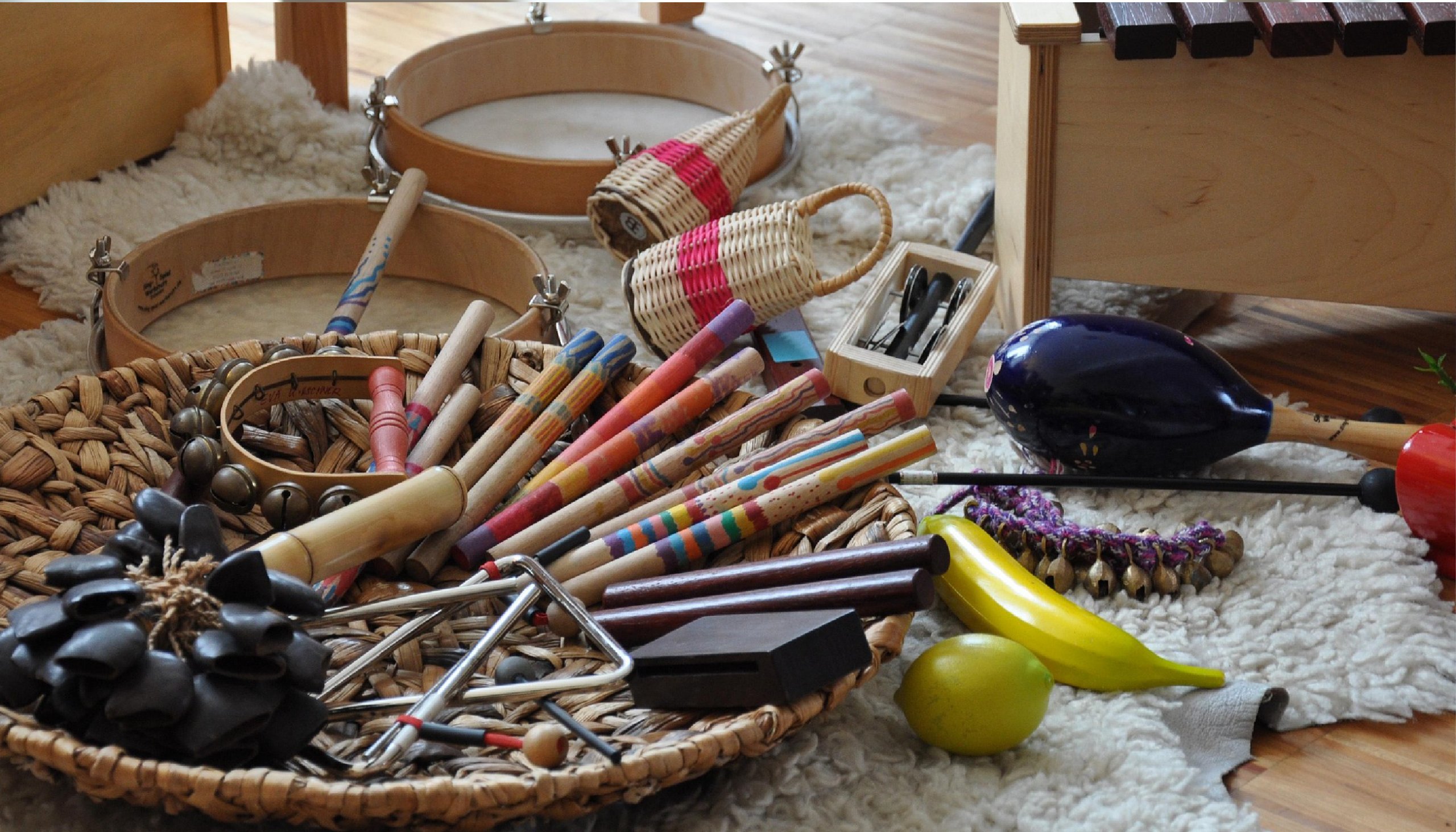



1-Minute Warm-Ups: Mini Music Videos for Busy Parents of Babies and Toddlers
You’re in the middle of getting breakfast ready, your toddler is pulling at your leg, and the day hasn’t even properly started. Sound familiar? For parents of babies and toddlers in Singapore, finding time for intentional developmental activities can feel like searching for a parking spot at Orchard Road on a Saturday — you know it matters, but the window is impossibly small. Here’s the good news: when it comes to music warm-ups for young children, one minute is genuinely enough to make a difference.
At The Music Scientist, we have spent years studying how music, movement, and sensory play work together to support early brain development in children aged 4 to 47 months. What we’ve discovered — and what the latest early childhood research confirms — is that short, consistent bursts of musical engagement can be just as powerful as longer sessions, particularly when they are woven naturally into the rhythms of a busy family day. Mini music warm-up videos are one of the simplest tools a parent can reach for, and in this guide, we’re going to show you exactly how to use them.
In this article, you’ll learn why one minute of intentional music activity has genuine developmental weight, what is happening inside your child’s brain and body during a warm-up, five age-specific warm-up ideas tailored to children from four months through to nearly four years old, and practical strategies for making these micro-moments a sustainable daily habit — even on the most chaotic of mornings.
Why Just One Minute Actually Matters
There is a common misconception among parents that meaningful learning requires long, structured sessions. The reality for babies and toddlers is quite the opposite. Young children’s attention spans are naturally short by design — their brains are built to absorb intense, focused experiences rather than prolonged ones. Research in early childhood development consistently reinforces that brief, repeated, high-quality interactions are the building blocks of lasting development. As one body of evidence from early childhood specialists puts it, “frequent short periods of learning each day are extremely beneficial.” A 60-second music warm-up, done every morning before nursery, carries more developmental weight than a single lengthy session done once a week.
Music warm-ups are particularly effective as short activities because they simultaneously engage multiple developmental domains in one go. When a toddler bounces to a rhythm, claps along to a beat, or mimics a simple melody, they are not just having fun — they are building motor coordination, processing language patterns, strengthening memory, and deepening their emotional connection with you. The compounding effect of doing this daily is significant. Consistency, even at the micro level, is what shapes neural architecture in the early years.
What Happens in Your Child’s Brain During a Music Warm-Up
Understanding the science behind these short activities can help parents feel confident that they are genuinely making a difference, rather than just filling time before the school run. Music stimulates multiple areas of the brain simultaneously. When children listen to or participate in music activities, they engage their auditory, motor, language, and emotional centres, and this multi-sensory experience strengthens neural connections and enhances cognitive development. For a child under four years old, whose brain is forming connections at an extraordinary rate, this multi-area activation is extraordinarily valuable.
Research reveals that toddlers exposed to music and rhythm regularly often demonstrate enhanced memory, better language skills, and an improved ability to follow patterns. When children engage in coordinated movements with music, they activate connections between sensory inputs and motor skills, laying the foundation for cognitive and motor development. This is why even a simple clapping game set to a familiar tune is doing far more developmental work than it appears.
When a parent sings or moves in time to the music with a baby, both brains release oxytocin, a bonding hormone that offers a sense of peace and well-being. So a one-minute warm-up is not just good for your child — it genuinely reduces your own stress too. In a demanding season of parenting, that is no small thing.
Listening to music and moving to the beat helps young babies learn to recognise patterns in music and language. Singing songs with rhymes, numbers, and patterns supports older infants and toddlers’ cognitive development, including memory, sequencing, and storytelling. These are precisely the foundations that programmes like The Music Scientist’s Tenderfeet infant care classes are built upon — and the same principles can be activated at home in just sixty seconds.
5 One-Minute Music Warm-Ups for Every Age (4–47 Months)
The following warm-ups are designed to match developmental milestones at each stage, so you’re always giving your child an activity that is appropriately stimulating without being overwhelming. Each one takes roughly sixty seconds, requires no equipment beyond your voice and body, and can slot into any pocket of your day — morning wake-up, nappy change, snack time, or the five minutes before bath.
1. For Babies (4–12 Months): The Bounce and Hum
Hold your baby securely in your arms and begin a slow, rhythmic sway or gentle bounce. Simultaneously hum a simple, repetitive melody — it does not need to be a recognisable song. Your own composed hum works perfectly. Whether rocking to a lullaby or bouncing to the beat, movement is a natural response to music. Young infants often rock or wiggle when they hear a tune, and combining music and movement helps to develop muscle strength and coordination, as well as a child’s spatial awareness. After about thirty seconds, try changing the tempo — slow it right down, then pick it back up — and watch your baby’s eyes and body respond. That moment of engagement is genuine sensory learning.
2. For Young Toddlers (12–24 Months): Clap and Stomp Along
Sit facing your child and begin clapping a simple, steady beat while singing or humming a short phrase. Invite them to clap along, then add stomps, taps on the floor, or taps on their knees. At this age, imitation is the primary mechanism through which toddlers learn, so your energy and enthusiasm are the most important ingredients. Research shows that singing increases emotional regulation, social skills like prosocial behaviour, and language learning. Using instruments like shakers and bells helps young children build fine and gross motor skills as they move and make music along to the beat. A small shaker, a wooden spoon, or even two plastic cups can turn this sixty-second warm-up into a full sensory experience. Our Happyfeet programme for 18-month-olds and toddlers uses exactly this kind of movement-based musical engagement as a core developmental tool.
3. For Toddlers (24–36 Months): Freeze and Move
This warm-up doubles as a listening exercise and a motor-skills activity. Play or sing a short, upbeat phrase, then suddenly stop and call out “Freeze!” Your toddler holds still until the music starts again. Alternate between fast, energetic sections where they can jump, spin, or dance, and frozen pauses where they must practise stillness and self-control. When toddlers engage in movement activities like dancing, they focus on timing and coordination. Following dance moves or imitating clapping patterns requires concentration, helping to build attention and self-regulation skills. This game-like warm-up is a particular favourite in The Music Scientist’s Groovers music and dance classes for toddlers, where movement regulation forms a key part of the developmental curriculum.
4. For Older Toddlers (36–47 Months): Echo Singing
Call-and-response, or echo singing, is one of the most powerful one-minute warm-ups you can do with a child approaching preschool age. Sing a short phrase — three to four syllables works well — and invite your child to echo it back to you. Vary the pitch, the rhythm, and the volume. Go high and squeaky, then deep and rumbly. Music and specifically singing use similar building blocks as language. Kids can learn to segment sounds and create sound blends through song. While they sing, students concentrate, develop listening and speech skills, retain information, visualise, and build their imaginations. This activity is especially well-aligned with the foundations laid in programmes like Scouts, which foster a love of learning through catchy, purposeful melodies, and the SMART-START English Preschool Readiness Programme, where early verbal skills are explicitly developed through music.
5. For All Ages: The Sensory Shake
Fill a small, sealed container — a repurposed plastic bottle with some rice or dried beans inside works perfectly — and shake it to a beat while you hum or sing. Babies will track the sound and movement with their eyes; toddlers will reach out and want to shake it themselves; older toddlers will begin to match their shaking to the rhythm. Dancing, clapping, jumping, and moving to the rhythm can help children improve coordination, balance, and strength. What makes this warm-up particularly special is its scalability — it grows with your child and can be done anywhere from the living room to the back seat of a car. This is the kind of everyday sensory play that sits at the heart of The Music Scientist’s philosophy across all age groups, from the earliest days in Tenderfeet right through to the preschool transition programmes.
How to Use Mini Music Videos at Home Without Guilt
For many Singapore parents, the phrase “screen time” still carries a shadow of guilt — but intentional, interactive music videos are a very different category from passive cartoon consumption. When a parent watches a one-minute music warm-up video alongside their child and actively participates — singing, moving, making eye contact — the screen becomes a prompt for connection rather than a substitute for it. Scientific research shows that music activates nearly every part of the brain. When a toddler engages with music, they aren’t just hearing a sound; they are processing tempo, pitch, and lyrics, which are the same building blocks used in spoken language.
The key distinction is co-viewing with active participation. Sit with your child, mirror the movements shown in the video, sing along even if your voice is imperfect, and add your own exaggerated expressions to amplify the emotional warmth of the activity. A caregiver does not need formal training or a perfect singing voice to make music meaningful. What matters most is presence, repetition, and a willingness to follow the child’s pace. That is genuinely reassuring news for every parent who has ever felt self-conscious about singing in front of their child.
A few practical guidelines for using mini music videos well:
- Choose purposefully: Look for videos that match your child’s current developmental stage rather than simply playing whatever auto-plays next.
- Participate actively: Your child’s engagement will be significantly higher when they see you genuinely taking part. Your enthusiasm is contagious.
- Keep it short: One to two minutes is optimal. Toddlers have short attention spans. Five minutes of focused musical play is better than thirty minutes of a child who is overstimulated.
- Repeat favourites: Repetition is not a sign of stagnation in toddlers — it is how learning consolidates. Revisiting the same warm-up video multiple days in a row actually deepens its developmental impact.
- Go offline afterward: Use the video as a launchpad, not an endpoint. After watching, put the device down and continue the same activity — the clapping, the bouncing, the echo singing — with just your voices and bodies.
Quick Tips for Making Music Warm-Ups a Daily Habit
The biggest barrier for most Singapore parents is not motivation — it’s the pressure of an already packed day. The trick is to remove the need for any special setup or designated “activity time” by anchoring music warm-ups to routines that already exist in your household. Music can also support transitions between activities, helping children move smoothly from one part of the day to another. Morning dress-up, the walk to the MRT, the wind-down before nap, or the five minutes after daycare pick-up — all of these are natural slots for a one-minute warm-up that requires nothing more than you and your child.
Here are a few habit-stacking ideas that have worked well for families in The Music Scientist community:
- Morning wake-up: Play a gentle, upbeat warm-up song as your child is having their first milk feed or breakfast. Let the music set a positive tone for the day.
- Transition moments: Sing a short, familiar phrase to signal the move from one activity to the next — from playtime to bath, from dinner to bedtime. Predictable musical cues reduce resistance in toddlers.
- Car or stroller time: Sing call-and-response games or shake a small instrument during commutes. These moments are often underutilised for rich musical engagement.
- Before the school door: A thirty-to-sixty-second warm-up right before drop-off at infant care or preschool primes your child’s brain for learning and helps with the emotional transition of separation.
Families do not need a packed schedule to make music part of early childhood. In fact, the most sustainable approach is usually the simplest. A few dependable moments each week can have more value than occasional elaborate plans. Give yourself permission to start small, and trust that the consistency will do the work over time.
From Mini Moments at Home to Structured Music Learning
Daily music warm-ups at home are a wonderful foundation, but there comes a point in every child’s early development where structured, group-based music experiences add a dimension that home activities cannot fully replicate. In a thoughtfully led class, children encounter peers, respond to a guide other than their primary caregiver, and experience music as a shared, social activity — all of which lay important groundwork for the transitions ahead. Thoughtfully planned music experiences can support and nurture each developmental domain — social-emotional, physical (motor), thinking (cognitive), and language and literacy.
At The Music Scientist, our programmes are designed to extend precisely what you begin in those one-minute moments at home. The Happyfeet enrichment classes for toddlers from 18 months build on foundational movement and rhythm play. The Groovers programme deepens coordination and musical expression through guided dance. And for children heading into formal education, our SMART-START Chinese and SMART-START English preschool readiness programmes use originally composed music integrated with general knowledge themes to build memory, focus, early literacy, and the confidence children need as they step into primary school life.
The journey from a sixty-second morning bounce to a child who loves learning — and loves music — begins exactly where you are right now. Every warm-up counts.
The Sixty-Second Investment That Compounds Over Time
Busy parents often underestimate the power of small, consistent actions. But in early childhood, those small moments accumulate into something remarkable. One minute of music warm-up each day adds up to over six hours of focused developmental engagement across a single year — hours that are quietly shaping your child’s language, memory, motor skills, emotional regulation, and love of learning. You do not need a music degree, a dedicated playroom, or a carefully curated schedule. You need a song, a willing heart, and sixty seconds. The science says that’s more than enough to make a difference — and at The Music Scientist, we have seen that truth play out in the lives of thousands of Singapore families.
Ready to Take the Next Step in Your Child’s Musical Journey?
If you’d like to bring the same developmentally purposeful, music-led learning your child experiences in those one-minute home warm-ups into a structured, expert-guided environment, we’d love to welcome your family to The Music Scientist.
Our programmes for children aged 4 to 47 months — from Tenderfeet and Happyfeet through to our SMART-START preschool readiness programmes — are designed to nurture every stage of your child’s growth through the power of music, movement, and sensory play.
Every few years, a well-meaning parent discovers a playlist titled something like Mozart for Babies: Boost Your Child’s IQ and wonders — is there something to this? The idea that playing classical music to your child will raise their intelligence, particularly their mathematical ability, has become one of the most persistent beliefs in early childhood parenting culture. It sounds perfectly logical: music is mathematical, Mozart was a genius, therefore Mozart equals math smarts. But how much of this is science, and how much is clever marketing?
The honest answer is more nuanced than a simple yes or no. The original research behind the so-called Mozart Effect has been widely misrepresented and, in its most popular form, largely debunked. Yet buried beneath the myth is a genuinely exciting body of evidence showing that music — when experienced actively and intentionally — does have meaningful links to cognitive development, including the kind of thinking that underpins early mathematical understanding. As an early childhood music enrichment school grounded in developmental science, we think it’s worth separating the noise from the signal.
Where Did the ‘Mozart for Math’ Idea Come From?
The story begins in 1993 with a modest study published in the journal Nature. Psychologist Frances Rauscher and her colleagues had 36 university students listen to either a Mozart piano sonata, a relaxation tape, or silence for ten minutes before completing a series of spatial reasoning tasks. The students who listened to Mozart showed a short-term improvement on one specific task — folding and cutting paper — equivalent to about eight to nine spatial IQ points. That’s it. Thirty-six adults. Ten minutes. One paper-folding task. A temporary effect.
What happened next is a fascinating case study in how science gets distorted. News outlets ran headlines suggesting that classical music makes children smarter. Parents rushed to buy CDs. In 1998, the Governor of Georgia proposed that every newborn in the state be sent home with a classical music recording. Florida mandated that day care centres play symphonies through their sound systems. A booming cottage industry of Mozart CDs, Baby Einstein videos, and ‘brain-boosting’ playlists was born — all built on a study that never involved children, never measured mathematical ability, and never claimed any lasting effect.
Rauscher herself has since stated clearly that the research was never intended to suggest that babies should listen to Mozart. In her own words, the idea that passive classical music exposure improves children’s cognitive abilities is, quite simply, a myth.
What the Research Actually Shows
Subsequent attempts to replicate the Mozart Effect have produced underwhelming results. A 1999 meta-analysis by psychologist Christopher Chabris reviewed 16 studies and found that any effect was tiny (roughly 1.5 IQ points), confined to the specific paper-folding spatial task, and likely attributable to the natural variability between two test sittings rather than Mozart’s influence. A major review commissioned by the German Federal Ministry of Education and Research went further, declaring the phenomenon essentially nonexistent.
The most plausible explanation for why students performed slightly better after listening to Mozart compared to sitting in silence is something researchers call arousal and mood. Engaging music simply puts people in a better mental state for completing tasks — more alert, less anxious — compared to sitting quietly doing nothing. You would likely see a similar short-term effect after listening to music you enjoy, regardless of whether it was composed in 18th-century Vienna. This is sometimes called the Arousal-Mood Hypothesis, and it suggests the benefit is about general engagement, not anything uniquely mathematical about classical music.
So if someone tells you that playing Mozart in the background while your toddler builds blocks will raise their math scores, the scientific consensus is: probably not. But this doesn’t mean music and cognitive development are unrelated. It just means we’ve been asking the wrong question.
Why the Myth Keeps Playing On
Understanding why the Mozart Effect myth has proven so resilient tells us something important about how parents think — and it’s not naivety. Researchers who studied the media coverage of Rauscher’s original paper found that it tapped into two deeply held cultural beliefs: that early childhood is a uniquely critical and irreversible developmental window, and that music is inherently enriching. Both of these beliefs happen to be largely correct, even if the specific claim about passive Mozart listening is not. The myth persists because it attaches itself to truths.
There is also a commercial dimension that cannot be ignored. Products marketed as cognitive enhancers for babies generate enormous revenue, and the phrase ‘Mozart Effect’ carries enough cultural currency to sell without requiring scientific accuracy. When parents want the best for their children and feel uncertain about how to provide it, a simple solution — press play on this playlist — is understandably appealing. The problem is not that parents care deeply about their children’s development. The problem is that passive listening is a very poor substitute for the rich, interactive experiences that actually support early learning.
The Real Connection Between Music and Mathematical Thinking
Here is where the science gets genuinely interesting. While passive listening to classical music does not produce lasting cognitive gains, there is substantial evidence that active engagement with music — learning to play an instrument, singing, moving rhythmically, participating in structured music programmes — supports the development of skills that are deeply intertwined with mathematical thinking.
Music is, at its core, a structured system of patterns, ratios, and sequences. When children learn to recognise a beat, they are practising the same cognitive skill required to understand sequences and order in mathematics. When they clap along to rhythms divided into halves and quarters, they are encountering fractions in an embodied, intuitive way long before they see a fraction written on a page. When they learn that musical phrases repeat and vary, they are building the pattern recognition abilities that underpin algebraic thinking.
Research published in journals including Psychological Science and Journal of Educational Psychology has found associations between musical training and improved performance in areas such as:
- Spatial-temporal reasoning — the ability to mentally manipulate shapes and understand sequences over time, which is foundational to geometry and arithmetic
- Working memory — holding and manipulating information in mind, critical for multi-step mathematical problem solving
- Phonological awareness — auditory pattern recognition that supports both literacy and the processing of numerical sequences
- Executive function — attention regulation, cognitive flexibility, and impulse control, all of which predict academic achievement across subjects including mathematics
Importantly, these benefits were observed in children who received active music instruction, not those who simply listened to recordings. The distinction matters enormously.
Active Music-Making vs. Passive Listening: A Critical Difference
Think of the difference this way: reading stories to a child builds language far more effectively than leaving the television on in the background. The same principle applies to music. When a child listens passively to a recording, their brain processes sound. When a child sings, moves, claps rhythms, plays a simple instrument, or engages with music through a responsive, interactive programme, their entire brain lights up — motor systems, auditory processing, language centres, emotional regulation, and memory networks all activate simultaneously.
Neuroscientist Nina Kraus at Northwestern University has described the musically trained brain as having a fundamentally more efficient auditory system — one that is better at extracting meaningful patterns from sound, filtering out noise, and encoding information accurately. This is not a passive effect. It develops through years of active musical engagement beginning in early childhood, and its benefits extend well beyond music itself into language, reading, and yes, mathematical thinking.
This is precisely why The Music Scientist’s programmes are built around active, multi-sensory participation rather than background music playback. Our Tenderfeet programme for infants aged 4 to 17 months and our Happyfeet classes for 18-month-old toddlers both use movement, responsive singing, and sensory play to engage children’s developing brains in ways that recorded music simply cannot replicate. The goal is not to press play and walk away — it is to create an experience where the child is an active, joyful participant in making and responding to music.
The Early Childhood Window: Why It Matters
The part of the Mozart Effect myth that is actually true is this: early childhood is a period of extraordinary neural plasticity. The brain in the first three years of life is building connections at a rate it will never replicate again. Experiences during this window shape the architecture of developing neural systems in ways that have long-term consequences. This is not infant determinism — one missed bedtime story will not derail a child’s intellectual development — but it does mean that the quality and richness of early experiences genuinely matter.
Music is one of the most neurologically comprehensive experiences available to young children. It simultaneously engages auditory processing, motor control, emotional regulation, social attunement (when experienced with others), and language systems. For very young children, it is also one of the most natural and joyful forms of engagement — babies are born with a sensitivity to rhythm and melody that predates language entirely. Harnessing this natural affinity through well-designed, developmentally appropriate programmes gives children a genuine cognitive advantage, rooted not in myth but in neuroscience.
Our Groovers programme for toddlers aged 25 to 35 months weaves music and movement together to develop coordination, sequencing skills, and cognitive focus — all while children are simply having fun. Similarly, our Scouts programme uses catchy, originally composed melodies to introduce early science and general knowledge concepts, using the brain’s natural affinity for musical memory to help children retain and recall new information. These are not background playlists. They are carefully designed developmental experiences.
What Parents Can Actually Do
The science points clearly away from passive music consumption and toward interactive, embodied musical experiences. Here are approaches that are genuinely supported by developmental research:
- Sing with your child, not just to them. Call-and-response songs, nursery rhymes with actions, and simple chants that children can participate in actively engage their auditory, motor, and language systems together.
- Move to music together. Clapping, bouncing, swaying, and dancing to a steady beat builds rhythm awareness that directly supports the sequential thinking underlying both literacy and numeracy.
- Make counting musical. Counting songs and rhythmic number sequences help children encode numerical patterns in memory through the same mechanisms that make catchy jingles so unforgettable.
- Introduce simple instruments early. Even banging on a drum or shaking a rattle gives infants and toddlers immediate cause-and-effect feedback that supports cognitive development.
- Enrol in structured, developmentally appropriate music programmes. Programmes designed around developmental milestones — with trained educators who understand how young brains learn — offer far more than any playlist can.
For families preparing children for the transition to formal schooling, our SMART-START English and SMART-START Chinese preschool readiness programmes use music as a central learning medium to develop literacy, numeracy foundations, attention, and confidence in children aged 36 to 47 months. The approach is grounded in exactly the kind of evidence-based active engagement that the research supports — not passive listening, but joyful, purposeful participation that prepares children for lifelong learning.
The Bottom Line
The ‘Mozart for Math’ claim, in its most popular form, is not supported by science. Putting on a classical music playlist will not make your child a mathematical prodigy. But dismissing the connection between music and cognitive development entirely would be just as mistaken. The real story — backed by decades of rigorous neuroscience and developmental research — is that active musical engagement in early childhood builds the very cognitive foundations that mathematical thinking depends on: pattern recognition, sequencing, working memory, auditory processing, and executive function.
The difference between the myth and the reality is the difference between a passive audience and an active participant. Children who sing, move, play, and engage with music in rich, responsive, developmentally appropriate ways are doing something genuinely powerful for their developing minds. They are not just listening to genius. They are practising it.
Give Your Child the Real Musical Advantage
At The Music Scientist, every programme is designed around the science of how young minds actually develop — through active music-making, movement, and multi-sensory play. If you’d like to find out which programme is right for your child’s age and stage, we’d love to hear from you.
Every parent has watched their toddler’s attention drift mid-activity and wondered: is there something I can do to help them focus better? With the rise of wellness audio tools online, binaural beats have entered the conversation — and some parents are now asking whether these audio frequencies could give their young children a cognitive edge. It is a fair question, and the answer is more nuanced than a simple yes or no.
Binaural beats have been studied in adults for their potential to reduce anxiety, promote relaxation, and sharpen concentration. But children — especially babies, toddlers, and preschoolers — have brains that are wired and developing very differently from adult brains. Before you press play on a binaural beat track for your little one, here is what the science actually says, what the safety considerations are, and what developmental experts know about how young children genuinely build focus and attention over time.
What Are Binaural Beats, Exactly?
Binaural beats are an auditory phenomenon that occurs when two slightly different sound frequencies are played separately into each ear. For example, if your left ear hears a tone at 200 Hz and your right ear hears one at 210 Hz, your brain perceives a third tone — the difference between the two, in this case 10 Hz. This perceived beat does not actually exist as a sound in the environment; it is created entirely by your brain as it tries to reconcile the two incoming signals. That is why binaural beats are sometimes described as an auditory illusion.
For binaural beats to work at all, both tones must be under 1,000 Hz, the difference between them must be no greater than 30 Hz, and each tone must be delivered separately through headphones — one to each ear. You cannot get the effect from a speaker playing in a room. The key mechanism behind the claimed benefits is something called brainwave entrainment, the idea that your brain’s electrical activity can synchronise with an external rhythmic stimulus, such as an audio beat.
How Binaural Beats Claim to Improve Focus
Researchers have categorised brain wave states into frequency bands, and proponents of binaural beats suggest you can nudge your brain into a desired state by listening to the corresponding beat frequency. The beta range (14 to 30 Hz) is most commonly associated with active thinking, alertness, and concentration — the kind of focused mental state useful for learning tasks. Meanwhile, alpha waves (8 to 13 Hz) are linked to calm, relaxed attention, which can also support learning in a low-stress way. Some studies on adults have shown that listening to beta-frequency binaural beats before or during cognitive tasks can modestly improve performance on memory and attention measures.
A 2020 study published in Scientific Reports found that 40 Hz binaural beats helped reduce what researchers called the “attentional blink” — a brief gap in attention that occurs when processing rapid streams of information. In practical terms, this suggested that certain frequencies could help the adult brain stay locked onto relevant stimuli for longer. These findings sound promising. The critical question, however, is whether any of this translates meaningfully to young children.
What Does the Research Say About Children Specifically?
Here is where parents need to pump the brakes a little. The overwhelming majority of binaural beat research has been conducted on adults, and most of those studies are small in scale, vary widely in methodology, and yield mixed results even in adult populations. A 2015 review published in Frontiers in Human Neuroscience noted that many studies in this space are limited or contradictory, and that effects can diminish over time with repeated exposure. If the evidence base for adults is still considered preliminary, the evidence base for children is essentially non-existent in the published literature.
This is not just a gap in research — it reflects a genuinely important biological distinction. A young child’s brain is not simply a smaller version of an adult brain. From birth through approximately age seven, the brain undergoes rapid, extraordinary development. Neural connections are being formed, pruned, and strengthened at a pace that will never be replicated again in life. The brain wave patterns that adults produce during focused tasks look quite different from those of a two-year-old or a four-year-old. Applying adult-derived frequency targets to a developing brain — without any dedicated paediatric research — is, at best, speculative and, at worst, potentially ill-advised.
Is It Safe for Children to Listen to Binaural Beats?
There are no reports of serious harm from binaural beats in healthy adults, and in general, listening to audio at safe volume levels is not inherently dangerous. That said, several considerations make caution especially important for young children. Volume safety is the most immediate concern: prolonged exposure to sounds at or above 85 decibels can damage hearing over time, and children’s ears are particularly vulnerable. A track playing through headphones at an adult’s comfortable volume may be too loud for a young child’s smaller ear canal and more sensitive auditory system.
There is also the question of neurological sensitivity. Children with epilepsy or seizure disorders should not be exposed to binaural beats without explicit medical guidance, as rhythmic auditory stimulation has the potential to trigger seizure activity in susceptible individuals. More broadly, because infant and toddler brains are in such an active phase of development, introducing external stimuli designed to artificially shift brain wave states is something that warrants much more research before it can be considered safe or appropriate for routine use. Most paediatric developmental specialists and audiologists would advise parents to consult their child’s doctor before using binaural beats with young children — and to consider whether the practice is necessary at all when more natural, well-evidenced alternatives exist.
Why Developing Brains Need More Than an Audio Track
One of the most important insights from decades of early childhood development research is that the young brain builds focus, attention, and cognitive skills through active engagement — not passive listening. Attention in young children is not a fixed capacity waiting to be unlocked by the right frequency. It is a skill that grows through repeated, meaningful experiences: through movement, play, social interaction, problem-solving, and sensory exploration. Every time a toddler finishes a simple puzzle, follows a sequence of dance steps, or listens carefully to a song and anticipates what comes next, they are literally strengthening the neural pathways that underlie sustained attention.
Passive audio tools, by contrast, ask very little of the child’s brain. There is no challenge to overcome, no response required, no interaction to process. Even if binaural beats could reliably shift a child’s brain into a beta or alpha state, that shift would not automatically translate into improved focus during learning activities — because focus in early childhood is inseparable from motivation, curiosity, and active participation. The brain learns to attend by practising attention in contexts that matter to the child.
Music as a Proven Focus and Learning Tool for Young Children
While binaural beats remain in the realm of promising-but-unproven for children, structured musical engagement has a robust body of evidence behind it. Music activates multiple areas of the brain simultaneously — the auditory cortex, motor regions, memory centres, and areas involved in emotional processing. When young children participate actively in music — clapping to a beat, responding to a melody, learning a song that carries information — they are exercising the same attentional and executive function systems that underpin academic readiness.
Research consistently shows that early music education is linked to stronger phonological awareness (a foundation for reading), improved working memory, and better self-regulation. These benefits come not from listening passively, but from the interactive quality of music participation — call-and-response patterns, rhythm matching, anticipation of musical sequences, and the social engagement of making music together. This is fundamentally different from wearing headphones and hearing an audio illusion.
At Tenderfeet, The Music Scientist’s infant care and sensory development programme, even the youngest learners are introduced to music through rich, multi-sensory interaction designed to stimulate early brain development. Toddlers in the Happyfeet programme engage with rhythm and movement in ways that build body awareness and early cognitive skills, while the Groovers music and dance classes take this further by encouraging creative expression through structured, age-appropriate movement. Each of these programmes recognises that the developing brain learns focus through doing — through meaningful, joyful musical activity that demands and rewards a child’s full attention.
For older preschoolers, the Scouts programme blends science concepts with catchy original melodies, harnessing the brain’s natural tendency to retain information that is set to music. And for children preparing to enter formal schooling, the SMART-START English and SMART-START Chinese programmes integrate music, movement, and general knowledge in a way that builds the sustained attention, language skills, and confidence children need for a smooth transition to primary school.
What Parents Can Do to Support Focus the Natural Way
Rather than reaching for audio hacks, parents can take several well-evidenced steps to nurture their child’s growing capacity for focus and sustained attention. These approaches work with how the developing brain actually builds attention — through routine, challenge, and joyful engagement.
- Consistent routines: Predictable daily schedules reduce cognitive load and help children feel safe, freeing up mental energy for learning and play.
- Active music participation: Singing together, playing simple instruments, and moving to rhythmic music all strengthen the attentional networks in a young child’s brain.
- Minimise distractions during play: Allowing a child to complete an activity without interruption, even for just a few minutes, practises the core skill of sustained focus.
- Read aloud regularly: Shared book reading requires children to hold a narrative in mind, predict what comes next, and listen attentively — powerful training for the focused brain.
- Reduce passive screen time: Unlike active engagement, passive screen exposure has been associated with shorter attention spans in young children, making it a poor substitute for interactive learning experiences.
- Choose enrichment programmes thoughtfully: Structured early learning experiences that combine music, movement, and curriculum-aligned content can build the cognitive foundations for lasting focus and academic readiness.
The bottom line for parents curious about binaural beats is this: the science is interesting but immature, especially where children are concerned. There is no meaningful research to suggest that binaural beats improve focus in young children, and several good reasons to be cautious about introducing them to developing ears and brains. What the research does support — clearly and consistently — is that active, music-rich learning environments do remarkable things for a young child’s brain.
The Real Sound of Learning
Binaural beats are a fascinating area of neuroscience, and the research in adults offers some genuinely intriguing leads. But for babies, toddlers, and preschoolers, the most powerful “focus frequency” is not found in a headphone track — it is found in a classroom full of movement, laughter, song, and well-crafted musical learning. The developing brain does not need to be tricked into paying attention; it needs to be given experiences worth attending to.
If you are looking for a science-informed, music-centred approach to early childhood development that genuinely supports focus, memory, and school readiness, the answer lies in active musical engagement — the kind that has been studied, refined, and joyfully delivered for years at The Music Scientist.
Ready to Support Your Child’s Development Through Music?
At The Music Scientist, our programmes are designed around how young brains actually grow — through rhythm, movement, song, and sensory play. Whether your child is a curious infant or a preschooler preparing for school, we have a programme built for their stage of development.
Every Singapore parent knows the feeling: standing in front of a long list of enrichment options, calculator in hand, trying to figure out which class is actually worth it. Phonics classes have long been the go-to choice for parents eager to give their child a head start in literacy. But early music education has been quietly accumulating an impressive body of evidence — and when you compare the two side by side on pure developmental ROI, the results might surprise you.
This article breaks down the real returns of both early music classes and phonics programmes for children in Singapore, looking beyond simple letter recognition to examine cognitive development, school readiness, emotional regulation, and long-term academic outcomes. Whether you are enrolling a curious 18-month-old or preparing a preschooler for Primary 1, understanding where your enrichment dollar goes furthest is a decision worth getting right.
Defining ROI in Early Childhood Education
When we talk about return on investment in enrichment classes, we are not just looking at whether a child can recite the alphabet faster. True ROI in early childhood education encompasses a much wider range of outcomes: cognitive flexibility, language acquisition, social-emotional development, school readiness, and even physical coordination. Parents who only measure success by academic benchmarks often miss the bigger picture of what these formative years can build.
In Singapore’s competitive education landscape, the stakes feel especially high. Families typically spend between SGD 150 and SGD 400 per month on a single enrichment programme. That is a meaningful financial commitment, and it makes sense to ask: what am I actually buying? Phonics classes and early music classes both promise to prepare children for school, but they invest in different areas of development — and those differences have real consequences for how broadly your child benefits.
What Phonics Classes Deliver
Phonics instruction teaches children to decode written language by mapping sounds to letters and letter combinations. It is a well-validated method for building early reading skills, and Singapore’s mainstream education system relies heavily on phonics as a foundation for English literacy. For children who are on the cusp of formal schooling, a structured phonics programme can accelerate reading readiness and give them more confidence in early Primary school English lessons.
The benefits of phonics are largely targeted and measurable. Research consistently shows that systematic phonics instruction improves word recognition, spelling accuracy, and reading fluency. However, these gains are strongest when children are developmentally ready — typically from around age four and above. For toddlers and infants, a phonics-heavy environment may introduce formal learning structures before the brain is optimally prepared for that kind of sequential, rule-based processing.
The limitations are worth noting too. Phonics classes tend to focus on one intelligence stream — verbal-linguistic — and deliver a narrower developmental footprint. Children who are more kinesthetic, musical, or spatial learners may engage less deeply, and the benefits may not transfer as broadly across other areas of development.
What Early Music Classes Deliver
Early music education, particularly programmes designed for babies, toddlers, and preschoolers, engages the developing brain on multiple levels simultaneously. Movement, rhythm, melody, language, and social interaction combine in each session to activate neural pathways across the brain’s hemispheres. Neuroscientists sometimes describe music as a “whole brain workout” — and the research on early exposure to structured musical learning supports that description strongly.
Studies from institutions including Harvard, Northwestern University, and the Nina Kraus Auditory Neuroscience Laboratory have found that music training in early childhood produces measurable improvements in phonological awareness, working memory, executive function, and fine motor skills. These are not peripheral benefits; they are the exact cognitive tools children need to succeed in school. What makes this remarkable is that music achieves these outcomes while also building emotional intelligence, confidence, and a joy for learning.
For infants and toddlers specifically, music classes provide developmentally appropriate stimulation that phonics programmes simply cannot. Programmes like Tenderfeet at The Music Scientist are designed for babies from 4 months, using sensory-rich musical experiences to support the earliest stages of neurological development. At this age, the brain is forming connections at an extraordinary rate, and music-based learning meets children exactly where they are developmentally.
ROI Comparison: Music vs Phonics Side by Side
To make a fair comparison, it helps to look at what each programme type contributes across several developmental dimensions:
- Language and literacy: Both invest in this area, but through different routes. Phonics builds decoding skills directly. Music builds phonological awareness, auditory discrimination, and vocabulary indirectly — but often more durably because the learning is embedded in enjoyment and repetition.
- Cognitive development: Music education consistently outperforms phonics in developing executive function, working memory, and cognitive flexibility. These meta-skills have broader academic impact than letter-sound correspondence alone.
- Emotional and social development: Music classes, especially group-based ones, build empathy, turn-taking, and emotional regulation. Phonics classes rarely address this dimension.
- Motor development: Music and movement classes directly support gross and fine motor skills. Phonics classes typically do not.
- Age range: Quality music programmes serve children from infancy. Phonics is most effective from age 4 upward, meaning phonics classes represent a shorter investment window.
- Engagement and enjoyment: Children who love learning are more likely to transfer skills into other contexts. Music classes consistently score high on engagement, which multiplies their real-world impact.
When you tally these dimensions, music classes offer a broader developmental return — more capabilities strengthened per dollar spent, across a longer period of a child’s early life.
A Closer Look: Real-World Outcomes in Singapore
Parents who enrol their children in early music programmes at The Music Scientist frequently report outcomes that go well beyond musical ability. Children who attend Happyfeet for 18-month-olds and toddlers show improved attention spans and clearer verbal communication — skills that directly support later phonics learning. By the time these children reach the preschool stage, they often have a strong auditory foundation that makes phonics instruction faster and more intuitive to absorb.
This is a key insight that many parents miss: early music education does not compete with phonics learning. It builds the neurological infrastructure that makes phonics work better. A child with well-developed auditory discrimination and phonological awareness — both products of quality music education — will typically outperform peers in early reading programmes, even if they never attended a dedicated phonics class.
The Groovers programme for toddlers and the Scouts programme, which embeds general knowledge themes into catchy original music, exemplify how music can carry academic content naturally. Children absorb concepts about science, language, and the world around them through melody and movement — a learning mode that the developing brain finds far more natural than rote instruction.
The Surprise Finding: Music Classes Boost Literacy Too
One of the most compelling pieces of research for parents considering this trade-off comes from a 2014 study published in the journal Developmental Science, which found that toddlers who received rhythmic training showed significantly better language development at 4 years old compared to those who did not. Separate research from MIT and Oxford has drawn clear links between early beat perception — the ability to feel and follow a musical rhythm — and later reading ability.
Why does this happen? Rhythm and phonemic awareness share neural real estate in the brain. A child who has spent 12 to 18 months clapping to beats, singing rhymes, and responding to musical patterns has essentially been training the auditory processing circuits that will later handle the sound-to-symbol mapping that phonics requires. In this sense, music education is not an alternative to literacy preparation — it is a precursor that makes literacy preparation more effective.
The Music Scientist’s SMART-START English and SMART-START Chinese programmes are built precisely on this principle. Designed for preschoolers preparing to enter formal education, these programmes use music as the vehicle to deliver language, numeracy, and cognitive readiness skills — so children are not just prepared for Primary 1, they are genuinely excited for it.
Choosing the Right Programme for Your Child
The honest answer is that the best choice depends on your child’s age and current developmental stage. For children under four, early music education offers a significantly higher ROI than phonics classes — the cognitive benefits are broader, the engagement is deeper, and the developmental timing is more appropriate. For children aged four and above who are approaching formal schooling, a well-designed music programme that incorporates school-readiness elements (like SMART-START) can deliver both the musical benefits and the academic preparation simultaneously, without requiring you to choose one or the other.
If you are working with a tight enrichment budget, here is a practical framework:
- Age 0 to 18 months: Early music and sensory programmes offer unmatched ROI at this stage. Phonics is not age-appropriate yet.
- Age 18 months to 3 years: Music, movement, and language-rich music classes continue to deliver the strongest cognitive and developmental returns.
- Age 3 to 4 years: Music-based school-readiness programmes begin to bridge musical development and academic preparation naturally.
- Age 4 to 5 years: Consider a hybrid approach — a preschool-readiness music programme alongside targeted phonics support if your child is showing specific literacy readiness.
The key is not to view these as competitors, but to understand that the right sequence matters. Music first builds the brain that phonics later activates.
Final Verdict
When you measure early enrichment by the breadth and depth of developmental return, early music classes consistently outperform standalone phonics programmes — especially for children under four. They develop cognitive skills, emotional intelligence, physical coordination, social confidence, and linguistic foundations all at once, rather than targeting a single academic skill in isolation. And as the research increasingly confirms, children who receive quality early music education often find phonics and formal literacy learning faster and more natural when they reach that stage.
Singapore parents are wise to take the enrichment decision seriously. But the most valuable investment is not always the one that looks most directly academic. Sometimes, the programme that teaches your child to feel a beat, sing a song, and move with joy is quietly building the most capable learner in the room.
Ready to Give Your Child the Broadest Head Start?
Discover The Music Scientist’s developmentally designed programmes for babies, toddlers, and preschoolers in Singapore. From infant sensory classes to preschool-readiness programmes in English and Chinese, every session is built on science and filled with joy.
Tucked between the Southern Ridges and the lush canopy of the Central Nature Reserve, Bukit Timah has long been one of Singapore’s most family-friendly neighbourhoods. Tree-lined streets, reputable schools, and a close-knit community spirit make it a natural home for parents who are intentional about how their young children learn, play, and grow. For families with babies, toddlers, and preschoolers, the area offers a surprisingly rich ecosystem of music and sensory resources that go well beyond the standard enrichment fare.
This guide is written especially for parents of children aged 4 to 47 months — the critical developmental window when the brain is forming connections at a remarkable pace. Whether you’re looking for your infant’s first music class, a sensory-rich playground, or a structured preschool readiness programme, Bukit Timah and its surroundings have something meaningful to offer. We’ve also highlighted how The Music Scientist, Singapore’s specialist in developmentally-focused music enrichment, supports young families in this region with programmes designed around your child’s specific stage of growth.
Why Bukit Timah Is a Hub for Young Families
Bukit Timah’s reputation as a family neighbourhood isn’t accidental. The area is home to a concentration of reputable schools, specialist enrichment centres, and community parks that make it especially appealing to parents who prioritise holistic early childhood development. Residential streets around Coronation Road, Clementi Road, and King Albert Park are dotted with young families, and the neighbourhood’s proximity to both Orchard and one-north means parents have easy access to resources across multiple disciplines.
What makes Bukit Timah particularly interesting from a developmental standpoint is the natural variety of stimulation it offers young children. From the rustling leaves and birdsong of the Bukit Timah Nature Reserve to the rhythm of weekend markets and the curated calm of neighbourhood libraries, the area provides an unusually diverse sensory landscape. For parents who understand the science behind early brain development, this neighbourhood is more than just a convenient address — it’s a genuinely enriching environment to raise a curious, confident child.
Music Enrichment Classes in Bukit Timah
Music is one of the most powerful tools available to parents of young children. Research consistently shows that early exposure to structured music — songs, rhythm, movement, and instrument play — activates multiple regions of the brain simultaneously, supporting language acquisition, memory, motor development, and emotional regulation. In Bukit Timah and the surrounding districts of Buona Vista, Clementi, and Holland Village, several options exist for families seeking quality music enrichment.
For the youngest learners, infant and toddler-focused music classes are far more effective when they’re built around developmental milestones rather than performance goals. Classes that integrate singing, percussion, and movement for babies as young as four months offer a fundamentally different experience from those designed around instrument technique. Parents should look for programmes that are age-banded, developmentally sequenced, and led by educators who understand early childhood learning, not just music theory.
The Music Scientist offers several programmes tailored to children at different stages of early development:
- Tenderfeet is designed for infants and focuses on sensory development through gentle music, movement, and tactile play — ideal for babies exploring the world through sound and touch for the very first time.
- Happyfeet is crafted for 18-month-olds and toddlers who are beginning to develop greater physical coordination and social awareness, using music to build confidence and connection.
- Groovers brings music and dance together for toddlers, channelling their natural energy into expressive movement that supports motor development and early self-expression.
- Scouts introduces early science concepts through catchy, originally composed melodies — making abstract ideas memorable and fun for curious young minds.
Each programme uses originally composed music integrated with general knowledge themes, so children aren’t just singing songs — they’re building vocabulary, memory, and cognitive frameworks that serve them well beyond the classroom.
Sensory Play Spaces and Playgrounds
Sensory play — activities that engage touch, sight, sound, smell, and movement — is essential for young children’s neurological development. In Bukit Timah, families have access to several excellent outdoor and indoor spaces that naturally stimulate multiple senses at once. The Bukit Timah Food Centre playground area near Jalan Anak Bukit is a local favourite for toddlers, offering open space, shade, and the ambient sounds of a busy hawker environment that provides its own kind of sensory richness.
Rail Mall along Upper Bukit Timah Road has a relaxed, open-air corridor that’s particularly pleasant for pram-pushing parents. With its surrounding greenery and relatively low foot traffic compared to major malls, it offers a gentler sensory environment well-suited to babies and younger toddlers who can become overwhelmed in busier spaces. The walk between shops, cafés, and the nearby canal provides natural contrasts in texture, sound, and light that are developmentally stimulating without being overstimulating.
For indoor sensory play, several play café concepts have emerged in the broader Clementi and Holland Village area that offer structured sensory stations alongside free play zones. These spaces are particularly valuable during Singapore’s hotter months when outdoor exploration needs to be balanced with cooler indoor alternatives.
Libraries and Bookstores for Early Literacy
Early literacy and music enrichment are deeply connected. Children who are regularly read to and who engage with rhythm in storytelling develop stronger phonemic awareness — the building block of reading. Bukit Timah families are well-served in this area by the Bukit Timah Public Library, which offers a dedicated children’s section with regular storytelling sessions for toddlers and preschoolers. These sessions often incorporate song and movement, making them a natural complement to formal music enrichment classes.
For families who prefer curated bookshop environments, the Holland Village and Dempsey Hill areas nearby offer independent bookstores with strong children’s sections. Spending time exploring picture books with your toddler — pointing to images, reading aloud with varied intonation, and responding to their reactions — is itself a form of sensory and musical engagement that costs nothing and yields enormous developmental returns.
The Music Scientist’s SMART-START English programme is particularly relevant here, as it bridges the gap between music enrichment and preschool readiness by using music to build early literacy skills, preparing children for a smooth and confident transition into formal education. A parallel SMART-START Chinese programme is also available for families who want to nurture bilingual literacy through the same music-driven methodology.
Nature Spots for Multisensory Exploration
One of Bukit Timah’s greatest gifts to young families is its extraordinary access to nature. The Bukit Timah Nature Reserve — one of the world’s smallest but most biodiverse tropical forests — is a remarkable sensory environment for children of all ages. Even a slow walk along the lower paths with a pram or a toddler in tow exposes young children to an extraordinary range of sounds (insects, birds, rustling leaves), textures (bark, pebbles, soil), and visual stimulation (dappled light, movement, varied green tones) that no indoor play space can fully replicate.
The nearby Dairy Farm Nature Park and the Wallace Education Centre within it offer structured nature programmes that introduce children to Singapore’s ecological heritage in age-appropriate ways. For parents of toddlers and preschoolers, these visits are most effective when paired with home activities that reinforce what was observed — singing songs about animals or plants heard during the walk, drawing what was seen, or incorporating nature sounds into musical play at home.
The Hindhede Nature Park, just adjacent to Bukit Timah Nature Reserve, features a quarry lake that provides a distinctly different sensory experience with its still water, reflected light, and chorus of frogs in the evenings. These natural contrasts in environment are exactly the kind of varied sensory input that supports healthy neural development in the first three years of life.
Movement, Dance, and Gymnastics Classes
Kinesthetic development — the way children learn through physical movement — is one of the multiple intelligences that The Music Scientist’s curriculum deliberately targets. In Bukit Timah and its surrounding neighbourhoods, a number of movement-focused programmes exist for young children, ranging from baby gymnastics and creative movement for toddlers to structured dance classes for children approaching preschool age.
What distinguishes high-quality movement programmes for very young children from recreational dance classes is intentionality. The best classes for under-fours focus on developing body awareness, spatial understanding, bilateral coordination, and proprioception — the sense of where one’s body is in space. These are not skills developed through performance practice, but through repetitive, playful, music-led movement activities that feel like play but function as targeted developmental support.
The Groovers programme at The Music Scientist integrates music and dance in exactly this way, ensuring that movement isn’t just physical activity but a vehicle for musical intelligence, emotional expression, and early social development. For parents attending external gymnastics or movement classes, pairing these with a music enrichment programme creates a powerfully complementary developmental combination.
Tips for Choosing the Right Enrichment for Your Child
With so many options available in the Bukit Timah area, it can feel overwhelming to decide where to direct your child’s enrichment time and energy — especially during the critical early years when every experience shapes developing neural pathways. Here are some practical considerations to guide your decision-making:
- Prioritise developmental alignment. Choose programmes that are designed specifically for your child’s current age and developmental stage, not programmes where all ages are grouped together. A class designed for 12-to-18-month-olds will be far more effective than one that accommodates children from one to five years in the same session.
- Look for qualified early childhood educators. Music or movement teachers who also hold early childhood education qualifications will understand child development in ways that specialist musicians or dancers without that background may not.
- Evaluate the curriculum, not just the activity. A well-structured programme will have a clear developmental rationale behind each activity. Ask providers about their curriculum framework and how it maps to developmental milestones.
- Consider your child’s temperament. Some children thrive in more structured class settings; others need more free exploration time before they engage with group learning. Choose environments that match your child’s natural learning style rather than pushing them into formats that create anxiety.
- Balance enrichment with unstructured play. Even the best programmes are most effective when they sit alongside plenty of open-ended, child-led play at home. Enrichment should supplement, not replace, the natural learning that happens in everyday life.
How The Music Scientist Supports Families in Bukit Timah
The Music Scientist was founded on a clear conviction: that music is not merely a creative pursuit but a powerful scientific medium for early brain development. Every programme offered is grounded in developmental research and structured around Singapore’s early childhood development landscape, making it particularly well-aligned with the needs and expectations of Bukit Timah’s engaged, education-conscious parent community.
What sets The Music Scientist apart is the seamless progression built into its curriculum. A child can begin with Tenderfeet as a young infant, move through Happyfeet and Groovers as a toddler, and enter the Scouts and SMART-START programmes as they approach preschool age — building on skills, confidence, and love of learning at every stage. This continuity means that parents don’t need to start from scratch in a new environment at each developmental transition. The familiar, trusted framework evolves with the child.
The Music Scientist also collaborates directly with preschools, bringing their holistic development methodology into institutional settings for families who prefer their child’s enrichment to be delivered within their existing educational environment. For Bukit Timah families exploring this option, the school partnership programme offers a natural bridge between home, enrichment, and formal early education.
Bukit Timah offers young families something genuinely rare in Singapore’s dense urban landscape: a neighbourhood where nature, community, and quality early childhood resources exist in close, complementary proximity. Whether you’re exploring the nature reserve with a curious toddler, attending a library storytime session, or enrolling your infant in their first music class, the area supports the kind of rich, varied early childhood experience that research consistently links to stronger developmental outcomes.
Music and sensory enrichment aren’t extras to be added when the schedule allows — they are foundational to how young children build the cognitive, social, and emotional skills they’ll carry into formal schooling and beyond. Choosing the right resources in the neighbourhood you call home is one of the most meaningful investments you can make in these early years. And in Bukit Timah, those resources are closer than you might think.
Ready to Find the Right Programme for Your Child?
The Music Scientist offers age-specific music enrichment programmes for babies, toddlers, and preschoolers at every stage of early development. Whether your child is just a few months old or approaching their fourth birthday, there’s a programme designed precisely for where they are right now.
If you have ever wondered what Singapore’s Ministry of Education (MOE) actually says about music in the preschool classroom, you are not alone. Many parents and educators are curious about the role music plays in early childhood education and how official guidelines shape what their children experience each day in nursery and kindergarten. Understanding the MOE guidelines on music in the preschool curriculum can help you make more informed decisions about your child’s learning journey — and recognise why quality music experiences matter far beyond simply singing a catchy tune.
In Singapore, early childhood education is guided by a carefully developed national framework that places holistic development at its heart. Music is not an afterthought or a filler activity in this vision — it is woven deliberately into the fabric of how young children are expected to learn, explore, and grow. This article unpacks what the framework says, why music holds such an important place in preschool education, and how parents can extend these benefits beyond the classroom walls.
What Is the NEL Framework and Why Does It Matter?
The cornerstone of Singapore’s early childhood education policy is the Nurturing Early Learners (NEL) framework, developed by the Ministry of Education. This framework sets out the vision, principles, and learning goals that guide all MOE Kindergartens (MK) and informs best practices across the broader preschool sector. Its central premise is that children aged three to six learn best through purposeful play and joyful, hands-on experiences rather than rote memorisation or formal instruction.
The NEL framework is built around the belief that every child is a curious, capable learner who thrives when given rich, meaningful experiences across multiple domains. It emphasises the importance of nurturing the whole child — cognitively, socially, emotionally, and physically. Educators are encouraged to design learning environments and activities that stimulate children’s natural curiosity, and music is explicitly identified as one of the most powerful tools to achieve this. For parents, understanding this framework means recognising that your child’s preschool is not simply following a syllabus — it is operating within a thoughtfully designed national approach to early learning.
How Music Features in the NEL Framework
Within the NEL framework, music is recognised as a fundamental mode of expression and a vehicle for learning across multiple developmental domains. The framework acknowledges that young children are naturally drawn to rhythm, melody, and song, and that these instincts can be harnessed to develop language, motor coordination, social skills, and emotional awareness simultaneously. Music is not confined to a single subject area — instead, it is integrated across different learning experiences throughout the preschool day.
MOE’s guidance makes clear that music in the early years should be experiential and participatory. Children are expected to engage actively — through singing, moving to music, playing simple instruments, and responding to what they hear — rather than passively listening. This approach reflects a broader understanding in early childhood research that learning is most effective when it engages the body, the senses, and the emotions together. Educators following the NEL framework are therefore encouraged to use music as a bridge that connects different areas of learning rather than treating it as a standalone subject.
The Six Learning Areas: Where Music Lives
The NEL framework organises early childhood learning into six key learning areas, and music intersects with several of them in meaningful ways:
- Aesthetics and Creative Expression — This is the primary home of music in the curriculum. Children explore sound, rhythm, and melody, and are encouraged to create and appreciate music as a form of artistic expression.
- Language and Literacy — Songs, rhymes, and chants build phonological awareness, vocabulary, and early reading readiness. The rhythmic patterns of music mirror the cadence of spoken and written language.
- Numeracy — Counting songs, patterns in rhythm, and the structure of musical phrases introduce early mathematical concepts such as sequencing, patterns, and number sense.
- Motor Skills Development — Movement activities set to music develop both gross and fine motor coordination, spatial awareness, and body control.
- Social and Emotional Development — Group music-making teaches children to listen, take turns, collaborate, and express their feelings in a safe and structured context.
- Discovery of the World — Songs about nature, animals, and community life help children make sense of the world around them and build general knowledge.
Understanding these intersections helps explain why a seemingly simple activity like singing a nursery rhyme in class is actually doing a great deal of developmental work at once. Well-designed music experiences in the preschool years are genuinely multidimensional.
What MOE Expects from Music Experiences in Preschool
MOE’s guidelines set out a number of key expectations for how music should be delivered in preschool settings. Educators are expected to provide age-appropriate, developmentally sensitive music experiences that match where children are in their physical and cognitive growth. This means activities for three-year-olds will look quite different from those designed for five-year-olds, even if both involve music.
Preschool music experiences guided by MOE principles should also be culturally inclusive, reflecting Singapore’s multicultural society. Children should be exposed to music from different traditions and communities, building appreciation and respect alongside musical skill. Additionally, educators are expected to give children opportunities to create and innovate — not just reproduce what they have heard — fostering creativity and original thinking from the earliest years. Assessment of children’s development in this area should be observational and formative, focusing on growth rather than performance or competition.
Why Music Matters for Early Childhood Development
The MOE guidelines do not exist in a vacuum — they are grounded in decades of research into child development and neuroscience. Studies consistently show that early music engagement has a profound and lasting impact on a child’s brain. When young children engage with music, they activate neural pathways associated with language processing, memory, attention, and executive function. These are the very cognitive tools that underpin academic learning across all subjects in school and beyond.
Music is also uniquely powerful for children who learn in different ways. Those who respond to movement, those who are drawn to patterns and structure, those who are highly verbal, and those who learn best through social interaction can all find an entry point through music. This is precisely why approaches that target multiple intelligences — musical, kinesthetic, linguistic, logical, and interpersonal — are so effective in the early years. The benefits are not limited to artistic development; they extend to emotional regulation, confidence building, and the development of a positive attitude toward learning itself.
Preschool Curriculum vs. Music Enrichment: Understanding the Difference
It is worth drawing a distinction between what happens within the standard preschool curriculum and what music enrichment programs offer. MOE-aligned preschools integrate music across the school day as part of a broad developmental curriculum, and this is valuable. However, the nature of group care settings and full-day curriculum requirements means that the depth and frequency of dedicated music experiences may vary significantly from one school to another.
Music enrichment programs are designed to go deeper. They offer structured, developmentally intentional music experiences led by specialists, with smaller group sizes and purpose-built curricula focused specifically on using music to accelerate development. For many families, enrichment is not a replacement for what happens at preschool — it is a meaningful complement that gives their child more time, more repetition, and more specialised guidance in an area that the research shows to be exceptionally important. Think of it the way you might think of swimming lessons alongside a school’s physical education programme: both serve the child, but in different ways and with different depth.
How The Music Scientist Aligns with MOE’s Vision
At The Music Scientist, every programme has been designed with the same developmental principles that underpin the NEL framework. The approach combines originally composed music with themes from the world around children — science, language, community, and nature — to build general knowledge, memory, and focus in ways that are joyful and age-appropriate. This mirrors MOE’s emphasis on integrated, meaningful learning experiences rather than isolated skill drills.
For the youngest learners, the Tenderfeet programme provides gentle sensory and music experiences tailored to infants, while the Happyfeet programme builds on this for toddlers around 18 months, nurturing confidence and curiosity through music and movement. As children grow, the Groovers programme introduces more structured music and dance for toddlers, and the Scouts programme uses catchy, original melodies to make early science concepts memorable and engaging.
For children approaching formal schooling, the SMART-START English and SMART-START Chinese preschool readiness programmes are specifically designed to ease the transition into Primary One. These programmes use music as the medium for building literacy, numeracy awareness, and the learning habits that school demands — all in both languages, reflecting Singapore’s bilingual education landscape. The Music Scientist also collaborates directly with preschools to bring this approach into the classroom, making it even more accessible for children across the country.
Tips for Parents: Supporting Music Learning at Home
You do not need to be a trained musician to create meaningful music experiences for your child at home. Some of the most powerful things you can do are wonderfully simple. Here are a few ways to extend the benefits of music learning beyond the classroom:
- Sing together daily — It does not matter how polished your voice is. Children respond to the warmth, rhythm, and repetition of familiar songs, and sharing music creates strong emotional bonds.
- Move to music — Put on different types of music and encourage your child to move freely. Dancing, clapping, and marching develop coordination and help children internalise rhythm and beat.
- Make simple instruments — Fill containers with rice or beans to create shakers, or tap out rhythms on pots and pans. Exploring sound-making is a natural part of musical development.
- Narrate with rhythm — Use rhymes, chants, and songs to make everyday routines more engaging. Songs about brushing teeth, getting dressed, or tidying up make transitions smoother and build language skills at the same time.
- Listen broadly — Expose your child to different genres and musical traditions. Curiosity about different sounds and styles lays the foundation for cultural appreciation and musical creativity.
These everyday moments matter enormously. Research shows that the home musical environment — how much music children hear and participate in outside of school — is a significant predictor of musical and broader developmental outcomes. Parents who engage with music alongside their children are actively supporting what their preschool and enrichment programmes are working to build.
Giving Your Child the Full Benefit of Music-Based Learning
Singapore’s MOE guidelines on music in the preschool curriculum reflect a clear, research-backed understanding: music is not decoration in a child’s education — it is one of its most powerful engines. Through the NEL framework, MOE signals that music should be integrated, intentional, and developmentally responsive, touching everything from language and numeracy to social skills and creative expression. As a parent, understanding this gives you the context to appreciate what your child’s preschool is trying to achieve, and to make informed choices about how to enrich that experience further.
Whether your child is just beginning their journey with sound and rhythm as a baby, or is preparing to step into Primary One, there are age-appropriate, developmentally meaningful music experiences that can support every stage of that path. The investment you make in your child’s early music education is an investment in their cognitive development, their emotional wellbeing, and their lifelong love of learning.
Ready to Explore Music-Based Learning for Your Child?
The Music Scientist offers specially designed programmes for every stage from infancy through preschool readiness, all built around the same developmental principles that MOE’s framework champions. Whether you are looking for sensory play for your baby, movement and music for your toddler, or a preschool readiness boost before Primary One, we would love to find the right fit for your family.
If you’ve ever tried to compare baby music classes in Singapore, you already know how quickly things get confusing. Prices vary widely, class structures differ, and every school seems to promise remarkable developmental benefits. As a parent, you want to make a smart decision — one that genuinely supports your child’s growth without paying a premium for something that doesn’t deliver.
This guide cuts through the noise. We’ve compiled an honest, up-to-date price comparison of the top baby and toddler music enrichment programs in Singapore for 2026, along with a breakdown of what each type of program actually offers. Whether your little one is a newborn discovering sound for the first time or a curious two-year-old ready to move and groove, you’ll find the information you need to make a confident, well-informed choice.
Why Baby Music Classes Are Worth the Investment
Music enrichment for babies and toddlers isn’t simply about singing nursery rhymes — it’s one of the most research-backed tools available for early cognitive development. Exposure to rhythm, melody, and movement in the earliest years stimulates multiple areas of the brain simultaneously, supporting language acquisition, motor coordination, memory formation, and emotional regulation. Neuroscientists have consistently found that musical experiences in infancy create neural pathways that benefit children well beyond the music classroom itself.
In Singapore’s competitive early childhood landscape, parents are right to think carefully about enrichment choices. The key isn’t spending the most — it’s finding a program that aligns with your child’s developmental stage, keeps them genuinely engaged, and is grounded in evidence rather than entertainment alone. When those elements come together, the value is undeniable.
What Affects the Price of Baby Music Classes in Singapore
Before diving into specific figures, it helps to understand why prices differ so significantly across providers. Several factors drive the cost of baby music enrichment programs in Singapore:
- Class size: Smaller group sizes allow for more personalised attention and typically command higher fees. Some programs offer semi-private or trial classes at different price points.
- Curriculum depth: Programs built on proprietary, developmentally sequenced curricula — with original music, themed learning, and milestone tracking — generally cost more than recreational sing-along sessions.
- Instructor qualifications: Teachers trained in early childhood development and music education bring more to a session than general music instructors, and this expertise is reflected in pricing.
- Location and facilities: Classes held in premium districts or purpose-built sensory learning spaces factor into overhead costs.
- Program duration and frequency: Monthly fees depend heavily on whether classes run weekly or fortnightly, and whether each session is 30, 45, or 60 minutes long.
- Age-specific programming: Well-designed schools segment their programs by developmental stage rather than offering one-size-fits-all sessions, which requires more resources to develop and deliver.
Understanding these variables helps you evaluate price against actual value — a critical distinction when comparing very different offerings side by side.
2026 Price Comparison: Top Baby Music Classes in Singapore
The following table provides a general overview of typical pricing ranges for well-known baby and toddler music enrichment providers in Singapore in 2026. Note that prices can vary based on class frequency, location, and any promotional packages on offer. Always confirm directly with the provider for the most current rates.
| Provider | Age Range | Approx. Monthly Fee (SGD) | Class Format |
|---|---|---|---|
| The Music Scientist | 4 – 47 months | ~$120 – $180 | Small group, developmental curriculum, music + movement + sensory play |
| Kindermusik | 0 – 7 years | ~$130 – $200 | Group classes, licensed international curriculum, take-home materials |
| Music for Aardvarks | 0 – 4 years | ~$140 – $190 | Group classes, original songs, parent-child participation |
| Julia Gabriel Centre | 3 months – 6 years | ~$180 – $260 | Speech, drama, and music integration; premium positioning |
| My Gym Singapore | 6 weeks – 10 years | ~$150 – $220 (membership) | Movement and music elements within broader gym programme |
It’s worth noting that some providers charge per term rather than monthly, and introductory trial class rates are often available. The Music Scientist, for instance, structures its fees to reflect the depth and developmental specificity of each age-appropriate programme — making it one of the most targeted and cost-effective choices for families with babies and toddlers specifically.
The Music Scientist: Developmental Music Classes by Age Group
What sets The Music Scientist apart in Singapore’s crowded enrichment market is the precision with which its programmes are designed around developmental milestones. Rather than offering a single format for all young children, every programme is calibrated to a specific age window — because a four-month-old and a two-year-old learn in profoundly different ways. Here’s a closer look at the programmes on offer:
Tenderfeet (4 – 18 Months)
Designed for the youngest participants, Tenderfeet introduces infants to music, movement, and sensory stimulation in a nurturing, low-pressure environment. Classes focus on auditory development, visual tracking, and early bonding between parent and child through musical interaction. This is the ideal starting point for families wanting to begin music-based development from the earliest possible stage.
Happyfeet (18 – 24 Months)
As toddlers begin to assert independence and communicate more actively, Happyfeet channels that energy into structured musical exploration. Sessions incorporate songs, rhythmic play, and movement activities that support vocabulary growth, coordination, and early social development. It’s an especially popular programme for parents of children who are always on the move.
Groovers (25 – 36 Months)
For toddlers who are becoming more expressive and curious, Groovers combines music and dance in a format that actively builds confidence alongside cognitive skills. Children in this age group respond strongly to rhythm and repetition, and the Groovers curriculum leverages those tendencies to strengthen memory, focus, and physical coordination.
Scouts (37 – 47 Months)
The Scouts programme introduces early science concepts through catchy, originally composed songs — a creative approach that makes abstract ideas memorable and genuinely fun. At this stage, children are approaching preschool readiness, and Scouts supports the cognitive foundations they’ll need for structured learning environments.
SMART-START: Preschool Readiness Programmes
For families preparing children for the transition into formal education, The Music Scientist offers dedicated preschool readiness tracks in both English and Chinese. The SMART-START programmes use music as the primary learning vehicle to develop early literacy, numeracy awareness, and the self-regulation skills that children need to thrive in kindergarten and beyond.
What to Look for Beyond the Price Tag
Price is an important factor, but it’s rarely the most important one when evaluating baby music classes. Here are the questions worth asking before enrolling your child in any programme:
- Is the curriculum developmentally sequenced? Look for programmes that change and evolve as your child grows, rather than offering the same content across a wide age range.
- Are instructors qualified in early childhood development? Music training alone isn’t enough. Educators who understand child psychology and developmental milestones deliver substantially richer learning experiences.
- Does the class structure support parental involvement? For children under two especially, parent-child participation is a key driver of learning outcomes. Classes that exclude caregivers miss an important opportunity.
- Is the music original and purposeful? Generic nursery rhymes have their place, but programmes that compose music around specific developmental goals — cognitive, linguistic, physical — offer measurably more educational value.
- Is there a clear learning progression? The best programmes feel like a journey with a destination. Each class should build on the last, and parents should be able to see their child’s development over time.
These criteria, taken together, shift the conversation from cost to value — which is precisely where it should be when your child’s development is at stake.
How to Choose the Right Music Class for Your Baby
Start with your child’s current developmental stage, not their age alone. Two 18-month-olds can be at very different stages of motor development, language acquisition, and social readiness — so look for providers who assess fit carefully rather than simply sorting by birth month. A trial class, where available, is invaluable for seeing how your child responds to the environment, the instructor, and the other children in the group.
Consider also the practical logistics: location relative to home or childcare, class timing, and whether the schedule is flexible enough to accommodate your family’s routine. Consistency matters enormously in early childhood learning — a slightly less-expensive class your child attends every week will almost always outperform a premium programme attended sporadically. The best choice is one you can actually commit to.
Finally, trust your instincts as a parent. If a class environment feels rushed, impersonal, or more focused on entertainment than genuine learning, those observations are worth taking seriously. The right baby music class should feel warm, purposeful, and grounded — and you’ll often sense that within the first session.
Frequently Asked Questions
At what age should I start my baby in music classes?
Many developmental experts suggest that musical exposure can begin from birth, as infants are already highly sensitive to rhythm and melody. Structured enrichment classes that incorporate parent-child participation, such as The Music Scientist’s Tenderfeet programme, are designed for babies as young as four months. The earlier you begin, the more neural pathways you help establish during the critical early years of brain development.
How many classes per month are typical for baby music programmes?
Most providers in Singapore offer weekly classes, which typically translates to four sessions per month. Some programmes run on a fortnightly basis, particularly for younger infants. Weekly attendance tends to produce better developmental outcomes because repetition and routine are central to how babies and toddlers consolidate learning.
Are baby music classes in Singapore eligible for any subsidies or grants?
As of 2026, private enrichment classes are generally not covered under Singapore government subsidies such as the Child Development Account (CDA), which is intended for approved childcare and early intervention services. However, it’s worth checking with individual providers and reviewing the latest guidelines from the Early Childhood Development Agency (ECDA), as policies do evolve.
Do I need to stay in class with my baby?
For children under approximately 18 months, parental participation is not just encouraged — it’s typically required and is actively built into the curriculum. Parent-child bonding through music is itself a developmental tool, and the best programmes treat caregivers as active co-learners rather than passive observers. From around age two onwards, some children begin to transition to independent class settings, depending on their individual readiness.
Making the Right Call for Your Child
Choosing a baby music class in Singapore in 2026 comes down to more than comparing monthly fees. The most valuable programmes combine developmental expertise, purposeful curriculum design, qualified instructors, and an age-specific approach that grows alongside your child. Price is a useful filter, but the real question is whether a programme will genuinely support the milestones that matter most during your child’s earliest years.
The Music Scientist has been built around exactly that philosophy — using originally composed music, sensory play, and movement to nurture young minds from as early as four months through to preschool readiness. With distinct programmes for every developmental stage and bilingual options available, it’s a thoughtfully designed choice for Singapore families who want enrichment that truly enriches.
Ready to Find the Perfect Class for Your Little One?
Every child is different, and finding the right fit starts with a conversation. Get in touch with The Music Scientist to learn more about our age-specific programmes, current pricing, and available trial class options.
Every parent who has tried to get a young child to sit down and practice music knows the struggle is real. One minute they’re eager to bang on the keys or strum a chord, and the next, they’ve wandered off in search of a snack or a toy. Keeping young learners consistently engaged with music practice is one of the most common challenges families face — and a printable music sticker chart might just be the simple, joyful solution you’ve been looking for.
Sticker charts have long been a trusted tool in early childhood education, and when applied specifically to music practice, they transform routine into celebration. Instead of nagging, you’re rewarding. Instead of frustration, you’re building excitement. This article walks you through everything you need to know about using a music practice sticker chart with your child — from understanding why it works developmentally, to designing one at home, to making it a meaningful part of your family’s musical journey.
Why Tracking Music Practice Matters for Young Children
Young children, particularly those between the ages of 3 and 7, are still developing the cognitive tools needed to understand abstract concepts like progress and improvement. When a child sits down to practice a song, they often can’t see how today’s effort connects to playing it perfectly next week. This is where visual tracking becomes incredibly powerful. A sticker chart makes the invisible visible — each sticker is a tangible, colourful reminder that they showed up and did the work.
Research in early childhood development consistently shows that young learners respond strongly to immediate, concrete rewards rather than delayed gratification. A sticker earned right after practice satisfies this developmental need beautifully. It also reinforces a growth mindset from an early age: the message isn’t “you played perfectly,” it’s “you practiced today, and that matters.” This subtle but important distinction helps children understand that effort, not just outcome, is worth celebrating.
Consistency in music practice also has measurable cognitive benefits. Studies have shown that regular engagement with music strengthens neural pathways associated with memory, language processing, and executive function. By helping your child build a practice habit early — even if sessions are only 10 to 15 minutes long — you’re investing in far more than musical skill. You’re nurturing the kind of focused, disciplined thinking that supports learning across all areas of life.
What Is a Music Practice Sticker Chart?
A music practice sticker chart is a simple visual tool, typically printed on a single sheet of paper, that allows children to record each completed practice session by placing a sticker in a designated spot. The chart usually spans a set period — a week, a month, or a school term — and is designed to be colourful, engaging, and age-appropriate. Some charts feature music-themed illustrations like notes, instruments, or little characters playing the piano or violin. Others use a grid or calendar format where each day has its own sticker space.
The “printable” aspect means families can easily download and print these charts at home, customise them to suit their child’s interests, and reprint them whenever needed. This makes them incredibly accessible and cost-effective. You don’t need to purchase a special reward system or invest in any technology — just a printer, some paper, and a pack of your child’s favourite stickers. The simplicity is part of what makes it so effective for busy families.
Music practice sticker charts can be adapted for children at virtually any stage of their musical journey. Whether your toddler is attending structured early music classes or your kindergartener is just beginning piano lessons, there’s a format that fits. The key is keeping the chart age-appropriate: younger children benefit from charts covering just one week at a time with large, easy-to-fill spaces, while older children can handle monthly charts with more detailed goal-tracking sections.
The Developmental Benefits of Using a Sticker Chart
Beyond the immediate motivation to practice, a well-used music sticker chart delivers a surprising range of developmental benefits. Understanding these can help parents use the tool more intentionally and get even more value from it.
Building a sense of autonomy: When a child places their own sticker on the chart after practice, they are taking ownership of their learning. This small act of self-management teaches children that they are in charge of their own progress, which is a foundational element of intrinsic motivation. Over time, children who experience this sense of agency are more likely to continue pursuing music — and other learning goals — independently.
Developing time awareness and routine: Young children thrive on predictability. A sticker chart that is part of a daily or weekly routine helps anchor music practice within the rhythm of family life. Children begin to associate a certain time of day or moment in the week with their practice session, reducing resistance because the activity becomes expected rather than imposed.
Strengthening fine motor skills: For toddlers and preschoolers, the act of carefully peeling and placing a sticker is itself a fine motor activity. This supports the same hand-eye coordination and dexterity that playing an instrument also develops, making the reward moment an extension of the learning itself.
Celebrating effort over perfection: Perhaps the most important benefit is the message the chart sends about what matters. A sticker is earned for showing up and practicing — not for playing a piece flawlessly. This nurtures resilience and a positive relationship with challenge, qualities that music education is uniquely well-positioned to develop. Programs like Happyfeet at The Music Scientist are built around this same philosophy — meeting children where they are developmentally and celebrating participation as the foundation of growth.
How to Create Your Own Printable Music Sticker Chart
Creating a printable music sticker chart at home is easier than you might think, and involving your child in the design process can make them even more excited to use it. Here’s a step-by-step guide to putting one together.
- Choose your timeframe. Decide whether you want a weekly chart (7 boxes) or a monthly chart (up to 31 boxes). For children under 4, a weekly chart is ideal — it feels achievable and gives you frequent opportunities to reset and celebrate. For older preschoolers and kindergarteners, a monthly chart creates a more satisfying sense of long-term progress.
- Pick a music-themed design. Use a free design tool like Canva or Google Slides to create a chart with musical imagery — treble clefs, musical notes, little pianos, or even cartoon characters holding instruments. Bright, primary colours tend to work best for young children. Make sure each day’s sticker space is large enough for small hands to place stickers comfortably.
- Add your child’s name and a goal. Personalisation matters enormously to young children. Write or type their name at the top of the chart, and include a simple goal statement such as “I practiced music every day this week!” This transforms the chart from a generic template into their personal achievement record.
- Print and laminate (optional). If you want to reuse the chart, print it on cardstock and laminate it, then use dry-erase stickers or small magnets instead of traditional stickers. For a simpler approach, just print a fresh sheet each week or month.
- Set up a sticker station. Place the chart somewhere visible — on the fridge, beside the piano, or on a dedicated “music wall” in your child’s room. Keep a tin or small basket of stickers nearby so the reward is always ready. The easier you make the process, the more consistently your child will engage with it.
Some families choose to create a simple reward milestone alongside the chart — for example, after completing a full month of stickers, the child gets to choose a special activity or small musical gift. Keep milestones modest and achievable so the reward feels motivating rather than distant.
Tips for Making the Sticker Chart System Work
Even the most beautifully designed chart can lose its magic if it’s not used thoughtfully. Here are some practical strategies to keep the momentum going over time.
- Keep practice sessions short and positive. For children under 5, aim for 5 to 15 minutes of focused practice rather than long sessions that lead to frustration. The goal is to end on a high note so your child looks forward to the next session.
- Let your child choose their stickers. Give them a sense of control by allowing them to select from a collection of stickers. Star stickers, animal stickers, glittery stickers — the more delightful the sticker, the more meaningful the reward feels.
- Be consistent without being rigid. If a day is missed, don’t treat it as a failure. Simply pick up the next day without guilt. The chart tracks effort over time, not perfection, and your attitude about missed days will shape your child’s response to them.
- Celebrate chart completions together. When a chart is full, make a small ceremony of it. Pin it on the wall, take a photo, or let your child show it to a grandparent. This social acknowledgment amplifies the sense of achievement and motivates the next round.
- Pair the chart with structured learning. A sticker chart works best when there’s meaningful content to practice. If your child is attending music classes, coordinate the chart with what they’re learning in class so home practice reinforces classroom progress.
It’s also worth noting that different children respond differently to reward systems. Some are highly motivated by visible progress charts, while others are more intrinsically driven and may only need the chart for a few weeks before internalising the practice habit. Pay attention to your child’s cues and be willing to adapt the system as they grow.
Beyond the Chart: Building a Lifelong Love of Music
A sticker chart is a wonderful starting point, but it’s just one piece of the larger puzzle of raising a child who genuinely loves music. The most powerful driver of long-term musical engagement isn’t external rewards — it’s the joy of discovery, expression, and connection that music provides. Your role as a parent is to create an environment where music feels like a natural, wonderful part of everyday life rather than another item on the to-do list.
This means singing together in the car, dancing in the kitchen, and listening to a wide variety of musical styles at home. It means being present and enthusiastic when your child plays for you, no matter how simple the melody. And it means choosing quality music education experiences that meet your child developmentally — programs that understand how young brains learn and that make music a source of delight rather than stress.
For families in Singapore with little ones from 4 to 47 months, The Music Scientist offers a range of developmentally-designed programmes that make this kind of joyful musical foundation possible. The Tenderfeet programme supports sensory and musical development for infants, while Groovers brings music and movement together for energetic toddlers. For families preparing children for the transition to formal schooling, the SMART-START English and SMART-START Chinese programmes integrate music with early literacy and cognitive readiness in a beautifully holistic way.
When children experience music as something that is celebrated — through sticker charts at home, through joyful classes with their peers, through songs that teach them about the world — they develop not just musical skills, but confidence, curiosity, and a love for learning that carries them far beyond the music room.
A printable music sticker chart is one of the simplest and most effective tools a parent can use to help a young child build a consistent practice habit. By making progress visible, celebrating effort over perfection, and turning practice into a daily ritual worth looking forward to, you’re laying the groundwork for a meaningful and lasting relationship with music. Start small, stay consistent, and let the stickers do some of the heavy lifting — you might be surprised at how much a little square of sparkly paper can inspire.
The most important thing to remember is that behind every sticker is a moment of bravery and effort from your child. Every time they sit down to practice, they’re learning something far bigger than music — they’re learning that showing up, day after day, is how growth happens. And that lesson will serve them for a lifetime.
Ready to give your child a musical head start?
At The Music Scientist, we design every programme around the way young children actually learn — through movement, play, song, and discovery. Whether your little one is a curious infant or an energetic preschooler, we have a programme that meets them exactly where they are. Explore our classes and find the perfect fit for your family.
There is something almost magical about the moment a young child reaches out to touch a glowing surface and hears a sound in response. Their eyes widen, their hands freeze for a split second, and then — pure delight. That moment of cause-and-effect discovery is not just adorable; it is one of the most powerful learning experiences a developing brain can have. A DIY sensory-music table combining light and sound gives your baby or toddler exactly this kind of multi-sensory magic, right in the comfort of your home.
Building one does not require a background in engineering or a hefty budget. With some thoughtful materials and a little creativity, you can create an activity station that engages your child’s senses, encourages musical exploration, and supports critical developmental milestones from as early as four months old. Whether you are a parent, grandparent, or early childhood educator, this guide walks you through everything — from the developmental rationale to the build itself, play ideas, and important safety considerations.
Why a Sensory-Music Table? The Science Behind Light, Sound, and Play
Young children learn through their senses long before they learn through language. In the earliest months and years of life, the brain is forming neural connections at a staggering rate, and every tactile touch, visual stimulus, and auditory experience contributes to this wiring process. When you combine light and sound in a single interactive surface, you are essentially creating a multi-sensory environment that engages multiple brain regions simultaneously, deepening the learning experience far beyond what a single-sense activity can offer.
Research in early childhood development consistently shows that multi-sensory play accelerates cognitive growth, improves memory formation, and enhances attention span in infants and toddlers. Sound, in particular, plays a unique role. Music and rhythmic sound stimulate the auditory cortex, strengthen language processing pathways, and even support early mathematical thinking through the patterns and sequences embedded in musical structures. When a child taps a glowing panel and hears a tone, they are not just playing — they are learning about cause and effect, spatial relationships, rhythm, and emotional expression all at once.
This is the philosophy at the heart of programs like Tenderfeet at The Music Scientist, which uses music, movement, and sensory input together to support infant cognitive and emotional development from as early as four months. A sensory-music table at home extends this kind of enriched, intentional play into everyday life.
Developmental Benefits by Age Group
One of the greatest strengths of a sensory-music table is its versatility. The same table that captivates a six-month-old with shifting colours will become a rhythmic percussion station for a two-year-old and a creative storytelling prop for a three-year-old. Here is how the benefits evolve across the early childhood window:
- 4 to 12 months (Infants): Visual tracking of light stimulates focus and eye coordination. Gentle sounds encourage auditory discrimination and calm the nervous system. Supervised exploration with hands and fingers builds tactile awareness.
- 12 to 18 months (Young Toddlers): Cause-and-effect discovery accelerates as babies begin to understand that their actions produce outcomes. Banging, pressing, and swiping the table surface strengthens fine and gross motor skills. Emotional regulation is supported through rhythmic, predictable sound responses.
- 18 to 36 months (Toddlers): Language development is enriched as caregivers narrate the play (“That’s a high sound! That’s a low sound!”). Musical patterning supports early numeracy. Creative play expands as toddlers begin to invent their own “songs.” This age group maps closely to The Music Scientist’s Happyfeet and Groovers programmes, which build on exactly these emerging capacities.
- 3 to 4 years (Preschoolers): Social play around the table teaches turn-taking and collaboration. Children begin to recognise and reproduce simple melodies, laying foundations for music literacy. The Scouts programme at The Music Scientist leverages this stage beautifully, connecting science themes with musical exploration.
What You’ll Need: Materials and Tools
The beauty of a DIY sensory-music table is that you can scale the complexity to match your budget, your child’s age, and your own comfort with building things. Below is a tiered materials list that covers both a simple starter version and a more elaborate build.
Core structure:
- A shallow storage bin or IKEA FLISAT children’s table (widely used as a sensory table base)
- A sheet of white acrylic or frosted perspex (cut to fit the table opening)
- Four to six short wooden or PVC pipe legs (if building from scratch), or an existing low table
- Non-toxic wood glue or waterproof adhesive
- Sandpaper (for smoothing any raw edges)
Light elements:
- LED light strip with colour-changing remote (USB-powered for safety)
- Alternatively, a battery-powered LED light pad (available from art supply stores)
- Diffusion material or tracing paper to soften direct LED glare
Sound elements:
- A small Bluetooth speaker or a set of pressure-sensitive musical buttons (toy keyboards work wonderfully)
- DIY option: place a children’s musical mat underneath a translucent surface so pressing the surface activates the keys
- Wind chimes, small bells, or hand drums as supplementary acoustic instruments around the table
Tools:
- Drill or screwdriver
- Measuring tape and marker
- Safety goggles and gloves for cutting acrylic
Step-by-Step: Building Your DIY Sensory-Music Table
Before you begin, clear a well-ventilated workspace and keep young children away from the build area. Once completed, the table is entirely child-safe — it is the construction process that requires adult-only attention.
- Prepare your base. If using an IKEA FLISAT table, remove the inner tray. If building from scratch, construct a shallow rectangular frame from wood panels approximately 10 to 12 centimetres deep. Sand all surfaces smooth and wipe away any dust before assembly.
- Cut and fit the translucent surface. Measure the opening of your table frame carefully and have your acrylic sheet cut to size (many hardware stores will do this for you). Lay a sheet of diffusion paper or tracing paper directly beneath the acrylic to create an even, soft glow rather than harsh LED spots.
- Install the light layer. Place your LED light strip or light pad inside the base of the table, beneath the diffusion layer. If using an LED strip, run the USB cable out through a small notch at the back of the frame. Ensure no wires are accessible to little fingers once the surface is secured.
- Add the sound layer. Position your musical mat, pressure-sensitive buttons, or Bluetooth speaker either directly beneath the acrylic surface or along the sides of the table within easy reach. Test that pressing on the acrylic surface (if using a musical mat underneath) produces a clear, satisfying sound.
- Secure the surface. Once happy with the placement of all components, secure the acrylic sheet in place with small rubber bumpers or adhesive foam strips along the edges. This keeps the surface stable without permanently sealing the table, so you can access the electronics for battery changes or adjustments.
- Test thoroughly before use. Turn on the lights and sound elements, press firmly on different parts of the surface, and check that no components shift or expose wiring. Wipe the acrylic surface with a child-safe cleaning cloth before your child’s first play session.
Sensory Play Ideas to Use With Your Table
The table itself is just the beginning. What you place on and around it transforms the experience week by week, keeping the play fresh and developmentally stretching. Here are some ideas to try across different ages and themes.
- Translucent colour mixing: Place coloured transparent tiles or coloured water in zip-lock bags on the light surface. As children rearrange them, they discover colour mixing while the light underneath makes the effect visually stunning.
- Nature exploration: Lay leaves, flowers, or feathers on the glowing surface and encourage children to tap the musical elements while they observe. This links beautifully to the science-meets-music approach of The Music Scientist’s Scouts programme.
- Rhythm tracing: Play a simple rhythm on a drum or clap a pattern, then invite your child to reproduce it by pressing the musical buttons on the table. This builds auditory memory and rhythmic awareness simultaneously.
- Loose parts play: Scatter gems, wooden discs, or smooth pebbles on the lit surface. Toddlers love sorting and arranging these while the ambient glow heightens visual engagement.
- Singalong sessions: Use the table as a musical backdrop during your favourite nursery rhymes or songs. The light creates a stage-like atmosphere that encourages performance, expression, and confidence.
Safety Tips for Sensory Tables at Home
Child safety is always the first consideration when building any home play equipment. A well-built sensory-music table is extremely safe, but there are several precautions worth taking seriously, especially for children under 18 months who are still exploring the world through their mouths.
- Always use USB or battery-powered LED systems rather than mains-connected lighting inside the table. This eliminates electrical shock risk entirely.
- Ensure all cables and battery compartments are fully concealed and secured with screws rather than clips, which small fingers can open.
- Check the acrylic surface regularly for cracks or sharp edges. Replace immediately if any damage is found.
- Avoid placing loose small objects (beads, small gems) on the table with children under three, as these pose a choking hazard. Use larger translucent tiles or sealed sensory bags instead.
- Supervise all sessions with infants and very young toddlers. The table is designed for supported, engaged play, not unsupervised independent activity.
- Clean the surface with a non-toxic, fragrance-free cloth between sessions to maintain hygiene, especially if multiple children are using the table.
Taking It Further: From Home Play to Structured Music Learning
A DIY sensory-music table is a wonderful way to ignite your child’s love of sound, rhythm, and sensory exploration at home. But home play works best when it is part of a broader developmental journey. Structured music enrichment in a social setting gives children access to group dynamics, professionally designed curricula, and trained educators who understand how to pace and challenge young learners at precisely the right developmental moments.
At The Music Scientist, every programme is designed with this developmental precision in mind. Infants as young as four months can join Tenderfeet, where music, sensory play, and movement come together in a nurturing class environment. Toddlers who are beginning to find their musical voice will thrive in Happyfeet or the dance-infused Groovers programme. For children approaching preschool age, the SMART-START English and SMART-START Chinese programmes use music as a bridge into formal learning, building early literacy, confidence, and a genuine love of discovery.
Think of your sensory-music table as the spark — and structured music enrichment as the ongoing flame that keeps your child’s love of learning burning brightly.
Your Child’s World of Sound and Light Awaits
Building a DIY sensory-music table is one of the most meaningful gifts you can give a young child: an environment that celebrates their curiosity, responds to their touch, and wraps everyday play in the beauty of music and light. From the first wide-eyed moment of discovery to the confident little musician who creates their own rhythms, this table grows with your child through some of the most formative years of their life.
Take your time with the build, involve older siblings in play ideas, and most importantly — get down on the floor and play alongside your child. Because the greatest developmental tool of all is still you.
Ready to Take Your Child’s Musical Journey Further?
The Music Scientist offers expert-designed music enrichment programmes for babies, toddlers, and preschoolers right here in Singapore. Whether your little one is four months or four years old, there is a programme built just for them — combining music, movement, and science in ways that make learning unforgettable.
There is something quietly extraordinary that happens when a parent sings to their baby. The infant’s eyes widen, their body relaxes, and for a few precious moments, the whole world narrows to the sound of a familiar voice and the gentle pulse of a melody. What many parents intuitively feel in these moments, science is now confirming with remarkable clarity: oxytocin release in parent-infant music interactions is real, measurable, and profoundly important for both the child’s development and the parent-child relationship.
Oxytocin, often called the “bonding hormone” or the “love hormone,” surges in both parents and infants during shared musical experiences — from lullabies at bedtime to rhythmic movement songs during play. Understanding why this happens, and how to harness it intentionally, can transform the way you engage with your baby in the earliest and most critical months of life. This article explores the neuroscience behind oxytocin and music, the developmental benefits this combination unlocks, and practical ways you can use music every day to deepen your bond with your little one.
What Is Oxytocin and Why Does It Matter for Your Baby?
Oxytocin is a neuropeptide produced in the hypothalamus and released by the pituitary gland. It plays a central role in social bonding, trust, and emotional regulation across the lifespan. In the context of early parenthood, oxytocin levels rise during skin-to-skin contact, breastfeeding, eye contact, and — crucially — during shared musical experiences. For infants, whose nervous systems are still in rapid development, oxytocin does not just feel good; it actively shapes the architecture of the developing brain.
Research published in journals such as Frontiers in Psychology and Psychoneuroendocrinology has demonstrated that oxytocin facilitates the formation of secure attachment between caregivers and infants. A securely attached child is more likely to develop healthy emotional regulation, stronger cognitive abilities, and greater resilience to stress later in life. This means that every moment of musical connection between a parent and baby is not simply enjoyable — it is neurologically formative. The hormone essentially tells the infant’s brain: you are safe, you are loved, and you can trust the world around you.
Importantly, oxytocin works as a two-way street. When a parent sings to or rocks their baby in rhythm, the parent’s own oxytocin levels rise too. This creates a positive feedback loop where both caregiver and infant experience increased feelings of warmth and connection, making the interaction self-reinforcing and deeply rewarding for both parties.
How Music Triggers Oxytocin Release in Parents and Infants
Music is one of the most potent non-pharmacological triggers of oxytocin release known to researchers. A landmark study by Nilsson (2009) found that patients exposed to soothing music showed measurably higher oxytocin levels compared to control groups. In the parent-infant context, the mechanisms are even more layered. When a caregiver sings to a baby, the interaction simultaneously activates multiple oxytocin-releasing pathways: vocal resonance, rhythmic touch, sustained eye contact, and emotional attunement all converge in a single shared moment.
Infants as young as four months old have been shown to prefer music that is sung directly to them over music played from a device, even when the acoustics are identical. Researchers at McMaster University demonstrated that babies engage more actively and for longer durations when a live human voice — especially a caregiver’s voice — delivers the melody. This preference is not coincidental. The infant brain is wired to respond to the nuances of human vocal music: the slight pitch variations, the embedded emotional tone, and the synchrony between the singer’s face and their sound. These are the very cues that trigger oxytocin release and signal social safety.
Rhythmic synchrony deserves particular attention. When a parent bounces a baby in time with a song, or claps along to a beat while maintaining eye contact, both individuals begin to physiologically synchronize — their heart rates, breathing patterns, and brain wave activity converge. This process, known as entrainment, is a powerful biological mechanism through which oxytocin is amplified. The baby’s brain, in effect, learns to associate rhythmic musical interaction with the sensation of being understood and cared for.
The Bonding Benefits of Singing and Moving Together
The bonding benefits that emerge from oxytocin-rich musical interactions extend well beyond the immediate moment of song. Longitudinal studies have found that infants who experience frequent musical engagement with their caregivers in the first year of life display stronger attachment security at 12 months. They are more easily soothed during distress, more willing to explore their environment (a key marker of secure attachment), and more responsive to social cues from both familiar and unfamiliar adults.
For parents, particularly new mothers navigating the emotional complexity of the postpartum period, the oxytocin released during musical play provides measurable relief. Research indicates that caregivers who regularly engage in musical activities with their infants report lower levels of postpartum anxiety and depression, and greater feelings of parenting self-efficacy. Music, it turns out, is not just good for the baby — it actively supports the parent’s wellbeing too, creating a more nurturing and emotionally available caregiver overall.
Beyond dyadic bonding, group musical settings introduce infants to the experience of social synchrony with multiple people simultaneously. When a baby attends a music class and participates in shared songs alongside other families, they begin developing the foundations of social cognition — the understanding that other minds exist, that coordinated action is possible, and that interaction with the wider world is safe and enjoyable. This is oxytocin at work on a community level, building the roots of empathy and social awareness from the very first months of life.
Oxytocin, Music, and Early Brain Development
The intersection of oxytocin and music reaches deep into the mechanics of infant brain development. The first three years of life represent a period of extraordinary neuroplasticity, during which synaptic connections are formed at a rate never again matched in the human lifespan. Oxytocin actively promotes synaptic growth and dendritic branching in the limbic system — the region of the brain responsible for emotional processing and memory formation. When oxytocin is released consistently through musical bonding experiences, it creates a neurochemical environment that is fundamentally favorable for learning.
Music itself further accelerates this developmental advantage by simultaneously engaging multiple brain regions. The auditory cortex processes pitch, rhythm, and timbre; the motor cortex activates in response to beat and movement; the prefrontal cortex develops executive function through the anticipation and prediction that musical patterns demand. When these regions are activated within the warm, oxytocin-rich context of a caregiver interaction, the brain effectively encodes the experience as both emotionally significant and cognitively stimulating. This dual encoding strengthens memory traces and accelerates the development of language, attention, and early reasoning skills.
Researchers have also found that infants who experience music-based interactions with elevated oxytocin show better emotional regulation — the ability to manage strong feelings, transition between states of arousal, and respond flexibly to environmental changes. This capacity, rooted in the limbic system and supported by oxytocin’s calming influence, is one of the strongest predictors of academic readiness and social success in later childhood. In other words, the lullaby you sing tonight is laying groundwork for the focused, emotionally balanced learner your child will become.
Simple Ways to Use Music to Strengthen Your Parent-Infant Bond
You do not need to be a trained musician to harness the oxytocin-boosting power of music with your baby. The research consistently shows that it is the quality of the social interaction — the eye contact, the responsiveness, the physical attunement — rather than the technical quality of the singing that drives the neurochemical response. Here are some practical, evidence-informed ways to integrate musical bonding into your daily routine:
- Sing during caregiving routines: Bath time, nappy changes, and feeding are ideal moments for gentle, repetitive songs. The predictability of a routine combined with familiar music deepens the infant’s sense of safety and anticipation.
- Respond to your baby’s vocalisations musically: When your baby babbles or coos, try matching their pitch and rhythm with your voice. This turn-taking lays the groundwork for both language development and social reciprocity.
- Use rhythmic movement alongside song: Rocking, bouncing, or swaying in time with a melody activates the entrainment mechanism, amplifying oxytocin release through the combination of tactile rhythm and auditory stimulation.
- Choose live singing over recorded music: While recorded music has its place, the face-to-face connection and vocal responsiveness of live singing triggers significantly more oxytocin in both you and your baby.
- Create musical rituals: A consistent sleep song, a morning greeting melody, or a special song for moments of comfort becomes a powerful emotional anchor for your infant, associated neurologically with safety, love, and your presence.
The cumulative effect of these small, everyday musical moments is significant. Infants who experience consistent musical engagement across their first two years develop stronger neural pathways associated with language, attention, and emotional intelligence — all traceable, in part, to the oxytocin-rich bonding experiences that music uniquely provides.
Why Structured Music Classes Amplify These Effects
While home-based musical interactions are invaluable, structured music programmes designed specifically for infants and toddlers provide an additional layer of developmental richness that is difficult to replicate independently. Purpose-built curricula align musical activities with developmental milestones, ensuring that the music your baby engages with is calibrated to their current neurological and physical capacities. This precision maximises the developmental yield of each session and provides parents with the tools and confidence to continue musical engagement at home.
At The Music Scientist, our programmes are designed with exactly this science in mind. Our Tenderfeet programme, crafted for babies in their earliest months, uses carefully composed original music, sensory play, and guided caregiver participation to create precisely the kind of oxytocin-rich, synchronised musical environment that research identifies as most beneficial for infant brain development and parent-child bonding.
As your child grows into the toddler years, our Happyfeet classes for 18-month-olds build on these foundations by introducing more complex rhythmic patterns, group musical interaction, and early movement coordination — all within a warm, attachment-supportive environment. For older toddlers ready to explore music through energetic dance and creative play, our Groovers programme channels the natural exuberance of this developmental stage into meaningful musical learning.
Our Scouts programme takes musical learning a step further by weaving scientific concepts into catchy, memorable melodies — fostering curiosity and early cognitive skills through the same neurochemical pathways that musical bonding activates. And for families preparing their children for the transition to formal schooling, our SMART-START English and SMART-START Chinese preschool readiness programmes use music as a core learning medium to develop literacy, numeracy, and school-readiness skills in both English and Mandarin.
What unites all of these programmes is the understanding that music is not merely an enrichment activity — it is a developmental tool of the highest order, one that works in harmony with your child’s neurobiology to build the emotional, cognitive, and social foundations they will carry throughout their entire lives.
Conclusion
The science is both clear and beautiful: when you sing to your baby, hold them close, and move together in rhythm, you are doing far more than passing the time. You are flooding both of your brains with oxytocin, sculpting the neural architecture of your child’s developing mind, and building a bond that will serve as the emotional foundation for everything that follows. Oxytocin release in parent-infant music interactions is not a metaphor for warmth — it is a measurable, repeatable biological reality that makes music one of the most powerful parenting tools available to you from the very first days of life.
The most important thing to remember is this: you do not need to be perfect. You do not need to be in tune. You simply need to show up, make eye contact, and sing. Your baby’s brain is already wired to respond to you, and every musical moment you share together is an investment in their wellbeing, their development, and the irreplaceable relationship between the two of you.
Discover Music Classes Designed for Your Baby’s Development
At The Music Scientist, every song, rhythm, and movement in our programmes is purposefully designed to support your baby’s neurological, emotional, and cognitive growth — while deepening the bond between you. Whether your little one is a newborn or approaching preschool age, we have a programme crafted for exactly where they are right now.
Ready to experience the science of music with your child? Get in touch with us today and find the perfect programme for your family.