





7 Evidence-Backed Benefits of Music for Your Infant’s Brain Development
Table Of Contents
- Introduction: The Power of Music in Infant Development
- Benefit 1: Enhanced Neural Connections and Brain Development
- Benefit 2: Accelerated Language Acquisition and Processing
- Benefit 3: Improved Memory Formation and Recall
- Benefit 4: Strengthened Emotional Regulation and Social Bonding
- Benefit 5: Advanced Motor Skills Development
- Benefit 6: Enhanced Spatial-Temporal Reasoning
- Benefit 7: Established Foundation for Lifelong Learning
- Incorporating Music into Your Infant’s Daily Routine
- Conclusion: Nurturing Your Child’s Development Through Musical Experiences
The first years of a child’s life represent an extraordinary period of brain development. During this critical window, more than one million neural connections form every second, laying the foundation for all future learning and growth. As parents, we naturally seek the most effective ways to support this remarkable developmental journey.
Music, it turns out, is one of nature’s most powerful tools for nurturing infant brain development. Far beyond mere entertainment, research consistently shows that musical experiences create unique and profound impacts on the developing brain. From enhanced neural connectivity to accelerated language acquisition, the benefits of introducing music early in life are both extensive and well-documented.
At The Music Scientist, we’ve dedicated ourselves to understanding and applying these principles through carefully designed programs that harness the developmental power of music. Our approach combines scientific research with engaging musical experiences tailored specifically to each developmental stage from 4 months to 6 years old.
In this article, we’ll explore seven evidence-backed ways that music benefits your infant’s brain development and provide practical suggestions for incorporating music into your daily routines. Whether you’re a new parent curious about musical enrichment or seeking to optimize your child’s developmental potential, understanding these benefits will help you make informed choices about your infant’s early experiences.
Benefit 1: Enhanced Neural Connections and Brain Development
When your infant listens to or engages with music, something remarkable happens in their brain. Research using advanced neuroimaging techniques has shown that musical experiences activate multiple brain regions simultaneously, creating what scientists call a “full brain workout.”
A landmark study published in the Journal of Neuroscience found that infants exposed to musical activities showed increased brain plasticity—the brain’s ability to form new connections and reorganize itself. This heightened plasticity was particularly evident in areas responsible for auditory processing, attention, and cognitive control.
Unlike many other stimuli, music engages both hemispheres of the brain simultaneously. The left hemisphere typically processes rhythm and lyrics, while the right hemisphere responds to melody and harmony. This dual-hemisphere activation strengthens the corpus callosum, the bridge connecting both sides of the brain, promoting more efficient communication between brain regions.
In our Tenderfeet infant care classes, we’ve observed how even the youngest babies demonstrate remarkable neural responses to musical stimulation. Activities that combine gentle melodies with rhythmic movements create multiple sensory pathways, maximizing the formation of these crucial neural connections during this highly receptive developmental window.
Benefit 2: Accelerated Language Acquisition and Processing
The connection between music and language development is particularly profound. Both music and speech rely on similar acoustic features—pitch, timing, and timbre—and are processed in overlapping brain regions. When infants engage with music, they’re simultaneously developing critical pre-linguistic skills.
Research published in the Proceedings of the National Academy of Sciences demonstrated that 9-month-old infants who participated in interactive musical play showed enhanced brain responses to both music and speech sounds compared to control groups. These infants displayed improved ability to detect pitch changes and rhythmic patterns in language—fundamental skills for speech recognition and language acquisition.
Music also exposes infants to a wider range of sounds than typical speech alone. This expanded acoustic experience helps babies develop more nuanced phonological awareness, the ability to recognize and manipulate the sound structures of language. Infants who receive musical exposure typically demonstrate larger vocabularies and more advanced sentence structure when they begin speaking.
In our Happyfeet enrichment classes for 18-month-olds, we incorporate specially composed songs that emphasize phonemic awareness, rhythmic patterns of language, and vocabulary development. Parents often report accelerated language development after consistent participation in these musically-rich environments.
Benefit 3: Improved Memory Formation and Recall
The human brain is naturally wired to remember musical information with remarkable efficiency. This is why we can often recall song lyrics more easily than prose text. For infants, this memory-enhancing quality of music creates powerful learning opportunities.
Studies from the Memory and Cognition journal have shown that information presented in a musical context is more readily encoded in both short-term and long-term memory. The melodic and rhythmic structures provide a framework that helps organize information, making it easier to store and retrieve.
When infants experience the same songs repeatedly, they develop predictive abilities as they anticipate familiar musical patterns. This prediction-confirmation cycle strengthens neural pathways associated with memory formation. Moreover, the emotional components of music activate the limbic system, which plays a crucial role in converting short-term memories into long-term ones.
Our curriculum at The Music Scientist leverages this connection by integrating core knowledge concepts into original musical compositions. In our Scouts program, we use catchy melodies to help children remember scientific concepts, demonstrating how music can serve as a powerful mnemonic device from the earliest stages of development.
Benefit 4: Strengthened Emotional Regulation and Social Bonding
Music profoundly influences the emotional centers of the brain, even in infants. Research published in the Frontiers in Psychology shows that infants as young as 5 months can distinguish between happy and sad musical expressions and respond accordingly with their own emotional states.
This emotional responsiveness to music helps infants develop emotional regulation—the ability to understand and manage their feelings. Lullabies and gentle melodies can activate the parasympathetic nervous system, reducing stress hormones like cortisol and promoting feelings of security and comfort. Conversely, upbeat, rhythmic music can stimulate positive arousal and engagement.
Beyond individual emotional development, music creates powerful opportunities for social bonding. When parents and infants engage in musical activities together—singing, swaying, or clapping—they experience synchronized neural activity. This neural synchronization releases oxytocin, often called the “bonding hormone,” strengthening attachment relationships.
In group settings like our Groovers music and dance classes, infants and toddlers learn to coordinate their movements with others, laying the groundwork for social skills like turn-taking, joint attention, and cooperation. These early musical interactions form the foundation for more complex social relationships as children develop.
Benefit 5: Advanced Motor Skills Development
The intrinsic connection between music and movement provides exceptional opportunities for motor skill development in infants. Rhythm, in particular, has a profound effect on the motor systems of the brain, activating areas like the cerebellum, basal ganglia, and motor cortex.
Research published in the Journal of Motor Learning and Development demonstrates that infants who participate in music and movement activities show accelerated development of both fine and gross motor skills compared to control groups. The temporal structure of music provides an external scaffold that helps babies organize and coordinate their movements more effectively.
When infants engage with percussion instruments, they develop fine motor precision and hand-eye coordination. Activities like clapping, tapping, or shaking instruments to a beat help establish timing mechanisms in the brain that transfer to other motor tasks. Similarly, dance-like movements to music promote balance, spatial awareness, and cross-body coordination.
Our developmental approach at The Music Scientist carefully sequences motor challenges according to age-appropriate milestones. From the gentle guided movements in our Tenderfeet program to the more complex choreographed activities in our Groovers classes, each experience is designed to progressively build motor competence through musical engagement.
Benefit 6: Enhanced Spatial-Temporal Reasoning
One of the most fascinating benefits of early musical exposure is its impact on spatial-temporal reasoning—the ability to visualize patterns, transform mental images, and understand relationships between objects in space and time. This cognitive skill set underlies mathematical thinking and problem-solving abilities.
The groundbreaking research known as the “Mozart Effect” has evolved into more nuanced understanding of how musical training enhances spatial reasoning. Studies from the Journal of Research in Music Education show that infants and young children who receive regular musical instruction demonstrate superior performance on spatial-temporal tasks compared to peers without musical experiences.
Music inherently requires processing sequential patterns over time, strengthening the brain’s ability to organize information chronologically and spatially. When infants track melodic contours (the ups and downs of a melody) or follow rhythmic sequences, they’re developing the same neural networks used for understanding mathematical patterns and relationships.
Our SMART-START English and SMART-START Chinese preschool readiness programs incorporate activities that specifically target spatial-temporal reasoning through musical patterns, laying crucial groundwork for later success in mathematics and logical thinking.
Benefit 7: Established Foundation for Lifelong Learning
Perhaps the most enduring benefit of early musical experiences is how they establish fundamental learning patterns and attitudes that persist throughout life. Research from longitudinal studies published in the Journal of Educational Psychology demonstrates that early musical engagement predicts academic achievement and cognitive abilities well into adolescence and beyond.
Music naturally stimulates curiosity and intrinsic motivation—the desire to explore and learn for the joy of the experience itself. When infants engage with music in supportive, playful environments, they develop positive associations with the learning process. These positive early learning experiences create a template for approaching future challenges with confidence and enthusiasm.
Additionally, musical activities develop executive function skills—including working memory, cognitive flexibility, and inhibitory control—that form the foundation for all academic learning. The structured yet creative nature of musical engagement helps infants develop the ability to focus attention, follow sequential instructions, and persist through challenges.
At The Music Scientist, our progressive curriculum across all age groups is designed to cultivate these learning dispositions. From our infant programs through our preschool readiness courses, we intentionally foster the metacognitive skills and learning attitudes that will serve children throughout their educational journeys and beyond.
Incorporating Music into Your Infant’s Daily Routine
Understanding the benefits of music is just the beginning. Implementing musical experiences consistently and meaningfully in your infant’s life is how these benefits are realized. Here are practical ways to incorporate music into your daily routines:
Create a Diverse Musical Environment
Expose your infant to various musical styles, instruments, and cultural traditions. This diversity creates a rich acoustic environment that stimulates neural development. Include classical compositions, folk songs, world music, and contemporary children’s music in your playlist. The varied tonal qualities, rhythmic patterns, and instrumental timbres provide a comprehensive auditory experience that broadens your child’s musical vocabulary.
Sing Together Daily
Your voice is the most powerful musical instrument for your child, regardless of your singing ability. Infants prefer their parents’ voices to recorded music because of the emotional connection and familiar tonal qualities. Create simple songs for daily routines like diaper changes, bath time, or getting dressed. These “ritual songs” help infants anticipate and transition between activities while strengthening your bond and their language development.
Incorporate Movement with Music
Add gentle movements that correspond to musical elements—swaying with the melody, bouncing to the beat, or raising arms during ascending notes. These movement-music connections strengthen neural pathways between auditory and motor systems. For younger infants, guided movements (moving their arms or legs to the music) helps establish these connections, while older babies benefit from freedom to create their own movement responses.
Provide Age-Appropriate Instruments
Offer safe instruments that your infant can explore—soft shakers, fabric drums, or bells attached to wrist bands or ankles. These tactile musical experiences connect sound production with physical movement, enhancing cause-and-effect understanding. As infants develop, graduate to more complex instruments that require different manipulations and produce varied sounds.
Join Structured Musical Programs
While home-based musical activities are valuable, professionally designed developmental music programs like those at The Music Scientist offer comprehensive, research-based approaches that systematically target specific developmental domains. These structured environments provide expert guidance, peer interaction, and carefully sequenced activities that maximize developmental benefits.
Whether you choose Tenderfeet classes for your infant, Happyfeet enrichment for your 18-month-old, or Groovers classes for your active toddler, professional programs complement your home musical environment with structured, developmentally appropriate experiences.
Conclusion: Nurturing Your Child’s Development Through Musical Experiences
The scientific evidence is clear: music profoundly impacts infant brain development in ways that extend far beyond simple entertainment. From enhancing neural connections and language acquisition to promoting emotional regulation and establishing foundations for lifelong learning, musical experiences offer comprehensive developmental benefits during this critical period of brain growth.
What makes music particularly powerful as a developmental tool is its holistic nature. Unlike narrowly focused activities, musical engagement simultaneously activates multiple brain regions and developmental domains. A single musical activity can simultaneously support cognitive, linguistic, motor, emotional, and social development—an efficiency that few other experiences can match.
As parents and caregivers, we don’t need to choose between making development fun or effective—music naturally achieves both. The joy and connection that come from shared musical experiences create the emotional foundation that optimizes learning, while the structured elements of music provide the cognitive scaffolding that supports developmental progress.
At The Music Scientist, we’ve witnessed countless children flourish through thoughtfully designed musical experiences that align with their developmental needs and natural curiosity. We invite you to explore how our specialized programs can complement your home musical environment and support your child’s unique developmental journey.
By intentionally incorporating music into your infant’s daily life—whether through singing together, moving to rhythms, exploring instruments, or participating in structured programs—you’re providing one of the most powerful, evidence-backed gifts for their developing brain: the transformative power of music.
Want to discover how our specially designed music programs can support your child’s development? The Music Scientist offers age-appropriate classes that harness the power of music for optimal brain development.
Contact us today to learn more about our Tenderfeet, Happyfeet, Groovers, Scouts, and SMART-START programs, or to schedule a trial class.
Inquisitiveness and a desire to learn about the world around them are inherent characteristics of young children. Children learn best when they’re involved and have their senses stimulated. This entails asking questions, having dialogues, and allowing their interests to influence plans.
To take advantage of this intrinsic curiosity, we should encourage our children to pursue their science interests as soon as possible. In the third grade, your kid will be exposed to a new subject: science.
Additionally, to prepare for upper primary, they will get more familiar with the essential ideas and concepts that make up nature. There is no doubt that children have a natural curiosity and a desire to learn about the world they live in, but it may be challenging for your kid to acclimatise to studying science in a school setting.
With the help of science enrichment classes, you can turn your child’s natural curiosity and sense of wonder into academic brilliance.
How Important are Enrichment Classes for Kids?
Co-curricular or cross-curricular activities outside the regular school day are called “enrichment programmes.” These extracurricular activities are often used with textbooks and other in-class resources.
Children’s well-being is the primary goal of these enrichment activities or programmes designed to help them grow as individuals. Students benefit from participating in these extracurricular activities. Academics alone cannot suffice to educate children about the problems of the future.
Children in Singapore and their parents benefit greatly from adding these enrichment activities to their educational choices. “The Music Scientist” provides a phenomenal opportunity for kids to clarify their scientific concepts with an especially designed science lesson for kids.
The Importance of Science Enrichment Classes:
Children learn new things by connecting the dots between previously known material and what they are now learning. Theoretical models and computer simulations have already been used to examine how learning builds these bridges. Our science enrichment classes for kids remain focused on basic science and its general concepts, all to better understand how children apply what they learn in these science lessons for kids to new situations.
Science affects the choices we make every day, even if they’re not always clear. From our health and well-being to whether we purchase paper or plastic at the grocery store to addressing a child’s query about the blue sky, science plays a part in our daily lives.
What Is the Need for Science Enrichment Classes?
Science plays an integral part in our daily lives, from taking care of our health and well-being and determining whether to purchase paper or plastic at the grocery store to answering a child’s query about why the sky is blue.
Remedial instruction may be included in optional science enrichment classes to make them more accessible to students of all backgrounds. Even though the connection between science and our daily lives isn’t immediately apparent, it significantly influences the numerous choices we make daily.
Science is a social experience that teaches patience and tenacity. These science lessons help kids think critically about their surroundings and how they may contribute to fixing the world’s problems using this method.
The Benefits of Science Lessons for Kids:
Below are a few of the benefits children get from science lessons for kids:
Develop a mind for analysis
For young brains, science is the fuel that propels them to their highest level of achievement. An experiment that uses scientific methods and analysis to demonstrate the validity of a hypothesis is often the first step in developing a scientific concept. For students, the scientific method ensures that they can link their theoretical and practical work. Science enrichment classes’ aid in learning how ideas and research are intertwined may have many benefits in many walks of life.
It boosts a variety of subjects
To understand science, one must be conversant in various fields of study. Scientific methodology is based on technical skills such as carefully observing what is happening around you and performing controlled tests. Mathematical notions, for example, are a vital part of quantitative and qualitative research. Teaching the importance of accuracy and impartiality may be accomplished by publishing research findings in peer-reviewed journals.
It develops a love of learning.
Discovering why the sky is blue, what causes fish to breathe in water, and other mysteries of the natural world is a natural curiosity. As a result of this inherent interest, students are compelled to investigate the world around them. Many children are drawn in by a method based on doing things themselves. The opportunity to see scientific principles in action may foster a lifelong love of knowledge during these science enrichment classes.
It is the key to future success.
Is there anything in life where technology hasn’t had some impact?
It’s essential to various industries, from farming to high-tech manufacturing. The next generation must have access to a scientific education that will help them prepare for the future.
Increase Your Knowledge of Technology
Science is used to educate the fundamentals of how a particular technology works. Using this method, youngsters may learn to generate their own concepts and, who knows, maybe even contribute to developing new technology. It is possible to assess items and tell them apart if you understand how lab devices such as microscopes and telescopes work. This basic understanding of technology may also help you resolve minor difficulties with electrical appliances in your house.
Science Lessons for Kids at The Music Scientist:
The Music Scientist designs science enrichment classes for kids based on the kinaesthetic concept, sometimes known as “learning by doing,” which underpins every one of our lessons. Each session is jam-packed with hands-on experiments and engaging demonstrations, many of which include active participation from the students.
Children are a bundle of delight and excitement when their much-anticipated school vacation finally begins because they anticipate the fun it will bring. The school breaks serve as a timely reminder that there are times when we need to take it easy. Most kids appreciate a schedule that includes both leisure and fun activities. Right now is the ideal moment to relax and recharge your emotions.
The good news is that the school holiday programme for children is easy to find and would be the best possible school holiday.
If you are seeking a child’s school holiday activities at home or outdoors to keep the kids occupied and entertained, it might be difficult to locate things to do during school breaks that aren’t going to break the bank. Suppose you are wondering what to do with your kids on a rainy day when you are forced to remain indoors because of the weather. In that case, the good news is that we have compiled a list of school holiday programmes which would keep your children engaged and allow them to acquire new abilities.
Kids-friendly Cooking Activities:
A kitchen is a favourite place for many children to lend a hand. It satisfies their need to discover new things and provides them with a feeling of achievement, as they are aware of their contribution to the preparation of a delectable dish. Aside from the fact that it will keep kids entertained, this is a valuable life skill for them to learn. Several simple recipes can be found on the internet, and none of them require the person to touch anything that is either too hot or too sharp. Maybe one of your children will one day become a talented cook or baker!
Run a Reading Marathon:
One of the best indoor activities for youngsters stuck indoors on a rainy day, or for any parent who needs to get more into reading, is to participate in a reading marathon.
Reading is beneficial for children because it teaches them vocabulary and grammar, helps them understand the world around them, fosters the development of independence, and increases the likelihood that they will be intellectually successful in the future. Additionally, children develop their creative and imaginative abilities to a greater degree.
You might organise a school holiday programme in which the entire family would participate. A reward will be given to the person who finishes reading the most pages within the allotted time.
If you’re not in the mood for competition, you might read an excellent book with your family and then have a conversation as you would at a book club about the characters or any intriguing themes that emerged from the book.
Experiment with Seasonal Science:
Discover the fascinating science behind snowflakes, and then try your hand at making some of your own. This engaging and interactive chemistry demonstration allows participants to create their own snowflakes, regardless of whether or not there is snow on the ground. You may also try your hand at some kitchen chemistry by following this recipe for peppermint cream wafers, written in the style of an experiment in chemistry. What an excellent reason to go into the kitchen and prepare a delectable holiday treat!
Explore Museums:
Children can gain valuable knowledge by visiting museums, and parents and children can take advantage of the opportunity to spend quality time together during the June School Holiday Programme. Children can learn new things and explore their natural curiosities in museums. Some museums have developed special virtual tours, so your youngster will love the opportunity to select the location of the next virtual vacation.
Exploring the different experiences a museum offers requires applicable skills, one of which is problem-solving. One of the most engaging activities that can be planned for children to participate in during their time off from school is to educate them on various aspects of art, history, and culture.
Play board games with your family:
It may be a surprise to learn that playing certain board games can provide children with many benefits. Playing board games together is a fun and practical approach to strengthening familial ties, especially if your children are older. It is much better than letting your children lock themselves in their rooms with their electronic devices to pass the time.
Possibilities for academic growth in childhood: Young children can learn to recognise colours, count the number of spaces between objects, and improve hand-eye coordination through the June School Holiday Programme. By having children wait for their turn, you may instil in them the virtues of patience and perseverance, which will benefit them even into their adult lives.
Do Some Gardening:
Allow them to lend a hand with the gardening; this will be especially beneficial if you have any plants, either flowers or veggies, that need care. Not only is it an educational exercise that assists in teaching children about nature and the environment, but it is also an activity that children will undoubtedly enjoy because they will have the opportunity to get muddy and uncover insects.
A visit to the zoo:
The pupils love day trips with an engaging June School Holiday Programme and animal encounters. While at the zoo, the student will learn about the indigenous animals in their home country and animals from other countries.
On this tour, kids experienced an exciting safari, and some of the animals they saw included rhinos, giraffes, and elephants. Kids socialise in a risk-free environment with gorillas and lions in their enclosures. They strolled closer to the emus, and many of them expressed interest in getting wild dogs as pets. Despite this, they did not find the hippos’ smell particularly appealing.
Naturally, children are explorers and experimenters who use the objects they come into contact with to learn more about the world. Starting from infancy and continuing through the early years of childhood, children utilize all of their senses to know everything about the world around them. They use their senses of touch, taste, smell, sight, movement, and hearing to accomplish this. When children and adults use all of their senses to learn, they are more likely to remember what they have learned.
Previously, children used to play outdoors. They sorted pebbles, flowers, and sticks. Many of us followed caterpillars as youngsters to see where they went, ride bikes, and play hide-and-seek until dinnertime. These experiences helped us develop our senses and self-regulate, preparing us for school.
Today, things are a little different, and kids play inside and participate in indoor activities, including video games, TV, and computers. These fast-paced activities stimulate visual and aural but don’t enable children to self-regulate. Parents and teachers are urged to “prepare” youngsters for school and look for “Baby Classes near me.”
This means younger students must complete worksheets and other unsuitable evaluations. Video games, TV, and desk work prevent children from exploring, discovering, and learning from their surroundings.
What is Baby Sensory Play?
Play that engages a kid’s senses, such as sensory play, helps develop cognitive abilities and impacts how your child perceives the world.
The goal of baby sensory play is to stimulate your child’s senses and aid in developing their verbal and motor abilities. Among other things, it aids with cognitive development, promotes social relationships, and stimulates exploration.
Proprioceptive and vestibular systems may be addressed via sensory play as well. Body awareness is referred to as proprioception. It shows us how much force we need to apply while holding, pushing, tugging, or lifting something about other portions of our body.
To keep our equilibrium while participating in activities, we rely on our vestibular sense, often known as our movement or balance sense. Playing with slime, riding a bike, or even simply listening to music are all examples of baby sensory play.
It’s normal for youngsters to apply scientific procedures when they play, create, study, and explore. Sensory activities enhance this discovery. The sensorial exercises encourage youngsters to improve their thresholds for various kinds of sensory information, which in turn helps their brains build stronger connections for processing and responding to sensory data.
The Importance of Baby Sensory Play:
What is the significance of baby sensory play?
What influences the development of a child’s senses?
What are the benefits to a child’s overall development of sensory activities?
To be considered “sensory,” a play activity must inspire a kid to engage in the exploration of objects that pique their senses. As this play may be dirty and noisy or lead to disruptive behavior, many people are reluctant to allow their children to engage in sensory play. Yoga, dance, play, and finger painting are some options available. With a few basic guidelines, a well-planned setting, and adequate time, the advantages of sensory play for children are undeniable.
Smell, taste, touch, sight, and sound all have a role in a child’s ability to respond to their surroundings. They have a strong desire for things within their grasp and are entirely new to them regarding their bodily and mental well-being. Children’s curiosity for the world around them develops as they mature. A child’s growth in all of these areas is aided by engaging in sensory exploration.
The Importance of Baby Sensory Play:
Sensory play encompasses all five senses, balance and proprioception, and two more senses. These two senses are all about the perception or awareness of the position and movement of the body.
The significant characteristics of baby sensory play are:
Vestibular Sensory Play
This kind of sensory play involves experimenting with your sense of hearing. Your child’s ability to maintain their balance may benefit from various activities, including rolling, hanging, swinging, and leaping.
This is because the vestibular system, which is situated in the inner ear, provides the feeling of balance and movement. To improve a child’s vestibular system, putting the child’s head in as many different positions as possible is essential.
Olfactory and Taste Sensory Play
‘Olfactory’ is a term used to describe someone with an acute sense of smell. It also has a connection to the sense of smell. There are apparent signs that toddlers are engaging their sense of smell and taste when they sniff flowers or taste the new building blocks they just received.
Children may foster these senses via activities encouraging them to experiment with their feelings of taste and smell.
Tactile Play
When we speak of sensory play, this is the most common form of activity that comes to mind. Tactile play occurs whenever a youngster explores an item with their hands. Learning about pressure, temperature and vibrations is possible via tactile play.
Visual Sensory Play
Sensory systems such as the auditory and vestibular are strongly intertwined with the visual system. Your child’s eyesight and vision will improve due to visual play. Colour and pattern matching games are a fun and engaging technique to stimulate visual sensory play in children.
Proprioception Sensory Play
Consider how unconstrained your arms and legs are when you’re not looking at them. Proprioception is to thank for this. You may assist your kid in learning about their own body’s spatial awareness by having them push, pull, and leap. Using proprioception, children can better understand their physical location in space and the relationships between different parts of their bodies.
Auditory Sensory Play
It’s all over in a flash!
Auditory play may not be your favourite, but it may help your kid improve their hearing and distinguish various sounds. You’ll notice how your youngster explores sound via play if you give them a wooden spoon and a skillet. Please be aware that this may irritate you.
The Music Scientist, Singapore offers Baby Classes Near Me:
We’re huge fans of playing and learning via play and music! Play and music-based learning are vital elements of our everyday curriculum, and we have a wealth of information on the subject to share.
Through play, The Music Scientist teaches youngsters music and science in a familiar classroom setting. Preschoolers learn to hypothesize and experiment during music courses.
Each session gives parents and children a joyful, comfortable environment for music, movement, and play. Children are exposed to various musical styles and genres that inspire music appreciation. We explore music via movement activities and instrument playing using rhythm instruments, scarves, and drums. By searching for “Baby Classes near me,” your child can join us!
Music holds a deep impact on our lives, stirring emotions, stimulating the mind, and promoting physical growth. As a parent, you have the opportunity to introduce your child to the vast world of music and cultivate a lifelong passion for it.
However, embarking on this journey may not be as straightforward as it seems. With numerous considerations to keep in mind, you may wonder where do you begin? Worry not! This blog presents 7 essential tips that can assist you in introducing your baby to the enchanting realm of music.
By following these suggestions, you can embark on a delightful musical journey with your little one.
7 Tips on Introducing Music to Your Baby
Explore the following 7 tips curated to help you introduce your baby to the world of music in an enjoyable and interactive manner. Let’s dive in!
Start Early
It’s never too early to introduce your child to the wonders of music. Research has revealed that even before birth, newborns have the ability to hear and respond to music. By playing gentle and relaxing music during pregnancy, you can stimulate your baby’s aural senses and create a calming environment.
Once your baby is born, it’s important to carry on with the musical experience. Play music whenever your child is awake, providing a soothing soundtrack to their early days. You can opt for lullabies, classical tunes, or simple nursery rhymes to calm and occupy your infant. This exposure to music can enhance their sensory development and lay the foundation for a lifelong appreciation of music.
Creating a Musical Corner
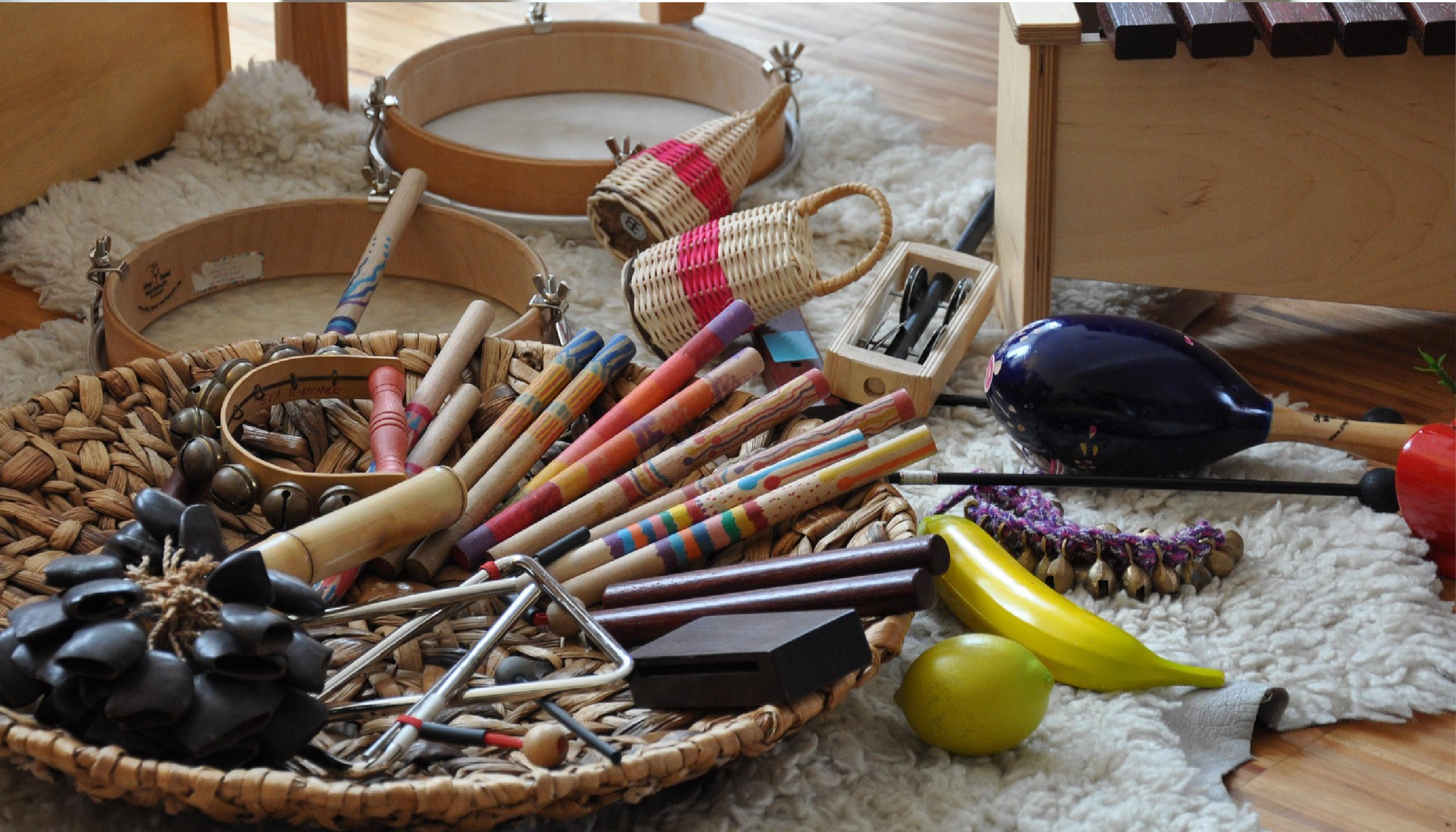
Creating a musical corner at home can greatly influence your child’s affinity for music. Dedicate a small area with age-appropriate instruments like a xylophone, miniature keyboard, or shakers where your baby can explore and play with these musical tools. This allows them to engage in hands-on musical experiences and discover the joy of creating sounds.
In addition to the musical corner, incorporate other elements that promote a musical environment. Hang musical mobiles over your child’s cot, filling their space with soothing melodies and captivating visuals. You can also play background music while they play or go about their day.
Singing and Dancing
One of the simplest and most effective ways to introduce your child to music is through singing. Whether it’s lullabies, nursery rhymes, or your favourite songs, your baby finds comfort in the sound of your voice. Don’t worry about your singing abilities; your baby simply enjoys hearing you sing and is captivated by the melodies and rhythms you create together. Singing provides a beautiful opportunity for bonding and creating cherished memories.
Dancing is another delightful way to expose your child to different rhythms and movements. Hold your baby close and sway, spin, or tap your feet to the beat of the music. Not only does this foster a sense of rhythm in your little one, but it also creates intimate moments of connection and bonding.
Musical Toys and Applications
There is a wide range of toys and applications designed for babies and young children that focus on music. These items often incorporate bright colors, engaging textures, and interactive features to capture your baby’s attention and foster their enjoyment of music. It’s important to ensure that the toys and applications you choose are safe and appropriate for your baby’s age.
Some examples include soft musical toys, baby keyboards, and musical books. Moreover, you can discover apps that allow your child to explore interactive soundboards, participate in sing-along songs, and engage in simple musical activities.
Attend Music Classes
Discover the benefits of infant music classes and children’s music classes tailored for babies and toddlers. Led by experienced music educators, these classes engage your little one in age-appropriate songs, dance, and instrument play.
They offer a structured and educational environment where your baby can make friends, explore different musical genres, and develop fundamental musical skills such as rhythm and melody. Find music classes in your area and give your child a meaningful musical experience.
Follow Your Baby’s Lead
Every child has unique interests, including their level of engagement with music. When introducing your newborn to music, it’s crucial to be patient and responsive to their cues. While some babies may immediately enjoy music, others may need time to adjust.
Observe your child’s signals and responses to different musical instruments, activities, and genres. If your baby shows signs of discomfort or disinterest, take a step back and try again later. Allow them to explore and develop their own connection with music at their own pace while remaining attentive to their needs and preferences.
Enjoy Music Outings
An enjoyable and straightforward way to venture out with your baby is by attending music events together. This experience exposes your baby to diverse sounds, environments, and social interactions. Begin by exploring live music venues such as local libraries, bookstores, coffee shops, outdoor neighborhood festivals, and family concerts.
If you and your baby find these shows enjoyable, consider checking if your community symphony offers family-friendly performances. These outings provide opportunities for both of you to engage with music in a welcoming and interactive setting, fostering a love for music and creating lasting memories.
Conclusion
Introducing your baby to music can be a rewarding experience for parents, and following the right tips can help cultivate their love for music. The aforementioned tips offer valuable guidance in this regard. Additionally, enrolling your baby in music classes for toddlers can enhance their learning journey.
If you’re searching for baby classes near you, The Music Scientist is an ideal option to consider. Our classes integrate sensory and music, enabling children to explore the wonders of music in a familiar classroom setting. Our music and movement classes provide a friendly environment for parents and kids to engage in music, movement, and play together. Join us to create a joyful and educational musical experience for your little one.
We know the importance of our children learning science – it teaches them about the world and about themselves, and the endless possibilities it holds brings wonder into their lives.
Yet, many students struggle with science in primary school, causing their initial fascination to deteriorate into dislike and fear. More often than not, it is because they are not first taught to love the subject.
Nurture the Love of Learning with The Music Scientist
At The Music Scientist, we use music to enhance young children’s learning of science and cultivate their love for it. We believe that learning must begin early – when a child’s development is at its most fertile stage. By integrating music, movement and science together, we stimulate both the right and left brains, thus developing their minds holistically.
We also effectively nurture their love for learning through fun and play; giving them a head start for the rigorous science education that lies ahead of them.
The Multiple Intelligences Approach
Our curriculum is designed based on early childhood pedagogies and music education principles. We also believe in the Multiple Intelligences pedagogical approach.
In 1983, Dr Howard Gardner asserted that human intelligence can be divided into eight forms. Hence it is important to help children find their strengths and develop them to their fullest potential. Learning science through music is a way to invoke children’s abilities and nurture them holistically:
- Bodily-kinaesthetic: A strong sense of body awareness through body movement is developed, and children learn to express themselves freely
- Musical-rhythmic: Children’s love for music and their musicianship skills are cultivated
- Visual-spatial: Spatial judgement and visualisation abilities are strengthened
- Interpersonal: Emotional intelligence is boosted, so children learn to socialise and work with others
- Intrapersonal: Self-confidence and awareness are built
- Verbal: Auditory skills improve, children use words effectively and develop the ability to comprehend and express ideas
- Naturalistic: A better understanding of the world and passion for nature is nurtured
- Logical: Good reasoning and critical thinking skills are developed
Bringing Science to Life
As numerous studies have shown, music can help children develop emotional connections to facts and information. When little ones listen to a familiar and catchy melody, they can recall the words in the song more easily. Music is also a great teaching tool to help children focus their attention and improve their concentration, especially when it comes to learning dry facts. Hence The Music Scientist programmes feature original compositions that are designed to engage and excite young children.
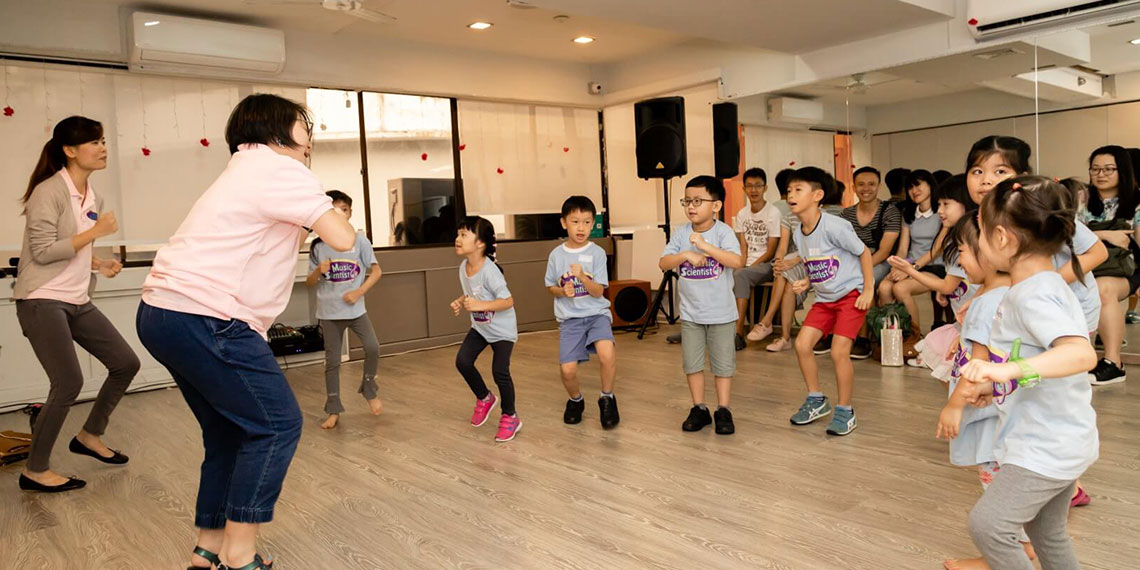
Likewise, dramatic play and movement inspires and increases their joy of learning. Through our activities, children get to immerse themselves in role-playing and acting out familiar and imaginary experiences. They are given opportunities to explore their body movements, interact with each other and communicate effectively.
Learning Through Tangible and Easy-to-understand Means
Often, science activity guides for young children contain scattered collection of science concepts that the children have difficulty understanding. At The Music Scientist, abstract concepts are presented in tangible and easy-to-understand format through thoughtful and fun-play activities, experiments and crafts. Our objective is to help your child connect, explore, discover solutions and start developing a lifelong interest in science.
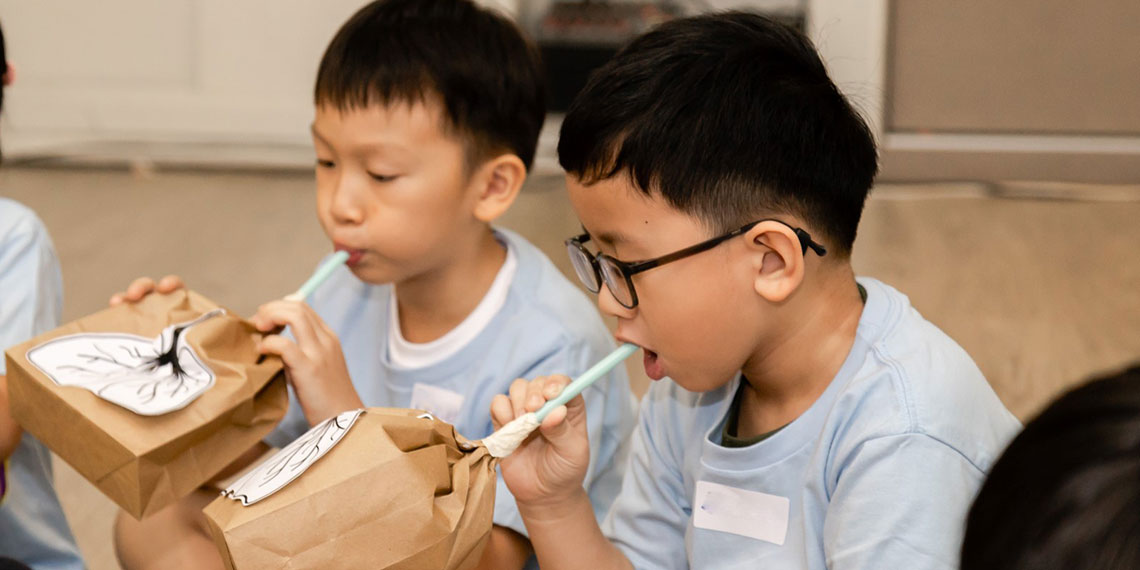
Science can be found in everything, and children are inherently curious – so we grab every opportunity to show your child that science is part of our daily lives. Our programmes cover topics from physics to human biology; children will use their senses to observe, explore, organise, and classify information. We seek to nurture their sense of curiosity, and guide them to discover the answers to their questions at their own pace.