





Infant Brain Development: How Music Fits into the First 1,000 Days
Picture a four-month-old lying on a play mat, eyes wide, arms and legs moving with surprising intention as a gentle melody plays. It looks like joy — and it is. But what is happening beneath that soft skull is something researchers are only now beginning to fully appreciate. In those first weeks and months of life, the infant brain is forming connections at a pace that will never be matched again. The right experiences, introduced at the right time, do not just entertain a baby — they literally shape the architecture of a developing mind.
Music is one of the most powerful of those experiences. Backed by decades of neuroscience research, it is now understood to engage more areas of the infant brain simultaneously than almost any other everyday stimulus. It underpins language acquisition, emotional regulation, motor coordination, and memory — all before a child can walk or speak a single word. Yet many parents still treat it as background noise rather than the developmental tool it truly is.
This article unpacks the science behind infant brain development and music across the first 1,000 days of life, explains why the type of musical experience matters enormously, and gives you practical, evidence-based guidance you can apply from today.
What Makes the First 1,000 Days So Extraordinary?
The “first 1,000 days” refers to the period from conception through a child’s second birthday. Researchers and paediatricians regard this window as uniquely consequential because the brain’s plasticity — its ability to form and reorganise connections — is at its absolute peak. Neural pathways that are stimulated grow stronger; those that are not are gradually pruned away. This is not a gentle process. It is a biological high-stakes window where environment and experience actively write the code for learning, language, memory, and emotion.
During this phase, a child’s brain undergoes rapid formation of neural connections that lay the foundation for lifelong learning and health. The foundations of neurodevelopment across an individual’s lifespan are established in these early months and years, making quality sensory input — including music — far more than a nice addition to daily life. It is, the science suggests, a developmental necessity.
The Neuroscience of Music and the Infant Brain
When an infant hears music, something remarkable unfolds neurologically. Unlike speech, which activates relatively targeted regions, musical processing lights up far more widespread areas of the brain — including regions later recruited for mathematics, spatial reasoning, and empathy. Music engages the auditory cortex, the motor planning areas, the limbic system (which governs emotion), and the prefrontal cortex (responsible for attention and pattern recognition) — often all at once.
Research using advanced neuroimaging techniques has shown that musical experiences activate multiple brain regions simultaneously, creating what scientists describe as a whole-brain workout at the very moment that brain is easiest to shape. Studies on music and neuroscience demonstrate that music promotes neurobiological processes, modulates synaptic plasticity, and supports neuronal learning in the human brain. In practical terms, a lullaby sung during a nappy change is doing cognitive work that a flash card simply cannot.
One of the most compelling findings involves the corpus callosum — the band of tissue connecting the brain’s two hemispheres. The left hemisphere typically processes rhythm and lyrics, while the right hemisphere responds to melody and harmony. This dual-hemisphere activation strengthens the corpus callosum, promoting more efficient communication between brain regions, with neurologists linking this to greater problem-solving ability and emotional resilience over time.
Researchers have also confirmed that the human brain is both wired with innate musical abilities and shaped by musical experience, starting in utero and continuing across the lifespan. Newborns enter the world already primed to detect rhythmic patterns and pitch differences — not as a learned skill, but as a biological inheritance that parents can immediately begin to build upon.
Two Critical Windows: 0–6 Months and 6–12 Months
Within the broader first 1,000 days, the first year of life contains two distinct neurological windows, each with its own profile of opportunity. Understanding these windows helps parents and educators choose musical experiences with genuine developmental purpose.
0 to 6 Months: Maximum Openness
In the earliest months, the infant brain processes structured music as early as three months of age. The auditory system is remarkably receptive during this period — babies can discriminate between musical intervals, pitch variations, and rhythmic patterns from across virtually every musical tradition in the world. This is not coincidence. It reflects the brain’s evolutionary design to remain open to all possible sound systems before gradually specialising.
During this window, variety is the goal. Exposing young infants to diverse musical genres — from classical to folk, reggae to lullabies from other cultures — keeps a wider range of neural pathways active. Early auditory experiences at this stage directly influence the quality of brain development, making the sounds a baby hears in these early months genuinely consequential.
6 to 12 Months: Specialisation and Movement Emerge
After around six months, the brain undergoes what researchers call “perceptual narrowing” — a natural process of synaptic pruning where the brain begins consolidating the pathways that have been most activated and letting others fade. This is not a negative development; it is the brain becoming more efficient. But it does underscore the value of rich, consistent musical exposure in those early months.
Research published in the journal eLife reveals that while the infant brain processes musical structure from as early as three months old, spontaneous physical movement to music — the physical drive to dance to a beat — emerges only toward the end of the first year of life. This milestone is tied to the biological maturation of the dorsal auditory stream, the neural pathway that links sound perception to motor action. By around 12 months, a baby who has been regularly immersed in musical play begins to move their body in response to rhythm — a milestone that is both delightful to observe and neurologically significant.
The rhythmic precision required to process music particularly benefits the brain’s timing networks. These same networks also underpin speech processing, since language relies heavily on detecting rhythmic patterns and timing differences between sounds. This overlap explains why musical engagement during infancy so consistently correlates with stronger language development in the years that follow.
Why Interactive Music Beats Passive Listening Every Time
Here is perhaps the most important distinction for parents to understand: not all music exposure is equally valuable. The difference between passively playing a playlist in the background and actively making music with your child is not merely qualitative — it is neurologically measurable.
A landmark study from McMaster University compared two groups of babies over several months. One group attended interactive music classes where caregivers and infants sang, drummed, and moved together. The other group was exposed to music through passive listening sessions. The results were striking: babies who participated in the interactive music classes showed earlier sensitivity to pitch structure, stronger and earlier brain responses to musical tones, and — perhaps most surprisingly — significantly better early communication skills, including pointing at objects and waving goodbye, compared to their passive-listening peers.
A University of Washington study reinforced this finding, demonstrating that 9-month-old infants who participated in rhythmic musical play showed enhanced brain responses in both the auditory cortex and the prefrontal cortex — the region responsible for pattern recognition and attention. The researchers described this as evidence that “early, engaging musical experiences can have a more global effect on cognitive skills” beyond music itself. Babies who had been exposed to interactive music showed enhanced pattern recognition and could better predict rhythm patterns, both of which are necessary skills for learning to speak and for picking up language.
Compared to passive music listening, active participation in group music activities has been shown to have a stronger effect on brain development, improving communication and the social-emotional development of infants. Passive listening still has real value — it soothes, it provides auditory richness, it supports sleep — but for cognitive and developmental growth, engagement is what moves the needle.
Five Ways Music Builds Your Baby’s Brain
The research across neuroscience, developmental psychology, and early childhood education converges on five key areas where music delivers measurable developmental benefits during infancy:
- Language and Communication: Listening to music, especially nursery rhymes, helps babies learn new sounds, rhythms, and words — building a foundation for language and speech development. When caregivers sing to infants, they naturally exaggerate pitch contours and slow down their speech, helping babies segment words and grasp language structure earlier than through speech alone. Musical experiences encourage babies to mimic sounds, experiment with pitch, and develop early conversational behaviours such as turn-taking — key stepping stones from babbling to meaningful speech.
- Memory and Pattern Recognition: Repeated melodies train infants to recognise patterns and anticipate what comes next, building working memory capacity. By engaging multiple areas of the brain simultaneously, songs help infants develop auditory processing, memory, and pattern recognition in an integrated way that most other stimuli cannot replicate.
- Motor Development: Music has been shown to bolster motor skills, coordination, and rhythm synchronisation by providing a structured, temporally organised context for movement. From the gentle swaying during a lullaby to the deliberate hand-clapping of a rhythm game, musical movement experiences lay the groundwork for gross and fine motor control.
- Social-Emotional Development: Singing fosters strong caregiver-child bonds, reduces infant distress more effectively than speech alone, and creates a nurturing environment where babies feel safe and supported. Active musical engagement involving singing and musical interaction with caregivers can also enhance attachment and bonding while promoting empathy, emotional regulation, and early social communication skills.
- Cognitive Foundations: Processing music — predicting where a melody is going, following a rhythmic sequence, responding to a change in tempo — exercises executive function in the developing brain. The early attention, impulse control, and pattern-detection skills built through musical play are the same foundations that later support focused learning, numeracy, and problem-solving in a classroom setting.
As one British neuroscientist who studies music’s impact on young children’s brains has noted, music can unlock a child’s path for learning in a way that nothing else might — building language skills, confidence, and even improving later math scores.
Debunking the Myths: What the Research Actually Says
Popular culture around infant music is muddied by a few persistent myths worth addressing directly:
Myth 1: Only Classical Music Works
The “Mozart Effect” — the idea that playing classical music to babies makes them smarter — has been largely debunked by subsequent research. No credible evidence shows that passively listening to classical music raises a child’s IQ. What research has shown is that any emotionally rich, structurally complex music has beneficial effects. Classical music’s layered harmonies are one example of this, but they are not uniquely privileged. A parent humming an off-key folk song while rocking their baby is doing more for that child’s brain than a perfectly curated Mozart playlist left running in the nursery.
Myth 2: Screen-Based Music Apps Are Just as Good
For infants under 18 months, screens generally cannot replicate the developmental value of live, interactive musical engagement. The American Academy of Pediatrics advises limiting screen time for this age group precisely because infants learn best through in-person, socially contingent interactions. A responsive caregiver who sings back, pauses, and mirrors the baby’s reactions creates a neurologically richer experience than any app can offer.
Myth 3: More Background Music Is Always Better
Volume and duration matter. Prolonged background music at high volumes can cause overstimulation and even damage developing auditory hair cells — keeping music at roughly conversation level (around 50 decibels) is wise. More importantly, fifteen focused minutes of engaged, interactive music delivers far more developmental value than hours of background audio. Quality and presence outperform quantity.
Practical Music Moments You Can Start Today
None of this requires formal training, perfect pitch, or expensive equipment. The most developmentally potent musical experiences for infants are built from everyday moments and genuine connection. Here are five approaches grounded in research:
- Sing Through Routines — Assign a simple song to daily transitions like bath time, feeding, or nap time. Consistent musical cues help build predictability and emotional security, while exposing your baby to repeated melodic patterns that strengthen memory.
- Create a Call-and-Response Exchange — Sing a short, simple phrase to your baby, then pause and smile expectantly. When they vocalise back — even with a coo or a babble — respond enthusiastically. This simple exchange mirrors conversational turn-taking and directly supports pre-language development.
- Move with the Music — Rock gently to triple-metre lullabies, bounce rhythmically to livelier play songs. Synchronised movement between caregiver and infant activates the cerebellum and motor planning pathways, while also releasing oxytocin — the bonding hormone — in both parent and child.
- Explore Different Musical Cultures — Introduce your baby to music from different traditions each week. African rhythms, Celtic melodies, and local Singaporean folk songs all offer distinct rhythmic and tonal patterns that keep auditory maps broad during the perceptually open first months of life.
- Let Them Make Noise — Place a small drum, a rattle, or even a container of rice in reach and let your baby explore sound-making. The shift from listening to producing sound is a significant developmental step, and even primitive percussion play activates the same neural pathways as formal music training.
Remember: your voice — imperfect as it may feel — is the most powerful musical instrument available to your child. Research consistently shows that a caregiver’s live singing carries an emotional and neurological warmth that recorded music simply cannot match.
When to Consider Structured Music Enrichment
At-home musical play is invaluable, and it remains the foundation of any early music experience. But there comes a point — often around three to six months — when many parents begin wondering whether a more structured environment might add another layer of developmental benefit. The answer, based on both research and real-world outcomes, is yes: structured music enrichment designed around developmental milestones can meaningfully extend what home play achieves.
The key phrase here is designed around developmental milestones. Not all music programmes for infants are created equal. The most effective ones progress with the child — adjusting activities, instruments, and interactions to match each developmental stage rather than simply repeating the same songs across age groups. They also incorporate parent participation meaningfully, because the caregiver’s presence and engagement is itself a core developmental ingredient, not merely a logistical convenience.
At The Music Scientist, Singapore’s developmentally-focused music enrichment school for children aged 4 to 47 months, every programme is built on this principle. The Tenderfeet programme, designed for infants from as young as four months old, integrates sensory play, original music, and caregiver bonding within a structured curriculum that targets the exact developmental milestones most active during early infancy. It is the structured, multi-sensory equivalent of those early interactive experiences that the McMaster and University of Washington studies showed to be most neurologically potent.
As babies grow into toddlers, the developmental picture shifts. Greater motor confidence, emerging independence, and the rapid acceleration of language acquisition call for experiences that match this new stage. The Happyfeet programme, designed for children around 18 months, expands on early musical foundations with more interactive elements that allow children to explore cause and effect through music. The Groovers programme continues this journey for older toddlers, weaving music and movement together to support the cognitive and physical developments most prominent at this stage.
For families who value bilingual development alongside musical enrichment, The Music Scientist’s Scouts programme introduces science concepts through catchy, memorable music — a uniquely effective method because the brain encodes information delivered in song more deeply than information delivered through speech alone. And for children approaching preschool entry, the SMART-START English and SMART-START Chinese programmes translate the neural foundations built through music into concrete school readiness skills — early literacy, numeracy, focus, and self-regulation — delivered in both English and Mandarin.
What distinguishes a programme worth enrolling in is not the marketing language or the instruments on display — it is the presence of a clear developmental rationale behind every activity, teachers trained in both music and early childhood education, and a curriculum that evolves as the child does. Weekly attendance, consistent routines, and parent involvement are the factors research shows matter most for consolidating developmental gains.
The First 1,000 Days Won’t Come Around Twice
Music is not a supplement to early development — it is woven into the very fabric of how the infant brain grows. From the moment a newborn hears a lullaby and stills, to the moment a 12-month-old bobs their head to a beat for the first time, music is doing developmental work that is measurable, significant, and lasting. The neuroscience is no longer ambiguous: regular, interactive musical experiences during infancy build stronger neural networks for language, cognition, motor skills, and emotional connection.
The beautiful truth is that you do not need to be a musician to give your child this gift. Every song you sing during the morning routine, every rhythm you tap on a high-chair tray, every moment you stop to dance together in the kitchen — each of these is a small but real investment in the brain your child is building right now. And when you are ready to complement that with structured, developmentally grounded enrichment, the right programme will feel less like a class and more like a natural extension of everything you have already started at home.
Ready to Give Your Child the Best Start?
The Music Scientist offers Singapore’s most developmentally grounded music enrichment programmes for babies, toddlers, and preschoolers aged 4 to 47 months. Whether your little one is just four months old or approaching preschool, there is a programme precisely designed for where they are right now.
Every culture in human history has sung to its babies. Long before researchers had the tools to scan infant brains or run randomised controlled trials, caregivers instinctively reached for song when they wanted to soothe, connect, or communicate with a young child. That universal instinct, it turns out, was never mere sentiment. It was biology.
The relationship between music and language development in early childhood is now one of the most active and well-evidenced areas of developmental neuroscience. Across hundreds of peer-reviewed studies, a consistent picture has emerged: music does not simply accompany early childhood — it actively structures the neural architecture that children will later depend on for reading, speaking, listening, and thinking. And crucially, these effects begin not at age three or four, but at birth, and perhaps even before it.
This article traces that evidence stage by stage, from the newborn period through to age six, drawing on the latest research to explain what is happening in your child’s brain at each phase — and why the quality of musical experience during these years has consequences that extend far beyond music itself.
Why Music and Language Are Fundamentally Linked
At a neural level, music and language are not as separate as they might appear. Both rely on the brain’s ability to process timing, rhythm, pitch contour, and sequential structure. Both require the auditory system to extract patterns from an ongoing stream of sound, identify meaningful units within that stream, and hold those units in working memory long enough for sense to be made of them. The overlap is so significant that researchers now speak of “shared processing mechanisms” between the two domains — neural resources that music and language literally use in common.
A comprehensive review of the research confirms that music plays a critical role in language development in early life, and that infants show sensitivity to the rhythmic components of language — a musical quality that turns out to be predictive of expressive language skills such as grammatical ability and phonological awareness. This is not a coincidence. McMullen and Saffran argued that both domains rely on the same learning mechanisms — specifically, the extraction of an abstract set of rules through statistical learning — in order to form native sound categories. In practical terms, this means that when a toddler learns to feel where the beat falls in a nursery rhyme, they are exercising the same neural circuitry they will later use to hear where one word ends and another begins.
Research further suggests that specific musical features such as melody play an essential role in language development — with evidence showing that neonates’ brain responses to sung streams actually predicted expressive vocabulary at 18 months. The music-language connection, in other words, is measurable from the very first days of life.
Birth to 6 Months: A Brain Already Listening
Newborns arrive in the world primed for sound. Their auditory systems have been active since the third trimester, absorbing the rhythmic patterns of the maternal voice, the prosodic shape of the surrounding language, and the melodic quality of sound itself. This early auditory priming means that the newborn brain is not starting from scratch — it is continuing a process already underway.
Although there is little work directly comparing neural responses to speech and music in very young infants, there is evidence that newborns show largely overlapping activation to infant-directed speech and to instrumental music — a finding that speaks to just how musically organised the early language brain truly is. Further evidence that melodic abilities are important for language development comes from infant cries: the melodic complexity of crying increases over the first few months of life, and infants who do not show such increasing melodic complexity also show poorer language performance two years later. Even a baby’s cry, it seems, is a form of musical practice.
The quality of singing directed at young infants also matters considerably. Research has found that infant-directed singing characterised by wide pitch variability and rich vocal amplitude was associated with infants’ optimal sensorimotor, language-vocalisation, and socioemotional skills at six months, with high resonance and rhythmicity formants specifically associated with optimal language and vocalisation skills at this age. These are not abstract neurological findings — they are a direct argument for singing to your baby, with expression and warmth, from day one. For families in Singapore’s early childhood landscape, this kind of responsive musical interaction at home forms the foundation on which structured programmes — such as The Music Scientist’s Tenderfeet infant care classes — are designed to build.
6 to 18 Months: Singing, Gestures, and the Vocabulary Window
Between six and eighteen months, the relationship between musical experience and language development becomes increasingly measurable. This is the period during which infants shift from broadly perceiving all of the world’s phonemes to narrowing their attention to the specific sound categories of their native language. It is also the window during which gesture, receptive vocabulary, and early word comprehension begin to emerge — and musical engagement plays a documented role in all three.
There is strong evidence that musical engagement influences children’s language development, with one study assessing musical exposure at home (including parental singing) and language development in 64 infants aged 8.5 to 18 months finding that the home musical environment significantly predicted gesture development, and that for infants under 12 months, both parental singing and overall home musical environment score significantly predicted word comprehension. Gestures are not peripheral to language development — they are among its earliest building blocks, and the fact that musical richness at home predicts gestural development tells us that the music-language link operates even before a child produces their first recognisable word.
Research measuring both neural and behavioural coordination in 7-month-old infants during live maternal singing found that infants coordinate at both the neural and behavioural levels with their mothers’ singing — and that infants’ neural and behavioural coordination with playsongs specifically predicted vocabulary size at 20 months. This is a striking result: the degree to which a baby’s brain tracks and physically responds to an interactive song today is predictive of how many words they will know a year from now. The Happyfeet programme at The Music Scientist is designed precisely around this interactive, movement-rich musical engagement for children around this developmental stage.
18 Months to 3 Years: Rhythm, Grammar, and the Toddler Language Explosion
The period from 18 months to three years is one of the most dramatic in all of human development. Vocabulary size, which may be around 50 words at 18 months, can reach several hundred words by the third birthday, and children begin to combine words into two- and three-word phrases that carry genuine grammatical structure. What is less well understood by most parents is how much of this linguistic scaffolding depends on the rhythm and melody perception that musical experience builds.
Research focused on melody and grammar development has shown that 3- and 4-year-old children can extract regularities from musical environments by internalising melodic and harmonic structures — and that similarly, between ages 3 and 4, children internalise the structures of their native grammar. These two processes are not merely parallel — they appear to draw on shared neural resources, which means that a child who is regularly immersed in structured musical environments during this period is simultaneously developing their grammatical intuitions. Rhythmic structures, timbre variations, and melodic contours serve as scaffolding for the semantic and syntactic development of language.
Research results reveal that the musical home environment significantly predicts outcomes in infants’ receptive vocabulary and gestural communication independently from general enrichment of home activities — with musical interaction presenting a particularly opportune medium for supporting language development. For toddlers, this means that the songs they hear, sing, and move to are doing more than filling time — they are assembling the grammatical and lexical architecture for the language explosion to come. The Groovers programme at The Music Scientist bridges exactly this moment, using music and movement together to deepen what toddlers are already primed to absorb.
3 to 6 Years: Phonological Awareness, Reading Readiness, and Executive Function
By the time a child reaches age three, language is no longer just being built — it is beginning to be examined. Phonological awareness, the ability to consciously reflect on the sound structure of words, emerges during this period and is widely recognised as the single strongest predictor of later reading success. Music’s contribution to this milestone is both direct and well-documented.
Phonological awareness is an important predictor of later reading ability, and research with 4- and 5-year-old children has found that musical aptitude correlated with phonological awareness in both age groups — with researchers concluding that the auditory processing mechanisms necessary for musical perception are related to the auditory processing mechanisms necessary for phonological awareness. In practical terms, a child who is regularly engaging with pitch discrimination, rhythmic patterns, and melodic structure in a music programme is strengthening the same auditory machinery they will need to hear the difference between “ship” and “chip” when they first begin to decode written words.
The rhythm connection to reading readiness deserves particular attention. Preschoolers who performed well on a rhythm task scored higher than peers on measures of phonological awareness, auditory short-term memory, rapid naming of both colours and objects, and musical rhythm discrimination.In a beat synchronisation task, children between the ages of 3 and 4 who were unable to synchronise with an external auditory beat had poorer pre-literacy skills, specifically in phonological processing. Rhythm is not just a musical skill. It is, quite literally, a pre-reading skill. The Scouts programme harnesses this principle directly, embedding science and knowledge content within rhythmic musical frameworks so that children approach the preschool curriculum already equipped with the auditory processing tools they need.
Beyond language, the preschool years also mark a critical window for the development of executive functions — the cluster of cognitive skills that include inhibitory control, working memory, and cognitive flexibility. These are the skills that allow a child to sit still during circle time, follow multi-step instructions, and resist the impulse to shout out an answer before the teacher has finished the question. Music training has been shown to support all three. A meta-analysis of ten studies found that children’s music training groups showed significantly improved inhibitory control, working memory, and cognitive flexibility in comparison with control groups — leading researchers to conclude that music training has a positive effect on all three executive function components in preschool children aged 3 to 6 years. For families preparing children for the transition to formal schooling, this is a finding worth taking seriously. The SMART-START English and SMART-START Chinese preschool readiness programmes at The Music Scientist are built around precisely this convergence — using music as the delivery vehicle for the cognitive foundations that primary school will demand.
Active Musical Participation vs. Passive Listening: What the Research Says
One of the most important nuances in the research concerns not just whether a child is exposed to music, but how. The distinction between active musical participation and passive listening is not a minor one — it has material consequences for developmental outcomes. Passive music exposure, such as a child listening to music in the background, produces some benefits, but the evidence consistently shows that active engagement generates substantially stronger effects on both language and cognition.
Research by Zhao and Kuhl revealed that infant music classes enhanced neural processing in aspects of both music and speech perception — with the key variable being the interactive, participatory nature of those classes rather than simple sound exposure. A controlled experiment investigating the effect of a music programme on phonological awareness in preschoolers found that children in both the phonological skills group and the music group showed significant increases in phonological awareness from pre- to post-test, with the music programme’s enhancement comparable to that of a dedicated phonological skills programme. Active musical engagement — singing together, moving to rhythm, clapping patterns, exploring instruments — is not a supplement to language learning. For young children, it is a form of language learning.
In a recent music training study, improvements in executive functions — particularly inhibitory control speed and working memory accuracy — were observed in preschoolers, corresponding to research indicating that musical interventions can enhance executive functions such as inhibition and working memory. The clear implication for early childhood programmes is that participation quality matters as much as frequency. Sessions that engage children as active musical agents rather than passive audiences are the ones that generate lasting cognitive benefit.
What This Means for Parents in the Early Years
The evidence across birth to age six tells a coherent and compelling story: music is not a nice-to-have in early childhood. It is one of the most efficient and enjoyable ways to build the neural infrastructure for language, reading, memory, and self-regulation — all within the window of greatest brain plasticity. The practical implications are not complicated, but they are important.
At the infant stage, the most powerful thing a caregiver can do is sing — not perform, simply sing. Lullabies, play songs, made-up songs about nappy changes and bath time: infants’ experiences with infant-directed song are associated with their language and communication development including gesture use, receptive language, and vocabulary. The quality of that singing — its expressiveness, its pitch variation, its rhythmic consistency — matters for the neural tracking that predicts later language milestones. At the toddler stage, the priority shifts toward interactive musical play: songs with actions, percussion instruments, call-and-response games that engage the child as a producer of music rather than just a receiver of it. Available evidence suggests that an enriched musical environment — including music classes and music at home — during infancy and preschool can promote language development.
By the preschool years, structured musical programmes that integrate rhythmic training, phonological elements, and movement can function as direct preparation for literacy and for the executive demands of formal schooling. Considering the importance of phonological awareness in the emergence of literacy, the research points toward music programmes as valuable preparation for learning to read and write. When those programmes are also developmentally sequenced — matched to what a child of a given age is neurologically ready to absorb — the benefits are compounded at every stage. That is the principle that underpins every programme at The Music Scientist, from the sensory-rich infant sessions through to the preschool readiness curriculum offered in both English and Chinese.
The Evidence Is Clear: Music Shapes the Language Brain
From the moment a newborn’s brain tracks the melodic contour of a caregiver’s voice to the moment a five-year-old masters phoneme segmentation through rhythm play, the story of music and language development is a single, continuous one. The research now spanning decades and developmental stages consistently confirms that musical engagement during the first six years of life is among the most powerful investments a parent or educator can make in a child’s cognitive and linguistic future. It builds phonological awareness, strengthens working memory, supports grammatical intuition, and deepens the auditory precision that reading will one day require.
The question is never whether music matters in early childhood. The science has answered that. The more practical question is whether the musical experiences your child is having right now are rich enough, interactive enough, and developmentally appropriate enough to do what the evidence says they can do. Age-matched, curriculum-informed musical engagement — the kind that meets a child exactly where they are developmentally and moves them purposefully forward — is where the greatest gains lie.
Ready to Give Your Child a Music-Powered Head Start?
The Music Scientist offers developmentally-sequenced music enrichment programmes for children aged 4 to 47 months, designed around the very research described in this article. Whether your child is a newborn just beginning to track sound or a preschooler on the cusp of formal schooling, there is a programme built precisely for where they are right now.
Every parent wants to give their child the best possible start in life. But what if one of the most powerful tools for building a smarter, more focused, and emotionally resilient child has been playing in the background all along? A growing and compelling body of neuroscience research confirms that music and cognitive development are deeply intertwined — and that the benefits of early musical engagement go far beyond learning a song. From boosting working memory to increasing IQ scores and sharpening attention, music shapes the developing brain in ways that no other stimulus quite replicates.
What makes this research especially exciting for parents of young children is the emphasis on timing. The window between birth and age seven — and particularly the first 47 months of life — is when the brain is forming neural connections at an extraordinary rate. Musical experiences during this period don’t just teach rhythm and melody; they fundamentally rewire how children think, learn, and process the world around them. In this article, we explore what the latest science says about how music influences memory, attention, and IQ in early childhood, and what that means for how we nurture young minds today.
Why the Early Years Are the Most Critical Window
Child development experts and neuroscientists agree on one foundational point: the brain is never more receptive to learning than it is in the earliest years of life. During this period, synaptic connections form at a remarkable pace, and the quality of sensory experiences a child receives has a direct impact on the architecture of the brain they will carry into adulthood. Music, with its layered combination of rhythm, pitch, melody, and movement, is one of the richest sensory stimuli available — and it arrives at exactly the right moment in a child’s development.
For children between 4 and 47 months, the brain is forming connections at an astonishing rate, and musical experiences during this window create neural pathways that enhance not just musical aptitude but cognitive, emotional, and social development across multiple domains. What this means in practice is that a baby bobbing to a beat, a toddler clapping along to a song, or a preschooler singing a catchy science melody is doing far more than having fun — they are actively building the neural infrastructure for memory, focus, language, and reasoning.
What Happens in the Brain When a Child Engages with Music
One of the most remarkable things about music is how broadly it activates the brain. Unlike many learning activities that engage a single region, music simultaneously stimulates the auditory cortex, the motor cortex, the limbic system, and the prefrontal cortex. Research confirms that music engages multiple brain regions simultaneously, integrating auditory, motor, emotional, and visual processing centers. This multidimensional engagement can accelerate learning, enhance memory retention, and develop attention control in ways that single-modality activities simply cannot replicate.
Studies in neuroscience and developmental psychology have shown that music exposure strengthens neural networks involved in executive functioning, language development, and spatial-temporal reasoning. One particularly exciting area of research involves the corpus callosum — the band of neural tissue that connects the brain’s left and right hemispheres. Music builds neural pathways throughout the brain, but especially in the corpus callosum, and neurologists believe this conveys a whole range of benefits, including increased problem-solving ability and greater emotional resilience. Research has shown that musicians who began training before age seven tend to have a larger, more developed corpus callosum than non-musicians — a structural difference that reflects a genuine neurological advantage.
A landmark study published in the journal Cerebral Cortex found that children with two years of music training showed larger structural development in the corpus callosum, specifically in fiber regions connecting frontal, sensory, and motor areas. These structural changes occurred in parallel with measurable improvements in auditory processing accuracy. A USC Brain and Creativity Institute study further confirmed that music instruction speeds up the maturation of the auditory pathway in the brain and increases its efficiency. Within just two years, children in a music program showed auditory systems maturing faster than children without music education — with implications for language and reading development that researchers continue to investigate.
Music and Memory: Building Stronger Neural Connections
Ask any adult to recall a childhood song, and they will likely remember not just the words but the feelings, the imagery, and the context that surrounded it. This is not accidental. Music is uniquely suited to encoding memory because it engages emotional, auditory, and linguistic processing simultaneously, creating multi-layered memory traces that are far more durable than those formed through reading or listening alone. Research shows that musicians have high memory power as they connect an incident or memory to a sound or phrase that carries visual and emotional elements.
This has immediate implications for early learning. When children encounter new concepts — letters, numbers, science facts, language patterns — through song, they are not simply adding a tune to information. They are anchoring that information to an emotional and sensory experience, making it more likely to be retained and recalled. The music-memory connection works because listening to music improves auditory memory, pitch discrimination, and selective attention by engaging a distributed network of brain structures working in concert.
Early musical exposure also plays a critical role in developing the neural pathways required for speaking and listening. Listening to music in early childhood helps establish these foundational pathways. Engaging with music from a young age can aid in refining language pronunciation, strengthening verbal memory, and fostering better overall communication skills — all building blocks of school readiness that most parents work hard to develop through books and conversation alone, not realising that music may be an equally powerful vehicle.
At Tenderfeet, The Music Scientist’s infant care and sensory development programme for babies from 4 months, every session is thoughtfully designed to stimulate these early auditory and memory pathways through original music, multisensory play, and rhythmic engagement — capturing the brain-building window right from the start.
Music and Attention: Training the Young Mind to Focus
Attention is often described as the gateway to all learning. Without the ability to focus, filter distraction, and sustain concentration, even the most intelligent child will struggle in an educational environment. Research has increasingly identified music as a powerful tool for developing this very capacity — and the effect appears to begin in the earliest months of life.
A study published in PMC examined the effects of music intervention on children’s attention and found that focused music engagement meaningfully improved attention-related cognitive functions. For children, music lessons act as additional schooling, requiring focused attention, memorisation, and the progressive mastery of a technical skill. It is therefore likely that the transfer skills of executive function, self-control, and sustained focused attention learned through music translate into better results across other areas of learning.
A particularly compelling long-term study tracked children over two years of formal music training and found significantly bigger improvements in a range of cognitive measures including working memory, attention, processing speed, cognitive flexibility, and bimanual coordination, compared to children in a control group. Exposure to diverse musical experiences has also been associated with increased connectivity between brain cells, leading to improved cognitive functions such as memory retention, attention span, and problem-solving skills. These are not marginal differences — they represent meaningful advantages that compound over time.
The attention benefits of music are especially relevant for toddlers, a developmental stage when the ability to follow instructions, persist through challenges, and regulate impulses begins to form. The Happyfeet programme for 18-month-olds and toddlers at The Music Scientist is built around structured musical play that naturally cultivates these emerging attention skills, meeting children exactly where they are in their development.
Music and IQ: What the Studies Actually Show
Perhaps the most headline-grabbing claim in the music-cognition literature is the connection between music training and increased IQ. While popular culture has reduced this to the “Mozart Effect” — a simplification of early research suggesting that merely listening to classical music boosts intelligence — the actual science tells a more nuanced and ultimately more meaningful story. Active engagement with music, rather than passive listening, is where the genuine cognitive gains are found.
There is clear evidence that music training in children is positively correlated with higher cognitive functioning. Multiple studies using the Wechsler Intelligence Scale for Children (WISC) have shown higher IQ scores in musically trained children than in their untrained counterparts. A longitudinal study using the Démos music training programme found that 18 months of music training improved total IQ scores, concentration abilities, and reading precision in participating children. Critically, this research used a pre-and-post design, which helps rule out the possibility that smarter children simply self-select into music classes.
A study of preschool children aged 5 to 6, published on PubMed, found statistically significant IQ increases in children who received structured music lessons — specifically on verbal reasoning and short-term memory subtests. Music can increase the overall intelligence quotient of a child through its combined effect on language processing, memory encoding, and attentional control. Children who regularly engage in active musical participation show efficiency in language pronunciation, verbal memory, logical reasoning, and complex problem-solving skills.
It is worth being clear about what the research does and does not say: music is not a magic intelligence pill. The gains are most significant when music education is active, consistent, and started early. But within those conditions, the evidence is genuinely exciting — and it points firmly toward the early childhood window as the period of maximum impact.
Music, Multiple Intelligences, and Whole-Child Development
To understand why music has such a broad cognitive impact, it helps to view it through the lens of Howard Gardner’s influential Theory of Multiple Intelligences. Gardner’s landmark work proposed that human intelligence is not a single, measurable trait but a portfolio of distinct capacities — each one a legitimate form of cognitive strength. Gardner suggests that people do not possess various degrees of one general intelligence but that each individual possesses a portfolio of intelligences, some greater than others.
What makes music so uniquely powerful as a developmental tool is that it simultaneously engages several of these intelligences at once:
- Musical Intelligence: The most direct — children develop sensitivity to pitch, rhythm, melody, and tone through active musical engagement.
- Bodily-Kinesthetic Intelligence: Movement, dance, and instrument play coordinate mind and body, developing fine and gross motor skills alongside cognitive processing.
- Linguistic Intelligence: Songs, rhymes, and chants build phonological awareness, vocabulary, and early literacy skills.
- Logical-Mathematical Intelligence: Patterns, rhythm structures, and sequencing in music directly exercise the same neural pathways used in mathematical reasoning.
- Interpersonal Intelligence: Group music activities develop listening, cooperation, and social awareness — skills that are just as critical for school readiness as academic knowledge.
This multi-intelligence activation is precisely why music-integrated learning is so effective for young children. Rather than targeting one area of development at a time, it creates a rich, simultaneous experience that nurtures the whole child. The Groovers programme for toddlers and the Scouts programme — which uses catchy original melodies to teach science concepts — are built on exactly this principle, weaving together musical, kinesthetic, linguistic, and logical intelligences in every session.
From Research to Real Life: How to Harness These Benefits
The science is compelling, but what does it mean for the decisions parents make day to day? The research consistently points toward a few key principles that parents and educators can act on right now.
Start as early as possible. The brain’s plasticity is at its peak in the first few years of life. Research suggests that children who begin musical engagement before age seven show greater structural and functional brain benefits than those who start later. Even simple activities — singing to your baby, introducing rhythm play, or attending structured music classes — activate the developmental processes described above. For babies and very young toddlers, the Tenderfeet programme offers a scientifically grounded entry point into these experiences from as early as 4 months.
Prioritise active engagement over passive listening. While background music has some benefits, the most significant cognitive gains come from active participation — singing, moving, clapping, playing instruments, and following musical patterns. Active engagement with music in the form of music lessons sometimes confers a positive impact on intelligence and cognitive functions in ways that passive listening does not. The difference matters, and structured music programmes are designed specifically to ensure children are active participants, not just an audience.
Make it consistent and joyful. The longitudinal studies that show the greatest gains involve sustained musical engagement over months and years — not single sessions. Equally important is the emotional quality of the experience. When children experience music in a warm, playful, and encouraging environment, they are more likely to remain engaged, and the emotional resonance of the experience deepens the memory and attention benefits. Learning music instills qualities like discipline, patience, and focus that are essential for cognitive development and intelligence — but only when the child genuinely enjoys the process.
Use music as a learning vehicle, not just an activity. The most powerful applications of music in early childhood link musical engagement to other areas of development — pairing songs with general knowledge themes, using rhythm to reinforce literacy, or combining movement with concept learning. The SMART-START English and SMART-START Chinese preschool readiness programmes at The Music Scientist take this approach, using originally composed music integrated with curriculum themes to prepare children for the academic transition ahead — in both languages.
The Science Is Clear — Music Is Far More Than a Subject
The research landscape on music and cognitive development is no longer a collection of interesting theories. It is a robust, growing body of evidence pointing to a consistent conclusion: early musical engagement meaningfully improves memory, sharpens attention, and supports the development of higher intelligence in children. The mechanisms are real, the brain changes are measurable, and the window of greatest impact is right now — in the earliest months and years of your child’s life.
Understanding this science changes how we think about music in early childhood. It is not a luxury subject or an optional extra. It is one of the most effective cognitive development tools available to parents and educators — one that works on multiple intelligences simultaneously, builds lasting neural architecture, and does all of this while children are simply having fun. That combination of joy and development is precisely what makes music so extraordinary as a learning medium.
Whether your child is a curious 6-month-old discovering sound for the first time or a busy 3-year-old ready to start exploring science through song, the evidence is clear: the earlier and more actively they engage with music, the greater the cognitive foundation they build for everything that comes next.
Give Your Child the Cognitive Head Start They Deserve
At The Music Scientist, every programme is designed around the developmental science you’ve just read about — combining original music, movement, and sensory exploration to nurture memory, attention, and early intelligence in children aged 4 to 47 months. From our infant Tenderfeet sessions to our preschool-ready SMART-START programmes, we turn the latest research into real-world learning experiences your child will love.
Get in touch with us today to find the right programme for your child’s age and stage — and take the first step toward building a lifelong love of music and learning.
If you have ever noticed your baby’s face light up at a familiar song, or watched your toddler stop mid-waddle to bounce along to a beat, you have already witnessed something remarkable: a developing brain responding to music in ways that go far deeper than enjoyment.
Over the past two decades, neuroscientists have produced a growing body of evidence showing that music is one of the most powerful tools available for shaping a young child’s brain. We are not talking about background music played passively in the corner of a room. We are talking about active, joyful, movement-rich musical experiences during the years when neural connections are forming at the fastest rate they ever will in your child’s lifetime.
This guide is written in plain English for parents who want to understand the science without wading through academic journals. You will learn what actually happens inside your child’s brain when they engage with music, what developmental milestones music supports at each age from birth to four years, and how you can make the most of this powerful learning medium at home and through structured programmes.
Why Music Is More Than Just Background Noise
Most parents know intuitively that music makes their children happy. What is less obvious is that happiness is just the surface effect. Beneath it, something genuinely remarkable is happening neurologically. When a child engages with music, especially through singing, moving, and hands-on instrument play, multiple regions of the brain activate simultaneously. Research consistently shows that musical experiences in the first years of life strengthen neural pathways associated with language acquisition, spatial reasoning, emotional regulation, and memory.
This is why early childhood researchers and educators treat music not as a pleasant extra, but as a core developmental tool. The effects are not limited to musical ability. Children who grow up with rich musical experiences tend to show advantages in attention span, vocabulary, problem-solving, and self-regulation. These are precisely the skills that determine how well a child transitions into formal schooling and thrives there.
It is also worth understanding that timing matters enormously. The brain is most receptive to music’s formative effects during the early childhood years, particularly from birth to age four. This is the window when neural architecture is most plastic, most adaptable, and most hungry for rich multi-sensory input. Missing this window does not doom a child, but it does mean missed opportunities to build foundations that would have come more easily and lasted longer.
What Actually Happens in Your Child’s Brain During Music
Here is the plain-English version of the neuroscience. Babies are born with billions of brain cells called neurons. During the first years of life, those neurons form connections with other neurons, and the connections that get used regularly become stronger and more efficient. Music, with its combination of rhythm, melody, pattern, and emotion, provides an unusually rich source of input that drives this connection-building process across multiple brain regions at once.
One particularly important structure is the corpus callosum, the band of tissue that connects the left and right hemispheres of the brain. Research conducted by Harvard neuroscientist Gottfried Schlaug and his team has shown that learning music before the age of seven enhances the neural connections in the corpus callosum. Better communication between the two hemispheres leads to higher executive function, stronger problem-solving ability, and greater emotional resilience. These benefits do not disappear in adulthood; because the brain built more neural pathways early on, it remains better equipped to process new information and resist memory deterioration throughout life.
A USC Brain and Creativity Institute study found that music instruction speeds up the maturation of the auditory pathway in the brain and increases its efficiency, particularly in the areas responsible for sound processing, language development, speech perception, and reading skills. For parents, the practical implication is clear: music does not just teach children about music. It builds the very cognitive hardware that underlies learning in every subject, in every classroom, for the rest of their lives.
Music and Brain Development: What to Expect at Each Stage
Understanding what is happening developmentally at each age helps you choose the right kind of musical experiences, and recognise the real growth that is taking place beneath the surface of what looks like simple play.
Babies (4–12 Months): The Sensory Foundation
Babies are born with a remarkable sensitivity to sound. Research shows that babies respond to rhythm and melody even before birth, and by four months they can distinguish musical patterns. In these early months, your baby’s brain is absorbing everything: tones, rhythms, voices, and the emotional warmth that accompanies a caregiver’s song. This is not passive entertainment. Every musical experience is laying down auditory foundations that the brain will later draw on for language and communication.
At this stage, music-rich activities work best when they involve the caregiver directly. When a parent sings or moves in time with their baby, both brains release oxytocin, a bonding hormone that creates a sense of peace and connection. Singing does not need to be tuneful or polished; what matters is the interaction, the eye contact, and the rhythmic predictability that helps your baby feel safe and stimulated at once. Simple programmes like Tenderfeet at The Music Scientist are built around exactly this principle, combining sensory-rich musical experiences with caregiver involvement to support auditory, visual, and tactile development during this critical early window.
Young Toddlers (12–24 Months): Language Takes Off
The period between twelve and twenty-four months is a critical window for language acquisition. During this stage, movement-based learning demonstrates significant impact on the development of neural pathways that underpin both physical coordination and cognitive processing. Music is a natural fit for toddlers at this age because it combines the repetition they love with the rhythm that mirrors the structure of spoken language. When a toddler babbles along to a song, they are not just being cute. They are toning the muscles needed for speech, testing their ability to reproduce sounds, and building the phonological awareness that underpins reading.
Songs with simple, repetitive lyrics and clear melodic contours are especially valuable here. The ability to feel and move to a steady beat is one of the earliest musical capacities to develop, and it is closely linked to language processing because both spoken language and music share rhythmic structure. Clapping, bouncing, and moving to a consistent musical pulse are not optional extras in a good toddler music programme. They are core developmental tools. The Happyfeet programme for toddlers around eighteen months has been designed with this in mind, nurturing confidence and curiosity through music and movement at precisely the age when these inputs have the greatest effect.
Older Toddlers (2–3 Years): Movement, Memory, and Social Play
By age two, children’s social awareness is growing rapidly even as their ability to share and cooperate is still developing. Music offers a uniquely gentle pathway into collaborative behaviour. Making music together, whether through singing the same song, clapping to the same beat, or taking turns with simple instruments, is a form of parallel play that lets children experience togetherness without the social demands of traditional sharing. Call-and-response songs, echo clapping, and group percussion activities all build auditory memory, turn-taking, and the early social skills that will serve children well in preschool and beyond.
At this stage, the combination of music, movement, and sensory play delivers particularly powerful developmental benefits. When toddlers engage in coordinated movement with music, they activate connections between sensory inputs and motor skills, laying the foundation for both cognitive and motor development simultaneously. The Groovers programme at The Music Scientist brings together music and dance in a structured, joyful format that harnesses this developmental window, helping older toddlers build body confidence, coordination, and social ease through music-led physical play.
Preschoolers (3–4 Years): Getting School-Ready Through Song
The preschool years represent a period of extraordinary brain development. Neural connections are forming at a rapid pace, and the brain is particularly receptive to experiences that engage multiple senses simultaneously. Music does exactly this: it activates hearing, memory, language processing, and emotional response all at once. For children approaching formal schooling, this makes music one of the most efficient school-readiness tools available.
Research from the University at Buffalo Graduate School of Education showed a direct link between regular music activities in preschoolers and the early development of reading and writing skills. Songs, rhymes, and chants expose children to phonemic patterns, vocabulary, and sentence structure in a memorable, engaging format. The rhythm and repetition built into children’s music are not accidental features. They are among the most effective vehicles for building phonological awareness, which is the ability to hear and manipulate the sounds within words, and one of the strongest predictors of reading success. The Scouts programme extends this further by using catchy, original melodies to make early science concepts memorable and engaging, building general knowledge alongside language and cognitive skills.
Six Key Benefits of Music for Young Children
While the full picture of music’s developmental impact is nuanced, research consistently highlights six areas where the benefits are most clearly documented for children in the 0–47 month age range.
- Language and literacy development: Musical activities naturally enhance phonological awareness, the ability to recognise and work with the sounds in spoken language. When paired with sensory experiences that reinforce concepts, children develop vocabulary more rapidly and gain a deeper understanding of language structure.
- Memory and attention: Music engages various cognitive processes including auditory perception, working memory, and attentional control. Setting words to music helps the brain learn them more quickly and retain them longer, which is why children remember nursery rhymes years after they first heard them.
- Motor skill development: From fine motor control during finger plays and instrument handling to gross motor coordination during dancing and movement, music-based activities provide comprehensive physical development that prepares children for writing, drawing, and physical play.
- Emotional regulation: Exposure to music strengthens the corpus callosum, which improves communication between the brain’s hemispheres and equips children to recognise, process, and manage their emotions more effectively.
- Social skills and cooperation: Group music activities teach children to listen to others, synchronise their actions, take turns, and participate in shared experiences, foundational social competencies that are difficult to teach through other means at this age.
- Confidence and self-expression: Music gives young children a safe, joyful medium for expressing themselves, trying new things, and experiencing competence, all of which contribute to the self-confidence and emotional resilience they will need throughout their education.
It is worth noting that these benefits are not automatic. They are most pronounced when musical experiences are active rather than passive, age-appropriate, and embedded in a relationship with a warm, responsive caregiver or educator. Letting a child passively watch music videos is a very different developmental experience from singing together, clapping to a beat, or exploring instruments with their hands.
The Bilingual Bonus: Music and Language Acquisition in Singapore
For families in Singapore navigating the country’s bilingual education landscape, music offers a particularly valuable resource. Singapore’s multilingual environment means many children are growing up with meaningful exposure to two or more languages, and music turns out to be one of the most effective carriers of language learning for young children. Songs and chants in a second language are processed differently from rote instruction. They embed vocabulary and phonemic patterns in a rhythmic, emotionally resonant context that the brain finds easier to retain.
Data from Singapore’s Ministry of Education indicates that a large proportion of parents now seek enrichment programmes offering meaningful bilingual experiences before age three, reflecting growing awareness of the cognitive advantages of early bilingualism. The timing makes sense neurologically. The window between birth and three years is when the brain is most receptive to acquiring multiple phonemic systems simultaneously, and music provides a uniquely enjoyable pathway into both. The Music Scientist’s SMART-START English and SMART-START Chinese programmes were designed with exactly this in mind, using songs, chants, and musical activities to support language acquisition and preschool readiness in both languages during this critical developmental period.
Practical Tips: How to Bring More Music Into Your Child’s Day
You do not need a music degree or even a decent singing voice to give your child meaningful musical experiences. The research is clear that what matters most is the quality of the interaction, not the technical quality of the music itself. Here are some simple, evidence-informed ways to weave music into your daily routine at home.
- Sing during everyday routines. Narrate bath time, mealtimes, and getting dressed with simple songs or made-up rhymes. The repetition of a daily musical routine is especially valuable for language development and emotional security.
- Move together. Hold your baby and sway, clap with your toddler, or have a dance break with your preschooler. Combining movement with music activates more neural connections than listening alone.
- Use call and response. Clap a simple pattern and wait for your child to clap it back. Sing a phrase and pause for them to fill in a word. These echo activities build auditory memory, attention, and social responsiveness.
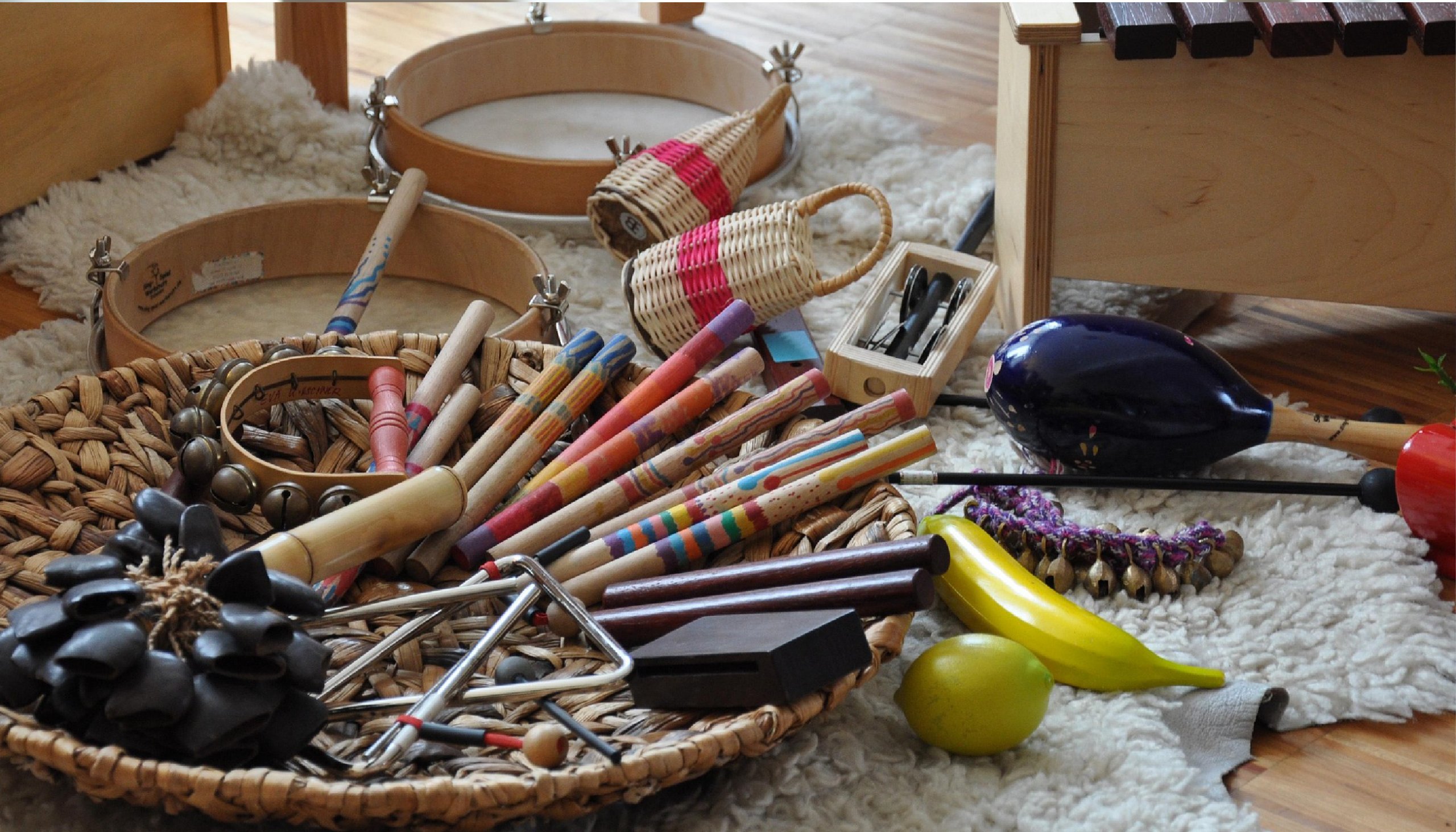
- Explore simple instruments. Shakers, drums, and xylophones give young children a tactile, hands-on way to interact with sound. Feeling the vibration of a drum teaches children about sound production in a way that no verbal explanation can match.
- Read books with a musical quality. Rhyming picture books, books with repetitive phrases, and stories with strong rhythm all build the same phonological awareness as music, and work beautifully alongside songs and singing.
- Let your child lead. Some of the most developmentally valuable musical experiences happen when children are free to explore sound in their own way. Follow their cues, join their invented songs, and celebrate their musical experiments with genuine enthusiasm.
What to Look For in a Music Enrichment Programme
When you are considering a structured music programme for your child, not all classes are created equal, especially for the under-fours. The most effective programmes for babies, toddlers, and preschoolers are built around how young children actually develop, not around instrument technique or performance outcomes. A well-designed programme at this age focuses on sensory stimulation, caregiver bonding, and the early auditory foundations of language for the youngest participants, before expanding to include movement, social interaction, and thematic learning as children grow.
Look for programmes that incorporate movement, tactile instruments, visual cues, and vocal play rather than relying on passive listening. The best early childhood music programmes deliberately engage multiple learning styles, including musical, kinesthetic, linguistic, and logical intelligences, because children learn in different ways and a programme that targets only one pathway will leave some children behind. It is also worth asking whether the curriculum follows developmental milestones and whether the educators have training in early childhood development as well as music. A music class led by someone who understands how a two-year-old’s brain works is a fundamentally different experience from one led by a musician who primarily works with older children.
Finally, look at the quality and intentionality of the music itself. Originally composed songs written to specific developmental and educational objectives tend to be more effective learning tools than generic nursery rhymes borrowed from other contexts. When curriculum themes, general knowledge, and developmental goals are built directly into the music, children are not just learning to enjoy music. They are absorbing language, concepts, and cognitive frameworks through the most memorable medium available to the young brain.
The Bottom Line for Parents
Music is not an enrichment extra. For children from birth to four years, it is one of the most powerful developmental tools we know of, with documented benefits across language, memory, motor skills, emotional regulation, social development, and school readiness. The science is not complicated once you strip away the jargon: young brains are built for music, and musical experiences during this early window create neural foundations that benefit children for life.
You do not need to turn your home into a concert hall. Singing at bath time, clapping together over breakfast, and dancing around the living room are all genuinely valuable. But if you want to give your child access to a structured programme that applies this science deliberately, with original music composed to specific developmental goals, caregiver involvement built into the design, and a curriculum that follows your child’s milestones from infancy through preschool readiness, there is real value in choosing a programme that takes early childhood development as seriously as it takes music.
The neural connections being formed right now, through every song sung, every beat clapped, and every instrument explored, are not just musical memories. They are the foundations of attention, language, coordination, and confidence that your child will carry forward into every classroom, and every chapter of their learning life.
Ready to Give Your Child a Musical Head Start?
At The Music Scientist, every programme — from sensory-rich infant classes to bilingual preschool readiness tracks — is grounded in developmental science and brought to life through originally composed music. Whether your child is 4 months or 47 months, there is a programme designed specifically for where they are right now.
Every child is born musical. Long before a baby can speak, they respond to rhythm, melody, and the gentle cadence of a caregiver’s voice. This universal connection to music is precisely why it holds such extraordinary promise for children with special needs. In inclusive classrooms — where learners of all abilities sit, move, and grow together — music is not simply an enrichment add-on. It is one of the most powerful tools educators and parents have to bridge developmental gaps, build confidence, and create a genuine sense of belonging.
Adapting music activities for special needs children does not require a complete curriculum overhaul. It requires thoughtful intention: understanding who is in the room, what each child brings, and how music can meet them where they are. Whether you are an early childhood educator navigating a mixed-ability preschool class, or a parent wondering how to support your child’s development at home, this guide offers practical, research-informed strategies to make music truly inclusive — from the very first beat.
Why Music Matters for Children with Special Needs
Music engages the brain in a way that few other activities can. Unlike many learning modalities that activate a single region of the brain, music simultaneously stimulates areas responsible for language, emotion, memory, and motor control. For children with developmental differences, this breadth of neural engagement creates multiple entry points for learning — and multiple pathways to success. It is no coincidence that music is often described as a universal language; for children who struggle with speech, communication, or social connection, it can offer a voice where words fall short.
Research consistently shows that children with developmental differences who engage regularly with music can see meaningful improvements across a range of skills. Studies have documented gains in coordination, processing speed, and even spatial reasoning among neurodiverse children who participate in music programs. For children with speech delays, music therapy has been shown to improve phonological capacity and language comprehension, with some studies noting that developmental age converged with biological age over the course of treatment. These are not small, incidental gains — they reflect the deep, structural impact that rhythmic and melodic engagement has on developing brains.
Beyond the neuroscience, music also meets a deeply human need. For children who may feel different, uncertain, or overwhelmed in a classroom setting, music offers a space where participation looks different for everyone — and that is perfectly acceptable. A child who cannot yet hold a conversation may tap a drum perfectly on the beat. A child with limited mobility may sway gently and still be fully part of the musical experience. In this way, music is inherently inclusive before any adaptation is even made.
Understanding Diverse Learners in the Music Classroom
No two children with special needs are alike, and this is perhaps the most important principle to carry into any inclusive music setting. A child on the autism spectrum may have a heightened sensitivity to high-pitched sounds or sudden volume changes, while another may find the predictable structure of a repeated song deeply calming. A child with motor delays may need instrument modifications to participate fully, while a child with a language processing difference may thrive in a movement-based activity that does not rely on following verbal instructions. Understanding these distinctions is the starting point for thoughtful adaptation.
Some of the most common learning profiles you may encounter in an early childhood inclusive classroom include children with autism spectrum disorder (ASD), sensory processing differences, speech and language delays, attention difficulties (such as ADHD), developmental delays, and physical or motor challenges. Each of these profiles responds differently to musical stimuli. For instance, children with sensory processing issues may find that certain sounds — particularly loud volumes, fast tempos, or high-pitched tones — can be a source of anxiety rather than joy. Being mindful of this from the outset, rather than retrofitting activities after distress occurs, makes a meaningful difference in how safe and welcome every child feels.
The guiding philosophy of an inclusive music classroom is not uniformity — it is equity. Every child participates, but participation may look different. One child claps along, another taps their foot, another watches and absorbs. All of these are valid, meaningful forms of musical engagement, and all deserve equal encouragement and recognition.
Setting Up an Inclusive Music Environment
The physical and sensory environment of a music classroom carries enormous weight for children with special needs. Before any activity begins, the room itself communicates safety or overwhelm. A thoughtfully arranged space considers how children with different mobility needs can navigate freely, where instruments are placed and how accessible they are, and whether the acoustics of the room might amplify sound in ways that cause distress for sensory-sensitive children. Simple adjustments — soft rugs to absorb sound, clear floor pathways, instruments at child height, and a designated quiet corner — can transform a child’s experience from the moment they walk in.
Visual supports are equally important. Many children with communication or cognitive differences rely heavily on visual cues to understand routine and expectation. Displaying a picture schedule of the session’s activities, using coloured cards to signal transitions, or placing visual symbols near instruments to indicate how they are used all reduce the cognitive load on children who struggle to process verbal instructions in real time. These supports do not detract from the musical experience; they make it accessible to children who would otherwise spend their energy trying to decode the environment rather than engaging with the music.
Predictability is another cornerstone of an inclusive music space. Children with autism, anxiety, or sensory processing differences often find comfort in knowing what comes next. Starting every session with the same welcome song, using a consistent musical cue to signal transitions between activities, and ending with a familiar goodbye routine creates a reliable structure that allows children to relax into the learning rather than brace for the unexpected. Over time, these musical anchors become deeply meaningful — children begin to anticipate, participate, and even initiate them.
Multisensory Music Activities That Work for Every Child
Multisensory instruction — engaging children through sound, sight, touch, and movement together — is one of the most effective approaches in inclusive music education. When a concept or experience is presented through multiple sensory channels simultaneously, children have more routes to understanding and more ways to demonstrate what they know. For children with special needs, this approach is especially powerful because it builds in natural differentiation: children engage with the activity through whichever senses are most accessible and comfortable for them.
Here are some multisensory music activities that translate beautifully in inclusive early childhood settings:
- Scarf dancing: Flowing scarves turn movement into a visual experience, helping children with sensory sensitivities or motor differences engage physically at their own pace while tracking colour and motion.
- Textured percussion play: Offering instruments with different surface textures — smooth maracas, rough shakers, soft fabric drums — invites tactile exploration alongside auditory engagement, making the experience richer for sensory-seeking children.
- Echo songs and call-and-response: Simple back-and-forth song structures encourage vocal participation and working memory without requiring children to hold complex sequences in their minds. These are also excellent for children with speech delays, as the musical scaffold supports sound production in a low-pressure way.
- Musical story dramatisation: Pairing music with simple narrative movement (stomping like a dinosaur, swaying like a tree in the wind) gives children who struggle with verbal comprehension a kinesthetic route into language and imagination.
- Freeze dance with visual cues: Adapting classic freeze dance by pairing the music stop with a visual signal (a raised coloured card or a hand sign) ensures that children who rely on visual processing can fully participate alongside their peers.
The key across all of these activities is flexibility without lowering the bar. Multisensory music activities do not simplify the experience — they widen the door so that more children can walk through it. When every child can participate in their own way, the entire classroom community benefits from a richer, more diverse form of engagement.
Rhythm, Movement, and Motor Development
Rhythm is arguably the most primal element of music, and it is also one of the most therapeutically potent for children with developmental differences. Research has shown that rhythmic auditory stimulation enhances neural synchronisation between the auditory and motor cortices, supporting not only rhythm perception but also executive function, memory, and language processing. In practical terms, this means that activities as simple as clapping to a beat or tapping a drum in time with a song are doing meaningful developmental work beneath the surface.
For children with motor delays or coordination challenges, rhythm-based movement activities provide a structured, enjoyable way to practise gross and fine motor skills. Beating a drum develops hand-eye coordination and bilateral integration. Marching to music strengthens core stability and spatial awareness. Clapping games build fine motor control and timing — skills that directly translate to early writing readiness. These activities are also naturally motivating in ways that isolated therapeutic exercises often are not, which means children are more likely to persist through challenge and build genuine competence over time.
When planning rhythm and movement activities for an inclusive classroom, consider offering a range of participation options. A child who cannot yet stand independently might tap a small drum on a tray. A child with limited grip strength might use adaptive instrument holders (such as cuffs that hold shakers against the wrist) to join in percussion play. A child who is overwhelmed by group movement might begin by observing and gradually lean into participation as comfort builds. The goal is never forced participation — it is creating conditions where wanting to join in feels irresistible.
The Groovers programme at The Music Scientist exemplifies this approach beautifully, weaving music and dance into developmentally appropriate experiences that build motor skills, body awareness, and rhythmic confidence in toddlers — with space for every child to engage in the way that feels right for them.
Adaptive Strategies for Different Learning Needs
Adapting music activities does not mean creating an entirely separate programme for children with special needs. In most cases, thoughtful modifications to existing activities are all that is required to make them accessible to a wider range of learners. The following strategies provide a starting framework that can be layered into nearly any music session:
For Children with Sensory Sensitivities
- Start sessions with softer, slower music and gradually increase tempo and volume as children settle in.
- Avoid sudden loud sounds (for example, a surprise cymbal crash) without warning.
- Offer noise-reducing ear defenders for children who find sustained sound overwhelming, allowing them to remain in the room while managing their sensory input.
- Choose instruments with muted or softer tones initially (fabric drums, soft shakers) before introducing louder percussion.
For Children with Communication Differences
- Use gesture, facial expression, and visual cues alongside verbal instruction so that understanding does not depend on language alone.
- Incorporate songs with simple, repetitive lyrics that make it easier for children to anticipate and join in over time.
- Allow children to communicate musical engagement non-verbally — through movement, expression, or instrument play — without requiring spoken responses.
- Use familiar tunes and nursery rhymes as foundations, modifying the words to match lesson themes while keeping the melody predictable and accessible.
For Children with Attention Difficulties
- Keep individual activity segments short (5–7 minutes) and varied to sustain engagement across different tasks.
- Use musical cues to manage transitions — a specific song to signal cleanup, a different one to signal gathering time — which reduces the cognitive demand of shifting between activities.
- Incorporate movement frequently; children who struggle to sit still for extended periods often find it far easier to engage when their bodies are actively involved in the learning.
- Offer sensory tools (a beanbag to hold, a fidget shaker to squeeze) that allow children to regulate their arousal level without leaving the group.
For Children with Motor or Physical Challenges
- Modify instrument play to suit the child’s physical capabilities — using adaptive cuffs, placing instruments on a tray at a comfortable height, or allowing hand-over-hand support from an educator.
- Offer seated alternatives to all standing movement activities so that physical limitation never becomes a barrier to participation.
- Celebrate participation in whatever form it takes — watching, listening, and micro-movements are all valid forms of musical engagement.
Collaborating with Families and Support Teams
Inclusive music education does not happen in isolation. The most effective outcomes occur when educators, families, therapists, and support staff work together with a shared understanding of each child’s needs, strengths, and goals. For educators working with children who have Individual Education Plans (IEPs) or who receive external therapeutic support, taking time to read those plans, attend meetings where possible, and connect with the child’s wider support team pays enormous dividends in the classroom. Insights from occupational therapists, speech-language pathologists, or behavioural support workers can directly inform which music activities are most appropriate, which sensory considerations to build in, and which participation goals align with the child’s broader developmental targets.
Families are also indispensable partners in this process. When parents understand the musical strategies being used in class, they can reinforce them at home — turning bath time into a rhythm game, singing a familiar classroom song during transitions, or using a lullaby as a calming anchor at the end of a challenging day. This continuity between the classroom and home environment is one of the most powerful ways to accelerate development for children with special needs. Research suggests that informal music-making at home — improvised songs, simple instrument exploration, movement play to music — produces measurable improvements in attention, early numeracy, and social skills in young children. For children with developmental differences, these home extensions of classroom music learning are not supplementary — they are foundational.
The Tenderfeet programme at The Music Scientist is designed with exactly this caregiver-child partnership in mind, creating shared musical experiences for infants and their caregivers that extend naturally into the home environment. Similarly, the Happyfeet programme for 18-month-olds recognises that the most powerful learning happens when music is experienced together — child and caregiver in rhythm, in play, and in joy.
How The Music Scientist Supports Inclusive Learning
At The Music Scientist, inclusion is embedded in the very philosophy of how music is taught. Every programme is built around the understanding that children develop at different rates, in different ways, and through different strengths — and that music, applied thoughtfully, can meet each child exactly where they are. Rather than following a one-size-fits-all curriculum, The Music Scientist’s programmes are aligned with developmental milestones, targeting multiple intelligences including musical, kinesthetic, logical, and verbal learning styles in every session.
For preschool-aged children preparing for formal schooling, the SMART-START English and SMART-START Chinese programmes combine original music with thematic learning to build memory, focus, early literacy, and language skills in ways that support children with diverse learning profiles. Music is not used as a background activity here — it is the primary vehicle for cognitive development, making abstract concepts concrete and memorable through melody and rhythm.
The Scouts programme takes this further by integrating science concepts into catchy musical frameworks, harnessing the brain’s natural affinity for melody to strengthen knowledge retention and curiosity. For children who find traditional instruction difficult to access, having a musical scaffold around important concepts is not just helpful — it can be genuinely transformative. The Music Scientist also partners directly with preschools across Singapore, bringing their developmentally focused, inclusive approach into educational institutions so that the benefits of adaptive music learning reach children within their familiar school environments.
Every Beat Counts
Creating an inclusive music classroom is not a destination — it is an ongoing practice of listening, adapting, and responding to the children in the room. The strategies explored in this article — from multisensory activity design and sensory-considerate environments to collaborative family partnerships and adaptive instrument use — are not exhaustive blueprints. They are starting points, invitations to look at each child with fresh eyes and ask: how can music meet this learner today?
The research is clear, the creativity is boundless, and the stakes are meaningful. For a child who struggles to communicate, a song may be the first time their voice feels powerful. For a child with motor challenges, keeping a beat on a drum may be the first time their body moves in confident coordination. For a child who feels different from their peers, making music together may be the first time they feel completely and unreservedly included. These moments are not incidental. They are, in many ways, the whole point.
Music has always had the capacity to reach across differences and find what is shared. In inclusive classrooms, that is not just a beautiful idea — it is the most practical, evidence-backed tool we have.
Ready to Explore Inclusive Music Learning for Your Child?
At The Music Scientist, we believe every child deserves a joyful, developmentally rich musical experience — regardless of where they are in their journey. Our programmes are thoughtfully designed to nurture young learners from 4 to 47 months through music, movement, and sensory play that honours every child’s unique pace and learning style.
Whether you are a parent looking for the right programme for your little one, or a preschool interested in bringing our holistic music approach to your school, we would love to connect with you.
Every parent has watched it happen: a child who couldn’t sit still for a bedtime story is suddenly perfectly absorbed, swaying along to a favourite song. It is not a coincidence, and it is not magic. There is a real, measurable reason why sound captures the attention of children who struggle to focus on almost everything else.
The relationship between music and ADHD has become one of the most actively researched areas of developmental neuroscience, and what scientists are finding is both fascinating and deeply practical. Sound — specifically structured, rhythmic, musical sound — interacts with the very parts of the brain that are underactive in children with ADHD. It can sharpen focus, calm impulsive behaviour, support emotional regulation, and even accelerate learning. But the science goes further than simply putting on a playlist. The type of musical engagement matters enormously, and so does when it starts.
This article unpacks what the research tells us about how sound affects the ADHD brain, what kinds of music help (and which do not), and — crucially — why building strong musical foundations in early childhood may be one of the most powerful things you can do for your child’s long-term focus and learning, long before any formal diagnosis is ever on the table.
What ADHD Means for the Developing Brain
Attention Deficit Hyperactivity Disorder (ADHD) is a neurodevelopmental condition that affects far more children than many parents realise. ADHD affects approximately 5% of children globally, making it the most prevalent behavioural health condition in this age group. It is characterised by persistent difficulties with attention, impulsivity, working memory, and — in many children — hyperactivity. These are not simply behavioural problems or a reflection of poor parenting. They arise from measurable differences in brain development, particularly in areas governing executive function: the prefrontal cortex, the basal ganglia, and the dopaminergic reward pathways.
One key factor that often goes underappreciated is the role of timing. Children with ADHD commonly struggle with the internal perception of time — tracking durations, anticipating sequences, and regulating the pace of their own actions. This timing difficulty cascades into many of the challenges families see daily: difficulty transitioning between activities, losing track of instructions, struggling to wait their turn. Understanding this gives us a crucial clue about why music, which is built entirely on rhythm, structure, and predictable timing, has such a distinctive effect on the ADHD brain.
Why Sound Matters So Much for ADHD Brains
The ADHD brain is not less capable — it is differently regulated. One of the central challenges is dopamine: the neurotransmitter responsible for motivation, reward anticipation, and sustained effort. In ADHD, dopamine pathways are less efficient, which is why tasks that feel intrinsically rewarding are far easier to sustain than tasks that feel neutral or effortful. This is also why music, which reliably triggers dopamine release, has such an outsized effect.
Research has confirmed that music engages the brain’s reward system, releasing dopamine and creating positive emotional associations with learning. When the ADHD brain encounters music, it receives both a reward signal and a structural scaffold at the same time. The rhythm provides an external timing framework to compensate for the internal one that is underdeveloped. The melody holds attention by keeping the brain anticipating what comes next. And the emotional content of music activates the limbic system, helping regulate arousal and mood. It is a remarkably complete package for a brain that struggles with all of these things independently.
Beyond dopamine, research into rhythmic auditory stimulation has found that rhythmic structures and specific sound frequencies actively engage the brain’s dopaminergic reward pathways, strengthening cognitive control networks and improving neural connectivity in areas responsible for sustained attention. This means music is not just a pleasant distraction — it is literally exercising the neural circuits that children with ADHD need most.
Passive vs. Active Music: Two Different Kinds of Benefit
When most people think about music and ADHD, they imagine a child putting on headphones to concentrate on homework. This is passive listening, and it does have genuine benefits — particularly for certain children and certain types of tasks. A growing body of research confirms that carefully selected background music can help some children with ADHD filter out distractions, sustain attention, and improve memory and cognitive performance. But passive listening is only part of the story.
Active music engagement — singing, playing instruments, moving to rhythm, participating in call-and-response games — produces a qualitatively different kind of benefit. Where passive listening temporarily boosts focus during a task, active music participation actually trains the neural circuits involved in attention and inhibitory control over time. Music therapy research demonstrates that activities such as rhythm-based exercises and improvisation not only stimulate attention but also improve executive function, enabling children to better plan, organise, and control their impulses. The brain is not just receiving music — it is actively processing, predicting, and responding to it, all of which constitutes a form of cognitive workout.
For children with ADHD specifically, the combination of physical movement with music produces particularly strong effects. Rhythmic movement activities require children to match their movements to the current music, inhibit incorrect movements, and synchronise with an external beat — all of which directly exercises the inhibitory control and timing functions that are weakest in ADHD. This is why movement-integrated music experiences are especially valuable, and why they are foundational to the approach at programmes like Groovers, The Music Scientist’s music and dance programme for toddlers.
How Rhythm Builds Focus and Impulse Control
Of all the elements in music, rhythm has the most direct relationship with the challenges of ADHD. When children participate in activities requiring them to follow rhythmic patterns, the areas in the prefrontal cortex responsible for attention, working memory, and impulse control show increased activation. This is not coincidental — it reflects the deep overlap between the neural systems for beat processing and those for executive function.
A 2019 randomised controlled study found that a rhythm-based music intervention enhanced inhibitory control in preschoolers — a result that a pitch-based music intervention and a sports intervention did not replicate. The specificity of this finding matters: it was not simply that music helped, or that physical activity helped, but that rhythm in particular is what drove improvements in inhibition. A 2024 meta-analysis further demonstrated that music training plays a privileged role compared to other activities — including sports, visual arts, and drama — in improving children’s executive functioning, with a particular effect on inhibitory control.
Research by Rickson (2006) demonstrated that drumming interventions improved self-control and reduced impulsive behaviours in children and adolescents with ADHD, with the structured rhythmic patterns providing external regulation that helped participants develop internal regulatory skills over time. More recently, a 2024 study on gamified rhythmic training found that active rhythm interventions improved both motor and perceptual timing in children with ADHD, with longer training sessions associated with greater improvements in timing abilities. The practical implication is clear: regular, structured rhythmic engagement is not just enjoyable — it is neurologically developmental.
Music and Emotional Regulation in Children
ADHD is often discussed in terms of focus and hyperactivity, but one of its most challenging dimensions — especially for families — is emotional dysregulation. Children with ADHD frequently experience heightened anxiety, difficulty managing frustration, and big emotional responses that feel disproportionate to the situation. These are not character flaws; they reflect the same underlying differences in prefrontal regulation and dopamine sensitivity.
Music addresses emotional dysregulation through multiple pathways simultaneously. On a neurochemical level, music reduces stress hormones like cortisol while increasing dopamine — the neurotransmitter associated with reward and positive affect. On a structural level, music therapy provides what researchers describe as a safe, structured, socially welcoming forum to improve mood and motivation, strengthen weak areas of the brain, and address core symptoms. Creating or engaging with music gives children a natural and non-verbal outlet for emotional expression, one that does not require the language or reflective capacity that formal emotional regulation strategies demand.
Group music activities add another layer of benefit. When children with ADHD integrate into a group using music as a shared medium, they not only gain a sense of belonging and support but also improve self-efficacy and build the positive feedback loops that reinforce behavioural regulation. The synchronisation required by group music — matching a rhythm with peers, responding to call-and-response cues, waiting for your turn in a musical sequence — is essentially a structured rehearsal of the social and behavioural skills that ADHD makes difficult. This is precisely the kind of experience that programmes like Scouts at The Music Scientist are designed to cultivate through catchy, theme-based melodies in a group setting.
What Kinds of Music Actually Help?
For parents wondering how to use music practically at home or during focused activities, the research offers some useful guidance — though with the important caveat that children respond individually, and experimentation matters.
For background listening during focused tasks:
- Instrumental music with a clear, steady rhythm tends to work best — think classical composers like Bach, Mozart, or Handel, or calm lo-fi instrumental tracks
- Familiar, self-chosen music tends to be more effective than unfamiliar selections, as the brain is not distracted by processing novel sounds
- Relaxing, medium-tempo music generally outperforms fast-paced or highly stimulating tracks
- White noise or steady ambient sound can also help, particularly for children with inattentive-type ADHD, where steady background sound improves cognitive performance
Music types and formats that tend to be less helpful during focused work:
- Songs with lyrics in a familiar language (the brain processes words, competing directly with reading or listening tasks)
- Abrupt, loud, or heavily percussive music that spikes arousal rather than sustaining it
- Extremely fast-paced or unpredictable music that increases cognitive load rather than reducing it
- Songs the child has very strong feelings about — whether loved or disliked — as the emotional response pulls attention away from the task
It is worth noting that what works during homework is a different question from what is most developmentally beneficial overall. The music types that best support focused background work are not necessarily the same as those that build the strongest long-term neurological foundations. For that, active rhythmic engagement — dancing, singing, instrument play, and movement-based music experiences — remains the most powerful approach, especially for young children.
Building the Foundation Before ADHD Becomes a Concern
One of the most important insights from the research on music and early brain development is that the most impactful time to build the neural foundations of focus, self-regulation, and executive function is before formal schooling begins — and in most cases, before ADHD would even be formally diagnosed. Early musical training, especially before the age of seven, leads to heightened brain plasticity, resulting in an increased number of neural connections and synapses, with direct improvements in attention, working memory, and task switching.
For babies and toddlers, structured musical engagement is not about addressing ADHD — it is about building the foundational cognitive architecture that makes attention, self-regulation, and executive function possible in the first place. Rhythmic play, call-and-response games, movement to music, and sensory-rich musical experiences all work to wire the developing brain for focus and emotional regulation long before formal schooling begins. Longitudinal studies indicate that regular engagement with rhythmic musical activities during early childhood correlates with better self-regulation skills during the preschool years.
The Music Scientist’s early childhood programmes are built precisely around these developmental windows. Tenderfeet, designed for infants from birth to around 8 months, weaves music, movement, and sensory play into a developmental framework that begins laying the groundwork for attention and regulation from the very first months of life. For toddlers around 18 months, Happyfeet builds on those early sensory foundations to support emotional regulation and expanding attention spans, capitalising on the critical window between 12 and 24 months when the brain is particularly receptive to rhythmic patterns that support both speech and movement coordination.
As children move into the 24-to-47-month range, executive function and social cognition undergo some of their most significant development. Children at this stage particularly benefit from group musical activities that require taking turns, following multi-step directions, and coordinating with peers. The Groovers programme targets this critical period with music and dance activities that develop these emerging cognitive and social capacities, while Scouts integrates science-themed catchy melodies to build both memory and focused engagement. For children approaching school age, the SMART-START English and SMART-START Chinese programmes further scaffold these developmental gains into school readiness, ensuring that the attentional and regulatory skills built through music translate seamlessly into formal learning environments.
Practical Ways to Use Music at Home
You do not need a clinical setting or formal training to bring these benefits into your child’s daily life. Some of the most powerful music-based developmental activities are also the simplest — and the most enjoyable for children and parents alike.
- Start with rhythm games: Clapping patterns, tapping on surfaces, or bouncing to a beat all engage the same neural circuits that underpin attention and impulse control. Even very young infants respond to and benefit from rhythmic interaction with a caregiver.
- Sing throughout the day: Transition songs (a specific song for cleaning up, another for getting ready) give predictable rhythmic structure to activities that children with ADHD find difficult. The music becomes an external timing cue that reduces the need for repeated verbal reminders.
- Move to music: Dancing, marching, and stretching to music are not just fun — they combine the executive function benefits of rhythmic processing with the motor regulation practice that the ADHD brain needs. Moving in sync with a beat specifically requires the inhibitory control that ADHD makes difficult, making it a genuine workout for the prefrontal cortex.
- Use background music intentionally: For older preschoolers working on a puzzle or drawing, calm instrumental music in the background can support sustained focus. Observe your child’s response — some thrive with it, while others do better in quiet.
- Enrol in structured musical play: Consistent, developmentally appropriate music programmes offer what home activities cannot easily replicate: a structured group environment, a trained educator who scaffolds the musical experience, and the social dimension of synchronising with peers. For young children aged 4 to 47 months, early enrichment classes provide exactly this kind of systematic, weekly engagement.
The Bottom Line
The connection between music and ADHD is not a parenting hack or a well-meaning myth — it is grounded in decades of neuroscience, and the research is becoming increasingly clear. Sound, rhythm, and structured musical engagement interact directly with the neural systems that ADHD disrupts: dopamine pathways, prefrontal executive function networks, the brain’s internal timing mechanisms, and the emotional regulation circuits of the limbic system. Both passive listening and active music participation offer genuine benefits, with active engagement producing the more lasting neurological gains.
For parents of young children in Singapore, the most empowering message from this research is that you do not have to wait for challenges to appear before acting. The early childhood years — from birth through the preschool period — represent the most fertile window for building the very brain architecture that supports focus, self-regulation, and learning. Music is one of the most powerful tools available for doing exactly that, and the best time to start is now.
Give Your Child’s Brain the Best Start
At The Music Scientist, our programmes for babies, toddlers, and preschoolers (aged 4 to 47 months) are designed around the exact developmental science explored in this article. Every class is a purposeful opportunity to build attention, self-regulation, motor skills, and a genuine love of learning — through music, movement, and play.
If you have ever watched a restless child suddenly go still the moment a familiar song comes on, you have already witnessed what neuroscientists spend careers trying to quantify. Music does something to the brain that very little else can replicate — and for children with ADHD, that something may be particularly significant.
In recent years, music therapy has attracted growing interest as a non-pharmacological approach to supporting children with Attention Deficit Hyperactivity Disorder. Parents searching for complementary strategies beyond medication, and educators looking for ways to engage distracted learners, are increasingly asking the same question: does it actually work? The honest answer is nuanced. The research is promising, the mechanisms are real, and the practical applications are accessible — but the science also has important gaps that any informed parent should understand.
This article unpacks the current evidence base for music therapy and ADHD, addresses where that evidence is limited, and offers concrete, research-informed ways to harness the power of music at home. We will also explore why the early childhood years represent a particularly powerful window for music-based development — one that extends well beyond managing symptoms.
What Is Music Therapy, and Is It the Same as Music Classes?
It is worth pausing on this distinction before diving into the research, because the terms are often used interchangeably when they describe quite different things. Music therapy is a clinical discipline delivered by credentialed professionals who use music-based interventions to target specific therapeutic goals — reducing hyperactivity, improving impulse control, building social skills. Sessions are structured around a child’s assessed needs and tracked against measurable outcomes. Music enrichment or music education, by contrast, is broader and developmental in focus: it builds musical skills, cognitive capacity, creativity, and social confidence through structured learning.
Both approaches draw on the same underlying neuroscience, and both have documented benefits for children with attention challenges. The distinction matters primarily because research studies on “music therapy” specifically may not capture the benefits of consistent, high-quality music education over time — and vice versa. As a parent, understanding which type of intervention you are considering helps you set realistic expectations and find the right fit for your child.
Why the ADHD Brain Responds to Music
To understand why music holds such promise for ADHD, it helps to understand what is happening neurologically. ADHD is a highly prevalent neurodevelopmental disorder that often leads to significant difficulties with attention, impulsivity, and working memory. At the brain level, these challenges are closely connected to how the ADHD brain regulates dopamine — a neurotransmitter that governs motivation, reward, and the ability to sustain focus. Music, as it turns out, is one of the most reliable natural dopamine triggers available.
Dopamine serves as a reward prediction error signal that regulates the neural circuits of timing. Music is often characterised by predictable patterns such as repetitive melodies, as well as surprises like sudden tempo changes — all of which boost dopamine release. This is significant because the default mode network — a set of brain regions that tends to be overly active in ADHD — often leads to daydreaming, zoning out, or jumping from one thought to another.Music therapy may help shift activity away from the default mode network by engaging brain systems involved in timing, attention, and cognitive control.
Rhythm also plays a structural role that goes beyond simple enjoyment. Neuroimaging techniques such as electroencephalogram (EEG) show that music therapy increases alpha power and decreases delta power, which correlates with an increased attention span.An increase in neurotransmitter levels of dopamine and serotonin also shows the neurobiological basis for its effectiveness. In practical terms, the predictable pulse of music acts as an external scaffold — it gives the ADHD brain a rhythmic framework to latch onto in moments when internal self-regulation is failing.
Music activates multiple parts of the brain at once, including those responsible for attention, memory, and emotion. For neurodivergent individuals, especially those with ADHD, this kind of whole-brain stimulation can help improve concentration and make routine tasks feel less overwhelming. It is also worth noting that individuals with ADHD frequently engage with music, and previous research has shown that music listening can serve as a means of increasing stimulation and self-regulation. In other words, many ADHD children are already instinctively drawn to music as a coping tool — the science is simply catching up with what they already know.
What the Research Actually Says
Multiple systematic reviews and meta-analyses have now examined the evidence on music therapy and ADHD in children and adolescents. The overall picture is encouraging, though not yet definitive. Among the main effects of music on ADHD, it can be treated as a non-pharmacological therapy that improves the level of concentration, raises self-esteem, intervenes in the progressive development of social skills, and promotes control of hyperactivity. These benefits are consistently observed across a range of study designs and intervention types.
A 2025 systematic review and meta-analysis published in PubMed found that music therapy was associated with a trend of efficacy involving ADHD symptoms, with an effect size of 1.18.The authors concluded that music therapy is an important therapeutic tool for ADHD. Separately, a scoping review of neurobiological evidence found that music therapy improves attention span in this population without the side effects associated with pharmacological treatments. It is described as a promising intervention for enhancing attention span in children and adolescents with ADHD.
Research has also examined the emotional dimension, given that anxiety and depression are common co-occurring challenges in ADHD. Following music therapy intervention, studies reflect a significant decrease in characteristic ADHD behaviours including hyperactivity, impulsivity, attention deficit, and behavioural disorder. Music therapy can be a helpful tool to develop social and emotional learning as a core element of educational systems, and it helped children regulate not only ADHD symptoms but also emotions and feelings related to daily life.
Traditional pharmacological treatments, although effective, often carry potential side effects, which positions music therapy as a promising non-pharmacological alternative to alleviate symptoms and improve social, cognitive, and emotional skills without the associated risks. This framing is important: the conversation around music therapy is not about replacing clinical support, but about expanding the toolkit available to families.
Honest Limitations: Where the Evidence Falls Short
Any responsible look at this topic must acknowledge where the research currently stands — and where it does not. The excitement around music therapy and ADHD is real, but so are the gaps. Most studies of music therapy found that it can generate significant benefits for individuals with ADHD. However, the strength of these findings was limited by inconsistencies among the studies, such as variations in ADHD diagnosis, comorbidities, medication use, and gender. This means results are harder to generalise across all children with ADHD, who represent a highly diverse population.
Sample size is another recurring challenge. Small sample sizes present a notable limitation, with six out of twenty included studies in one major review featuring fewer than 20 participants, which warrants caution in interpreting findings.Most studies also focus on evaluating the short-term effects of interventions, with a lack of long-term tracking studies. Research on the specific mechanisms of music interventions, especially their neurobiological mechanisms, is still insufficient.
Despite the promising potential of music interventions, current research still faces challenges such as small sample sizes, a lack of long-term follow-up data, and the absence of standardised intervention protocols. This last point — the lack of standardisation — is particularly relevant for parents. When one study uses drum-based improvisation and another uses structured listening sessions, and both are labelled “music therapy,” comparing outcomes becomes difficult.
There is also an important age gap in the literature. The majority of studies examined in existing reviews focused on children and adolescents, with limited data on adults. This lack of representation requires caution when generalising findings to adult populations, as the effects of music interventions may differ significantly across age groups. Similarly, very few studies focus specifically on toddlers and preschoolers — the age group where early music enrichment may have its most profound developmental impact, and where formal ADHD diagnosis has not yet typically occurred.
None of this means music therapy does not work. It means the science is still maturing, and that parents should approach music-based interventions as a valuable complement to professional guidance rather than a standalone solution.
Practical Ways to Use Music for ADHD at Home
The good news is that many of the benefits linked to music therapy do not require a clinical setting. The mechanisms — dopamine release, rhythmic structure, sensory engagement — are activated by music itself. Here are research-informed strategies that parents can build into daily routines.
Use Rhythm to Anchor Transitions
Children with ADHD often struggle most during unstructured moments between activities — the gap between finishing breakfast and getting dressed, or between leaving the playground and settling to homework. A consistent rhythmic signal such as a clapping pattern, a drum beat, or a simple musical phrase can serve as a reliable, predictable cue that helps children shift attention and prepare for what comes next.Setting simple daily transitions, like tidying up or getting ready to leave, to a consistent song means the rhythm acts as a predictable cue that eases the anxiety many children with ADHD feel around change.
Try Beat-Keeping and Rhythm Games
Simple beat-based activities such as tapping a rhythm while reciting steps to a task, or using a steady beat during a transition routine, can add structure to moments that might otherwise feel unpredictable. You do not need instruments. Beat-keeping with household items — wooden spoons on pots, tapping on different surfaces, shaking containers filled with rice — works just as well. Varying the tempo can shift your child’s energy level up or down. This kind of active music-making also supports impulse control: children learn to wait for their turn, to listen before responding, and to match their movements to an external beat.
Use Freeze Dancing to Build Inhibitory Control
Freeze dancing — playing music and dancing, then freezing when the music stops — builds inhibitory control, one of the core executive function challenges in ADHD, in a way that feels like pure play. This is exactly the kind of activity that delivers therapeutic value without the clinical label. The child experiences it as a game; the brain experiences it as structured practice in stopping, starting, and self-monitoring.
Build Sequencing Skills Through Song
Songs with predictable, repeating sequences can support working memory and planning skills. Learning and repeating a rhythmic pattern requires a child to hold information in mind and execute steps in order, which directly engages the same executive function skills that are often challenging for children with ADHD. Multi-step morning routines, for example, become far easier to navigate when each step is paired with a song cue or sung aloud together.
Tune Music to Your Child’s Energy State
Music can help regulate the nervous system. Slow, soft music is calming and can ease anxiety, while loud, up-tempo music is alerting and helps an under-stimulated nervous system. The key is observing your child’s response, experimenting across different tempos and genres, and building a small repertoire of go-to tracks for different moments in the day — wind-down after school, energy release before dinner, quiet focus during creative play. Some children with ADHD may sustain attention more easily when there is consistent, low-stimulation background sound, though responses to auditory input vary and should be observed individually.
Why the Early Years Matter Most
Much of the public conversation about music therapy and ADHD focuses on school-age children who have already received a diagnosis. But the developmental window of 0 to 5 years is arguably the most important period of all — not because ADHD symptoms are most severe then, but because the brain is at its most plastic and most responsive to environmental input. Music therapy provides a safe, structured, socially welcoming forum to improve mood and motivation, strengthen weak areas of the brain, and address core symptoms. Because the brain has the capacity to change through neuroplasticity, when musical activities re-shape the brain, it can have lasting effects on learning.
For babies and toddlers, structured musical engagement is not about addressing ADHD — it is about building the foundational cognitive architecture that makes attention, self-regulation, and executive function possible in the first place. Rhythmic play, call-and-response games, movement to music, and sensory-rich musical experiences all work to wire the developing brain for focus and emotional regulation long before formal schooling begins. This is precisely the approach taken in The Music Scientist’s early childhood programmes.
For infants from birth to around 8 months, Tenderfeet weaves music, movement, and sensory play into a developmental framework that begins laying the groundwork for attention and regulation from the very first months of life. Toddlers around 18 months benefit from the structured musical exploration in Happyfeet, which builds on early sensory foundations to support emotional regulation and expanding attention spans. For children aged 2 to 3, Groovers integrates music and movement in ways that develop coordination, sequencing, and social turn-taking — all core executive function precursors.
As children approach preschool age, the Scouts programme uses catchy, originally composed melodies to connect music with general knowledge themes, building memory, focus, and early literacy simultaneously. For families preparing children for formal schooling, both the SMART-START English and SMART-START Chinese preschool readiness programmes use music as the central learning medium to build cognitive, linguistic, and social readiness — giving children the strongest possible start before the demands of Primary 1.
The point is not that music enrichment will prevent or cure ADHD. Rather, consistent, developmentally appropriate musical engagement in the early years builds the same cognitive skills — sustained attention, working memory, emotional regulation, impulse control — that are most challenged by ADHD. Investing early means the brain has more resources to draw on later.
A Note for Parents
Music therapy for ADHD is neither a miracle cure nor an overhyped fad. The research is genuinely promising: music engages the dopaminergic pathways the ADHD brain struggles to regulate, provides rhythmic structure that supports executive function, and offers a non-pharmacological route to improved attention, emotional regulation, and social skills. At the same time, the current evidence base has real limitations — small studies, inconsistent protocols, and a lack of long-term follow-up data — that mean music-based approaches are best understood as a powerful complement to broader support, not a replacement for it.
What is clear, and what the science consistently supports, is that regular, engaged musical activity delivers measurable developmental benefits for young children. Whether that is through clinical music therapy, structured music enrichment classes, or simply freeze-dancing in the living room before bedtime, the act of making and responding to music trains the young brain in precisely the ways it most needs. For children with ADHD, that is meaningful. For all children, it is foundational.
Give Your Child the Musical Foundation That Lasts a Lifetime
At The Music Scientist, our programmes are built on exactly this science — combining music, movement, and sensory play to support cognitive development, focus, and school readiness in children from birth through preschool age. Whether your child is taking their very first steps in music or getting ready for Primary 1, we have a programme designed to meet them where they are.
Reach out to our team to find the right fit for your child.
If you have a child on the autism spectrum, chances are you have encountered some version of the claim that music therapy can be transformative. And if you have spent time reading about it, you may have also found yourself wading through a mix of heartfelt anecdotes, cautious clinical language, and the occasional overpromise. So what does the evidence on music therapy for autism actually show?
This article takes an honest, research-grounded look at what studies have found, where the science is strong, where it remains inconclusive, and what that means for families thinking about how music fits into a child’s development. Whether you are exploring formal music therapy or simply curious about the role of music in early childhood, understanding the evidence helps you make more informed, confident decisions.
What Is Music Therapy, Really?
Music therapy is a clinical, evidence-based health profession in which a credentialed therapist uses music interventions to address specific therapeutic goals within a professional relationship. It is not the same as music lessons, background music during play, or general music enrichment — though all of those can offer developmental value. A registered music therapist works with an individualised treatment plan, assessing the client’s needs and using targeted musical activities such as improvisation, song-writing, rhythmic movement, or active listening to meet measurable outcomes.
In the context of autism spectrum disorder (ASD), music therapy sessions are typically tailored to a child’s sensory profile, communication style, and developmental stage. The therapist may use instruments, vocal work, or movement to achieve goals around communication, behaviour, social connection, or emotional regulation. Because music engages multiple regions of the brain simultaneously, it offers a uniquely flexible medium for reaching children who may respond differently to conventional verbal or social instruction.
Why Music and Autism Are Often Discussed Together
One of the most consistently documented observations in autism research is that many individuals with ASD demonstrate a heightened sensitivity to, and often a deep affinity for, music. Some researchers have proposed that music may be processed through different neural pathways compared to speech — which helps explain why children who are minimally verbal can sometimes sing words they cannot yet say in conversation. This neurological distinction has made music a point of genuine scientific curiosity rather than mere anecdote.
Additionally, music has a structural quality that resonates with the predictability many autistic individuals find reassuring. Rhythm is repetitive. Melodies follow patterns. Songs have beginnings and endings. These features may lower anxiety, increase attention, and create conditions in which learning and social engagement feel safer. That combination of neurological responsiveness and structural predictability is precisely why clinicians began exploring music as a therapeutic medium decades ago.
What the Research Actually Shows
The body of research on music therapy and autism has grown substantially over the past two decades. While no single study is definitive, the accumulated weight of evidence points to several meaningful areas of benefit.
Communication and Language Development
One of the most consistently supported findings is that music therapy can support communication development in children with ASD. A landmark Cochrane systematic review — considered one of the gold standards in evidence-based medicine — examined multiple randomised controlled trials and found that music therapy was associated with improvements in verbal communication, non-verbal communication, and social-emotional responsiveness compared to placebo or standard care alone. Children in music therapy sessions showed greater use of words and communicative gestures, and demonstrated more initiation of joint attention with caregivers.
These gains are thought to occur partly because music naturally scaffolds language. The rhythm and melody of sung speech slow down phonetic information, making it easier to process. Songs also embed language within a memorable, emotionally engaging structure, which may help children with ASD retain and reproduce words more readily than through spoken instruction alone.
Social Skills and Engagement
Research also indicates that music therapy can improve social engagement and reciprocal interaction. Studies have found that children with ASD demonstrate more eye contact, turn-taking, and responsiveness to others during and following structured music therapy sessions. The shared experience of making music — whether through drumming together, passing instruments, or synchronising movement — creates a low-pressure context for practising social connection.
The concept of entrainment, where two people naturally synchronise their movements or rhythms, is particularly relevant here. When a child and therapist drum together or move in time to music, they are practising the neurological and behavioural foundations of social coordination. This kind of rhythmic synchrony appears to activate mirror neuron systems and reinforce the pleasurable experience of being in sync with another person.
Emotional Regulation and Sensory Processing
Many children on the autism spectrum experience challenges with emotional regulation and sensory processing. Research suggests that music therapy, when adapted to an individual’s sensory profile, can help reduce anxiety, improve self-regulation, and provide structured sensory input that feels organising rather than overwhelming. Rhythmic auditory stimulation in particular has been studied for its capacity to regulate arousal levels and help children transition between activities more smoothly.
Importantly, the therapeutic relationship itself appears to be a significant factor. When a skilled music therapist builds trust and attunement with a child over time, the music becomes a shared language through which the child feels understood. This relational element is difficult to separate from the effects of music alone, but it is also part of what makes the intervention meaningful in clinical practice.
Honest Limitations: What the Evidence Doesn’t Yet Prove
It is equally important to be clear about what the research has not yet established. The field of music therapy research, while growing, faces challenges common to many psychosocial interventions: relatively small sample sizes, variability in how interventions are delivered, difficulty blinding participants, and inconsistent outcome measures across studies. The Cochrane review noted improvements across several domains but also called for more high-quality trials before strong recommendations could be made.
Music therapy is not a cure for autism, nor does the evidence suggest it addresses all areas of difficulty equally. Gains in one domain (such as communication) do not automatically generalise to other areas without intentional therapeutic work. The quality and training of the therapist, the child’s individual profile, and family involvement all significantly influence outcomes. Parents should approach music therapy as a potentially valuable component of a broader, multidisciplinary support plan — not a standalone solution.
Music Therapy vs. Music Enrichment: Understanding the Difference
A distinction worth drawing carefully is the one between music therapy and music enrichment. Music therapy is a clinical service delivered by a credentialled professional with specific therapeutic goals for children with diagnosed conditions. Music enrichment, on the other hand, encompasses the broader world of music education, music-based play, and developmentally stimulating musical experiences designed for all young children.
Both have real value, but they serve different purposes. Music enrichment programmes — like those designed around developmental milestones for babies, toddlers, and preschoolers — foster cognitive growth, sensory exploration, language acquisition, and social confidence in typically developing children. They are not clinical interventions, but they are grounded in the same fundamental truth: music is a remarkably powerful medium for early learning and brain development.
For families whose children do not have a clinical diagnosis but who want to harness music’s developmental potential from the earliest months of life, quality music enrichment programmes offer a rich, evidence-informed foundation. From infant sensory classes to movement and melody sessions for toddlers, these experiences build the neural architecture that supports memory, attention, and communication well before formal schooling begins.
The Role of Music in Early Development for All Children
Even setting aside clinical populations, the developmental neuroscience of music is compelling. Exposure to music in the first years of life strengthens auditory discrimination, supports phonological awareness (a key predictor of reading ability), and encourages the kind of multimodal learning — hearing, moving, seeing, and feeling simultaneously — that builds robust neural connections. Rhythm-based activities improve motor coordination and timing. Call-and-response singing develops turn-taking and early conversational skills.
These benefits are not reserved for children with exceptional musical ability. They emerge from active, engaged participation in musical experiences — clapping along, dancing, exploring instruments, and being sung to by responsive caregivers and educators. The earlier these experiences begin, the greater the developmental dividend. Research consistently shows that musical engagement in infancy and toddlerhood primes the brain for language, social connection, and school readiness in ways that persist into childhood and beyond.
At The Music Scientist, this understanding is at the heart of everything we design. Our Tenderfeet programme for infants brings music, sensory play, and movement together from the earliest months, while our Happyfeet classes for 18-month-olds and young toddlers build on those foundations with age-appropriate musical exploration. As children grow, our Groovers programme integrates music and dance to develop coordination, rhythm, and creative expression, and our Scouts programme fuses science themes with catchy original melodies to nurture curiosity and memory. For children approaching school age, our SMART-START English and SMART-START Chinese programmes use music as the vehicle for preschool readiness — preparing children for the transition to formal education with confidence and joy.
Practical Considerations for Parents
If you are a parent exploring music therapy specifically for a child with autism, there are several practical steps worth considering. First, seek out a qualified, credentialled music therapist rather than a music teacher who incorporates therapeutic language informally. Professional music therapy associations in many countries maintain registries of certified practitioners. Second, look for a therapist who has specific experience working with children on the autism spectrum and who can explain their approach, goals, and how they measure progress.
Third, stay involved. Research suggests that parental participation in sessions, and the use of musical strategies at home, significantly amplifies outcomes. Music therapy is most effective when it is not siloed into a weekly appointment but woven into the rhythms of daily family life. Finally, maintain realistic expectations. Progress may be gradual, non-linear, and look different from what you expected — but meaningful gains in communication, connection, and emotional wellbeing are well within reach for many children with consistent, quality music therapy support.
The Bottom Line
The evidence on music therapy for autism is genuinely promising, particularly in the areas of communication, social engagement, and emotional regulation. It is not a cure, and the research still has gaps that need filling, but the scientific case for music as a meaningful therapeutic medium is far stronger than anecdote alone. For children with ASD, thoughtfully delivered music therapy — as part of a broader support plan — can open doors that other approaches sometimes cannot.
And for all children, regardless of developmental profile, the message from developmental science is consistent: early, active, joyful engagement with music shapes the brain in ways that matter for learning, language, and wellbeing. That is a gift worth giving from the very first days of life.
Nurture Your Child’s Development Through Music
Whether your child is a newborn discovering sound for the first time or a preschooler getting ready for big school, The Music Scientist has a developmentally designed programme to match where they are and where they are going. Our curriculum blends original music, movement, and sensory play to build the cognitive, social, and language foundations that last a lifetime.
If you have spent any time searching for music programmes for your young child in Singapore, you have probably come across the term music therapy — and wondered whether it is the same thing as a music class, something only children with special needs attend, or perhaps just a trendy label for any music activity marketed to parents. You are not alone in that confusion. Music therapy is a genuinely misunderstood profession, and the lines between therapy, education, and enrichment are blurred even further when every type of music activity is enthusiastically promoted as being “good for development.”
This guide is here to set the record straight. We will walk you through what music therapy truly is (and is not), who it is designed for, what qualifications a music therapist must hold, and how it differs from both music lessons and music enrichment classes. By the end, you will have a clear picture of the landscape — and a much better sense of what your child actually needs at their stage of life.
What Is Music Therapy, Really?
Music therapy is a clinical, evidence-based practice. The Association for Music Therapy (Singapore), or AMTS, defines it as “the scientific use of music interventions within a therapeutic relationship towards observable or measurable functional, educational, rehabilitative or well-being outcomes by a credentialled professional.” That definition is worth unpacking carefully, because every single word in it matters. The key phrase is therapeutic relationship — music therapy does not just involve playing music in someone’s presence. It involves a trained clinician who assesses a client, sets individualised non-musical goals, designs specific music-based interventions to meet those goals, and evaluates progress over time.
Think of it this way: music therapy is a health service in the same family as occupational therapy or speech therapy. The music itself is not the end goal — it is the medium. A child might bang a drum, sing a song, or improvise on a xylophone during a music therapy session, but the actual goal could be to improve motor coordination, support emotional regulation, develop communication skills, or manage pain and anxiety. The musical activity is carefully chosen and guided to serve that non-musical outcome.
Who Is Qualified to Deliver Music Therapy?
This is one of the most important things for parents to understand. Music therapy can only be legitimately delivered by a credentialled music therapist — someone who holds at minimum a bachelor’s degree in music therapy and is registered with a recognised accreditation body. In Singapore, all practising music therapists hold credentials from their country of training, such as the MT-BC designation from the USA, RMT from Australia, or HCPC registration from the UK. They undergo extensive clinical placement hours as part of their training, in addition to core coursework in music, psychology, and therapeutic techniques.
Credentialled music therapists are also required to adhere to a strict code of ethics and maintain ongoing professional development to keep their accreditation active. This is why the term “music therapist” is a protected professional title in most countries — using it without the proper qualifications is considered a misrepresentation of credentials. So if a practitioner is advertising “music therapy” without clearly stating their clinical credentials, it is worth asking questions. At present, LASALLE College of the Arts offers the only MA Music Therapy programme in Singapore, meaning that all locally-based credentialled therapists were trained overseas.
What Does Music Therapy Actually Treat?
Music therapy has a broad and research-backed range of clinical applications across the lifespan — from premature babies in neonatal intensive care units all the way to seniors living with dementia. In paediatric settings specifically, music therapy can support children with autism spectrum disorder, Down’s syndrome, ADHD, cerebral palsy, speech and language delays, and a range of acquired neurological conditions. It is also used in hospitals to help children cope with the fear and isolation of being admitted for medical treatment, managing pain, and building emotional resilience during recovery.
In Singapore, institutions such as KK Women’s and Children’s Hospital (KKH) offer music therapy as part of a formal allied health service, provided on referral from medical staff. The music therapists there are trained to assess, implement, evaluate, and document treatment objectives towards measurable non-musical outcomes. This is a very different context from a community music class or an enrichment centre — it is a healthcare service operating within a multidisciplinary clinical team.
What Music Therapy Is Not
Now for the part that trips many parents up. Music therapy is not the same as a music lesson. It is not a group sing-along for toddlers. It is not playing background music while your child does activities. And it is not something every child automatically needs, or that every music programme can provide simply by calling itself therapeutic. Understanding what music therapy is not is just as important as knowing what it is, especially when making decisions about your child’s early enrichment.
Here is a quick reference to clear up some of the most common misconceptions:
- “Music therapy is just music class with extra steps.” Not accurate. Music education focuses on teaching musical skills — reading notation, technique, and performance. Music therapy’s goals are entirely non-musical in nature, using music as a tool to achieve clinical outcomes.
- “Any teacher who uses music is doing music therapy.” Not true. A music enrichment teacher, kindergarten teacher, or music school instructor who incorporates songs into learning is doing music education or developmental enrichment — not therapy.
- “My child needs music therapy to develop properly.” Music therapy is a clinical intervention for children with identified therapeutic needs. A typically-developing child does not need music therapy — but they will absolutely benefit from high-quality, developmentally-appropriate music enrichment.
- “Listening to classical music is music therapy.” Passive listening to music, while beneficial in certain contexts, does not constitute music therapy without the involvement of a credentialled therapist, an individualised plan, and a therapeutic relationship.
Music Therapy vs. Music Education: A Clear Comparison
The clearest way to understand the difference between these two disciplines is to remove the word “music” and look at what remains. Therapy is the treatment of a disorder or condition through a remedial or rehabilitative process. Education is the act of imparting knowledge or skills. When you place “music” in front of each, the fundamental character of each field remains unchanged. Music therapy addresses functional, emotional, or clinical needs. Music education builds musical literacy and ability.
In practice, a music therapy session and a music class can look surprisingly similar from the outside — both might involve singing, instruments, and rhythmic movement. The difference lies in the intent, the assessment process, and who is facilitating the activity. A music therapist might use the same children’s song that a preschool teacher uses, but the therapist is specifically targeting a child’s speech and language goals, adjusting the vowel sounds and tempo in response to real-time clinical observations. The music class teacher, by contrast, is helping the group enjoy music and develop a love for it — which is also genuinely valuable, just different.
The Third Category Parents Often Overlook: Music Enrichment
Between clinical music therapy and traditional music lessons, there is an important and often underappreciated third category: music enrichment. Music enrichment programmes are designed specifically for typically-developing infants, toddlers, and preschoolers, and they sit at the exciting intersection of music, movement, cognitive development, and sensory play. They are not trying to treat a condition, and they are not primarily focused on producing skilled musicians — their goal is to harness the extraordinary developmental power of music during the earliest, most plastic years of a child’s brain development.
This is exactly the space that The Music Scientist occupies in Singapore. Rather than offering either a clinical service or traditional music lessons, The Music Scientist’s programmes are purpose-built to support developmental milestones through music, movement, and sensory play from as early as 4 months of age. The curriculum targets multiple intelligences simultaneously — logical, musical, kinesthetic, and verbal — using originally composed music integrated with general knowledge themes to reinforce memory, focus, motor skills, and early literacy.
Why Music Still Matters Deeply for Typically-Developing Children
Even if your child does not need music therapy, there is an extraordinary body of research showing how powerfully music shapes early childhood development. Infants exposed to music early on have been shown to display improvements in cognitive, motor, and social-emotional development, with music interventions credited for augmenting infants’ attention, memory, and problem-solving capacities. Music also bolsters motor skills like coordination and rhythm synchronisation by providing a structured, temporally organised context for movement. These are not small benefits — they are foundational building blocks for the learning years ahead.
Early childhood music also deepens the parent-child bond in meaningful ways. Research indicates that when parents sing, read, or play with their babies through music, those children have a greater chance of reaching developmental milestones on time. Activities involving singing and musical interaction with caregivers can enhance attachment and bonding while also promoting empathy, emotional regulation, and social communication skills. For busy Singapore parents navigating the early years, that means a music class is not just a nice activity — it can be a genuinely enriching investment in your child’s development.
The Music Scientist’s programme lineup is built around exactly these developmental windows. For the youngest babies, Tenderfeet introduces infants to a rich world of sound, sensory stimulation, and caregiver bonding through music. As toddlers grow into their curiosity, Happyfeet builds on that foundation with age-appropriate enrichment for 18-month-olds, while Groovers introduces music and movement for slightly older toddlers who are ready to get up and explore the world with their whole bodies. For preschoolers with a love of discovery, Scouts weaves early science concepts into catchy melodies that make learning genuinely stick.
For families looking ahead to formal schooling, The Music Scientist also offers dedicated preschool readiness programmes in both English and Mandarin. SMART-START English and SMART-START Chinese are designed to prepare children for a seamless transition into Primary 1, combining music with early literacy and numeracy concepts in a way that builds genuine confidence and school-readiness — not just academic drilling.
So Which Does My Child Need?
If your child has been identified by a doctor, developmental paediatrician, or allied health professional as having a specific therapeutic need — whether related to speech and language, motor development, emotional regulation, or a diagnosed condition — a referral to a credentialled music therapist may be appropriate and beneficial. In Singapore, music therapists work in hospitals, special schools, and private practice settings, and the AMTS website is a good starting point for finding a qualified professional.
If, on the other hand, your child is a typically-developing baby, toddler, or preschooler and you are looking for the best way to stimulate their growing brain, nurture their love of learning, and give them a strong developmental foundation — then what you are looking for is not therapy. What you are looking for is rich, intentional, developmentally-informed music enrichment. The science is clear that music is one of the most powerful tools available for early childhood development, and a well-designed enrichment programme will harness that power in ways that are joyful, age-appropriate, and meaningfully impactful.
The Bottom Line
Music therapy is a rigorous, evidence-based clinical practice delivered by credentialled professionals to address specific health and developmental needs. It is a genuinely powerful intervention for children who need it. But it is not a blanket term for all music activity with children, and most typically-developing babies and toddlers do not need therapy — they need enrichment. Understanding the distinction empowers you as a parent to make better decisions: knowing when to seek clinical support, and knowing how to choose a music enrichment programme that is truly grounded in developmental science rather than just a trendy activity. Your child’s early years are precious. The music they engage with in those years can shape their brain, their confidence, and their love of learning for a lifetime.
Ready to Explore Music Enrichment for Your Child?
The Music Scientist offers developmentally-focused music enrichment programmes for babies and young children aged 4 to 47 months in Singapore. Whether your little one is just starting their journey with sound and movement or preparing for preschool, our team is here to guide you to the right programme for their age and stage.
If your toddler has ever bounced spontaneously when a favourite song plays, banged a spoon on every pot in the kitchen, or insisted you sing the same rhyme for the tenth time in a row, you have already seen the power of toddler music at work. That irresistible pull toward rhythm, melody, and sound is not random — it is your child’s developing brain doing exactly what it is designed to do during one of the most formative developmental windows in early childhood.
Between the ages of 1 and 3, the brain is building neural pathways at a pace that will never be matched again. Music engages all of these pathways at once: language centres, motor systems, memory circuits, and the emotional brain are all activated when a toddler listens, moves, or sings along. For parents and caregivers, understanding what is actually happening — and how to make the most of it — can turn everyday musical moments into genuine developmental investments.
This guide covers everything you need to know about toddler music from ages 1 to 3: the developmental science behind it, what to expect at each age stage, the specific benefits for language, cognition, motor skills, and emotional health, practical ways to weave music into daily life, and what to look for if you’re considering a structured music programme in Singapore.
Why Ages 1 to 3 Are a Critical Window for Music
The period between 12 and 36 months is one of the most intensely active phases of human brain development. Synaptic connections form at an extraordinary rate, and the experiences a child has during this time — the sounds they hear, the movements they make, the patterns they encounter — actively shape the neural architecture that will support learning for the rest of their life. Music, uniquely, engages multiple areas of the brain simultaneously. A toddler clapping along to a song is not simply having fun; they are activating auditory processing, motor planning, memory, and emotional response all at the same moment.
This is not just anecdotal. Research consistently shows that musical experiences during the earliest years go far beyond musical ability itself. The neural pathways formed during this window shape language acquisition, memory formation, motor coordination, and emotional regulation in ways that persist well into formal schooling. For parents, this means that the nursery rhymes, dance sessions, and spontaneous musical moments of toddlerhood are doing real developmental work — whether or not they ever feel that way in the middle of a noisy Tuesday morning.
The 1–3 age range also presents a specific parenting opportunity that is worth naming clearly. This is the window during which a child is most sensitive to musical input, most wired for imitation, and most naturally inclined to merge music with movement and play. The habits of musical engagement formed now — singing at mealtimes, responding to rhythm, exploring instruments — tend to stick, laying the groundwork for a confident, curious learner who arrives at preschool ready to participate, focus, and connect.
What Toddler Music Actually Does for Developing Brains
To appreciate why music matters so much for children in this age range, it helps to understand what is happening neurologically when a toddler engages with music. Unlike passive screen time, which tends to activate a limited set of brain regions, music triggers simultaneous engagement across the auditory cortex, motor system, limbic system (responsible for emotion and memory), and language centres. This whole-brain activation is what makes music so unusually powerful as a developmental medium.
Music also builds neural pathways throughout the brain, particularly in the corpus callosum — the band of tissue connecting the two hemispheres. Stronger connections between the hemispheres support faster information processing, which researchers associate with enhanced problem-solving ability and greater emotional resilience. When toddlers hear and respond to musical patterns, they are also practising the core cognitive skill of prediction and anticipation: they learn to expect what comes next in a song, and this ability to track and anticipate patterns is directly related to reading readiness and early numeracy.
Perhaps most importantly for the 1–3 age range, music engages all of these systems in a way that feels effortless and joyful to a toddler. There is no separation between the learning and the fun. A child who squeals and claps along to a familiar song is doing sophisticated neurological work — and the positive emotional experience reinforces the learning, making it more likely to be remembered and built upon.
Music Milestones by Age: What to Expect from 1 to 3
One of the most useful things a parent can understand about this age range is that a 12-month-old and a 3-year-old have genuinely different musical needs and capabilities. The breadth of development across these 24 months is remarkable, and a good programme — whether at home or in class — should reflect that. Here is what to look for at each stage.
12–18 Months: Movement and Sound Exploration
At this stage, a child’s engagement with music is primarily physical and sensory. Toddlers at 12 to 18 months respond to music by bouncing, swaying, and clapping — often slightly out of sync with the beat, but with genuine enthusiasm. They begin to show clear preferences for familiar songs and will often quieten and attend when a known melody begins. Vocally, they babble and experiment with pitch variation, exploring the sounds their voices can make without yet attempting to replicate specific melodies.
This is an ideal stage for exposing toddlers to a wide range of musical textures, tempos, and timbres. Simple instruments like shakers, drums, and bells are perfect because they reward the kind of large, whole-body movements toddlers naturally make. At The Music Scientist, the Tenderfeet programme is designed precisely for this developmental stage, blending sensory-rich music experiences with the kind of caregiver-supported exploration that 12-to-18-month-olds need to feel safe, stimulated, and engaged.
18–24 Months: Singing Begins and Rhythm Emerges
Between 18 and 24 months, something exciting starts to happen: toddlers begin attempting to sing. It is not perfect — melodies are approximate and words are often garbled — but the intention is clear. This is a significant developmental milestone, as it reflects not just growing musical awareness but advancing language ability, memory, and the confidence to participate vocally. At the same time, toddlers begin to respond more accurately to the beat of music, showing more synchronised movement than they managed at 12 months.
This is also when call-and-response songs become especially powerful. When an adult sings a phrase and waits for the toddler to respond, it mirrors exactly the conversational turn-taking patterns that underpin language development. Songs with repetitive structures give children a predictable framework to participate in, which builds both confidence and phonological awareness. The Happyfeet programme at The Music Scientist is built around this developmental moment — offering structured, movement-rich musical experiences for toddlers from 18 months that balance the child’s growing desire to participate with the sensory grounding they still need.
2–3 Years: Songs, Stories, and Self-Expression
By age 2 to 3, toddlers begin to sing along more accurately to familiar songs, show clearer rhythmic movement, and may even start inventing their own simple melodies or musical games. This is a stage of growing intentionality: children are no longer just reacting to music but beginning to use it as a form of self-expression. They connect songs to emotions, use music to narrate their play, and demonstrate strong opinions about what they want to hear.
This is also when general knowledge themes can be meaningfully woven into music. A song about animals, colours, or the weather does double duty — reinforcing language and memory while feeding a 2–3 year old’s rapidly expanding conceptual curiosity. At The Music Scientist, both the Groovers programme (music and dance for older toddlers) and the Scouts programme (which introduces early science concepts through catchy melodies) are designed with this developmental shift in mind, giving children music that grows with their thinking.
The Key Benefits of Toddler Music (Backed by Research)
Language Development and Early Literacy
Music and language share fundamental neural real estate in the developing brain. Songs slow down speech, exaggerate vowel sounds, and repeat phrases in structured ways that make it easier for toddlers to tune in to the rhythms and patterns of language. Singing songs and engaging in rhythmic clapping can improve a toddler’s vocabulary, pronunciation, and comprehension, and children who engage regularly in musical activities develop stronger phonological awareness — the ability to hear, identify, and manipulate the sounds in words that is a critical precursor to reading.
The connection to literacy is not coincidental. Rhymes and chants expose toddlers to the way sounds combine to form words long before formal reading instruction begins. A strong music programme in the 1–3 age range is, in this sense, simultaneously a language enrichment programme. Every echo song, fingerplay, and call-and-response activity is building the same neural architecture that a child will draw on when they begin to read. This is one of the reasons that children who arrive at preschool with rich music backgrounds tend to show stronger language baselines from the start.
Cognitive Development and Memory
Music is a remarkably efficient memory tool for young children. The repetitive structures of songs create predictable patterns that toddlers can anchor new information to, making it easier to recall. When children engage with music, their brains form connections that aid in the retention of information — this is why a toddler can remember the words to a song they have heard ten times when they cannot yet reliably name their own shoes. Patterns, sequences, and rhythms that are introduced musically become foundational for learning language and mathematics.
Research also shows that consistent music experiences help build attention span during the toddler years, one of the most significant cognitive gains a child can make before entering formal schooling. Music requires a child to track something over time — to hold a melody in working memory, anticipate what comes next, and respond at the right moment. This sustained, joyful attention is exactly the kind of cognitive exercise that prepares children for the focus demands of a classroom environment.
Gross and Fine Motor Skills
The relationship between music and motor development is direct and well-documented. When toddlers clap to a beat, march to rhythm, or wave scarves during a song, they develop coordination, balance, and body awareness in ways that strengthen the neural pathways involved in all movement-based learning. Moving to music works the vestibular system (sense of balance) and proprioception (awareness of where the body is in space) — two foundations of physical confidence that will support everything from climbing to writing later in childhood.
Fine motor development is equally served by musical engagement. Playing simple instruments — shaking a maraca, tapping a drum, squeezing a bell — requires controlled use of the small muscles in the hands and fingers that children will later use for writing and drawing. Fingerplay songs like those commonly used in toddler music classes are particularly valuable for this reason. The combination of gross and fine motor demands in a typical music session makes it one of the most physically complete activities available to a toddler.
Emotional Regulation and Social Skills
Music’s impact on a toddler’s emotional world is both immediate and lasting. Soothing melodies can help regulate a child’s nervous system, slowing heart rate and calming anxious feelings — a practical tool that caregivers have relied on instinctively for centuries. Music also spurs the release of endorphins and dopamine, chemicals that support a child’s sense of wellbeing, openness, and connection to others. A toddler who regularly experiences music in a warm, interactive context learns to associate sound with safety and belonging, a powerful emotional foundation.
In group settings, music also teaches the earliest social skills: turn-taking, listening while others participate, joining in at the right moment, and responding to shared cues. These are not small achievements for a 2-year-old. Group music activities allow children to interact, collaborate, and develop communication skills in a context that feels natural and low-pressure. Over time, regular participation in shared music experiences builds the kind of social confidence and attentiveness that prepares children for group learning environments at preschool and beyond.
Bringing Music Into Your Toddler’s Daily Life at Home
You do not need to be a trained musician, own a piano, or set aside large blocks of time to give your toddler meaningful musical experiences at home. Research shows that short, consistent musical interactions are often more effective than infrequent longer sessions, especially for children under four. What matters far more than duration is regularity — daily musical moments, however brief, create stronger learning patterns than occasional extended sessions because repetition and frequency strengthen memory formation in developing brains.
The most effective home music approach is to weave music into what you are already doing. Narrate the morning routine in a singing voice. Tap a beat on the steering wheel in the car. Make up a simple song about lunchtime. Sing a consistent bedtime song to signal sleep. These micro-moments accumulate into a genuinely music-rich environment that supports your toddler’s development without requiring any special equipment or expertise. Your genuine enthusiasm and willingness to be playful matter far more than your vocal range or rhythmic accuracy.
For more deliberate home activities, the following ideas are developmentally appropriate across the 1–3 range and can be adapted as your child grows:
- Homemade instruments: Dried rice in a sealed plastic bottle, pots and wooden spoons, and empty containers all make excellent first percussion instruments. The act of creating sound independently is enormously satisfying for toddlers and builds motor control alongside musical awareness.
- Call-and-response games: Sing a short phrase and wait for your toddler to echo it back — either vocally or by clapping. This mirrors conversational language patterns and builds phonological awareness in a playful, pressure-free way.
- Dance breaks with varied music: Play a range of musical styles during spontaneous dance moments at home. Varying tempo, genre, and instrumentation gives your child a richer musical vocabulary and strengthens their ability to respond to musical cues.
- Fingerplay songs: Songs that combine words, melody, and specific hand movements (such as classic action rhymes) develop fine motor control, memory, and language simultaneously — a high-value investment of just two or three minutes.
- Outdoor sound walks: Take time on walks to listen for the sounds around you — birds, traffic, rain, wind. Naming and imitating these sounds builds auditory discrimination, which underpins both music and language development.
The key principle is consistency over perfection. Singing the same songs repeatedly, even if they feel repetitive to you as an adult, is deeply valuable for toddlers. Familiarity allows them to move from passive listening to active participation — and each stage of that journey represents real developmental progress.
Home Music vs. a Structured Programme: Do You Need Both?
A question many parents ask is whether home music activities are sufficient, or whether a structured programme adds something genuinely different. The honest answer is that they serve complementary purposes, and the research supports the value of both. Home music builds the relational, habitual dimension of musical engagement — the daily sing-along, the bedtime lullaby, the spontaneous kitchen dance. These experiences are irreplaceable because they happen in the context of a child’s primary attachment relationship, and that emotional context amplifies their developmental impact.
What a well-designed structured programme adds is qualitatively different. It provides a social learning environment where children observe and respond to peers, a teacher who can calibrate musical input to the group’s developmental level in real time, and a curriculum designed around developmental milestones rather than improvised around whatever feels fun that day. Research shows that engagement, consistency, and longevity of participation in music classes directly correlate with the language, literacy, and cognitive benefits of music — suggesting that structured programmes deepen the gains that home music begins.
There is also a dimension that benefits parents directly. The most effective structured programmes treat caregivers as active participants, not as observers. When a parent understands why a particular activity is developmentally significant, they engage with it differently — and they carry that understanding home, reinforcing the programme’s value across the whole week. A parent who learns an echo song in class and sings it in the car on the way home is multiplying the learning far beyond what the class session alone could achieve.
What to Look for in a Toddler Music Programme
Not all toddler music programmes are built equally, and in Singapore’s busy enrichment landscape, it can be hard to know what questions to ask. The most important filter is whether a programme is genuinely designed around developmental milestones rather than simply organised by age group. A 12-month-old and a 3-year-old have fundamentally different cognitive, motor, and social capabilities — a programme that treats them as essentially the same is missing the developmental point entirely.
Look for the following when evaluating a music programme for your toddler:
- Milestone-based curriculum: The programme should be able to explain how each activity serves a specific developmental purpose at each age stage, not just why it is fun.
- Originally composed or purposefully selected music: Songs calibrated for a specific age group — in terms of vocabulary, melodic range, and rhythmic complexity — have measurably greater developmental impact than generic children’s songs used across all ages.
- Active caregiver involvement: For children under 3, the presence and active participation of a parent or caregiver is not a logistics convenience — it is a developmentally significant feature. The programme should design around this, not simply tolerate it.
- Integration of movement and sensory play: Sitting still and listening is not developmentally appropriate for this age range. Movement should be built into the programme architecture, not treated as a bonus activity.
- A clear developmental continuum: A strong programme maps a child’s progression from infancy through preschool readiness, so that each stage builds meaningfully on the last.
- Small class sizes: Younger toddlers in particular benefit from an environment where the teacher can attend to individual responses and adjust accordingly. Large classes reduce this responsiveness significantly.
It is also worth asking about how the programme prepares children for the transition into formal education. Music programmes that integrate general knowledge content — themes like animals, nature, or science — alongside musical skill-building give children a richer foundation for the conceptual and linguistic demands of preschool. This is a meaningful differentiator between programmes that treat music as entertainment and those that treat it as a genuine learning medium.
How The Music Scientist Supports the 1–3 Year Journey
At The Music Scientist, the 1–3 year range is not treated as a single undifferentiated block. The curriculum is built around a clear developmental continuum that recognises the vast difference between what a 12-month-old needs and what a 3-year-old is ready for. Each programme within this arc uses originally composed music, movement, and sensory play to target the specific developmental milestones most relevant to that stage — cognitive, linguistic, motor, and social — rather than delivering a one-size-fits-all class experience.
The journey begins with Tenderfeet, The Music Scientist’s infant care and sensory development programme, which provides music-based sensory experiences for the youngest learners in a safe, nurturing environment. From there, Happyfeet serves toddlers from 18 months with structured, movement-centred sessions focused on language development, rhythm, and caregiver-supported exploration. Older toddlers progress into Groovers, where music and dance combine with growing conceptual awareness. And for those whose curiosity extends into the wider world, Scouts fosters a love for science through catchy, purposefully composed melodies — demonstrating how music and knowledge content can grow together.
For families looking beyond the toddler years, The Music Scientist’s SMART-START programmes prepare children for the transition into formal schooling. Available in both English and Chinese, these preschool readiness programmes use music as the bridge between the rich developmental work of toddlerhood and the academic demands that lie ahead — ensuring that the neural pathways built in the 1–3 window are carried forward with confidence into the next stage of learning.
The Bottom Line: Toddler Music Is Developmental Work
The years between 1 and 3 are among the most remarkable in a child’s life — a period of explosive brain growth, language emergence, motor exploration, and emotional awakening happening all at once. Music does not simply accompany this period; it actively shapes it. The toddler who dances, sings, and bangs a drum is not just having fun. They are building the neural foundations for language, memory, focus, physical coordination, and emotional resilience that will define their early learning experience.
As a parent, you do not need to orchestrate elaborate musical experiences to make a meaningful difference. Consistent, joyful, everyday musical engagement — singing at the table, dancing in the kitchen, humming at bedtime — creates the kind of musically rich environment that research consistently links to stronger language, cognitive, and social outcomes. When that home foundation is complemented by a structured programme designed around your child’s actual developmental stage, the impact deepens further still. The investment is relatively small. The return, measured in confident, curious, language-ready children who love to learn, is extraordinary.
Ready to Give Your Toddler a Head Start Through Music?
At The Music Scientist, every programme in our 1–3 year pathway is designed around your child’s developmental milestones — not just their age. Whether your little one is just beginning their musical journey or ready to take the next step toward preschool readiness, we have a programme built precisely for where they are right now.
Get in touch with us today to learn more about our programmes, ask about trial classes, or find the right fit for your family. We would love to be part of your child’s story.