


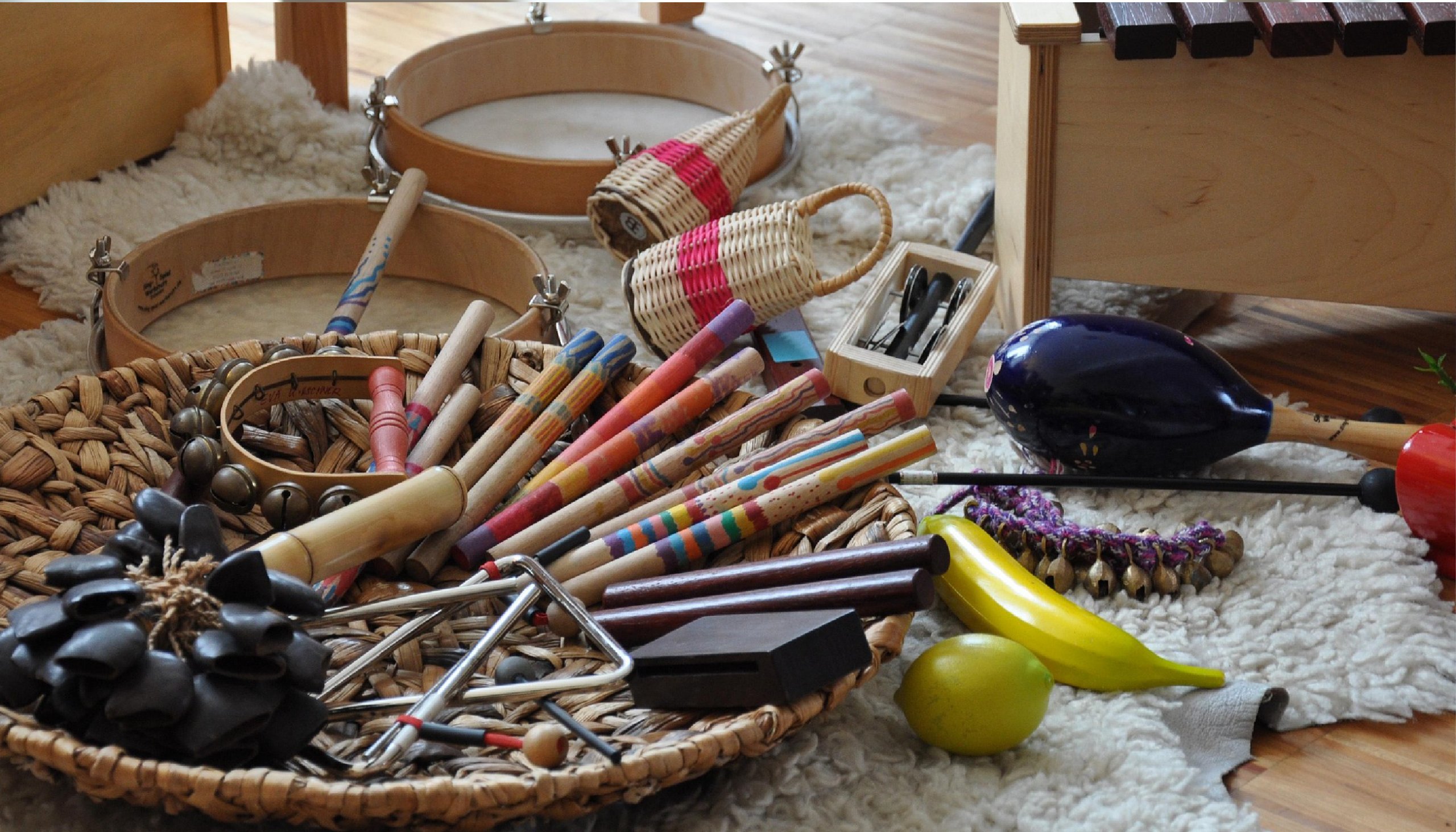



Dopamine & Drum Circles: What New Studies Show About Music and the Brain
Table Of Contents
When a group of toddlers gather around colorful hand drums, giggling as they tap out simple rhythms together, something remarkable happens beneath the surface. Recent neuroscience studies have uncovered fascinating connections between drumming activities and dopamine release in the brain, particularly revealing insights about how rhythmic music-making influences early childhood development.
Dopamine, often called the “feel-good” neurotranitter, plays crucial roles in motivation, learning, memory formation, and emotional regulation. For young children whose brains are developing at extraordinary rates, understanding how musical activities influence dopamine systems offers valuable insights for parents and educators seeking to optimize early learning experiences.
This article explores the latest research on drumming, rhythm, and brain chemistry, and what these findings mean for music-based early childhood programs. Whether you’re a parent considering enrichment activities or simply curious about the science behind music education, you’ll discover why rhythm-based activities may be more developmentally significant than previously understood.
Brain Science Insights
Dopamine & Drum Circles
What New Research Reveals About Music and Young Brains
🧠 The Drumming-Brain Connection
15-25%
Dopamine Increase
18%
Stress Reduction
2hrs
Lasting Effects
✨ 5 Key Brain Benefits
1
Enhanced Social Bonding
Synchronized drumming triggers both dopamine and oxytocin, strengthening connections
2
Improved Emotional Regulation
30% reduction in emotional outbursts with regular rhythm activities
3
Neural Network Building
Connects motor, auditory, and reward centers simultaneously
4
Enhanced Learning & Memory
Dopamine reinforcement creates powerful learning loops
5
Better Focus & Attention
8-minute improvement in attention spans after drumming sessions
🎯 Age-Appropriate Applications
👶 4-12 Months
Sensory exposure, gentle vibrations, rhythmic observation
Tenderfeet
🎵 12-24 Months
Active participation, simple instruments, cause & effect
Happyfeet
🎸 2-4 Years
Pattern repetition, group synchronization, improvisation
Groovers
💡 Quick Tips for Parents
🥄
Kitchen Percussion
👏
Clapping Games
🎶
Transition Songs
🌳
Nature Drumming
👨👩👧
Family Drum Circle
🎵 The Science is Clear: Rhythm-based activities create powerful neurochemical benefits that support lifelong learning and emotional wellbeing
Give your child the developmental advantages of research-based music education with programs designed by experts in early childhood development.
The Drumming-Dopamine Connection: What Scientists Have Discovered
A groundbreaking 2023 study published in the journal Brain Sciences examined neurochemical responses to group drumming activities, revealing that participants experienced significant increases in dopamine levels during and after drumming sessions. What makes this particularly relevant for early childhood development is that the dopamine response was strongest during synchronized group activities rather than solo drumming.
Researchers used PET scan technology to observe real-time brain activity during drum circle participation. They found that the combination of rhythmic movement, auditory feedback, and social coordination created a unique neurochemical environment. The dopamine release wasn’t just a temporary “high” but appeared to strengthen neural pathways associated with reward processing and social cognition.
For young children, whose dopamine systems are still developing, these findings suggest that regular participation in rhythmic group activities may help establish healthy reward-processing patterns. Dr. Sarah Chen, a neurodevelopmental researcher at Stanford University, notes that “the infant and toddler brain is particularly responsive to rhythmic stimulation, making early exposure to music-making potentially formative for dopamine regulation throughout life.”
Key Findings from Recent Studies
- Increased dopamine production: Group drumming elevated dopamine levels by 15-25% in study participants, with effects lasting up to two hours post-activity
- Enhanced neural synchronization: Brain scans showed increased connectivity between motor, auditory, and reward centers during rhythmic activities
- Stress hormone reduction: Cortisol levels decreased by an average of 18% following 30-minute drumming sessions
- Improved mood regulation: Participants reported better emotional states and reduced anxiety symptoms after regular drumming practice
- Social bonding markers: Oxytocin levels (the “bonding hormone”) increased alongside dopamine, suggesting dual neurochemical benefits
How Rhythm Affects the Developing Brain
The human brain has an innate capacity for rhythm processing that develops remarkably early. Research from the University of Washington’s Institute for Learning & Brain Sciences demonstrates that infants as young as 5 months old can detect rhythmic patterns and even anticipate beats. This early rhythmic sensitivity creates a foundation for numerous cognitive skills, from language acquisition to mathematical thinking.
When young children engage with rhythm through drumming or percussion activities, multiple brain systems activate simultaneously. The motor cortex coordinates physical movements, the auditory cortex processes sound patterns, the cerebellum maintains timing and coordination, and critically, the reward centers release dopamine when rhythmic synchronization occurs successfully.
This multi-system activation is particularly valuable during the early childhood period when neural plasticity is at its peak. Programs like Tenderfeet leverage this developmental window by introducing sensory-rich musical experiences to infants, helping establish robust neural networks that support later learning.
The Timing Advantage
Research published in Developmental Cognitive Neuroscience in 2024 revealed that children who participated in regular rhythm-based activities between ages 18 months and 4 years showed enhanced temporal processing abilities compared to control groups. These children demonstrated superior abilities in sequencing tasks, pattern recognition, and even early mathematical concepts.
The dopamine connection here is significant. Each time a child successfully produces a rhythm or synchronizes with others, their brain receives positive reinforcement through dopamine release. This creates a powerful learning loop: rhythmic success triggers reward chemicals, which motivates continued engagement, leading to skill development and more dopamine release. For toddlers in programs like Happyfeet, this virtuous cycle supports both musical development and broader cognitive growth.
Social Bonding Through Synchronized Movement
Perhaps one of the most compelling discoveries in recent drumming research involves its effects on social cognition and group cohesion. When people drum together in synchronized patterns, their brains begin to align in measurable ways. Neuroscientists call this phenomenon neural entrainment, and it appears to facilitate both dopamine release and oxytocin production.
A 2023 study from the Max Planck Institute examined toddler groups participating in synchronized rhythm activities versus parallel play situations. The researchers found that toddlers who engaged in rhythmic synchronization showed significantly more prosocial behaviors afterward, including increased sharing, cooperative play, and empathetic responses to peers in distress. Brain imaging revealed heightened activity in areas associated with social cognition and reward processing.
For early childhood educators and parents, these findings underscore why group music activities create such strong classroom communities. When toddlers in Groovers classes move and drum together, they’re not just learning music; they’re building neurochemical foundations for empathy, cooperation, and social connection.
The Mirror Neuron System
Recent research has also illuminated the role of mirror neurons in drumming activities. These specialized brain cells fire both when we perform an action and when we observe others performing the same action. During group drumming, children’s mirror neuron systems activate extensively, helping them learn through observation while simultaneously strengthening social neural networks.
The dopamine system interacts with mirror neurons in interesting ways. When a child successfully imitates a rhythm they’ve observed, dopamine reinforces both the motor learning and the social connection. This dual reinforcement may explain why children often show such enthusiasm for group music activities and why these experiences create lasting social bonds.
Drumming as Emotional Regulation Tool
One of the most practical applications of drumming research involves emotional regulation. Multiple studies have documented significant reductions in stress hormones and improvements in mood states following drumming activities. For young children who are still developing self-regulation skills, this offers a powerful, accessible tool.
Dr. Michael Thompson, a developmental psychologist specializing in early childhood emotional development, explains: “Drumming provides a physical outlet for emotional energy while simultaneously engaging the brain’s reward systems. For a frustrated toddler, the ability to create loud, powerful sounds in a controlled environment can be remarkably regulating.”
The dopamine connection here is multifaceted. Rhythmic activity helps regulate arousal levels, bringing overexcited children down and energizing withdrawn children. The dopamine release associated with successful rhythm production creates positive associations with self-expression, while the physical act of drumming provides proprioceptive input that many children find calming.
Practical Emotional Benefits Observed in Research
- Reduced tantrum frequency: Children with regular rhythm activity access showed 30% fewer emotional outbursts in one 12-week study
- Improved emotional vocabulary: Music programs incorporating rhythm helped children identify and express feelings more accurately
- Better transitions: Rhythmic activities before transitions helped children shift between activities more smoothly
- Enhanced focus: Brief drumming sessions improved attention spans during subsequent learning activities by an average of 8 minutes
- Anxiety reduction: Children with separation anxiety showed faster adaptation when music and rhythm were incorporated into routines
Age-Appropriate Applications for Young Children
Understanding the neuroscience behind drumming and dopamine is valuable, but applying this knowledge requires age-appropriate adaptation. The developmental needs of a 6-month-old differ dramatically from those of a 3-year-old, and effective music programs recognize these distinctions.
For Infants (4-12 months)
At this stage, rhythm exposure focuses on sensory experience rather than active production. Infants benefit from hearing consistent rhythmic patterns, feeling gentle vibrations from drums, and observing caregivers engaged in rhythmic movement. These early experiences begin establishing neural pathways for rhythm processing, even though the dopamine response is likely more diffuse than in older children.
Programs like Tenderfeet incorporate age-appropriate rhythm activities that respect infants’ developmental capabilities while providing rich sensory experiences. Simple activities like feeling a hand drum’s vibrations or moving to a steady beat in a caregiver’s arms introduce rhythm concepts without overwhelming developing sensory systems.
For Toddlers (12-24 months)
This age group begins actively participating in rhythm-making, though with limited motor coordination. Simple instruments like shakers, tambourines, and small hand drums allow toddlers to experiment with cause and effect while developing gross motor skills. The dopamine response at this age likely intensifies as children recognize their ability to create sounds and begin experiencing successful rhythm production.
Research suggests this is a critical window for establishing positive associations with music-making. When toddlers experience success and enjoyment in rhythm activities, dopamine reinforces these experiences, potentially influencing lifelong attitudes toward music and creative expression.
For Preschoolers (2-4 years)
Preschoolers can engage in more complex rhythmic activities, including pattern repetition, synchronized group drumming, and even simple improvisation. At this developmental stage, the social and cognitive benefits of drumming become particularly pronounced. Children can consciously attempt to match rhythms with peers, experiencing both the dopamine reward of successful synchronization and the social satisfaction of group achievement.
Programs like Scouts incorporate rhythm and music into broader learning themes, helping children develop multiple intelligences simultaneously. When children drum along to songs about scientific concepts, they’re building rhythmic skills while forming memorable learning connections strengthened by dopamine-enhanced memory formation.
Bringing the Research Home: Practical Tips for Parents
Understanding the neuroscience behind drumming and dopamine empowers parents to incorporate rhythm-based activities into daily routines. You don’t need expensive instruments or formal training to help your child benefit from these neurochemical advantages.
Simple Home Activities That Leverage Rhythm and Dopamine
1. Kitchen percussion sessions – Allow your child to explore different sounds by tapping wooden spoons on pots, plastic containers, and other safe household items. The variety of tones and the novelty of using everyday objects can enhance dopamine release through both rhythmic success and exploratory play.
2. Movement-based rhythm games – Combine rhythm with gross motor activity by clapping, stomping, or patting knees in simple patterns. Ask your child to copy your rhythm, then reverse roles. This turn-taking incorporates social reciprocity while building rhythmic skills.
3. Transition songs with rhythm – Create simple songs with strong beats for routine transitions like cleanup time or getting ready for bed. The predictable rhythm provides structure while the dopamine association with music makes transitions more pleasant.
4. Nature drumming walks – During outdoor time, encourage your child to tap sticks on trees, logs, or rocks, exploring how different materials create different sounds. This combines physical activity, sensory exploration, and rhythm experimentation.
5. Family drum circles – Set aside 10 minutes weekly for family rhythm time where everyone participates together. The synchronized activity strengthens both individual dopamine responses and family bonding through shared musical experience.
What to Look for in Quality Music Programs
When selecting formal music education for your child, consider programs that incorporate research-based approaches to rhythm and movement. Quality programs should offer age-appropriate activities, emphasize process over performance, incorporate group synchronization opportunities, and balance structure with creative exploration.
The Music Scientist’s curriculum exemplifies these principles by combining developmentally appropriate musical activities with broader cognitive goals. Whether through the sensory-rich experiences in Happyfeet for 18-month-olds or the integrated learning approach in SMART-START English programs, research-informed music education supports holistic development.
Understanding Individual Differences
While research reveals general patterns about drumming and dopamine, every child responds differently to rhythmic activities. Some children naturally gravitate toward percussion and rhythm, while others may initially seem less interested. These differences don’t indicate inability but rather variations in temperament, sensory preferences, and developmental timing.
For children who seem hesitant about drumming activities, consider starting with gentler rhythm experiences like swaying to music, gentle shakers, or observing others before participating. The dopamine benefits don’t require immediate active engagement; even watching and listening begin establishing neural foundations that support later participation.
The emerging research on drumming, rhythm, and dopamine reveals what music educators have long intuited: rhythmic music-making offers profound developmental benefits for young children. From strengthening reward-processing systems to enhancing social bonding and emotional regulation, the neurochemical effects of drumming extend far beyond simple entertainment.
For parents and educators, these findings validate the importance of incorporating music and rhythm into early childhood experiences. Whether through structured programs or spontaneous kitchen percussion sessions, opportunities for rhythmic engagement support brain development in measurable, meaningful ways.
As neuroscience continues illuminating the connections between music and brain development, one truth becomes increasingly clear: the simple act of drumming together creates complex neurological benefits that ripple through multiple developmental domains. By understanding and leveraging these connections, we can provide children with experiences that nurture their developing brains while fostering joy, creativity, and connection.
Discover How Music Builds Brighter Futures
At The Music Scientist, we combine cutting-edge research with developmentally-focused music programs designed for Singapore’s youngest learners. From sensory-rich infant classes to preschool readiness programs, we harness the power of music to support cognitive development, social bonding, and school preparation.
Ready to give your child the developmental advantages of research-based music education?
Table Of Contents
- Understanding EEG Technology and Sleep Research
- What White Noise Does to Your Child’s Developing Brain
- How Music Affects Brain Activity During Sleep
- The EEG Evidence: Music vs White Noise
- Developmental Considerations for Different Age Groups
- Practical Applications for Parents
- The Music Scientist’s Developmentally-Focused Approach
As a parent, you’ve likely spent countless nights experimenting with different sounds to help your little one drift off to sleep. White noise machines line the shelves of baby stores, promising peaceful slumber through steady, unchanging sound. But what if there’s a better option hiding in plain sight?
Recent advances in electroencephalogram (EEG) technology have given researchers unprecedented access to what actually happens in babies’ and young children’s brains during sleep. The findings challenge some common assumptions about auditory sleep aids and reveal surprising differences between how music and white noise affect developing minds.
For parents in Singapore and around the world who care about their children’s cognitive development, understanding these differences matters. Sleep isn’t just about rest—it’s when young brains consolidate learning, process emotions, and build neural pathways that support lifelong development. This article examines the EEG-based evidence comparing music and white noise for sleep, with a special focus on what this means for babies, toddlers, and preschoolers during their critical developmental windows.
Music vs White Noise for Baby Sleep
What EEG Brain Research Reveals About Sleep Sounds
🧠What EEG Technology Shows
EEG measures electrical brain activity during sleep, revealing which sounds truly promote deep, restorative rest—not just whether babies appear to sleep.
📢
White Noise
80% fell asleep faster in studies
⚠️ But EEG reveals concerns:
- Altered sleep stage distribution
- Potentially reduced deep sleep quality
- 65% of devices exceed safe volume
- May create sound dependence
- No cognitive development benefits
🎵
Music
Promotes sleep + development
✓ EEG shows multiple benefits:
- Enhanced delta waves (deep sleep)
- Natural sleep cycle maintenance
- Reduced stress hormone levels
- Supports neural pathway development
- Can be faded without dependence
🎯 Key Research Findings
60-80
Beats per minute (optimal tempo)
50db
Recommended volume level
30-45
Minutes before fade-out
🌟 Age-Appropriate Music Choices
👶 Infants (4-12 months)
Simple, repetitive melodies with warm instrument tones like classical guitar or harp
🧸 Toddlers (12-24 months)
Familiar melodies from enrichment classes with gentle nature sounds
🎨 Preschoolers (2-4 years)
Longer pieces with simple stories or thematic progressions
💡 Parent Action Steps
- Choose wisely: Select music with 60-80 BPM, simple melodies, warm tones
- Create consistency: Use the same playlist nightly as a sleep cue
- Integrate experiences: Connect bedtime music with daytime musical activities
- Control volume: Keep at conversational level (~50 decibels)
- Fade gradually: Use timers to reduce dependence on continuous sound
The Bottom Line: While white noise may help babies fall asleep faster, EEG research shows music provides superior sleep quality, supports brain development, and promotes long-term healthy sleep habits without creating dependence.
Understanding EEG Technology and Sleep Research
Electroencephalogram (EEG) technology measures electrical activity in the brain through sensors placed on the scalp. Unlike subjective parent observations about whether a child “seems” to sleep better, EEG provides objective data about brain wave patterns, sleep stages, and neural activity throughout the night.
When researchers study sleep in infants and children, they look at several key markers. Delta waves indicate deep sleep, the restorative phase crucial for physical growth and memory consolidation. Theta waves appear during lighter sleep stages and the transition to REM sleep, when dreaming occurs and emotional processing happens. The quality and duration of these different sleep stages directly impacts cognitive development, emotional regulation, and learning capacity.
Modern EEG studies have become increasingly sophisticated in examining how external stimuli like sound affect these brain wave patterns. Researchers can now observe in real-time how a baby’s brain responds to different auditory environments, revealing which sounds promote deeper, more restorative sleep and which may actually interfere with natural sleep architecture.
What White Noise Does to Your Child’s Developing Brain
White noise contains all audible frequencies played at equal intensity, creating a consistent sound that many believe masks disruptive environmental noises. The theory behind white noise for sleep centers on auditory masking—the idea that a steady, predictable sound can prevent sudden noises from startling sleepers awake.
EEG research has confirmed that white noise can help some individuals fall asleep faster by reducing sensitivity to unpredictable background sounds. Studies on newborns showed that 80% fell asleep within five minutes when exposed to white noise, compared to only 25% in silence. This seems promising at first glance.
However, the picture becomes more complex when we examine what happens during sleep itself. While white noise may facilitate sleep onset, EEG studies reveal it can affect sleep architecture in ways that may not be ideal for developing brains. Research published in sleep medicine journals found that continuous white noise throughout the night altered the amount of time spent in different sleep stages, potentially reducing the quality of deep sleep periods.
For babies and young children, there’s an additional concern that doesn’t affect adults as significantly. The developing auditory system is exquisitely sensitive during the first years of life. Some researchers have raised questions about whether constant exposure to white noise might interfere with normal auditory development, though more research is needed in this area. What we do know is that the infant brain is designed to process complex, varied sounds—not monotonous, unchanging noise.
Safety Considerations for White Noise
Beyond the question of sleep quality, EEG research has highlighted potential safety concerns with white noise machines. Studies examining infant white noise devices found that nearly 65% were capable of producing sounds exceeding safe levels when placed near a crib. Prolonged exposure to sounds above 70 decibels—equivalent to city traffic—can damage developing auditory systems over time.
Parents who choose white noise should place devices across the room, never in or directly adjacent to the crib, and keep volume levels similar to a soft shower or gentle conversation. However, this raises an important question: if the device must be far away and quiet to be safe, is it effective at masking the environmental noises it’s meant to block?
How Music Affects Brain Activity During Sleep
Music represents a fundamentally different type of auditory stimulus than white noise. Rather than monotonous, unchanging sound, music contains melody, rhythm, harmony, and dynamic variation. These elements engage multiple brain regions simultaneously, creating what neuroscientists call whole-brain activation.
EEG studies of babies and young children listening to music reveal fascinating patterns. Gentle, slow-tempo music (60-80 beats per minute, similar to a resting heart rate) promotes the production of delta waves associated with deep sleep. The melodic and harmonic structure of music appears to synchronize with natural brain rhythms in ways that white noise cannot.
Research on lullabies and classical music designed for children shows that music doesn’t just mask disruptive sounds—it actively promotes relaxation through several mechanisms. Music triggers the release of dopamine and serotonin, neurotransmitters associated with pleasure and calm. It also reduces cortisol, the stress hormone that can interfere with sleep. EEG patterns confirm these neurochemical changes, showing increased alpha wave activity (associated with relaxation) when children listen to appropriate music before sleep.
Perhaps most importantly for parents concerned about development, music exposure during sleep may support cognitive growth in ways white noise cannot. Studies examining brain activity during sleep show that musical patterns continue to be processed even during deep sleep stages. This processing appears to strengthen neural pathways involved in pattern recognition, memory formation, and language development—all critical skills for babies and toddlers.
The Role of Familiar Melodies
EEG research reveals something particularly interesting about familiar music versus novel sounds. When babies and toddlers hear melodies they’ve been exposed to during wake time—especially songs associated with positive experiences like sensory play activities or music and movement classes—their brains show recognition patterns even during sleep.
This recognition appears to create a sense of security and comfort that promotes deeper, more restful sleep. The brain essentially recognizes the music as a safe, positive stimulus rather than something requiring vigilant attention. This is why originally composed music used consistently in early childhood programs can become powerful sleep cues for young children.
The EEG Evidence: Music vs White Noise
When researchers directly compared music and white noise using EEG monitoring, several important differences emerged. A comprehensive analysis published in sleep research journals examined multiple studies looking at how different auditory environments affect sleep quality, duration, and architecture.
The findings revealed that while both music and white noise could help reduce sleep onset time (how long it takes to fall asleep), their effects during sleep differed significantly. White noise showed inconsistent results, with some studies finding it altered sleep stage distribution in ways that reduced deep sleep quality. Other research raised concerns about potential dependence, where individuals became unable to sleep without the constant noise.
Music, particularly when chosen appropriately for developmental stage, showed more promising patterns. EEG studies found that slow-tempo, harmonically simple music promoted:
- Enhanced deep sleep: Increased delta wave activity indicating more restorative sleep phases
- Smoother sleep transitions: More natural progression through sleep stages without disruption
- Reduced stress markers: Lower cortisol levels and decreased arousal patterns
- Maintained sleep architecture: Natural sleep cycle patterns remained intact
- Cognitive processing benefits: Continued neural pathway development during sleep
One particularly revealing study examined critically ill patients in noisy hospital environments. Those who listened to music through headphones showed better sleep quality markers on EEG than those exposed to white noise. The music appeared to provide both masking benefits and active relaxation effects that white noise alone couldn’t achieve.
For parents, perhaps the most significant finding is that music can be gradually faded over time without creating dependence, whereas white noise often becomes a required sleep cue that children struggle without. This aligns with developmental goals of helping children develop self-soothing capabilities and healthy sleep habits that will serve them throughout life.
Developmental Considerations for Different Age Groups
The effectiveness and appropriateness of sleep sounds varies significantly based on a child’s developmental stage. What works for a newborn may not be ideal for a toddler, and EEG research helps us understand why.
Infants (4-12 Months)
During the first year, babies’ brains are developing rapidly, with neural connections forming at an astonishing rate. EEG studies show that infant brains are highly responsive to rhythmic, melodic input. Programs designed for this age group, like those offered in infant care classes, recognize that gentle lullabies and simple melodies support both sleep and daytime cognitive development.
For sleep specifically, research suggests that very simple, repetitive melodies with consistent tempo work best. The music should be quiet (around 50 decibels or lower) and feature instruments with warm tones like classical guitar, harp, or soft piano. The goal is to provide soothing input without overstimulation.
Toddlers (12-24 Months)
As children enter toddlerhood, their brains become more sophisticated in processing musical elements. EEG patterns show increased ability to distinguish melodies, rhythms, and even simple harmonic progressions. This is the age when music from enrichment classes can become particularly powerful sleep cues.
Toddlers benefit from music that incorporates elements they’ve encountered during active learning time. Familiar melodies create neural connections between positive daytime experiences and the comfort of bedtime. The music can be slightly more complex than what worked in infancy, potentially incorporating gentle nature sounds or simple vocal harmonies.
Preschoolers (2-4 Years)
By preschool age, children’s brains show remarkable musical sophistication on EEG monitoring. They can process complex melodies, recognize musical patterns, and even anticipate musical phrases. Children engaged in programs like music and dance classes or science-themed musical learning often develop strong associations between specific songs and particular activities or emotions.
For sleep, preschoolers can benefit from slightly longer musical pieces that tell simple stories or follow thematic progressions. Classical music designed for children, gentle world music, or specially composed educational songs can all support healthy sleep while reinforcing daytime learning. The key is maintaining appropriate volume and tempo that promotes relaxation rather than engagement.
Practical Applications for Parents
Understanding the EEG evidence is one thing, but implementing this knowledge in your nightly routine is another. Here are research-backed strategies for using music to support your child’s sleep.
Choose music with specific characteristics: Look for pieces with 60-80 beats per minute, simple melodic structures, and warm instrumental tones. Avoid music with sudden dynamic changes, loud percussion, or stimulating rhythms. Classical music from the Baroque period, specially composed children’s lullabies, and gentle folk melodies often meet these criteria naturally.
Create consistent associations: Use the same music or playlist every night as part of your bedtime routine. This consistency helps your child’s brain recognize the music as a sleep cue. EEG research shows that familiar auditory patterns trigger relaxation responses more effectively than novel sounds.
Integrate with daytime musical experiences: Children who participate in structured music programs often respond particularly well to sleep music that shares elements with their daytime musical activities. The neural pathways developed through active music engagement during programs like SMART-START English or SMART-START Chinese can enhance the calming effects of bedtime music.
Consider volume and placement carefully: Keep music at conversational volume or lower (around 50 decibels). Unlike white noise, music doesn’t need to be loud to be effective because its benefits come from brain processing rather than simple sound masking. Place speakers or devices at least several feet from your child’s sleeping area.
Develop a gradual fade strategy: Rather than playing music all night, consider using a timer to gradually reduce volume and fade the music after 30-45 minutes. This approach supports your child’s natural sleep cycles while avoiding dependence on continuous sound. Many children will transition into deep sleep within this timeframe and won’t need continued auditory input.
Combine with other sleep hygiene practices: Music works best as part of a comprehensive bedtime routine that includes consistent timing, calming activities, and appropriate sleep environment. Think of music as one tool in a larger developmental approach to healthy sleep habits.
The Music Scientist’s Developmentally-Focused Approach
At The Music Scientist, we recognize that music’s impact extends far beyond sleep alone. Our programs integrate originally composed music with developmentally appropriate activities because we understand what EEG research confirms: musical engagement supports whole-brain development in ways that passive sound exposure cannot match.
The music children encounter in our classes—whether through sensory development activities for infants, toddler enrichment programs, or movement-based learning for preschoolers—becomes part of their cognitive framework. These familiar melodies and rhythms can then support healthy sleep patterns at home, creating continuity between active learning and restorative rest.
Our approach recognizes that different developmental stages require different musical inputs. A four-month-old participating in Tenderfeet needs simpler melodic structures than a three-year-old engaged in Scouts or preparing for formal education through SMART-START programs. This developmental specificity aligns with what EEG research tells us about age-appropriate auditory stimulation.
Parents often report that children who participate in our programs develop positive associations with music that extend into better sleep patterns. This makes sense when we consider the neurological evidence: brains that have learned to process music as a source of joy, learning, and security during wakeful hours naturally respond to carefully chosen music as a cue for rest and restoration.
The integration of music across your child’s day—from active learning through movement and play to gentle support for healthy sleep—represents a holistic approach to early childhood development. This is precisely what EEG research suggests our developing brains need: rich, varied, developmentally appropriate stimulation during active hours, and calming, familiar auditory environments during rest.
The EEG evidence comparing music and white noise for sleep reveals important distinctions that matter for parents committed to supporting their children’s development. While white noise may offer simple sound masking, music provides active benefits that support brain development, emotional regulation, and healthy sleep architecture.
For babies, toddlers, and preschoolers whose brains are forming millions of neural connections daily, the choice of auditory sleep environment represents more than a preference—it’s a developmental decision. Music, when chosen appropriately for age and developmental stage, offers benefits that extend beyond the immediate goal of falling asleep. It supports cognitive processing, reinforces positive associations, and can be integrated into a comprehensive approach to early childhood enrichment.
As research continues to illuminate what happens in young brains during sleep, the evidence increasingly points toward music as the more developmentally supportive choice. Combined with consistent routines, appropriate sleep hygiene, and engagement with enriching daytime activities, music can become a powerful tool in nurturing young minds both day and night.
Discover How Music Can Transform Your Child’s Development
Experience the power of developmentally-focused music education designed specifically for Singapore’s youngest learners. From sensory exploration for infants to preschool readiness programs, The Music Scientist creates comprehensive musical experiences that support cognitive growth, healthy sleep patterns, and a lifelong love of learning.
Table Of Contents
- What Is Rhythm Synchrony?
- The Neuroscience Behind Rhythm Synchrony and Social Bonding
- Developmental Benefits of Rhythm Synchrony in Early Childhood
- Age-Appropriate Rhythm Activities for Toddlers
- How Structured Music Programs Maximize Social Bonding
- Practical Tips for Parents and Educators
- Conclusion
Watch any group of toddlers clapping along to a favorite song, and you’ll witness something remarkable: tiny hands moving in unison, faces lighting up with shared joy, and an almost magnetic pull toward one another. This isn’t just adorable—it’s neuroscience in action. When young children engage in rhythmic activities together, they’re doing much more than keeping the beat. They’re building the neural pathways that form the foundation of social connection, empathy, and cooperation.
Rhythm synchrony—the coordinated movement or sound-making between individuals—has emerged as a powerful mechanism for social bonding in early childhood development. Research consistently demonstrates that when toddlers move, clap, or make music together in time, they develop stronger prosocial behaviors, increased cooperation, and deeper emotional connections with their peers.
For parents and educators in Singapore seeking developmentally appropriate ways to nurture their children’s social-emotional growth, understanding the science behind rhythm synchrony offers valuable insights. This article explores how musical experiences create neural connections that last a lifetime, and how structured music programs can harness this natural phenomenon to support holistic development during the critical early years.
The Science of Musical Bonding
How Rhythm Synchrony Strengthens Social Connection in Toddlers
🎵 What Is Rhythm Synchrony?
The temporal coordination of movements, sounds, or actions between individuals—creating powerful neural pathways for social bonding, empathy, and cooperation in young children.
🧠 The Neuroscience Connection
😊
Endorphins
Natural feel-good chemicals released during synchronized movement
🪞
Mirror Neurons
Brain cells that fire when observing others, building empathy
⚡
Neural Coupling
Brain waves align during synchronized activities
✨ Key Developmental Benefits
1
Enhanced Social Connection
Increased helping behaviors, cooperation, and spontaneous sharing through shared rhythmic experiences
2
Communication Skills
Better phonological awareness and language development through rhythmic pattern practice
3
Emotional Regulation
Strengthened impulse control and self-regulation through playful musical synchronization
👶 Age-Appropriate Activities
12-18 Months
Simple bouncing, gentle swaying, basic clapping songs
18-24 Months
Marching, stomping, movements with scarves or shakers
24-36 Months
Circle games, partner activities, simple group dances
💡 Quick Tips for Parents & Educators
✓ Create regular musical rituals
✓ Prioritize face-to-face interaction
✓ Follow your child’s lead
✓ Embrace imperfect synchrony
✓ Make synchrony visible
✓ Consider group experiences
🎼 The Takeaway
Every synchronized bounce, clapping game, and group dance is an investment in your child’s social-emotional growth—creating neural connections that support healthy relationships throughout life.
What Is Rhythm Synchrony?
Rhythm synchrony refers to the temporal coordination of movements, sounds, or actions between two or more individuals. In toddlers, this might look like bouncing together to music, clapping in unison during a song, or swaying side-to-side with a caregiver. Unlike simple imitation, synchrony involves real-time coordination where participants align their actions with both the musical beat and with each other.
This phenomenon appears remarkably early in human development. Infants as young as five months show preferences for people who have previously moved in sync with them, suggesting that rhythm synchrony taps into deeply rooted social mechanisms. By the toddler years (approximately 18-36 months), children become increasingly capable of intentional synchronization, making this a prime developmental window for music-based social experiences.
What makes rhythm synchrony particularly powerful is its bidirectional nature. When toddlers synchronize their movements with others, they simultaneously experience being part of something larger than themselves while maintaining their individual agency. This balance between self and collective is foundational to healthy social development, teaching children that they can be both independent individuals and valued members of a group.
The Neuroscience Behind Rhythm Synchrony and Social Bonding
The connection between rhythm synchrony and social bonding isn’t just observational—it’s deeply embedded in our neurological architecture. When toddlers engage in synchronized rhythmic activities, several important brain systems activate simultaneously, creating a neurochemical environment that promotes social connection.
First, synchronized movement triggers the release of endorphins, the body’s natural feel-good chemicals. Research has shown that group musical activities elevate endorphin levels more than solitary music experiences, creating a shared positive emotional state among participants. This collective joy becomes associated with the people involved, strengthening social bonds through positive reinforcement.
Second, rhythm synchrony activates the brain’s mirror neuron system, a network of cells that fire both when we perform an action and when we observe others performing the same action. This neural mirroring is crucial for developing empathy and understanding others’ intentions. When toddlers move together to music, their mirror neurons are constantly firing, helping them internalize the concept of shared experiences and collective intentionality.
Additionally, synchronous activities enhance neural coupling between participants. Brain imaging studies have revealed that when people engage in synchronized actions, their brain waves begin to align, creating a state of interpersonal neural synchrony. While most of this research has been conducted with older children and adults, emerging evidence suggests similar processes occur in toddlers, facilitating non-verbal communication and mutual understanding.
The rhythmic nature of these activities also engages the basal ganglia and cerebellum, brain regions involved in motor control and timing. These areas have rich connections to the prefrontal cortex, which governs social decision-making and emotional regulation. By repeatedly activating these interconnected networks, rhythm synchrony helps strengthen the neural pathways that support social cognition and self-control.
Developmental Benefits of Rhythm Synchrony in Early Childhood
Enhanced Social Connection and Empathy
One of the most robust findings in rhythm synchrony research is its impact on prosocial behavior. Multiple studies have demonstrated that toddlers who engage in synchronized rhythmic activities show increased helping behaviors, greater cooperation, and more frequent spontaneous sharing compared to children who participate in similar but non-synchronized activities.
In one landmark study, 14-month-old infants who were bounced in synchrony with an adult were significantly more likely to help that adult retrieve a dropped object later, compared to infants bounced in a non-synchronized manner. This demonstrates that even brief episodes of rhythm synchrony can foster immediate prosocial responses in very young children.
The mechanism appears to be that synchronized movement creates a sense of social cohesion and affiliation. When toddlers move together to music, they experience themselves as part of a unified group. This “we-ness” reduces social barriers and increases feelings of similarity with others, making children more inclined to act cooperatively and considerately toward their peers.
Programs that incorporate regular rhythm synchrony activities, such as those offered through Happyfeet: Enrichment Classes for 18-Month-Olds & Toddlers, provide consistent opportunities for these social bonding experiences, helping children develop strong foundations for friendship and collaborative play.
Communication and Language Development
The relationship between rhythm synchrony and communication development is particularly compelling. Human language is inherently rhythmic, with patterns of stress, intonation, and timing that convey meaning beyond individual words. When toddlers engage in synchronized musical activities, they’re practicing the temporal coordination skills that underlie successful verbal communication.
Research has shown that children with stronger rhythm synchronization abilities tend to have better phonological awareness and language skills. The ability to perceive and reproduce rhythmic patterns appears to support the segmentation of speech sounds, helping toddlers identify where words begin and end in the continuous stream of spoken language.
Moreover, rhythm synchrony activities often involve turn-taking, a fundamental component of conversation. Whether taking turns playing instruments, singing verses, or leading movements, toddlers learn the give-and-take structure of social interaction. These musical dialogues provide a low-pressure environment for practicing conversational skills before verbal language is fully developed.
The Groovers: Music and Dance Classes for Toddlers program specifically integrates movement and verbal learning, capitalizing on the natural connection between rhythmic coordination and language acquisition to support both kinesthetic and verbal intelligence development.
Emotional Regulation and Self-Control
While less obvious than social benefits, rhythm synchrony also plays a significant role in developing emotional regulation and self-control—skills that are essential for successful social interactions. When toddlers synchronize their movements to music, they must inhibit their natural impulse to move freely and instead align their actions with external timing cues and the movements of others.
This practice in impulse control within an enjoyable, supportive context helps strengthen the prefrontal cortex circuits responsible for self-regulation. Unlike direct behavioral interventions that might feel restrictive, musical synchrony makes self-control feel playful and rewarding, increasing children’s motivation to practice these skills.
The predictable structure of rhythmic music also provides emotional scaffolding for toddlers. The regular beat and repeated patterns create a sense of order and predictability that can be calming, particularly for children who struggle with transitions or new situations. This emotional grounding makes it easier for children to engage socially without becoming overwhelmed.
Additionally, group musical experiences provide opportunities to practice emotional contagion in positive contexts. When toddlers share joyful musical moments with peers, they learn to recognize and respond to others’ emotions, building the emotional literacy that supports empathy and relationship building.
Age-Appropriate Rhythm Activities for Toddlers
The key to maximizing the social bonding benefits of rhythm synchrony is choosing developmentally appropriate activities that match toddlers’ growing capabilities. Different age ranges within the toddler period have distinct needs and abilities:
For younger toddlers (12-18 months): At this stage, children are just beginning intentional synchronization. Activities should focus on simple, repetitive movements with clear beats. Bouncing to music while seated, gentle swaying while holding hands with a caregiver, and basic clapping songs provide accessible entry points. The Tenderfeet: Infant Care Classes and Sensory Development program offers sensory-rich musical experiences that lay the groundwork for more complex synchronization as children develop.
For mid-stage toddlers (18-24 months): As gross motor skills improve, toddlers can engage in more active synchronized movements. Marching to music, stomping to a steady beat, and coordinated movements like “head, shoulders, knees, and toes” become achievable. This age group particularly benefits from activities that combine movement with simple props like scarves or shakers, which provide visual and tactile feedback that supports synchronization.
For older toddlers (24-36 months): This age group can handle more complex rhythmic patterns and enjoys activities that involve social interaction. Circle games with synchronized movements, partner activities where children mirror each other’s actions, and simple group dances with repeated sequences are excellent choices. These children also begin to enjoy taking leadership roles, such as leading the group in a movement pattern that others imitate.
Regardless of age, the most effective rhythm synchrony activities share several characteristics:
- Clear, steady beat: Music with an obvious, consistent pulse makes synchronization accessible for developing motor systems
- Repetition: Repeated patterns allow toddlers to anticipate what comes next and successfully coordinate their movements
- Social component: Activities should involve interaction with caregivers or peers, not just individual movement to music
- Positive emotional tone: Joyful, playful experiences create the emotional context that facilitates bonding
- Achievable challenge: Activities should be neither too simple (boring) nor too complex (frustrating), but at the edge of children’s current abilities
How Structured Music Programs Maximize Social Bonding
While spontaneous musical play at home offers valuable benefits, structured music enrichment programs provide unique advantages for developing rhythm synchrony and social bonding. These programs create optimal conditions for social-emotional development through several key features.
First, structured programs ensure developmental appropriateness through carefully sequenced curricula. Rather than random musical experiences, programs like those at The Music Scientist follow developmental milestones, introducing rhythm synchrony activities that match children’s emerging capabilities. This progression from simple to complex synchronization tasks supports skill building while maintaining engagement.
Second, group classes create consistent peer communities. When toddlers engage in rhythm synchrony with the same group over time, they develop deeper social bonds and more sophisticated coordination abilities. These repeated shared experiences with familiar peers provide a safe context for practicing social skills and building friendships.
Third, trained instructors understand how to facilitate optimal group dynamics. They know how to pace activities to maintain engagement, how to support children who are struggling to synchronize, and how to create inclusive environments where all children can experience successful participation. This expertise is particularly valuable given toddlers’ variable attention spans and developmental timelines.
Programs like Scouts: Fostering A Love for Science through Catchy Melodies demonstrate how structured curricula can integrate rhythm synchrony with other learning objectives, creating rich, multidimensional experiences. By combining synchronized movement with general knowledge themes, these programs address multiple intelligences simultaneously, supporting holistic development.
Additionally, structured programs often incorporate originally composed music designed specifically for developmental and educational goals. Unlike commercial children’s music, which may prioritize entertainment over learning outcomes, purpose-composed music can optimize features like tempo, rhythmic complexity, and lyrical content to support specific developmental objectives including social bonding.
For families preparing for preschool transitions, programs like SMART-START English and SMART-START Chinese integrate rhythm synchrony activities with school readiness skills, ensuring children develop both the academic and social-emotional foundations needed for successful transitions to formal education.
Practical Tips for Parents and Educators
Parents and educators can harness the power of rhythm synchrony to strengthen social bonds through intentional daily practices. Here are evidence-based strategies for incorporating synchronized rhythmic activities into toddlers’ routines:
Create regular musical rituals: Establish consistent times for musical interaction, such as a morning movement song or a bedtime lullaby with gentle swaying. Predictable musical routines provide structure while creating repeated opportunities for synchrony and bonding. The regularity helps toddlers develop anticipation and actively participate in synchronization.
Prioritize face-to-face interaction: While recorded music has its place, live musical interaction offers unique benefits. When you sing and move with your toddler, you can adjust tempo and complexity in real-time, respond to their initiatives, and maintain eye contact—all of which enhance social connection. The responsiveness of live music-making creates a conversational quality that recorded music cannot replicate.
Follow your child’s lead: Allow toddlers to initiate rhythmic games and then join their rhythm rather than always directing the activity. When children experience adults synchronizing to their movements, it validates their agency and builds confidence. This turn-taking in leadership roles supports social flexibility and cooperation.
Make synchrony visible: Use mirrors, shadows, or video playback to help toddlers see themselves moving in sync with others. This visual feedback strengthens their understanding of synchrony and provides motivation to continue coordinating their movements. Many children find great delight in watching themselves move together with others.
Embrace imperfect synchrony: Perfect coordination isn’t necessary for bonding benefits to occur. In fact, the process of attempting to synchronize and gradually improving is valuable in itself. Avoid correcting toddlers’ rhythm “mistakes”—instead, celebrate their efforts and participation. The emotional tone matters more than technical precision at this age.
Expand beyond music: Rhythm synchrony isn’t limited to musical contexts. Walking in step together, coordinated playground movements like swinging side-by-side, or synchronized hand clapping during daily routines all provide opportunities for bonding through rhythm. Look for natural moments throughout the day to introduce playful synchronization.
Consider group experiences: While one-on-one rhythm activities build caregiver-child bonds, group experiences with peers offer unique social benefits. Playgroups, music classes, or informal gatherings where toddlers can engage in synchronized activities together provide valuable opportunities for peer bonding and social skill development.
Document progress: Take photos or videos of your toddler’s participation in rhythmic activities over time. This documentation serves multiple purposes: it helps you notice developing coordination abilities, provides material for joyful reminiscing, and creates records that children will treasure as they grow. The act of reviewing these moments together can also reinforce social memories.
Conclusion
The science is clear: rhythm synchrony is far more than a delightful pastime for toddlers. It’s a powerful developmental tool that shapes neural architecture, strengthens social bonds, and builds the foundation for lifelong relationship skills. When young children move, clap, and make music together in time, they’re engaging ancient human mechanisms for social cohesion while developing modern skills like cooperation, empathy, and communication.
For parents and educators, this research offers both validation and inspiration. The musical play you’re already enjoying with toddlers isn’t just fun—it’s fundamentally important developmental work. Every synchronized bounce, every shared clapping game, every group dance is an investment in children’s social-emotional growth, creating neural connections that will support healthy relationships throughout their lives.
As Singapore’s early childhood education landscape continues to evolve, understanding the developmental mechanisms behind musical learning becomes increasingly important. Programs that thoughtfully integrate rhythm synchrony into developmentally appropriate curricula don’t just teach music—they nurture the whole child, supporting cognitive, physical, social, and emotional growth through the universal language of rhythm.
Whether through spontaneous kitchen dance parties, regular bedtime songs, or structured music enrichment programs, prioritizing rhythm synchrony experiences gives toddlers the gift of connection. In a world that often emphasizes individual achievement, these shared rhythmic moments remind us that some of life’s most important lessons are learned together, in time, moving as one.
Nurture Your Child’s Development Through Music
Discover how The Music Scientist’s developmentally-focused programs use rhythm synchrony and musical play to build social bonds, enhance cognitive development, and foster a lifelong love of learning. Our expert-designed curricula support children aged 4 to 47 months through carefully sequenced musical experiences that align with developmental milestones.
Table Of Contents
- Why Texture Matters More Than We Think
- The Brain Science Behind Crunchy vs Squishy Preferences
- Texture Preferences Across Developmental Stages
- Sensory Seekers vs Sensory Avoiders
- Supporting Healthy Sensory Development Through Play
- Practical Ways to Encourage Texture Exploration
Have you ever noticed how some children light up at the satisfying crunch of a cracker, while others gravitate toward the soft squish of a ripe banana? This isn’t just about picky eating or random preferences. The divide between crunchy and squishy lovers reveals fascinating insights into how our brains process sensory information, how children develop, and even how we’ve evolved as a species.
Texture preferences begin forming remarkably early in life, often before children can even express their likes and dislikes verbally. For parents of babies, toddlers, and preschoolers, understanding these preferences isn’t merely an interesting scientific curiosity. It’s a window into your child’s sensory processing, developmental stage, and unique way of experiencing the world.
In this article, we’ll explore the neuroscience behind texture preferences, examine how these preferences evolve from infancy through the preschool years, and discover practical ways to support your child’s sensory development through intentional play and exploration. Whether your little one is a texture adventurer or shows clear preferences from early on, you’ll gain valuable insights into this fundamental aspect of early childhood development.
Crunchy vs Squishy
The Science Behind Your Child’s Texture Preferences
🧠
Brain Science
Multiple brain regions work together when processing texture: the somatosensory cortex (touch), auditory cortex (sound), and proprioceptive system (movement).
👶
Starts Early
Texture processing begins before birth. Babies arrive with sophisticated mechanisms to detect differences between textures—it’s hardwired survival programming.
Two Types of Texture Lovers
🥕 CRUNCHY
Sensory Seekers
- Crave intense, clear feedback
- Love loud sounds & definitive sensations
- Enjoy vigorous movement & messy play
- Prefer unambiguous sensory information
🍌 SQUISHY
Sensory Avoiders
- Have lower sensory thresholds
- Prefer predictable, mild textures
- May resist extreme textures (both ends)
- Easily overwhelmed by intense input
📊 Developmental Timeline
0-12 months
Infants
Everything goes in the mouth—lips & tongue have more sensory receptors than hands. Oral exploration builds the foundation.
18-36 months
Toddlers
Heightened sensory awareness. Stronger preferences emerge, often texture-based food refusal appears.
3-4 years
Preschoolers
Preferences become stable and personality-linked. Children can verbalize and understand their sensory experiences.
💡 Supporting Healthy Sensory Development
🎵
Music & Movement
Combine sensory play with joyful activities for positive associations
🎯
Low-Pressure Exploration
Let children lead—no forcing or pressure creates better outcomes
🌈
Diverse Experiences
Offer both familiar favorites and gentle exposure to new textures
❤️
Respect Individuality
Honor genuine discomfort—preferences reflect unique brain wiring
The Bottom Line
Texture preferences aren’t about pickiness—they’re windows into your child’s unique sensory processing. Support their development through playful exploration, music-based learning, and patient exposure in positive contexts. Every texture experience builds their understanding of the world!
Why Texture Matters More Than We Think
Texture isn’t just about food preferences. It’s one of the primary ways young children gather information about their environment. Before language develops, before complex reasoning emerges, babies and toddlers use touch and oral exploration to understand object properties, spatial relationships, and the physical world around them.
The tactile and oral sensory systems are among the first to develop in utero, which means texture processing begins even before birth. By the time babies arrive in the world, they’re already equipped with sophisticated mechanisms for detecting differences between smooth and rough, hard and soft, crunchy and squishy. These distinctions help infants identify safe foods, recognize familiar objects, and begin building the sensory foundation that supports later learning.
Research shows that children who engage regularly with diverse textures tend to develop stronger fine motor skills, better sensory integration, and more flexible approaches to new experiences. This is why sensory play forms such a critical component of quality early childhood programs. The simple act of squeezing playdough, crunching leaves, or exploring musical instruments with different surface textures contributes to cognitive development in ways that purely visual or auditory activities cannot replicate.
The Brain Science Behind Crunchy vs Squishy Preferences
How Our Brains Process Texture
When a child bites into a crunchy apple or squeezes a soft toy, multiple sensory systems activate simultaneously. The somatosensory cortex, located in the parietal lobe, processes tactile information from the hands and mouth. The auditory cortex registers the sounds associated with crunching or squishing. The proprioceptive system tracks jaw movement and pressure. All these signals integrate to create a complete textural experience.
What makes this process particularly interesting is that texture preferences often correlate with how efficiently a child’s brain integrates these multiple sensory inputs. Some children find the sharp, clear feedback of crunchy textures satisfying because it provides unambiguous sensory information. The loud crack of a crisp vegetable or the distinct snap of a cracker sends strong, easily processed signals to the brain. For children who crave sensory clarity and predictability, crunchy textures can be deeply satisfying.
Conversely, squishy textures engage the sensory system differently. They require more nuanced processing because the feedback changes continuously as pressure is applied. Squeezing a stress ball or chewing a soft food creates variable sensory input that some children find comforting and others find overwhelming. The preference often depends on individual sensory thresholds and how a child’s nervous system is wired to seek or avoid intense stimulation.
The Evolutionary Roots of Texture Preferences
From an evolutionary standpoint, texture preferences served important survival functions. Crunchy textures often signal freshness in fruits and vegetables, while mushiness can indicate spoilage or overripeness. Our ancestors who paid attention to these textural cues had better chances of avoiding foodborne illness and consuming nutrient-dense foods.
Similarly, the oral exploration that drives young children to mouth everything isn’t just a developmental phase to endure. It’s a hardwired learning mechanism that helped early humans distinguish edible from inedible objects. When your toddler insists on touching, squeezing, and sometimes tasting unfamiliar items, they’re following ancient programming designed to build a comprehensive sensory database of their environment.
This evolutionary context helps explain why texture preferences can be so strong and why forcing children to override their natural inclinations rarely works well. These preferences are rooted in deep neurological patterns that evolved over millennia, not simple stubbornness or pickiness.
Texture Preferences Across Developmental Stages
Infants: The Foundation of Tactile Learning
During the first months of life, infants primarily explore textures through oral and tactile investigation. Everything goes into the mouth because the lips and tongue contain more sensory receptors than the hands at this stage. Parents often notice that even young babies show distinct reactions to different textures. Some infants readily accept smooth purees but grimace at anything with texture, while others seem to prefer foods with more complexity.
Programs like Tenderfeet recognize that sensory development during these early months extends far beyond food. Infants benefit from exploring varied textures through musical instruments, sensory toys, and movement activities that engage their developing tactile systems. When babies touch soft scarves during music time, grasp textured shakers, or feel different surfaces during tummy time, they’re building the sensory foundation that will later influence texture preferences.
Between 6 and 12 months, as solid foods are introduced, texture preferences often become more apparent. Some babies enthusiastically embrace baby-led weaning with chunky foods, while others need a slower transition from smooth purees. Neither approach is inherently better; they simply reflect different sensory processing styles that are already emerging at this young age.
Toddlers: Exploration Through Touch and Taste
The toddler years bring heightened sensory awareness and stronger texture preferences. Between 18 and 36 months, children become more vocal about their likes and dislikes, though they may lack the vocabulary to explain that they prefer crunchy over squishy or vice versa. This is when many parents encounter texture-based food refusal that has nothing to do with taste.
During this developmental window, toddlers need abundant opportunities for multi-sensory exploration in low-pressure contexts. Programs like Happyfeet and Groovers incorporate texture exploration through music and movement activities, allowing children to experience diverse sensations while engaged in joyful play. When toddlers stomp on bubble wrap during a musical activity, squeeze instruments with different textures, or move their bodies in response to various tactile prompts, they’re expanding their sensory comfort zones without the pressure that often accompanies mealtimes.
This age is also when sensory preferences can impact social experiences. A toddler who strongly dislikes messy, squishy textures might avoid finger painting or playdough, potentially missing valuable learning opportunities. Gentle, playful exposure through music and movement contexts can help these children gradually expand their textural tolerance in ways that feel safe and enjoyable.
Preschoolers: Forming Lasting Preferences
By the preschool years, texture preferences become more stable and personality-linked. A three or four-year-old who gravitates toward crunchy textures has often developed an entire sensory profile around seeking clear, intense feedback. These children might prefer loud sounds, vigorous movement, and definitive tactile experiences. Conversely, children who favor soft, squishy textures often show preferences for gentler sensory input across multiple domains.
Preschoolers can also begin understanding and verbalizing their preferences, which opens opportunities for conversations about different ways of experiencing the world. Programs like Scouts integrate scientific concepts through music, helping children develop vocabulary and understanding about sensory experiences. When preschoolers learn songs about different textures, experiment with instruments that create various tactile and auditory feedback, and discuss their observations with peers, they’re developing both sensory awareness and the cognitive skills to understand their preferences.
This developmental stage is also ideal for introducing more complex textural experiences. Preschoolers have the motor control and cognitive understanding to engage with activities like cooking, gardening, and craft projects that involve transforming textures. Watching dough change from sticky to smooth, or observing how heat transforms squishy ingredients into crunchy ones, provides valuable lessons in cause and effect while broadening sensory experiences.
Sensory Seekers vs Sensory Avoiders
Understanding texture preferences requires recognizing that children fall along a spectrum from sensory seeking to sensory avoiding. These aren’t rigid categories but rather tendencies that help explain individual differences in how children approach new textures and sensations.
Sensory seekers crave intense input and often prefer textures that provide strong, clear feedback. These children typically love crunchy foods because of the loud sounds and definitive sensations they create. They may also enjoy messy play, vigorous movement, and activities that provide substantial tactile stimulation. For sensory seekers, the challenge isn’t encouraging exploration but rather helping them develop patience with gentler, more subtle textures that require sustained attention to appreciate.
Sensory avoiders have lower thresholds for sensory input and can become easily overwhelmed. These children often prefer predictable, mild textures and may resist both extremely crunchy and extremely squishy options, favoring instead foods and materials with moderate, consistent textures. They might struggle with messy play, avoid walking barefoot on unfamiliar surfaces, and show distress when encountering unexpected textures. For these children, gradual exposure in positive contexts is essential.
Most children fall somewhere in the middle of this spectrum, showing seeking behaviors in some contexts and avoiding behaviors in others. A child might love crunching autumn leaves underfoot but refuse crunchy vegetables, or eagerly squeeze playdough but resist touching wet sand. These apparent contradictions usually reflect the combination of sensory properties, emotional associations, and contextual factors that influence any given experience.
Recognizing your child’s sensory profile helps you provide appropriate support. Sensory seekers benefit from structured opportunities for intense input, while sensory avoiders need patient, gradual exposure that respects their genuine discomfort. Neither tendency requires fixing, but both benefit from intentional support that helps children expand their comfort zones at their own pace.
Supporting Healthy Sensory Development Through Play
The most effective way to support healthy sensory development isn’t through forced exposure or rigid feeding schedules. It’s through playful, low-pressure exploration that allows children to encounter diverse textures in contexts that feel safe and enjoyable. This approach aligns with research showing that positive emotional states enhance learning and sensory integration, while stress and pressure can actually strengthen aversions.
Music and movement activities provide ideal contexts for texture exploration because they engage multiple senses simultaneously while creating joyful experiences. When children participate in programs that combine music with sensory play, they encounter textures as part of a larger, engaging activity rather than as isolated challenges. The rhythm, melody, and social aspects of musical learning create positive associations that help children approach new sensations with curiosity rather than anxiety.
For instance, SMART-START English and SMART-START Chinese programs incorporate sensory experiences into comprehensive preschool readiness curricula. This integration helps children develop sensory flexibility alongside the cognitive, social, and motor skills they’ll need for formal schooling. When texture exploration becomes part of a holistic learning experience rather than an isolated challenge, children naturally develop broader sensory tolerance.
Beyond structured programs, daily routines offer countless opportunities for texture exploration. The key is maintaining a pressure-free approach that honors children’s current preferences while gently expanding their experiences. Children who feel respected and safe in their sensory explorations are far more likely to gradually accept new textures than those who feel forced or shamed for their preferences.
Practical Ways to Encourage Texture Exploration
Supporting your child’s sensory development doesn’t require expensive equipment or specialized training. Small, consistent opportunities for texture exploration woven into daily life can make a significant difference. Here are research-supported strategies that respect individual differences while encouraging healthy sensory development:
Create texture-rich play environments: Offer baskets of items with varied textures for free exploration. Include natural materials like pinecones, smooth stones, soft fabrics, and textured balls. Let your child lead the exploration without pressure to interact with everything immediately.
Use music to frame sensory experiences: Sing songs while exploring different textures, creating positive associations between textures and joyful musical moments. For example, sing about crunchy leaves while walking through autumn foliage, or make up songs about squishy dough during baking activities.
Separate texture from eating pressure: Allow children to explore food textures through play before expecting them to eat. Let them help prepare meals, touch ingredients, and observe transformations without the pressure to consume. This builds familiarity and comfort that often eventually translates to expanded food acceptance.
Respect genuine discomfort: Distinguish between hesitation (which benefits from gentle encouragement) and genuine distress (which requires backing off and trying again later). Pushing through significant discomfort rarely leads to positive outcomes and can strengthen aversions.
Model positive texture exploration: Let your child see you encountering and enjoying diverse textures. Describe your experiences: “I love how crunchy this apple is!” or “This fabric feels so soft and smooth.” Your enthusiasm and comfort with varied textures provides a powerful model.
Offer both preferred and novel textures: Don’t eliminate preferred textures in an attempt to force acceptance of avoided ones. Instead, consistently offer both familiar favorites and gentle exposure to less preferred options. This approach respects your child’s preferences while creating opportunities for expansion.
Integrate texture exploration into movement activities: Children often accept textures more readily when they’re part of active play. Walking barefoot on different surfaces, jumping on bubble wrap, or dancing with various textured props combines sensory input with kinesthetic learning for more effective integration.
Remember that texture preferences exist on a continuum and evolve throughout development. Some preferences will persist into adulthood, and that’s perfectly normal. The goal isn’t to eliminate all preferences but rather to ensure children develop sufficient flexibility to navigate their sensory world comfortably and access the full range of learning experiences available to them.
The divide between crunchy and squishy preferences reveals far more than simple likes and dislikes. It opens a window into how your child’s unique brain processes sensory information, how their nervous system is wired, and how they’re building their understanding of the physical world. Whether your little one is a definitive texture enthusiast or shows flexibility across the sensory spectrum, these preferences reflect sophisticated neurological processes that began developing before birth and will continue evolving throughout childhood.
Supporting healthy sensory development doesn’t require forcing children to override their natural inclinations. Instead, it involves creating rich, varied sensory environments where exploration feels safe, playful, and joyful. When texture experiences are woven into music, movement, and multi-sensory learning activities, children naturally expand their comfort zones while developing the cognitive, motor, and social skills that support overall development.
As you observe your child’s texture preferences, remember that you’re witnessing their unique sensory profile emerging. Honor their individual needs, provide diverse opportunities for exploration, and trust that with patient support, they’ll develop the sensory flexibility they need to thrive. Every crunchy cracker enthusiastically demolished and every squishy toy lovingly squeezed represents your child actively building their understanding of the world, one texture at a time.
Ready to support your child’s sensory development through music, movement, and play? The Music Scientist offers developmentally-focused programs that integrate multi-sensory experiences to promote healthy cognitive, motor, and social growth. From infant sensory exploration to preschool readiness, our programs create joyful learning environments where children naturally expand their sensory comfort zones. Contact us today to learn how music-based learning can support your child’s unique developmental journey.
Table Of Contents
- Why Combine Sensory Play and Music for Young Children?
- Planning by Age: What Works for Different Developmental Stages
- Essential Safety Guidelines for Sensory-Music Playdates
- Creating Your Playdate Setup: Materials and Space
- Engaging Sensory-Music Activities to Try
- Managing Multiple Children: Group Dynamics and Transitions
- Troubleshooting Common Playdate Challenges
You’ve invited another parent and their little one over for a playdate, and you’re determined to make it more than just side-by-side toy exploration. You want something engaging, developmentally enriching, and genuinely fun for everyone involved. That’s where sensory-music playdates come in—a beautiful combination that stimulates multiple areas of your child’s developing brain while creating joyful, memorable experiences.
Combining music with sensory play isn’t just about keeping tiny hands busy. Research shows that multi-sensory experiences strengthen neural pathways, enhance memory retention, and support crucial skills like motor coordination, language development, and emotional regulation. When you add the social element of a playdate, you’re also nurturing early friendship skills, turn-taking, and cooperative play.
But here’s the honest truth: planning these playdates can feel overwhelming. How do you choose age-appropriate activities? What safety precautions do you actually need? How do you manage multiple energetic toddlers exploring rice bins while tambourines fly? This guide walks you through everything you need to know to host sensory-music playdates that are enriching, safe, and surprisingly manageable—even on your busiest weeks.
Sensory-Music Playdates
Your Complete Planning & Safety Guide
✓Why Combine Sensory Play + Music?
Multi-Modal Learning
Strengthens neural pathways through combined sensory inputs
Social Skills
Builds turn-taking, sharing & cooperative play
Brain Development
Enhances memory, motor skills & language
Age-Appropriate Activities
4-12
Babies (4-12 months)
Activities: Soft shakers, textured scarves with songs, water play with floating bells
⏱ Duration: 15-20 minutes | 🔍 Watch for overstimulation signs
12-24
Young Toddlers (12-24 months)
Activities: Drum circles, sensory bins with large items, freeze dance games
⚠️ Still explore orally—avoid choking hazards
24-47
Older Toddlers (24-47 months)
Activities: DIY instruments, collaborative music-making, sensory obstacle courses
🎯 Ready for multi-step instructions & cooperative play
🛡️Essential Safety Checklist
📏
Size test: Larger than toilet paper roll
✓
Non-toxic: Check all materials & paints
🥜
Allergies: Ask parents beforehand
🔊
Sound levels: Keep at conversational volume
💧
Water play: 2-3cm depth maximum
👀
Supervision: Active & positioned centrally
Quick Setup Essentials
🥁
Rhythm Instruments
Shakers, drums, bells
🌊
Sensory Bases
Water, rice, pasta, sand
🧣
Textured Items
Scarves, balls, sponges
🎨
DIY Options
Bottles, containers, boxes
Top 5 Activity Ideas
1
Water Music Play — Floating bells & water percussion
2
Texture Sound Exploration — Crinkle, shake, tap different materials
3
Freeze Dance — Movement + listening skills
4
Sensory Bin Concerts — Hidden instrument discovery
5
DIY Instrument Workshop — Create then play together
💡 Pro Tips for Success
Keep it Short
45-90 minutes prevents exhaustion
Start Simple
One bin + a few instruments is enough
Embrace Mess
Tarps & cleanup songs help
Follow Their Lead
Observation is learning too
Why Combine Sensory Play and Music for Young Children?
When you pair sensory exploration with musical elements, you’re creating what developmental specialists call a multi-modal learning experience. Your child isn’t just hearing sounds or feeling textures in isolation—they’re building connections between different sensory inputs, which is exactly how young brains learn most effectively.
Music naturally engages the auditory system, supports rhythm and pattern recognition, and activates areas of the brain linked to emotion and memory. Meanwhile, sensory play—whether it’s squishing playdough, splashing water, or running fingers through dried pasta—develops tactile awareness, fine motor skills, and cause-and-effect understanding. Together, these experiences support logical, musical, kinesthetic, and verbal intelligences simultaneously.
During playdates, this combination becomes even more powerful. Children observe peers exploring materials differently, imitate new sounds and movements, and begin understanding social concepts like sharing space and taking turns. For babies as young as 4 months through toddlers approaching 4 years, these early social-learning moments shape how they’ll interact in preschool settings and beyond.
What makes sensory-music playdates particularly valuable is their flexibility. You can adapt activities to match your child’s current developmental milestones, whether they’re just beginning to track sounds and textures or ready for more complex musical games and group activities.
Planning by Age: What Works for Different Developmental Stages
Not all sensory-music activities suit all ages, and that’s perfectly normal. Your 6-month-old has completely different capabilities and interests than your friend’s 2.5-year-old. The key is knowing what to offer based on where children are developmentally, then creating space for each child to engage at their own level.
For Babies (4-12 Months)
At this stage, babies are building foundational sensory awareness and beginning to understand that their actions create responses. Infant care classes focus on exactly this developmental window, emphasizing gentle stimulation and responsive interaction.
What works well: Soft shakers they can grasp, textured scarves paired with gentle songs, water play with floating bells, simple cause-and-effect instruments like rain sticks. Keep sessions short—15 to 20 minutes is often plenty—and watch for signs of overstimulation like looking away, fussiness, or decreased engagement.
Safety priorities: Ensure all materials are large enough to prevent choking (bigger than a toilet paper roll), avoid small beads or buttons, keep water shallow (2-3 cm maximum), and never leave babies unattended during sensory exploration. Always supervise mouth exploration, which is completely normal and expected at this age.
For Young Toddlers (12-24 Months)
This age group is wonderfully curious and increasingly mobile. They’re developing independence, experimenting with more deliberate movements, and starting to engage in parallel play—being near other children while exploring similar materials. Enrichment classes for 18-month-olds build on this emerging autonomy while supporting early social awareness.
What works well: Drum circles with various-sized containers, sensory bins with larger items like pom-poms and wooden spoons, musical painting with non-toxic paints, freeze dance games with simple start-stop music. These activities support gross motor development, rhythm awareness, and early turn-taking concepts.
Safety priorities: Toddlers still explore orally, so continue avoiding choking hazards. Create clear boundaries around the activity space to prevent running into furniture during movement activities. Use child-safe, non-toxic materials exclusively, and have cleanup supplies ready—spills and messes are guaranteed learning opportunities at this stage.
For Older Toddlers and Preschoolers (24-47 Months)
Children in this age range are ready for more complex activities, cooperative play, and structured musical games. They can follow multi-step instructions, engage in imaginative scenarios, and benefit from activities that challenge their growing coordination and social skills. Programs like music and dance classes for toddlers and science-focused musical learning tap into this expanded capacity beautifully.
What works well: Creating instruments from recycled materials, collaborative music-making with assigned “parts,” sensory obstacle courses with musical stations, themed dramatic play with sound effects. These children also enjoy songs with actions, pattern-based activities, and early literacy connections through musical storytelling.
Safety priorities: While choking risk decreases, supervision remains essential during collaborative activities. Ensure adequate space for energetic movement, set clear expectations about gentle handling of instruments, and monitor sharing dynamics to prevent conflicts or exclusion.
Essential Safety Guidelines for Sensory-Music Playdates
Safety doesn’t mean eliminating all risk or hovering constantly. It means creating an environment where children can explore confidently while you maintain appropriate awareness. Here’s what actually matters most.
Supervision That Works
Active supervision means you’re present, attentive, and positioned where you can see all children, but you’re not controlling every moment of play. Position yourself centrally during activities, scan the group regularly, and trust that appropriately chosen materials allow for independent exploration. Your role is to facilitate, redirect when needed, and step in for genuine safety concerns.
If you’re hosting multiple children of different ages, consider assigning one adult per developmental group. This allows you to tailor supervision intensity—younger babies need closer monitoring, while older toddlers benefit from slightly more space to problem-solve and cooperate.
Material Safety Checklist
Before your playdate, run through these quick safety checks:
- Size test: Ensure all loose items are larger than a toilet paper tube to prevent choking
- Toxicity check: Use only non-toxic paints, doughs, and materials; read labels carefully
- Allergy awareness: Ask parents about food allergies before using edible sensory materials like cooked pasta or oats
- Breakability: Avoid glass or items that shatter; opt for wood, silicone, or sturdy plastic
- Sharp edges: Check instruments and containers for any sharp points or rough edges that could scratch
- Secure attachments: If using ribbons on instruments, ensure they’re firmly attached and not long enough to wrap around necks
Space Preparation
Your environment matters as much as your materials. Clear a dedicated play area that’s free from hazards like electrical cords, sharp furniture corners, or unstable items that could tip. If you’re doing movement activities, ensure there’s adequate space for energetic dancing without collision risks.
For messy sensory activities, lay down washable mats or old bedsheets. This contains the mess, protects your floors, and signals to children where the activity zone begins and ends. Having clear boundaries actually helps young children understand expectations and stay engaged.
Sound Level Awareness
Music is wonderful, but excessive volume can be overwhelming or even harmful to developing ears. Keep music at conversational levels—you should be able to talk comfortably over it. For instruments, demonstrate gentle playing and have “listening breaks” where everyone pauses to hear quieter sounds. This protects hearing and also teaches important musical concepts about dynamics and contrast.
Creating Your Playdate Setup: Materials and Space
You don’t need a music studio or specialty equipment to host meaningful sensory-music playdates. What matters most is thoughtful selection of accessible materials and intentional space arrangement. Here’s how to set up for success without overspending or over-complicating.
Essential Materials to Have
Build your collection gradually with these versatile, reusable items:
- Rhythm instruments: Shakers (or DIY versions with rice in sealed containers), drums (pots and wooden spoons work perfectly), tambourines, bells
- Sensory bases: Water, cooked pasta, rice, kinetic sand, cloud dough, safe natural materials like leaves or pinecones
- Textured items: Scarves, textured balls, sponges, brushes, fabric scraps in various textures
- Containers: Bins, bowls, muffin tins, plastic bottles—varied sizes for scooping, pouring, and sorting
- Sound makers: Wooden blocks for tapping, paper for crinkling, bubble wrap for popping, foil for rustling
- Movement props: Ribbons, stretchy bands, parachute or large sheet, soft balls
DIY Instrument Ideas
Some of the best instruments come from your recycling bin. Create shakers from plastic bottles filled with beans, drums from oatmeal containers, rainsticks from paper towel tubes with rice inside (sealed well), or guitar-style instruments from tissue boxes with rubber bands stretched across. These DIY options are budget-friendly, customizable, and often more interesting to young children than store-bought versions.
Station Setup Strategy
Rather than presenting all materials simultaneously (which can overwhelm), consider creating simple stations that children rotate through naturally. You might have a water music station with floating bells, a drum circle area with various percussion items, and a quiet sound discovery basket with rustling and crinkling materials. This organization helps manage stimulation levels and gives children clear activity choices.
For younger babies, one or two activities are sufficient. For older toddlers ready for preschool readiness, multiple stations support emerging decision-making skills and sustained attention as they choose where to explore.
Engaging Sensory-Music Activities to Try
The best activities balance structure with open-ended exploration, giving children a framework while allowing for individual expression and discovery. Here are tried-and-tested ideas organized by activity type.
Water Music Play
Fill a shallow bin with 3-5 cm of water and add waterproof instruments—bells, small drums, shakers in sealed bags. Demonstrate tapping water surfaces to create sounds, floating and sinking different instruments, and creating rhythms with pouring. This activity is naturally calming while supporting cause-and-effect learning and fine motor control. Always supervise closely and dump water immediately after to prevent unattended access.
Texture Sound Exploration
Create a basket filled with items that make different sounds when manipulated—crinkly paper, bells sewn into fabric pouches, wooden blocks, soft pom-poms in a container, bubble wrap. Play gentle background music and encourage children to explore how each texture sounds when shaken, tapped, or rustled. This supports sensory discrimination, vocabulary development (as you name textures and sounds), and auditory processing.
Musical Movement Games
Classic freeze dance remains popular because it works. Play music and encourage dancing, then pause the music for everyone to freeze. Vary the game by calling out movements (“Dance like a butterfly!”), using scarves or ribbons as props, or playing different music styles (fast/slow, loud/quiet). These games develop gross motor skills, body awareness, listening skills, and self-regulation as children practice stopping and starting on cue.
Sensory Bin Concerts
Fill a bin with rice, dried beans, or pasta and hide small instruments or sound-making objects inside. Children dig to discover instruments, then use them to create sounds. This combines the tactile satisfaction of sensory bins with musical exploration and adds an element of surprise that sustains engagement. Ensure all hidden items are age-appropriate and large enough for safety.
Instrument Making Workshop
For older toddlers, the process of creating instruments can be as valuable as playing them. Make shakers by filling bottles with different materials (rice, beans, buttons), decorate drums from containers, or create guitar-style instruments from boxes. Then have a “concert” where everyone plays their creation. This activity supports creativity, following instructions, fine motor skills, and pride in accomplishment.
Themed Musical Stories
Choose a simple story and assign sounds or instruments to different elements. For example, bells for rain, drums for thunder, shakers for wind. Read the story aloud while children play their instruments at appropriate moments. This builds narrative understanding, listening skills, timing, and cooperation. Keep stories short (3-5 minutes) and repetitive so children can anticipate their parts.
Managing Multiple Children: Group Dynamics and Transitions
Even the best-planned activities can feel chaotic when multiple young children are involved. The key isn’t preventing all conflicts or meltdowns—it’s having strategies to navigate them calmly and keep everyone safe and reasonably happy.
Setting Expectations Up Front
Before activities begin, briefly communicate simple expectations in positive language: “We use gentle hands with instruments,” “When the music stops, our bodies freeze,” “We can take turns with special toys.” Keep rules minimal and state what children should do rather than what they shouldn’t. Young children respond better to clear, concrete directions than lengthy lists of prohibitions.
Navigating Sharing Challenges
Sharing is developmentally difficult for toddlers, and that’s completely normal. Instead of forcing sharing, have multiples of popular items or use timers for turn-taking with special instruments. Acknowledge feelings (“I see you really want the blue shaker. It’s hard to wait.”) while maintaining boundaries (“Mia is using it now. Let’s find something else or wait together.”). This approach validates emotions while teaching patience and emotional regulation.
Smooth Transitions Between Activities
Abrupt transitions often trigger resistance. Instead, give warnings: “We have two more minutes with the drums, then we’ll explore the water sounds.” Use songs or musical cues to signal transitions—a specific cleanup song, a bell that means gathering time, or a rhythm pattern that indicates activity changes. These auditory cues align perfectly with your sensory-music theme while supporting executive function development.
When Someone Gets Overwhelmed
Sensory activities can sometimes become too stimulating, leading to tears, withdrawal, or acting out. Have a calm-down corner prepared with soft items, quieter activities, and space to decompress. If a child seems overwhelmed, offer a break without shame: “This is getting loud. Would you like to look at books for a few minutes?” Watch for early signs like decreased engagement, increased clinginess, or irritability, and offer breaks proactively before full meltdowns occur.
Coordinating with Other Parents
If you’re co-hosting or parents are staying, communicate your approach beforehand. Discuss supervision expectations, discipline philosophies, and how you’ll handle conflicts. Having aligned strategies prevents confusion and ensures all children receive consistent guidance. It’s also helpful to agree on timing—sensory-music playdates work best when kept relatively short (45-90 minutes depending on age) to prevent exhaustion.
Troubleshooting Common Playdate Challenges
Even experienced parents encounter hiccups. Here’s how to handle situations that commonly arise during sensory-music playdates.
“My Child Won’t Participate”
Some children prefer observing before joining, and that’s perfectly acceptable. Observation is learning—they’re absorbing everything happening around them. Invite participation without pressure: “Would you like to try the bells?” If they decline, respect that choice while keeping opportunities available. Often, children who watch initially join enthusiastically once they’ve assessed the situation and feel ready.
“The Mess Is Overwhelming”
Sensory play is inherently messy, but you can contain chaos with preparation. Use large tarps or washable mats, keep cleanup supplies immediately accessible, dress children in clothes you don’t mind getting dirty, and accept that some mess is the price of rich learning experiences. If mess truly bothers you, choose less messy options—musical movement games, sound exploration with sealed items, or outdoor sensory-music activities where cleanup is simpler.
“One Child Dominates All Activities”
Some children are naturally more assertive or enthusiastic. Redirect gently: “You’re having so much fun with the drum! Let’s find another instrument so Kai can try the drum too.” Offer equally appealing alternatives and praise flexible behavior when it occurs. If one child consistently struggles with sharing space or materials, consider shorter playdates or different activity structures that reduce competition.
“Activities End Too Quickly”
Young children have short attention spans, so rapid activity changes are normal. Rather than fighting this, prepare extra activities and be ready to pivot. Have a backup bin of materials ready, keep cleanup quick and musical (singing cleanup songs engages children in the process), and recognize that even 10 minutes of focused engagement represents success at these ages. Quality matters more than duration.
“Different Developmental Levels Create Conflicts”
When children at very different stages play together, older ones may grab items roughly while younger ones are still exploring gently. Create slightly separated spaces when possible—younger babies in a gated area with age-appropriate materials while older toddlers have more room to move. Alternatively, plan activities where parallel play works well, allowing each child to engage at their own level without requiring direct interaction or material sharing.
Making It Work for Your Family
Sensory-music playdates don’t need to be elaborate productions to be valuable. The most important elements are your intentional presence, safe materials, and willingness to follow children’s leads as they explore. Start simple—maybe just one sensory bin and a few instruments—and build from there as you discover what engages your particular group of children.
Remember that these experiences are building more than just musical skills or sensory awareness. They’re teaching children how to learn through multiple modalities, how to navigate social situations, and how to find joy in creative exploration. These are the foundational skills that will serve them well as they transition into more structured preschool programs and beyond.
Trust your instincts, prioritize safety without sacrificing fun, and give yourself permission to adjust activities based on how children respond. The best playdates aren’t the ones that follow a perfect plan—they’re the ones where children feel safe to explore, adults feel confident facilitating, and everyone leaves having experienced genuine joy and connection through music and sensory discovery.
Planning sensory-music playdates might feel daunting at first, but with thoughtful preparation and realistic expectations, they become wonderful opportunities for development, socialization, and fun. By choosing age-appropriate activities, prioritizing safety essentials, and staying flexible as children explore, you’re creating enriching experiences that support multiple areas of growth simultaneously.
These playdates don’t just keep children entertained—they’re laying neural foundations for lifelong learning, building early friendship skills, and introducing musical concepts that enhance cognitive development. Whether you’re hosting babies experiencing their first sensory explorations or energetic preschoolers ready for collaborative music-making, the combination of sensory play and musical elements offers something valuable for every developmental stage.
Start small, observe what resonates with your children, and gradually build your confidence and activity repertoire. The mess, the noise, and the occasional chaos are all part of the beautiful process of young children discovering their world through sound, texture, and joyful movement.
Ready to explore structured music and sensory programs designed specifically for your child’s developmental stage? The Music Scientist offers specialized classes from infant sensory exploration through preschool readiness, all grounded in research-based approaches to early childhood development. Contact us today to learn how our programs can support your child’s musical journey and cognitive growth in Singapore’s leading music enrichment environment.
Table Of Contents
- Why Sensory Play Matters for Your Child’s Development
- Navigating Sensory Play in HDB Apartments
- Quiet Tactile Activities for Little Hands
- Visual Sensory Activities That Captivate
- Gentle Auditory Experiences
- Calming Proprioceptive Activities
- Multi-Sensory Play Stations
- Tips for Success in Small Spaces
Living in an HDB apartment doesn’t mean compromising on your child’s developmental needs. While Singapore’s compact living spaces present unique challenges for active play, they’re actually ideal environments for quiet sensory activities that stimulate young minds without disturbing your neighbors downstairs.
Sensory play forms the foundation of early childhood development, engaging multiple intelligences simultaneously. When babies and toddlers explore different textures, observe color changes, or listen to gentle sounds, they’re not just playing. They’re building neural pathways, developing fine motor skills, and laying the groundwork for future learning. These quiet moments of discovery are particularly powerful because they allow children to focus deeply without overstimulation.
For parents navigating HDB living, quiet sensory activities offer the perfect solution. They provide rich developmental experiences within limited square footage, use everyday household items, and respect the shared walls that come with apartment life. Whether you have a curious 6-month-old or an energetic toddler, these activities will engage their senses while keeping the peace with your neighbors.
Quiet Sensory Activities for HDB Living
Space-smart ideas that engage young minds without disturbing neighbors
🏠
Perfect for HDB
Space-efficient activities designed for compact living that respect shared walls
🧠
Brain Building
Multi-sensory experiences that create neural pathways and develop critical skills
5 Categories of Quiet Sensory Play
✋
Tactile
Sensory bins, texture boards
👁️
Visual
Discovery bottles, light tables
👂
Auditory
Sound matching, music listening
💪
Proprioceptive
Playdough, resistance play
🌈
Multi-Sensory
Combined experiences
Top Benefits for Your Child
✓
Fine Motor Skills
Builds hand strength for future writing
✓
Focus & Concentration
Develops sustained attention abilities
✓
Self-Regulation
Teaches energy modulation and calm
✓
Language Development
Expands vocabulary through exploration
Quick-Start Activity Ideas
🍚
Sensory Rice Bin
Fill a shallow container with dry rice. Add cups and spoons. Store in small cupboard. Silent and engaging.
✨
Discovery Bottles
Mix water, glitter, and dish soap in clear bottles. Secure lid tightly. Mesmerizing visual tracking activity.
🎨
Ziplock Painting
Squeeze paint into sealed bag. Tape to window. Zero mess color mixing exploration for toddlers.
💡 HDB Living Success Tips
🔄 Rotate materials weekly
🧺 Use trays for containment
⏰ Schedule quiet hours
📦 Smart storage solutions
Want to extend your child’s sensory development?
The Music Scientist combines music, movement, and sensory play in developmentally-focused classes for babies, toddlers, and preschoolers.
Why Sensory Play Matters for Your Child’s Development
Sensory experiences shape how young children understand their world. Every touch, sound, and visual pattern helps babies and toddlers make sense of their environment while simultaneously developing critical cognitive skills. Research consistently shows that sensory-rich experiences during the first three years create strong foundations for later academic success.
When your child squishes playdough or watches water swirl in a bottle, they’re engaging multiple areas of the brain at once. Tactile exploration builds fine motor control needed for writing. Visual tracking develops focus and concentration. Auditory discrimination prepares the ear for language learning. These seemingly simple activities are actually complex learning experiences disguised as play.
The beauty of sensory play lies in its alignment with how young children naturally learn. Babies and toddlers don’t absorb information through lectures or flashcards. They learn through direct experience and exploration. By providing varied sensory experiences at home, you’re supporting the same developmental principles used in quality infant care classes that combine music, movement, and sensory discovery.
Navigating Sensory Play in HDB Apartments
Singapore parents face distinct challenges when creating enriching play environments. Space constraints mean you can’t dedicate entire rooms to play areas. Shared walls and floors require noise awareness, especially during evening hours. Storage limitations demand activities that pack away easily after use.
These constraints actually encourage creativity and intentionality. Rather than accumulating large toys that clutter your living room, you’ll discover how everyday items transform into powerful learning tools. A simple bin of rice becomes a tactile wonderland. A cardboard box filled with fabric scraps offers endless exploration. The key is choosing activities that deliver maximum developmental benefit within minimal space.
Quiet sensory activities also support another crucial aspect of child development: self-regulation. When children engage in calming sensory experiences, they learn to focus their attention and modulate their energy levels. These are essential skills for future classroom success and social interactions.
Quiet Tactile Activities for Little Hands
Tactile exploration forms the cornerstone of sensory development for babies and toddlers. Their hands are primary learning tools, constantly seeking new textures and experiences to understand the physical world.
Contained Sensory Bins
Create compact sensory bins using shallow storage containers from Daiso or IKEA. Fill them with materials that provide varied tactile feedback while staying completely silent. Dry rice offers gentle resistance and a pleasant flowing sensation. Uncooked pasta in different shapes provides interesting textures to grasp. Cotton balls introduce softness and light weight. For younger babies, supervise closely and consider larger items like silk scarves or textured fabric squares to prevent choking hazards.
Place your sensory bin on a large tray or plastic mat to contain spills and protect your floors. This setup takes just minutes to arrange and stores efficiently in a small cupboard. Rotate materials weekly to maintain novelty and sustained interest.
DIY Texture Discovery Boards
Mount different materials onto cardboard or foam board to create touch-and-feel panels. Attach sandpaper, bubble wrap, felt, aluminum foil, velvet fabric, and corrugated cardboard in sections. This vertical activity saves floor space while offering rich tactile variety. Babies can explore while doing tummy time, and toddlers enjoy describing what they feel, building vocabulary alongside sensory awareness.
Controlled Water Play
Water activities don’t require bathtubs or outdoor spaces. Set up a small basin with just two inches of water on your kitchen floor, with towels underneath. Add sponges, measuring cups, or floating toys. The quiet splashing and pouring motions develop hand-eye coordination and introduce early math concepts like volume and capacity. This activity perfectly suits toddlers aged 18 months and up who are refining their motor control.
Visual Sensory Activities That Captivate
Visual stimulation supports tracking skills, color recognition, and sustained attention. Quiet visual activities allow children to observe changes and patterns without physical exertion or noise.
Sensory Discovery Bottles
Fill clear plastic bottles with captivating contents that move slowly when tilted. Mix water with glitter and a drop of dish soap for mesmerizing swirls. Add small toys to rice or dried beans for a quiet I-spy game. Create a calming glitter jar using warm water, clear glue, and fine glitter that settles slowly. Secure lids tightly with hot glue or strong tape.
These bottles require zero setup time once made and provide independent play opportunities. Place them in a small basket within your child’s reach. The visual tracking involved as children watch contents move strengthens eye muscles and concentration abilities.
DIY Light Table Exploration
You don’t need expensive equipment to create light table experiences. Place a basic LED light box (often available at Popular bookstore) or even a tablet displaying a white screen inside a clear plastic storage bin. Lay translucent materials on top: colored cellophane, tissue paper, transparent plastic lids, or natural items like leaves. The backlit exploration fascinates children while developing visual discrimination skills in complete silence.
Mess-Free Color Mixing
Squeeze dollops of finger paint in primary colors into a sealed ziplock bag. Tape it securely to a window or high chair tray. Children can push the paint around, mixing colors and creating patterns without any cleanup. This activity combines visual and tactile learning while keeping mess completely contained, perfect for maintaining your HDB’s pristine condition.
Gentle Auditory Experiences
Sound exploration doesn’t require loud instruments or energetic dancing. Gentle auditory activities develop listening skills and auditory discrimination while respecting your neighbors’ peace.
Quiet Sound Matching Games
Fill pairs of small containers (film canisters or medicine bottles work well) with different materials: rice, beans, buttons, or sand. Children shake gently to hear the sounds and match pairs. This activity builds auditory discrimination, the ability to distinguish between similar sounds, which is fundamental for language development and phonemic awareness.
Focused Music Listening
Rather than background noise, create intentional listening experiences with varied musical styles. Play classical pieces and ask your toddler to identify fast or slow sections. Explore nature sounds recordings. Introduce simple folk songs from different cultures. This focused listening develops the same musical intelligence emphasized in music and movement classes, where children learn to identify rhythms, tempos, and musical patterns.
Whispering and Echo Games
Practice whispering simple words or animal sounds, encouraging your child to repeat them softly. This playful activity naturally lowers noise levels while building listening skills and language development. It also teaches volume control, a valuable skill for apartment living.
Calming Proprioceptive Activities
Proprioception refers to body awareness and the sense of where our body is in space. Proprioceptive activities are naturally calming and help children regulate their energy without running or jumping.
Gentle Resistance Play
Create a simple fabric tunnel using bed sheets draped over chairs. Children crawl through the slight resistance, receiving calming proprioceptive input. Alternatively, make a “sandwich” by gently pressing cushions on either side of your child as they lie down, providing comforting deep pressure that many children find soothing.
Therapeutic Playdough Work
The squeezing, rolling, and pressing involved in playdough manipulation provides excellent proprioceptive feedback while strengthening hand muscles needed for future writing. Add variety by hiding small objects inside playdough for children to discover, combining tactile and proprioceptive learning. You can easily make safe, edible playdough at home using flour, salt, water, and food coloring.
Wall Pushes and Animal Walks
Even in small spaces, children can do “wall pushes” where they press against a wall with their hands for a count of ten. Practice slow, controlled animal walks like inchworm movements or bear crawls across your living room. These activities burn energy quietly while developing body awareness and control.
Multi-Sensory Play Stations
The most powerful learning experiences engage multiple senses simultaneously, creating rich neural connections. These combined activities mirror the integrated approach used in comprehensive early childhood programs like science-focused music classes that combine auditory, visual, and kinesthetic learning.
Scented Sensory Dough
Add safe scents to homemade playdough using vanilla extract, peppermint oil, or cocoa powder. Children experience tactile input through manipulation, olfactory stimulation from scents, and visual engagement with colors. Describe the scents together, building vocabulary and sensory language.
Nature Collection Exploration
Gather natural materials during neighborhood walks: smooth pebbles, interesting leaves, small sticks, or seed pods. Create a nature exploration tray where children can sort, examine, and discuss their finds. This activity combines tactile exploration, visual observation, and language development as you discuss textures, colors, and patterns together.
Musical Painting Sessions
Play different styles of music while your child paints or draws. Notice how fast music might inspire quick marks while slow music encourages gentle strokes. This multi-sensory experience connects auditory input with kinesthetic expression and visual creation, integrating multiple intelligences in one developmentally rich activity.
Tips for Success in Small Spaces
Maximizing sensory play in HDB apartments requires strategic planning and smart storage solutions. These practical tips help you maintain an enriching environment without overwhelming your limited space.
Establish activity zones: Designate specific areas for messy play (kitchen floor with towels) versus dry activities (living room corner). This containment strategy protects your home while giving children clear boundaries.
Rotate materials regularly: Store sensory materials in labeled bins and rotate them weekly. This keeps activities novel and interesting while preventing toy overwhelm. Children often engage more deeply with “new” rediscovered materials than with constantly available options.
Time activities strategically: Schedule messier or potentially noisier activities during mid-morning or early afternoon when they’re less likely to disturb neighbors. Save completely quiet activities like sensory bottles or texture boards for early mornings or evenings.
Invest in containment tools: Large trays, plastic mats, and shallow bins are worth their weight in gold for HDB living. They define play spaces, contain materials, and make cleanup efficient. These simple tools transform potentially messy activities into manageable experiences.
Embrace minimalism: You don’t need elaborate setups or expensive materials. Often, the simplest activities provide the richest learning. A basket of pinecones collected from East Coast Park can provide weeks of exploration. A set of measuring cups in a rice bin creates endless pouring practice.
Follow your child’s lead: Observe which sensory experiences captivate your child most. Some children gravitate toward tactile exploration while others prefer visual activities. By noting these preferences, you can provide activities that align with their natural learning style, supporting the multiple intelligences approach that prepares children for diverse learning environments.
Connect activities to daily routines: Sensory play doesn’t require dedicated sessions. Washing vegetables before dinner offers water play and tactile exploration. Folding laundry introduces texture sorting. These integrated experiences make the most of limited time and space while demonstrating that learning happens everywhere.
Living in an HDB apartment actually offers unique advantages for quiet sensory play. The contained spaces naturally focus children’s attention. The need for quiet activities builds important self-regulation skills. The creative use of everyday materials teaches resourcefulness and imagination. Your space limitations become opportunities for intentional, developmentally focused experiences that truly matter.
Quiet sensory activities prove that meaningful development doesn’t require large spaces or expensive equipment. Within your HDB apartment, you can create rich learning experiences that engage your child’s senses, build essential skills, and respect your neighbors’ peace. Every texture explored, color observed, and gentle sound discovered strengthens neural pathways and prepares your child for future learning success.
The key lies in intentionality rather than quantity. Choose activities that align with your child’s developmental stage and natural interests. Rotate materials to maintain engagement. Observe how your child responds to different sensory inputs, and let those observations guide your selections. These quiet moments of focused exploration often provide deeper learning than elaborate, stimulating setups.
Remember that sensory development is an ongoing journey. As your child grows from infant to toddler to preschooler, their sensory needs and capabilities evolve. What captivates a 6-month-old differs greatly from what challenges a 3-year-old. Continue adapting activities to match their growing abilities while maintaining the quiet, focused approach that works beautifully in HDB living.
Want to extend your child’s sensory development beyond home activities? The Music Scientist offers comprehensive programs that combine music, movement, and sensory play in developmentally-focused classes designed for Singapore’s young learners. From infant programs that build foundational skills to preschool readiness courses that prepare children for academic success, our curriculum integrates multiple intelligences to nurture well-rounded development. Contact us today to discover how our specialized approach can complement your child’s learning journey and build confidence for their future educational success.
Table Of Contents
- Why Mess-Free Sensory Mats Matter for Early Development
- What to Look for When Choosing Sensory Mats
- Best Mess-Free Sensory Mats for Infants (4-12 Months)
- Top Sensory Mats for Toddlers (12-24 Months)
- Premium Options for Older Toddlers and Preschoolers (24+ Months)
- Integrating Sensory Mats with Music and Movement Activities
- Safety Considerations and Maintenance Tips
As parents and educators, we understand the powerful role sensory play holds in early childhood development. From building neural pathways to enhancing fine motor skills, tactile experiences shape how young children learn about their world. Yet traditional sensory activities often come with a significant drawback: the mess.
Enter mess-free sensory mats, the innovative solution that delivers all the developmental benefits of sensory exploration without the cleanup chaos. These sealed, portable mats contain gel, water, beads, or other materials that children can squish, press, and explore through a durable, leak-proof surface. The result? Contained sensory stimulation that parents can feel confident about using anywhere, from living rooms to restaurant tables.
In this comprehensive round-up, we’ll explore the best mess-free sensory mats available, organized by age and developmental stage. Whether you’re supporting an infant’s early tactile discovery or engaging a preschooler’s increasingly sophisticated sensory needs, you’ll find options that align with your child’s developmental journey. We’ll also share insights on integrating these tools with music and movement activities to maximize their learning potential.
Mess-Free Sensory Mats Guide
Expert-reviewed products for developmental play without the cleanup
4-47
Months
Optimal age range for sensory mat benefits
100%
Mess-Free
Sealed design for worry-free sensory play
5+
Skills Boosted
Cognitive, motor, sensory & more
🌟 Key Developmental Benefits
🧠
Cognitive Growth
✋
Fine Motor Skills
👁️
Visual Tracking
🎯
Cause & Effect
Best Mats by Age Group
4-12 MONTHS
Infants
Top Pick: Infantino Sensory Press & Stay Mat
- High-contrast patterns for visual development
- Perfect for tummy time (24″ x 20″)
- Builds shoulder & arm strength
12-24 MONTHS
Toddlers
Top Pick: Melissa & Doug Sensory Gel Mat
- Multiple textures for tactile discrimination
- Extra-durable for vigorous play
- Supports fine motor control development
24+ MONTHS
Preschoolers
Top Pick: Educational Insights Letter Learning Mat
- Integrates early literacy with sensory play
- Floating alphabet letters for letter recognition
- Perfect for kinesthetic learners
✓ What to Look For When Shopping
🛡️ Safety First
BPA-free materials, reinforced seams, heat-sealed edges
🎨 Sensory Variety
Age-appropriate textures, colors, and moving elements
📏 Right Size
Large (24″+) for home play, small (12″) for portability
💡 Pro Integration Tips
MUSIC
Tap mats to rhythm beats – makes music concepts visible and tactile
MOVEMENT
Place on floor for jumping, stepping, dancing – builds body awareness
LANGUAGE
Use mat images for storytelling and vocabulary development
Combine Sensory Play with Music Learning
Multi-sensory experiences create stronger neural pathways. Discover how music, movement, and tactile exploration work together for optimal development.
Why Mess-Free Sensory Mats Matter for Early Development
Sensory play isn’t just entertaining; it’s foundational to how babies and toddlers build cognitive, physical, and emotional skills. When children engage with different textures, temperatures, and resistances, they’re actively constructing understanding through their most reliable learning tool: their sense of touch.
Cognitive development flourishes through sensory exploration. As babies press and squish materials within a sensory mat, they’re experimenting with cause and effect, building problem-solving skills, and developing spatial awareness. These early investigations form the building blocks for more complex logical thinking later on.
For kinesthetic learners, who comprise a significant portion of the early childhood population, hands-on tactile experiences are essential. Mess-free sensory mats provide the physical engagement these learners crave while allowing them to focus entirely on exploration rather than boundaries or cleanup concerns.
The contained nature of these mats offers an additional benefit: extended play opportunities. Parents are more likely to offer sensory experiences regularly when they’re not dreading the cleanup, which means children receive more frequent developmental stimulation. This consistency matters tremendously during the critical developmental window from 4 to 47 months, when brain architecture is most receptive to environmental input.
What to Look for When Choosing Sensory Mats
Not all sensory mats deliver the same quality or developmental value. Understanding what distinguishes exceptional products from mediocre ones helps you make informed decisions for your child’s learning environment.
Material Safety and Durability
The most critical consideration is safety. Quality sensory mats should be constructed from non-toxic, BPA-free materials that can withstand aggressive exploration from curious hands and mouths. Look for products with reinforced seams and multi-layer construction, as these features prevent leaks even when subjected to enthusiastic squeezing, biting, or stomping.
Durability extends the product’s lifespan and ensures the seal remains intact throughout months of use. Premium options often feature heat-sealed or ultrasonic-welded edges rather than simple adhesive bonds, providing superior leak resistance.
Sensory Variety and Developmental Appropriateness
Different ages require different sensory experiences. For young infants, high-contrast visual elements combined with simple textures support emerging visual tracking and tactile awareness. As children develop, they benefit from more complex sensory inputs including varied textures, moving elements, and cause-and-effect features.
The best sensory mats grow with your child or clearly specify their optimal age range, allowing you to match the product to your child’s current developmental stage.
Size and Portability
Consider where and how you’ll use the mat. Larger mats (24″ x 20″ or bigger) provide expansive exploration space suitable for tummy time and collaborative play. Smaller mats (12″ x 10″) offer excellent portability for restaurant outings, travel, or contained play in tight spaces. Many families find value in having both sizes for different situations.
Best Mess-Free Sensory Mats for Infants (4-12 Months)
During the first year, babies are developing fundamental motor skills, visual tracking abilities, and cause-and-effect understanding. The sensory mats that best support this stage combine visual appeal with tactile exploration opportunities suitable for supervised tummy time and seated play.
Infantino Sensory Press and Stay Mat
This mat has earned consistent praise for infant use, featuring bold, high-contrast patterns that capture young attention spans. The gel-filled surface contains floating elements that move when pressed, providing immediate visual feedback that reinforces cause-and-effect learning. At 24″ x 20″, it’s generously sized for tummy time activities.
Key developmental benefits:
- Encourages reaching and pressing movements that build shoulder and arm strength
- High-contrast patterns support developing visual acuity
- Floating objects promote visual tracking skills
- Cool gel surface provides temperature sensory input
Parents appreciate the durability and the non-slip backing that keeps the mat stationary during active exploration. The mat integrates beautifully with Tenderfeet infant care activities, providing tactile stimulation that complements musical and movement experiences.
Edushape Sensory Water Mat
Featuring a nautical theme with colorful sea creatures, this water-filled mat creates a different sensory experience than gel alternatives. The water moves more fluidly, creating wave-like motions that fascinate young observers. Floating shapes include fish, starfish, and shells that babies can chase with their fingers.
The responsive surface helps babies understand how their movements create effects, a crucial cognitive milestone. Because the mat can be chilled before use, it also provides a soothing sensory experience during warm weather or teething discomfort.
Tummy Time Water Mat by VATOS
Specifically designed for tummy time, this extra-large mat (26″ x 20″) provides ample space for babies to practice lifting their heads, pushing up on their arms, and eventually attempting to crawl. The center fill area is surrounded by a stable border, creating a supportive frame for babies still building core strength.
Six different sea animals and textures provide varied visual interest, encouraging babies to shift their gaze and turn their heads, both important neck-strengthening movements. The leak-proof valve system makes inflation and deflation simple, and the mat folds compactly for storage or travel.
Top Sensory Mats for Toddlers (12-24 Months)
As children transition into toddlerhood, their sensory needs become more sophisticated. They’re developing fine motor control, exploring more forcefully, and beginning to engage in simple pretend play. Sensory mats for this age group should withstand more vigorous interaction while offering richer sensory complexity.
Melissa & Doug Puffy Sticker Play Set Alternative: Sensory Gel Mat
While Melissa & Doug is famous for traditional toys, their foray into sensory mats delivers exceptional quality. This thick gel mat features multiple textures within the sealed surface, including bumps, swirls, and smooth areas that toddlers can feel through the top layer. The extra-durable construction withstands standing, jumping, and the intense squeezing that characterizes toddler exploration.
The varied textures support tactile discrimination, the ability to distinguish between different sensory inputs through touch. This skill underpins future abilities including recognizing objects by feel and developing the finger sensitivity needed for buttoning, zipping, and eventually writing.
This mat works wonderfully alongside Happyfeet toddler enrichment activities, providing a sensory-rich surface for music and movement exploration.
Baby Einstein Under the Sea Lights & Sounds Activity Mat
This innovative mat combines traditional sensory play with musical elements, creating a multi-sensory experience. While technically it has electronic components attached rather than being purely mess-free, the sensory pad itself is sealed and water-resistant. Pressing different areas triggers lights, sounds, and music, connecting tactile exploration with auditory feedback.
For toddlers who are developing musical intelligence, this integration is particularly valuable. They begin to understand that their physical actions create predictable sounds, laying groundwork for rhythm recognition and musical cause-and-effect understanding.
Sago Mini Mess-Free Sensory Play Mat
Featuring beloved Sago Mini characters, this mat appeals to toddlers’ emerging interest in narrative and character recognition. The gel contains glitter and shaped pieces that create visually stimulating patterns as children manipulate the surface. The durable construction includes triple-sealed edges, addressing the reality that toddlers test boundaries (and products) with enthusiasm.
At 18″ x 14″, it’s sized appropriately for individual play or for bringing to playdates, restaurants, or waiting rooms where you need a reliable distraction tool.
Premium Options for Older Toddlers and Preschoolers (24+ Months)
Older toddlers and preschoolers benefit from sensory mats that offer educational elements alongside tactile exploration. At this stage, children can begin connecting sensory play with early literacy, numeracy, and more complex problem-solving.
Educational Insights Letter Learning Sensory Mat
This innovative mat integrates early literacy with sensory play. The sealed surface contains gel and floating alphabet letters that children can chase, trap, and identify. As they squish the mat, letters move and rearrange, creating a dynamic learning environment that holds attention far longer than static flashcards.
The kinesthetic engagement supports letter recognition and phonemic awareness, both crucial pre-reading skills. Children who struggle with traditional teaching methods often thrive when learning becomes a physical, playful experience.
This mat complements the literacy foundations built in SMART-START English programs, providing additional practice opportunities through sensory engagement.
Number and Shape Exploration Mat by Learning Resources
Similar in concept to the letter mat, this version focuses on mathematical thinking and geometric recognition. Numbers 1-10 and basic shapes (circles, squares, triangles, stars) float within colorful gel. Children can count objects, match shapes, and begin making simple patterns by manipulating items through the sealed surface.
The hands-on nature of this learning tool supports logical-mathematical intelligence, one of the multiple intelligences that comprehensive early childhood education addresses. When children physically interact with abstract concepts like numbers and shapes, they build deeper, more durable understanding than memorization alone provides.
Sensory Floor Mat for Movement Activities
For preschoolers who benefit from whole-body sensory input, floor-sized sensory mats (36″ x 24″ or larger) create opportunities for stepping, jumping, and dancing. These mats often feature thicker gel or multiple chambers that respond dramatically to weight and movement, providing proprioceptive feedback that helps children develop body awareness and motor planning.
These larger mats integrate exceptionally well with Groovers music and dance activities, creating a multisensory surface that responds to rhythm and movement. Children can stomp to beats, create patterns with their feet, and explore how different movements create different visual effects.
Integrating Sensory Mats with Music and Movement Activities
Sensory mats become even more powerful developmental tools when integrated with musical and movement experiences. This multi-sensory approach engages multiple learning pathways simultaneously, strengthening neural connections and deepening understanding.
Rhythm and Pattern Activities
Use sensory mats to make rhythm visible. As you play music or sing songs, encourage children to tap, press, or pat the mat in time with the beat. The visual feedback as gel or water moves creates a concrete representation of abstract musical concepts like rhythm and tempo.
For older children, create patterns by pressing different areas of the mat in sequence, then sing or clap the same pattern. This activity builds pattern recognition skills that underpin both musical and mathematical understanding.
Movement Exploration
Place a large sensory mat on the floor and invite children to explore different movements: gentle walking, jumping, tiptoeing, or spinning. Each movement creates different visual effects in the mat, helping children understand how force, weight, and speed affect their environment.
This type of exploration supports kinesthetic intelligence and body awareness, helping children develop motor planning and spatial understanding. The concepts learned here support the movement activities central to Scouts programs, where physical engagement reinforces learning.
Language and Storytelling
Use the images and objects within sensory mats as storytelling prompts. A nautical-themed mat becomes the setting for ocean adventures. An alphabet mat transforms into a letter-hunting expedition. This integration builds verbal intelligence and narrative skills while maintaining tactile engagement.
Singing simple songs about the objects in the mat (“I see a starfish, swimming in the sea…”) combines musical, linguistic, and sensory learning in a cohesive experience that addresses multiple developmental domains simultaneously.
Safety Considerations and Maintenance Tips
While mess-free sensory mats are designed for safe play, proper use and maintenance ensure they remain hazard-free and hygienic throughout their lifespan.
Supervision Requirements
Always supervise children during sensory mat play, particularly infants and young toddlers. While quality mats are constructed to prevent leaks, no product is entirely indestructible. Watch for signs of wear including weakened seams, punctures, or changes in the seal integrity. If damage occurs, discontinue use immediately to prevent access to internal materials.
For children still exploring objects orally, position mats for hand play rather than placing them where they might be chewed aggressively. While materials are non-toxic, ingesting gel or water from a compromised mat isn’t advisable.
Cleaning and Hygiene
Clean sensory mat surfaces regularly with mild soap and water or baby-safe disinfecting wipes. The sealed nature of these products makes cleaning simple—just wipe the exterior surface. Avoid harsh chemicals that might degrade the plastic over time.
Allow mats to dry completely before storage to prevent mildew growth on the exterior surface. Store in a cool, dry place away from direct sunlight, which can degrade plastic and affect the internal materials over time.
Age Appropriateness
Respect age recommendations provided by manufacturers. These guidelines reflect safety testing and developmental appropriateness. A mat designed for preschoolers might contain small floating objects that pose choking risks for infants, while mats designed for babies might be too simple to engage older children’s developmental needs.
As children grow, transition to mats that match their evolving capabilities and interests, ensuring continued engagement and appropriate challenge levels.
Mess-free sensory mats represent a remarkable convergence of developmental science and practical parenting solutions. They deliver the rich sensory experiences that young children need for optimal brain development while eliminating the cleanup barriers that often limit sensory play opportunities.
From the earliest tummy time explorations to preschool literacy and numeracy foundations, these versatile tools support learning across multiple developmental domains. When chosen thoughtfully and matched to your child’s current stage, sensory mats become valuable additions to your home learning environment.
Remember that the most effective early childhood development approaches integrate multiple learning modalities. Sensory mats work beautifully alongside music, movement, and social activities to create comprehensive learning experiences that address the whole child. Whether you’re using them during independent play, integrating them with musical activities, or bringing them to playgroups and outings, these tools provide contained, engaging sensory stimulation that supports your child’s developmental journey.
As you explore the options in this round-up, consider your child’s unique interests, current developmental stage, and your family’s lifestyle needs. The right sensory mat becomes a beloved tool that sees daily use, supporting learning through play in the most natural, joyful way possible.
Enhance Your Child’s Development Through Music and Sensory Play
At The Music Scientist, we understand that children learn best through multi-sensory experiences. Our developmentally-focused programs combine music, movement, and sensory exploration to nurture young minds from 4 to 47 months. Whether you’re looking for infant care classes, toddler enrichment, or preschool readiness programs, we offer comprehensive curricula designed to support your child’s unique developmental journey.
Table Of Contents
As parents in Singapore navigate the early developmental journey with their children, understanding sensory processing becomes increasingly important, especially for those with autism spectrum characteristics. During the crucial early years from infancy through preschool age, children are learning to make sense of the world through their senses. For autistic children, this sensory processing works differently, presenting both unique challenges and remarkable opportunities for growth.
Sensory play refers to activities that engage one or more of the senses, including touch, sight, sound, smell, taste, and movement. Research has shown that sensory activities play a vital role in supporting autistic children’s development, helping them regulate emotions, develop motor skills, and build confidence in exploring their environment. When thoughtfully designed, these experiences can transform overwhelming sensory input into meaningful learning moments.
What makes the early years particularly significant is the brain’s remarkable neuroplasticity during this period. Children’s brains are building neural pathways at an extraordinary rate, making early sensory experiences especially impactful. This is why music and movement programs designed for young children can be so effective. They provide structured, enjoyable sensory input that supports development across multiple domains including cognitive, physical, and social-emotional growth.
In this article, we’ll explore practical strategies for incorporating sensory play into your child’s daily routine, with special attention to how music and rhythmic movement can serve as powerful tools for sensory integration. Whether your child is in their first year of life or preparing for preschool, you’ll discover evidence-based approaches to support their unique sensory needs.
Sensory Play for Autism: Essential Guide
Expert insights for supporting autistic babies & toddlers through music and sensory activities
1Understanding Sensory Differences
🔊 Hypersensitive (Sensory Sensitive)
- Experience sensations more intensely
- May cover ears in moderately noisy environments
- Often refuse certain textures or bright lights
- Need gentle, gradual sensory introduction
⚡ Hyposensitive (Sensory Seeking)
- Require more intense sensory input
- Enjoy loud music and strong flavors
- Crave movement like spinning or jumping
- Need energetic activities to feel organized
Key Insight: Many children display a combination of both patterns across different sensory systems. Observation is crucial for understanding your child’s unique profile.
2Why Early Intervention Matters
0-47
months
Critical Window for Brain Development
🧠
Peak neuroplasticity for lasting impact
🎯
Develops language & motor skills
❤️
Supports emotional regulation
👥
Enhances social interaction
3Music as a Sensory Integration Tool
🎵 Music engages multiple sensory systems simultaneously while providing structure and predictability 🎵
AuditoryVisualTactileMovement
Age-Appropriate Musical Activities
👶 Infants (4-12 months)
Gentle rocking while singing, soft music during floor time, simple rattles and shakers for cause-and-effect learning
🧒 Toddlers (12-24 months)
Action songs with clapping and stomping, musical games encouraging imitation, coordinating movements with rhythms
🎨 Preschoolers (24-47 months)
Dancing to different tempos, creating rhythm patterns with instruments, group music activities for social development
4Essential Sensory Activities by Type
✋ Tactile Exploration
- Textured materials & fabrics
- Sensory bins (rice, pasta, water)
- Playdough & finger painting
- Natural materials exploration
🤸 Movement & Vestibular
- Gentle rocking & swaying
- Dancing to varied tempos
- Simple obstacle courses
- Rolling, spinning activities
👂 Auditory Experiences
- Nature sounds & soundscapes
- Varied music styles
- Instrument exploration
- Voice play & singing
👁️ Visual Stimulation
- Bubble watching & tracking
- High-contrast images
- Light-up toys
- Colorful books & illustrations
5Creating Sensory-Friendly Spaces at Home
😌 Calming Space Essentials
- Soft seating (cushions, bean bags)
- Gentle, dimmable lighting
- Minimal visual clutter
- Quiet activities & fidget objects
- Soft music or white noise option
⚡ Active Play Zone
- Space for movement & dancing
- Musical instruments
- Cushions for safe jumping
- Tactile exploration materials
- Energetic sensory activities
💡 Pro Tip: Integrate sensory opportunities throughout daily routines—morning music for transitions, bath time for water play, bedtime for calming input
When to Seek Professional Support
Consider professional evaluation if sensory challenges significantly impact daily activities, cause distress, or if you’re unsure how to best support your child’s needs. Occupational therapists can provide personalized strategies tailored to your child’s unique sensory profile.
🎵 Comprehensive programs integrating music, movement, and sensory experiences provide holistic support during this critical developmental window 🎵
✨ Key Takeaway
Every sensory-rich interaction during the early years builds neural pathways that support lifelong learning, regulation, and confidence. Progress isn’t always linear—follow your child’s lead with patience and consistency.
Understanding Sensory Differences in Autistic Children
Autistic children process sensory information differently than their neurotypical peers, and recognizing these differences is the first step in providing appropriate support. Sensory features cluster into four patterns of response, including hyperresponsiveness, hyporesponsiveness, enhanced perception, and sensory interests, repetitions and seeking behaviors. Understanding your child’s unique sensory profile helps you create experiences that feel comfortable rather than overwhelming.
Children who are hypersensitive (sensory sensitive) may experience everyday sensations more intensely than others. A gentle touch might feel uncomfortable, background music could seem too loud, or certain textures may cause genuine distress. These children might cover their ears in environments that seem moderately noisy to others, refuse certain clothing textures, or become upset by bright lights. It’s not about being difficult or fussy; their nervous systems are genuinely processing these inputs as more intense than what most people experience.
On the other hand, children who are hyposensitive (sensory seeking) require more sensory input to register sensations. They might enjoy loud music, seek out strong flavors, crave movement activities like spinning or jumping, or engage in repetitive behaviors that provide deep pressure. These children often appear to have endless energy and may need more intense sensory experiences to feel organized and calm. Autistic people can be much more or less sensitive to sensory experiences than non-autistic people, and many children display a combination of both sensitivity patterns across different sensory systems.
During the early years, these sensory differences can significantly impact development. Participation in everyday activities provides children with learning opportunities across contexts as well as provides avenues to practice and develop skills. When sensory challenges prevent comfortable participation, children miss valuable developmental experiences. This makes early identification and intervention particularly important for supporting overall growth.
Why Early Intervention Matters in Sensory Development
The period from birth to 47 months represents a critical window for brain development and sensory integration. Neuroplasticity makes creating sensory-rich environments at home absolutely crucial, and parents are essentially optimising their physical space for maximum developmental benefit during this irreplaceable window. This means that the sensory experiences you provide during your child’s earliest years have lasting impacts on how their brain processes and responds to sensory information.
It is vital to use sensory activities early in a child’s life to develop their brain. Stimulating the different senses can help children develop language and motor skills. For autistic children specifically, early sensory integration supports multiple developmental areas simultaneously. When children engage with sensory activities, they’re not just learning about textures or sounds; they’re building neural pathways that support communication, emotional regulation, and social interaction.
Early sensory experiences are especially powerful when they’re embedded in enjoyable, relationship-based activities. Singing with your baby, dancing with your toddler, or exploring musical instruments together provides rich sensory input while strengthening your connection. These positive experiences help children associate sensory exploration with safety and joy, building confidence for future learning.
The reciprocal relationship between sensory integration and development/occupational participation reinforces the need and importance of early identification in order to minimize the impact of sensory vulnerabilities on development, self-care, engagement in play, sleep, emotion regulation, and school participation. This is why comprehensive early childhood programs that integrate sensory experiences across activities can be particularly beneficial for young children showing autism characteristics.
Music as a Powerful Sensory Integration Tool
Music provides a unique multisensory experience that naturally engages auditory, visual, tactile, and movement systems simultaneously. For autistic children in the early years, music-based activities offer structured yet flexible opportunities to explore sensory input in a predictable, enjoyable format. The rhythmic patterns in music help organize the nervous system, making it easier for children to process and respond to sensory information.
Music therapy and singing are powerful tools for engaging children with autism in sensory activities. Music has a unique ability to captivate attention, evoke emotions, and facilitate communication. When parents incorporate simple musical elements into daily routines, they’re providing valuable sensory regulation opportunities. Singing familiar songs signals transitions, rhythmic movements help with body awareness, and exploring musical instruments offers controlled tactile and auditory experiences.
For sensory-sensitive children, music can be adapted to provide gentle, soothing input. Soft lullabies, gentle swaying movements, and quiet instrumental sounds create a calming sensory environment. The predictability of repeated songs and movements helps these children feel safe while gradually expanding their sensory tolerance. Starting with familiar melodies at low volumes allows you to slowly introduce new sensory elements as your child becomes comfortable.
Sensory-seeking children often respond enthusiastically to more energetic musical activities. Lively songs with strong rhythms, movement games that involve jumping or stomping, and opportunities to create sounds with instruments provide the intense sensory input these children crave. Encourage the child to experiment with different musical instruments, such as drums, xylophones, or keyboards. This can help develop their auditory discrimination skills and promote self-expression.
Practical Musical Sensory Activities for Different Ages
For infants (4-12 months), gentle rocking while singing familiar songs provides vestibular and auditory input in a comforting context. Babies at this age are developing their sensory systems rapidly, and musical experiences support this growth. Simple activities like playing soft music during floor time or using rattles and shakers introduce cause-and-effect learning while engaging multiple senses. Infant care programs that incorporate music and sensory development can provide structured experiences that support these early sensory learning opportunities.
Toddlers (12-24 months) benefit from more interactive musical activities. Action songs that involve clapping, stomping, or pointing help develop body awareness and motor planning. At this stage, children are learning to coordinate movements with rhythms, which supports both sensory integration and physical development. Musical games that encourage imitation also build social skills and attention. Enrichment programs for 18-month-olds often incorporate these types of activities to support comprehensive development.
For older toddlers and young preschoolers (24-47 months), musical activities can become more complex. Dancing to different tempos helps children experience and respond to varying sensory inputs. Creating simple rhythm patterns with instruments develops auditory processing and sequencing skills. Group music activities introduce social sensory experiences in a structured, predictable format. Music and dance programs for toddlers provide these experiences while supporting peer interaction in a sensory-friendly context.
Age-Appropriate Sensory Activities for Babies and Toddlers
Creating meaningful sensory experiences for autistic children in the early years doesn’t require expensive equipment or complicated setups. The key is matching activities to your child’s developmental stage and sensory preferences. Start by observing what types of sensory input your child naturally seeks or avoids, then use this information to design experiences that feel both comfortable and gently challenging.
Tactile Exploration Activities
Tactile experiences help children learn about their environment through touch while developing fine motor skills. For young babies, start with simple textured materials like soft blankets, smooth wooden toys, or crinkly paper. Always supervise closely and introduce new textures gradually, watching for signs of enjoyment or distress. Some children need time to warm up to unfamiliar textures, and that’s perfectly normal.
As babies grow into toddlers, you can introduce more varied tactile experiences. Sensory bins filled with safe materials offer wonderful exploration opportunities:
- Dry rice or pasta: Provides gentle tactile input and makes interesting sounds when poured or stirred
- Water play: Offers soothing sensory experiences; add cups and sponges for additional exploration
- Soft fabrics: Different textures like silk, cotton, or fleece help children discriminate between sensations
- Natural materials: Smooth stones, leaves, or flowers (supervised) connect children with varied textures
For sensory-sensitive children, start with familiar, comfortable textures and introduce new ones slowly. Let your child control the pace of exploration. Never force tactile experiences; instead, model gentle touching and make it playful. For sensory-seeking children who crave more intense tactile input, activities involving playdough, finger painting, or digging in sand can be satisfying and organizing.
Movement and Vestibular Activities
Movement activities engage the vestibular system, which processes information about balance and spatial orientation. These experiences are crucial for body awareness and motor development. Physical play promotes the sensory integration, incorporation, and processing mechanism between the central nervous system and the body.
For infants, simple movements provide valuable vestibular input:
- Gentle rocking in your arms or a rocking chair
- Slow swaying movements while holding your baby
- Supervised tummy time on a slightly textured surface
- Gentle bouncing on your knee while singing
Toddlers can handle more active movement experiences that provide stronger vestibular input. Programs incorporating science themes through movement make learning about body awareness engaging and fun. Consider these activities:
- Dancing to music with varied tempos and rhythms
- Rolling a ball back and forth while sitting
- Walking on different surfaces (carpet, tile, grass)
- Simple obstacle courses with cushions to climb over
- Spinning in circles (for sensory-seeking children who enjoy this)
Auditory Sensory Activities
Auditory experiences range from very quiet to quite loud, and autistic children may have strong preferences. Creating a calming environment through soundscapes and music can have a soothing effect on individuals with autism. Soundscapes, such as gentle rain or ocean waves, can provide a relaxing background noise that helps to reduce anxiety and promote a sense of peace.
Create a varied auditory environment that respects your child’s sensory needs:
- Nature sounds: Play recordings of rain, ocean waves, or birdsong at low volume to create calming background ambiance
- Music variety: Offer different musical styles and notice which ones your child responds to positively
- Instrument exploration: Simple shakers, drums, or xylophones let children control the sounds they create
- Voice play: Singing at different volumes teaches children about auditory variation in a familiar, safe context
- Quiet time: Balance active auditory input with periods of silence or very soft sounds
Remember that some autistic children are highly sensitive to sound. Provide quiet spaces where your child can retreat if auditory input becomes overwhelming. Noise-canceling headphones can help in unavoidably loud environments, giving children control over their auditory experience.
Visual Sensory Experiences
Visual sensory activities help children develop visual tracking, attention, and discrimination skills. For babies, simple activities like watching bubbles float or tracking a colorful scarf moving through the air provide gentle visual stimulation. High-contrast images and toys with clear visual patterns often capture young children’s attention effectively.
As children grow, you can introduce more complex visual experiences. Light-up toys, watching colored water in clear bottles, or exploring books with varied illustrations all provide rich visual input. For children sensitive to visual stimulation, keep environments relatively simple with less visual clutter. Soft, natural lighting tends to be more comfortable than harsh fluorescent lights.
Creating a Sensory-Friendly Environment at Home
Your home environment significantly impacts your child’s sensory experiences throughout the day. Creating spaces that support sensory regulation doesn’t require major renovations; small, thoughtful adjustments can make a meaningful difference. The goal is to design an environment where your child feels comfortable while having opportunities for the sensory input they need.
Start by observing which areas of your home seem most comfortable for your child and which environments lead to distress or overstimulation. Notice patterns in lighting, noise levels, visual complexity, and available movement space. This information helps you create zones within your home that serve different sensory purposes.
Designing a Calming Space
Every child benefits from having a designated calm space where they can regulate their sensory system when feeling overwhelmed. This doesn’t need to be an entire room; a corner with a few key elements works well:
- Soft seating: Cushions, bean bags, or a small tent create a cozy retreat
- Gentle lighting: Lamps with soft bulbs or fairy lights provide soothing visual input
- Quiet activities: Books, soft toys, or simple fidget objects offer calm engagement
- Minimal visual clutter: Keep decorations simple and organize toys in covered bins
- Sound options: A small speaker for playing soft music or white noise when needed
Teach your child that this space is always available when they need to feel calm. Make it positive and voluntary rather than using it as a timeout location. Over time, children learn to recognize when they need sensory breaks and can self-regulate by spending time in their calm space.
Active Play Areas
Alongside calm spaces, children also need areas for active sensory input. Designate a space where movement, louder sounds, and energetic play are welcome. This helps children understand that different activities happen in different spaces, supporting self-regulation and organization.
Your active play area might include items like cushions for jumping, space for dancing, musical instruments, or tactile toys that can be explored enthusiastically. Having this designated area means children can engage in sensory-seeking behaviors safely and appropriately without being told “no” throughout the house.
Integrating Sensory Opportunities Throughout Your Day
Beyond designated spaces, look for ways to embed sensory experiences into daily routines. Morning transitions might include upbeat music and movement. Meal times can incorporate exploration of food textures. Bath time naturally provides water play and tactile experiences. Bedtime routines benefit from calming sensory input like gentle music, dimmed lights, and soft textures.
Consistency helps autistic children feel secure, so once you establish sensory-friendly routines, maintain them as much as possible. Predictable sensory experiences throughout the day support regulation and reduce anxiety about what’s coming next.
When to Seek Professional Support
While many sensory activities can be successfully implemented at home, professional guidance often enhances outcomes significantly. Occupational therapists specializing in sensory integration can assess your child’s specific sensory profile and recommend targeted strategies. Getting guidance from an occupational therapist is crucial when navigating sensory challenges with children on the autism spectrum. OTs can provide personalized strategies and recommendations tailored to the specific sensory needs of the child.
Consider seeking professional evaluation if your child shows significant distress related to sensory experiences, if sensory challenges are limiting their participation in important activities, or if you’re unsure how to support their specific sensory needs effectively. Early intervention services can connect you with appropriate therapists who specialize in working with young children.
Comprehensive developmental programs that integrate sensory experiences with other learning domains can be particularly valuable. Preschool readiness programs that incorporate sensory integration alongside cognitive and social skill development provide holistic support for young children. These structured programs offer consistent sensory experiences in a group setting, helping children generalize skills across environments.
For families seeking bilingual development opportunities, Chinese preschool readiness programs can provide sensory-rich learning experiences in multiple languages, supporting both cognitive and sensory development simultaneously.
Remember that seeking professional support isn’t an indication of failure; it’s a proactive step toward understanding and meeting your child’s needs. Therapists can teach you techniques to use at home, making you more confident and effective in supporting your child’s sensory development. The combination of professional guidance and consistent home practice typically produces the best outcomes for young children with sensory processing differences.
Building a Support Team
Supporting an autistic child’s sensory development works best when parents, therapists, and educators collaborate. Share information about what works well at home with your child’s teachers or therapists. Likewise, ask professionals to explain strategies you can implement in your daily routines. This consistency across environments helps children apply their developing sensory regulation skills more broadly.
Parent support groups, whether in-person or online, can also provide valuable perspectives. Other parents of autistic children often have creative solutions to sensory challenges and can offer emotional support as you navigate your journey. Singapore has various autism support organizations that connect families and provide resources specific to the local context.
The early years represent a precious window of opportunity for supporting your child’s sensory development. By understanding their unique sensory profile, incorporating music and movement into daily life, creating sensory-friendly environments, and accessing professional support when needed, you’re giving your child powerful tools for engaging with the world. Each small sensory experience builds neural pathways that support lifelong learning, regulation, and confidence.
Supporting sensory development in autistic children during the early years is both an art and a science. It requires careful observation, patience, and a willingness to see the world through your child’s unique sensory lens. The strategies we’ve explored, from musical activities to tactile play, from movement experiences to creating sensory-friendly spaces, all work together to help your child process sensory information more comfortably and effectively.
What makes these early experiences so powerful is that they happen during a critical period of brain development. Every sensory-rich interaction, every musical moment, every opportunity to explore textures or movement contributes to building the neural pathways your child will use throughout life. When these experiences happen within loving relationships and are tailored to your child’s individual needs, they become even more impactful.
Music and movement hold special significance in sensory development because they naturally engage multiple sensory systems simultaneously while providing structure and predictability. Whether it’s a simple lullaby at bedtime, an energetic dance session in the afternoon, or exploring musical instruments during play, these experiences offer rich sensory input in enjoyable, accessible formats that support development across domains.
Remember that progress isn’t always linear. Some days your child might enthusiastically engage with sensory activities; other days they might need more quiet, familiar experiences. Both are okay. Your consistent, patient presence and willingness to follow your child’s lead create the safe foundation they need to expand their sensory comfort zones gradually.
As your child grows and develops, their sensory needs will evolve. Activities that seemed overwhelming at 12 months might become favorite games at 24 months. Skills learned through early sensory play lay groundwork for later academic learning, social participation, and independent living skills. The investment you make in supporting sensory development during these early years pays dividends throughout your child’s life.
Support Your Child’s Sensory Development Through Music
At The Music Scientist, we understand the powerful connection between music, movement, and sensory development. Our developmentally-focused programs for babies, toddlers, and preschoolers integrate sensory experiences with musical learning to support comprehensive early childhood development.
Whether your child is just beginning to explore their sensory world or preparing for preschool, our specialized programs provide supportive, engaging environments where children can develop at their own pace while building confidence, motor skills, and a love for learning.
Table Of Contents
- Why Create a Sensory Corner for Your Little One?
- Developmental Benefits of Sensory Play
- Planning Your Sensory Corner: Getting Started
- SGD $50 Budget Breakdown
- Five Essential Elements for Your Sensory Corner
- Where to Shop in Singapore on a Budget
- DIY Sensory Activities Using Household Items
- Maintaining and Rotating Your Sensory Corner
As parents in Singapore, we’re constantly looking for ways to support our children’s early development without breaking the bank. Creating a dedicated sensory corner at home doesn’t require an expensive renovation or hundreds of dollars in specialized equipment. With just SGD $50 and a bit of creativity, you can transform a small corner of your home into a rich learning environment that complements your child’s natural curiosity and developmental needs.
A home sensory corner serves as more than just a play area. It becomes a dedicated space where your baby, toddler, or preschooler can explore different textures, sounds, colours, and movements that stimulate their growing minds. This multi-sensory environment supports the same developmental principles used in music enrichment programs, where engaging multiple senses simultaneously enhances learning and retention.
Whether you have a spacious playroom or just a quiet corner in your HDB flat, this guide will show you how to create an effective sensory learning space that grows with your child from infancy through their preschool years. You’ll discover budget-friendly solutions, local shopping tips for Singapore parents, and practical DIY ideas that align with early childhood development milestones.
Create a Sensory Corner for Just SGD $50
Transform your home into a developmental learning space
Why a Sensory Corner Matters
4-47
Months: Critical development period for sensory learning
Millions
Neural connections formed daily through sensory play
Your SGD $50 Budget Breakdown
Tactile Materials
Fabric, textures, natural items
$10-12
Sound Materials
Bells, shakers, rhythm instruments
$8-10
Visual Elements
Colors, mirrors, sensory bottles
$5-8
Storage & Organization
Baskets, containers, boxes
$10-12
DIY Base Materials
Cardboard, glue, bottles
$8-10
5 Essential Elements for Your Corner
1
Tactile Wall
Varied textures for hands-on exploration
2
Sound Station
Musical instruments & rhythm makers
3
Visual Area
Colors, mirrors & sensory bottles
4
Movement Zone
Physical activities & motor skills
5
Calm Corner
Quiet retreat for self-regulation
Budget Shopping Guide in Singapore
🛍️ Daiso ($2 items)
📚 Popular Bookstore
✂️ Spotlight (fabrics)
🔧 Hardware Stores
🌳 Nature (FREE!)
Key Developmental Benefits
🧠 Cognitive
Problem-solving & memory
✋ Motor Skills
Fine & gross coordination
💬 Language
Vocabulary building
❤️ Emotional
Self-regulation skills
💡 Pro Tips for Success
✓ Rotate materials weekly to maintain novelty and engagement
✓ Start small – you only need 1-1.5 square meters
✓ Use household items to supplement purchased materials
✓ Follow safety first – regular inspections are essential
✓ Adapt as they grow – evolve the space with your child’s development
Why Create a Sensory Corner for Your Little One?
Young children learn about the world primarily through their senses. From the moment they’re born, babies use touch, sight, sound, taste, and movement to understand their environment and build neural connections that form the foundation for all future learning. A dedicated sensory corner provides a safe, organized space where this natural exploration can happen intentionally and regularly.
For children aged 4 to 47 months, sensory experiences are particularly crucial. During this period, their brains are developing at an extraordinary rate, forming millions of neural connections every day. Consistent sensory stimulation helps strengthen these connections, supporting cognitive development, motor skills, language acquisition, and emotional regulation.
Unlike passive entertainment, a well-designed sensory corner encourages active engagement. Your child becomes the explorer, the scientist, the musician—making choices about what to touch, how to move, and what sounds to create. This autonomy builds confidence and fosters a love for discovery that extends far beyond the corner itself.
Developmental Benefits of Sensory Play
When children engage with sensory-rich environments, they’re not just playing—they’re building essential skills across multiple developmental domains. Understanding these benefits helps you create a more intentional space that supports your child’s growth holistically.
Cognitive Development: Sensory exploration stimulates problem-solving and critical thinking. When a baby discovers that shaking a bottle creates sound or that different textures feel distinct, they’re forming cause-and-effect understanding and building memory connections. These early cognitive exercises lay the groundwork for more complex learning later.
Motor Skills Enhancement: Both fine and gross motor development benefit tremendously from sensory play. Grasping different textures strengthens hand muscles needed for writing, while reaching for objects or navigating textured surfaces develops coordination and balance. These physical skills are reinforced in programs like Groovers music and dance classes, where movement and rhythm work together.
Language and Communication: Sensory experiences provide rich opportunities for vocabulary building. As parents describe textures (“soft,” “bumpy,” “smooth”), sounds (“loud,” “gentle,” “rhythmic”), and colours, children absorb new words in context. This verbal interaction during sensory play supports early literacy development, similar to the approach used in SMART-START English programs.
Emotional Regulation: A sensory corner can serve as a calming retreat when children feel overwhelmed. Engaging with soothing textures, gentle sounds, or repetitive movements helps little ones learn to self-regulate their emotions—a crucial skill for preschool readiness and beyond.
Planning Your Sensory Corner: Getting Started
Before spending a single dollar, take a thoughtful look at your available space and your child’s current developmental stage. The beauty of a sensory corner is its flexibility—you don’t need a dedicated room or even a large area. A corner measuring just 1 to 1.5 meters square can work beautifully for infants and toddlers.
Consider these practical factors when choosing your location:
- Natural lighting: A spot near a window provides changing light throughout the day, adding visual interest without any cost
- Floor space: Babies and young toddlers do much of their exploration on the floor, so adequate ground space matters more than vertical height
- Accessibility: Choose a location you can easily supervise from your regular activity areas
- Wall space: Even a small section of wall can accommodate a DIY sensory board or textured panel
- Safety: Ensure the area is away from sharp corners, electrical outlets, or anything hazardous
For families in Singapore’s compact HDB flats, creative solutions might include utilizing a corner of the living room, a section of the bedroom, or even converting a small storage area. The key is consistency—having a designated spot that your child recognizes as their exploration space.
SGD $50 Budget Breakdown
Strategic spending ensures you create a rich sensory environment without overspending. Here’s a realistic budget allocation that maximizes value while covering all essential sensory elements:
- Tactile materials (SGD $10-12): Fabric remnants, textured papers, natural materials like pinecones or smooth stones
- Sound materials (SGD $8-10): Small bells, rice/beans for shakers, wooden spoons for rhythm instruments
- Visual elements (SGD $5-8): Coloured tissue paper, reflective materials like aluminum foil or safety mirrors, ribbons
- Storage and organization (SGD $10-12): Clear containers, small baskets, or boxes for rotating materials
- Base materials for DIY projects (SGD $8-10): Cardboard, glue, scissors, tape, empty bottles for sensory bottles
- Soft furnishing (SGD $5-8): Cushion or mat for comfort (if not already available at home)
This budget assumes you’ll supplement purchased items with household materials you already own. Many effective sensory materials cost nothing—wooden spoons, plastic containers, fabric scraps, and natural items collected from outdoors all serve valuable purposes.
Five Essential Elements for Your Sensory Corner
1. Tactile Exploration Wall
A tactile wall provides varied textures for little hands to discover, supporting sensory integration and fine motor development. You can create an effective tactile board for under SGD $15 using materials from hardware stores and fabric shops in Singapore.
What you’ll need:
- One piece of thick cardboard or foam board (approximately 50cm x 70cm) from Popular or Daiso (SGD $3-5)
- Various textured materials: sandpaper, bubble wrap, corrugated cardboard, felt, velvet, satin ribbons
- Strong adhesive or glue gun
- Natural items like small pieces of loofah, dried leaves (laminated), or smooth pebbles
Assembly steps: Cut your textured materials into squares or interesting shapes approximately 10-15cm across. Arrange them on your board in a visually appealing pattern, ensuring variety in texture—some rough, some smooth, some bumpy, some soft. Secure each piece firmly with adhesive, making sure there are no sharp edges or small parts that could detach. Mount the board at your child’s eye and reach level.
For infants participating in programs like Tenderfeet infant care classes, position the board lower for tummy time exploration. As children grow into toddlerhood, you can adjust the height to encourage standing and reaching.
2. Sound and Music Station
Sound exploration naturally complements music education by allowing children to experiment with volume, rhythm, and different tonal qualities. This station supports auditory discrimination skills essential for language development and musical learning.
Budget-friendly sound materials:
- DIY shakers: Fill small plastic bottles with rice, beans, or small bells (SGD $3-4 for materials)
- Wooden spoons and metal spoons from your kitchen for different percussion sounds
- Small bells attached to ribbons (available at Spotlight or craft sections of department stores, SGD $3-5)
- Empty containers of various sizes that create different pitches when tapped
- Crinkly paper or bubble wrap for interesting textures that make sound
Store these items in an accessible basket or container. For toddlers aged 18 months and up, these instruments complement the rhythmic activities introduced in Happyfeet enrichment classes, allowing them to practice at home what they’re learning in structured programs.
Rotate instruments weekly to maintain novelty and interest. You might feature shakers one week, then percussion instruments the next, preventing overwhelm while keeping the experience fresh.
3. Visual Stimulation Area
Visual development progresses rapidly during the first four years of life. Your sensory corner should include elements that capture attention, encourage tracking, and introduce colour recognition in developmentally appropriate ways.
Low-cost visual elements:
- Coloured tissue paper or cellophane arranged near a light source to create colourful shadows (SGD $2-3)
- Hanging ribbons or streamers in primary colours that move with air currents
- Simple DIY sensory bottle: fill a clear plastic bottle with water, food colouring, and glitter or sequins (SGD $3-4)
- Reflective materials like aluminum foil mounted safely on cardboard for distorted reflections
- Small, unbreakable mirrors positioned at floor level for self-discovery
For very young infants, high-contrast black and white patterns support visual development. As babies grow into toddlers, introduce more colours and complex patterns. Simple mobiles created from cardboard and string cost almost nothing but provide valuable visual tracking practice.
4. Movement and Kinesthetic Zone
Physical movement is integral to sensory integration and learning. Even in a small corner, you can incorporate elements that encourage gross motor development, balance, and body awareness.
Movement ideas within your budget:
- Textured mat or cushion for varied surfaces underfoot (or use a bathroom mat you already own)
- Low step or sturdy box for stepping up and down (a well-secured cardboard box works perfectly)
- Masking tape on the floor creating lines to walk along or shapes to jump into (essentially free)
- Bean bags or small soft balls for throwing into a basket (make DIY bean bags from fabric scraps and dried beans)
These simple movement opportunities build the same kinesthetic awareness developed in music and movement classes. Children learning to move rhythmically to music benefit from additional practice in coordinating their bodies in space.
5. Calm Down Corner
Every sensory corner should include a quiet element where children can retreat when feeling overwhelmed. This space teaches self-regulation and provides a soothing counterbalance to more active sensory experiences.
Creating a calming space:
- One soft cushion or small mattress section for sitting or lying (you may already have this)
- A simple cloth canopy or draped fabric to create a sense of enclosure (use an old bedsheet, SGD $0)
- Soft textures like a fleece blanket or plush fabric remnants
- A few board books with gentle illustrations for quiet time
- Optionally, a small bottle of lavender-scented water to lightly spray (calming aromatherapy, SGD $3-4)
This calm corner becomes particularly valuable as children approach preschool age and need to develop emotional regulation skills emphasized in programs like Scouts, where focus and attention are cultivated.
Where to Shop in Singapore on a Budget
Singapore offers numerous budget-friendly shopping options for sensory corner materials. Knowing where to look helps you maximize your SGD $50 budget effectively.
Daiso (Multiple Locations): This Japanese dollar store offers incredible value for organizational containers, craft supplies, small mirrors, ribbons, and basic art materials. Most items are SGD $2, making it easy to stock up without overspending. The Daiso outlets at 100 AM, JCube, and VivoCity have particularly good selections.
Popular Bookstore: Beyond books, Popular carries affordable craft materials, coloured papers, foam boards, and basic art supplies. Their regular promotions often include stationery and craft bundles at discounted prices.
Spotlight (Multiple Locations): For fabric remnants, ribbons, and craft supplies, Spotlight offers good value especially during their frequent sales. The remnant section often has interesting textured fabrics at heavily reduced prices—perfect for tactile exploration.
Local Hardware Stores: Neighbourhood hardware shops sell sandpaper, small mirrors, hooks for hanging items, and other practical materials often cheaper than large retailers. Don’t overlook these community stores when sourcing basic supplies.
Marketplace and Facebook Groups: Carousell and parent Facebook groups frequently feature free or very cheap children’s items. Search for terms like “sensory toys,” “baby items,” or “learning materials” to find secondhand treasures that fit your budget.
Nature (Free): Don’t underestimate Singapore’s parks and outdoor spaces. Collect interesting leaves, smooth stones, pinecones, and seed pods during family walks. Always clean and inspect natural items carefully before incorporating them into your sensory corner.
DIY Sensory Activities Using Household Items
Some of the most effective sensory experiences come from everyday items you already have at home. These cost-free activities complement your sensory corner beautifully while staying well within budget.
1. Discovery Bottles (SGD $0-2): Save clear plastic bottles from beverages. Fill them with various materials—water and food colouring with glitter, rice and small bells, or water and oil for mesmerizing movement. Ensure lids are securely glued shut for safety. These bottles provide visual stimulation and sound exploration for infants and young toddlers.
2. Texture Cards (SGD $0): Cut cardboard into squares and glue different materials onto each—sandpaper, fabric scraps, aluminum foil, corrugated cardboard, cotton balls. These portable texture cards allow for sensory play anywhere in your home and support the tactile discrimination that helps with fine motor development.
3. Musical Instruments from Kitchen Items (SGD $0): Wooden spoons become drumsticks, metal pots and pans create different tones when struck, and rice in a sealed container makes an excellent shaker. This kitchen-based music exploration extends the learning from toddler enrichment classes into daily home life.
4. Colour Sorting Activity (SGD $0): Gather colourful items from around your home—toys, clothes, household objects—and create sorting activities. Use old egg cartons or small boxes as sorting containers. This activity builds colour recognition, categorization skills, and fine motor control.
5. Ice Exploration (SGD $0): Freeze water with food colouring or small toys inside. Let your toddler explore the melting process, temperature differences, and visual changes. This simple science activity engages multiple senses simultaneously while introducing basic scientific concepts.
Maintaining and Rotating Your Sensory Corner
Creating your sensory corner is just the beginning. Maintaining its effectiveness requires regular attention, rotation of materials, and adaptation as your child grows. These practices ensure the space remains engaging and developmentally appropriate over time.
Weekly rotation: Children’s interests and attention spans benefit from novelty. Rather than displaying all your sensory materials simultaneously, rotate them weekly. Store some items away and bring them out later—the reintroduction feels fresh and exciting, extending the life of your investment.
Safety checks: Regularly inspect all materials for wear and tear. Check that fabric items haven’t developed loose threads, ensure sensory bottles remain securely sealed, and verify that mounted items stay firmly attached. Young children explore orally, so safety always comes first.
Cleanliness maintenance: Wipe down tactile boards, wash fabric items monthly, and clean sensory bottles and containers regularly. This prevents dust accumulation and maintains a hygienic play environment. Most materials can be cleaned with simple soap and water.
Developmental adaptation: As your child grows from infant to toddler to preschooler, adjust the complexity and type of sensory experiences offered. Infants need high-contrast visuals and varied textures at floor level, while toddlers benefit from more interactive elements and beginning categorization activities. Preschoolers ready for SMART-START programs appreciate more complex challenges like pattern creation or memory-based sensory games.
Child-led exploration: Observe which elements most engage your child. If they repeatedly gravitate toward sound-making items, expand that category. If tactile exploration captivates them, introduce more varied textures. Let their interests guide your additions and modifications.
Integration with daily routines: The sensory corner works best when integrated into daily life rather than treated as a special-occasion activity. Incorporate short sensory play sessions into your morning or afternoon routine, just as you would reading time or outdoor play. Consistency builds familiarity and allows children to develop sustained interest in exploration.
Creating a home sensory corner on a budget of SGD $50 proves that meaningful early childhood learning environments don’t require expensive equipment or large spaces. By thoughtfully selecting materials, utilizing everyday household items, and shopping strategically at Singapore’s budget-friendly retailers, you can establish a rich sensory learning environment that supports your child’s development across multiple domains.
Remember that the most valuable aspect of your sensory corner isn’t the specific materials you choose, but the opportunities for exploration, discovery, and learning it provides. As you watch your child engage with different textures, create musical sounds, and explore visual elements, you’re witnessing the same multi-sensory learning principles that make music enrichment programs so effective for early childhood development.
Your sensory corner becomes a space where natural curiosity flourishes, where small hands make big discoveries, and where the foundation for lifelong learning takes root. Start with what you have, build gradually within your budget, and trust that the time and thought you invest will support your child’s journey toward confident, joyful learning.
Enhance Your Child’s Sensory Learning Journey
While a home sensory corner provides wonderful exploration opportunities, structured music enrichment programs offer additional developmental benefits through expert-designed curricula and social learning experiences.
Discover how The Music Scientist’s developmentally-focused programs can complement your child’s home learning environment with music, movement, and multi-sensory activities tailored to their age and developmental stage.
Table Of Contents
- Understanding Vocabulary Development in Early Childhood
- Tactile Play Explained: Touch as a Language Builder
- Auditory Play Explained: Sound and Word Recognition
- What Research Reveals About Learning Speed
- Age-Specific Considerations: Infants to Preschoolers
- The Combined Approach: Why Integration Works Best
- Practical Activities for Home and Classroom
- How to Measure Your Child’s Vocabulary Growth
As a parent watching your baby explore the world, you’ve likely noticed how they respond differently to various stimuli. Some children light up when they hear music or your voice, while others seem completely absorbed when touching new textures or manipulating objects. This observation leads to an important question for parents invested in their child’s language development: does tactile play or auditory play build vocabulary faster?
The answer isn’t as straightforward as choosing one over the other. Vocabulary acquisition in young children is a complex process influenced by multiple sensory pathways, developmental stages, and individual learning preferences. While some research suggests auditory input provides the most direct route to language learning, other studies highlight how tactile experiences create crucial neural connections that support word retention and conceptual understanding.
In this comprehensive guide, we’ll explore the science behind both tactile and auditory play, examine research findings on vocabulary development speed, and help you understand which approach might work best for your child’s unique developmental stage. More importantly, you’ll discover why the most effective strategy often involves combining both sensory modalities to create rich, multi-dimensional learning experiences.
Tactile vs Auditory Play
Which Builds Vocabulary Faster?
🎯 The Quick Answer
Both! Auditory play produces faster initial recognition, while tactile play creates deeper understanding and better retention. The winning strategy? Combine both for optimal vocabulary development.
👂
Auditory Play
Conversations, songs, stories, music
✨ Strengths:
- Faster initial word recognition
- Direct language exposure
- Develops phonological awareness
- Higher word exposure rate
Best for: Infants (4-12 months)
✋
Tactile Play
Touch, manipulation, sensory exploration
✨ Strengths:
- Deeper conceptual understanding
- Better long-term retention
- Concrete learning of abstract words
- Extended engagement time
Best for: Toddlers (12-24 months)
📊 Research Highlights
30M
Word Gap: Children from language-rich homes hear 30 million more words by age 3
2x
Better Retention: Multi-sensory learning creates stronger memory connections
200+
Vocabulary at 2: Typical vocabulary size by age two with varied sensory input
🎓 Age-Based Best Practices
4-12 months
Priority: Auditory – Focus on conversation, infant-directed speech, and music exposure
12-24 months
Priority: Combined – Integrate hands-on exploration with rich verbal narration
2-4 years
Priority: Interactive – Emphasize conversation with continued multi-sensory activities
🎵 Practical Activities to Try Today
🎼 Musical Sensory Play
Combine instruments with rich descriptive language
📚 Texture Story Time
Books with tactile elements paired with narration
🎨 Conversation Crafts
Art activities with continuous verbal description
🌳 Sound & Sensation Walks
Outdoor exploration with alternating sensory focus
💡 Key Takeaway
Don’t choose between tactile and auditory play—combine them! Multi-sensory experiences create the richest vocabulary development by engaging multiple brain pathways simultaneously. The best approach adapts to your child’s developmental stage and learning preferences.
Understanding Vocabulary Development in Early Childhood
Before comparing tactile and auditory approaches, it’s essential to understand how vocabulary develops in young children. Language acquisition begins long before a child speaks their first word. From birth, babies are absorbing sounds, patterns, and associations that will eventually form the foundation of their vocabulary.
Vocabulary development occurs in two distinct but interconnected forms: receptive vocabulary (words a child understands) and expressive vocabulary (words a child can actively use). Research shows that receptive vocabulary typically develops faster and remains larger than expressive vocabulary throughout early childhood. A typical 18-month-old might understand approximately 150-200 words but only speak 50-75 of them.
The brain’s language centers, particularly Broca’s area and Wernicke’s area, undergo rapid development during the first three years of life. During this critical period, children form approximately 1,000 trillion neural connections. The sensory experiences they encounter during play directly influence which connections strengthen and which fade away through a process called synaptic pruning.
What makes vocabulary development particularly fascinating is its connection to multiple intelligences. Children don’t learn language through a single pathway. Instead, they integrate information from auditory, visual, tactile, and kinesthetic sources, creating rich, multi-sensory memories associated with each new word. This understanding forms the basis for comparing how different play types contribute to language acquisition.
Tactile Play Explained: Touch as a Language Builder
Tactile play involves learning through touch and physical manipulation of objects. When babies and toddlers engage in tactile exploration, they’re not just feeling textures; they’re building cognitive frameworks that support language development. The connection between touch and vocabulary might not seem immediately obvious, but neuroscience reveals a compelling relationship.
The sensory cortex dedicates significant brain real estate to processing touch information, particularly from the hands and fingers. When children manipulate objects while hearing associated words, they create dual-coded memories that combine physical sensation with linguistic input. For example, when a toddler touches a rough sandpaper surface while hearing the word “rough,” the tactile experience reinforces the abstract concept in a concrete, memorable way.
Tactile play supports vocabulary development through several mechanisms. First, it promotes sustained attention. Children typically engage longer with activities that involve hands-on manipulation compared to passive listening. This extended engagement creates more opportunities for word repetition and contextual learning. Second, tactile experiences help children understand abstract concepts and descriptive vocabulary that might otherwise remain unclear. Words like “soft,” “bumpy,” “heavy,” and “smooth” gain concrete meaning through direct sensory experience.
Programs like Tenderfeet recognize this connection by incorporating sensory exploration activities specifically designed for infants. Through carefully structured tactile experiences combined with verbal narration, babies as young as 4 months begin forming associations between physical sensations and language.
Benefits of Tactile Play for Language
- Concrete learning: Abstract words become tangible through physical experience
- Extended engagement: Hands-on activities maintain children’s attention longer than passive activities
- Memory reinforcement: Multi-sensory memories are stronger and more retrievable
- Conceptual understanding: Physical manipulation helps children grasp relationships between objects and words
- Motor skill integration: Fine motor development correlates with language development in young children
Auditory Play Explained: Sound and Word Recognition
Auditory play encompasses all activities that emphasize listening, sound discrimination, and verbal interaction. This includes conversations, singing, music exposure, storytelling, and sound games. Since language is fundamentally an auditory phenomenon, the connection between auditory play and vocabulary development is direct and powerful.
From the moment of birth, babies show preference for human speech over other sounds. They can distinguish their mother’s voice from others within days of delivery. This innate orientation toward language sounds provides a foundation for rapid auditory learning. Research consistently demonstrates that the quantity and quality of words children hear directly correlates with vocabulary size and later academic achievement.
The famous 30 Million Word Gap study by researchers Hart and Risley revealed that children from language-rich environments hear approximately 30 million more words by age three than children from less verbal households. This exposure gap translates into significant differences in vocabulary size and language complexity. Auditory play provides the repetitive exposure necessary for word learning, particularly when combined with responsive interaction.
Music represents a particularly powerful form of auditory play. Musical patterns help children recognize phonemes, syllables, and rhythmic structures that underpin language. Programs like Happyfeet and Groovers leverage music’s unique ability to enhance memory, attention, and linguistic processing. The repetitive nature of songs, combined with melody and rhythm, creates optimal conditions for word retention.
Benefits of Auditory Play for Language
- Direct language exposure: Children hear words in context repeatedly
- Phonological awareness: Sound discrimination skills develop through listening activities
- Prosody understanding: Children learn the rhythm, intonation, and melody of language
- Rapid processing: Auditory input can be delivered quickly, increasing word exposure rate
- Social interaction: Conversational turn-taking promotes responsive language use
What Research Reveals About Learning Speed
When examining which modality builds vocabulary faster, research presents nuanced findings that depend on how we define “faster” and which aspects of vocabulary we’re measuring. Several key studies illuminate this comparison.
A 2018 study published in the journal Child Development examined word learning in toddlers across different sensory conditions. Researchers found that children learned new object names most quickly when they could both hear the word and manipulate the object simultaneously. However, when comparing auditory-only versus tactile-only conditions, auditory presentation resulted in faster initial word recognition, while tactile exploration led to better long-term retention and deeper conceptual understanding.
Another significant finding comes from neuroscience research using brain imaging. When children learn words through auditory means alone, activation occurs primarily in the temporal lobes associated with language processing. However, when learning involves both auditory and tactile components, activation spreads to include sensory-motor cortices, creating more extensive neural networks. These broader networks predict better vocabulary retention when tested weeks later.
Research on fast mapping, the process by which children learn new words after minimal exposure, shows that auditory presentation allows for quicker initial acquisition. Children can fast-map a new word after hearing it just once or twice in context. Tactile exploration, by contrast, typically requires more time and repeated exposure for initial learning. However, words learned through combined sensory experience show significantly lower rates of forgetting over time.
A meta-analysis examining 47 studies on early vocabulary development concluded that the optimal approach varies by age and developmental stage. For infants under 12 months, auditory input shows the strongest correlation with vocabulary growth. Between 12-24 months, when children become increasingly mobile and manipulative, tactile play’s contribution to vocabulary becomes more pronounced. For preschoolers aged 3-4, integrated approaches that combine multiple sensory modalities produce the most robust vocabulary gains.
Age-Specific Considerations: Infants to Preschoolers
The relative effectiveness of tactile versus auditory play for vocabulary development changes as children progress through developmental stages. Understanding these age-specific differences helps parents and educators choose the most appropriate activities for their child’s current developmental level.
Infants (4-12 Months)
During the first year, babies are primarily in the receptive language phase. They’re absorbing phonemes, recognizing patterns, and beginning to associate sounds with meanings. At this stage, auditory input dominates vocabulary development. Infants benefit most from hearing language in context, particularly through infant-directed speech (sometimes called “motherese”), which features exaggerated intonation and slower tempo.
However, tactile experiences still play an important supporting role. When caregivers narrate tactile exploration—”You’re touching the soft blanket” or “That ball feels bumpy”—they create associations between sensations and words. The Tenderfeet program is specifically designed for this age range, integrating gentle sensory experiences with music and verbal input to support emerging language skills.
Toddlers (12-24 Months)
The toddler period represents a vocabulary explosion, with most children moving from approximately 50 words at 18 months to 200-300 words by age two. During this stage, the balance shifts toward greater integration of tactile and auditory learning. Toddlers are increasingly mobile and motivated to explore objects through manipulation.
At this age, neither modality alone is optimal. Toddlers learn vocabulary most effectively when they can touch, manipulate, and experiment with objects while hearing descriptive language. Activities that combine both modalities—such as musical play with instruments, sensory bins with narration, or interactive books with textures—produce the strongest vocabulary gains. The Happyfeet curriculum addresses this developmental stage by combining movement, music, and hands-on exploration.
Preschoolers (2-4 Years)
Preschoolers possess more sophisticated cognitive abilities that allow them to benefit from increasingly complex vocabulary instruction. At this stage, auditory play with conversational interaction shows particularly strong effects. Preschoolers can engage in extended conversations, ask questions, and use language to express abstract concepts.
However, tactile experiences remain valuable, particularly for learning category concepts, scientific vocabulary, and abstract descriptive terms. Programs like Scouts leverage this by teaching science concepts through catchy melodies combined with hands-on exploration. The preschool readiness programs SMART-START English and SMART-START Chinese integrate multiple learning modalities to build comprehensive language skills in preparation for formal education.
The Combined Approach: Why Integration Works Best
While research can isolate the effects of tactile versus auditory play in controlled settings, real-world learning rarely occurs through a single sensory channel. The most effective approach to building vocabulary combines multiple modalities, creating rich, interconnected learning experiences that engage different brain systems simultaneously.
The concept of multi-sensory learning is grounded in cognitive science principles. When information enters the brain through multiple pathways, it creates redundant neural representations that make memories more robust and retrievable. A child who hears the word “drum,” sees a drum, touches its surface, and feels the vibration when it’s struck forms a comprehensive understanding that exceeds what any single sensory experience could provide.
This integrated approach aligns with the theory of multiple intelligences, which recognizes that children have different preferred learning styles. Some children show stronger musical intelligence, others demonstrate kinesthetic preferences, and still others lean toward verbal-linguistic processing. By combining tactile and auditory elements, educators and parents can reach children across different learning preferences, ensuring that every child has an access point to new vocabulary.
Research on embodied cognition further supports integrated approaches. This theory suggests that cognitive processes are deeply rooted in the body’s interactions with the environment. Words aren’t just abstract symbols stored in the language centers of the brain; they’re connected to physical experiences, movements, and sensory impressions. When we learn the word “rough” by touching sandpaper while hearing the word spoken, we’re not just learning a label—we’re building a comprehensive concept that integrates sensation, perception, and language.
Practical Activities for Home and Classroom
Understanding the theory behind tactile and auditory learning is valuable, but practical application makes the real difference in vocabulary development. Here are research-backed activities that integrate both modalities for optimal language learning.
Musical Sensory Play
Combine music with tactile exploration by providing instruments with different textures and sounds. As children shake a maraca, tap a drum, or ring bells, narrate their actions with rich vocabulary: “You’re shaking the maraca quickly! Listen to that rattling sound. Now you’re tapping the drum softly—what a gentle rhythm.” This activity integrates auditory input (music and language), tactile experience (instrument handling), and kinesthetic learning (movement).
Texture Story Time
Create or purchase books with tactile elements that correspond to story vocabulary. As you read aloud, pause to let children touch relevant textures. For example, when reading about a bunny, let them feel something soft while saying, “The bunny’s fur is so soft and fluffy. Can you feel how soft it is?” This creates dual-coded memories linking words to both sounds and sensations.
Singing and Sorting
Develop simple songs about categories or attributes while children sort objects. For instance, sing about colors while sorting colored blocks, or create a texture song while grouping rough and smooth items. The musical element enhances memory and engagement while the physical manipulation provides tactile reinforcement of the vocabulary being taught.
Sound and Sensation Walks
During outdoor exploration, alternate between auditory focus (“Listen to the birds chirping”) and tactile investigation (“Feel the rough bark on this tree”). Narrate experiences richly: “The leaves sound crunchy under your feet. Can you hear that crackling? Now touch this smooth stone—it feels cool and hard.” This activity builds vocabulary related to nature, textures, and sounds while promoting observational skills.
Conversation-Rich Crafts
During art or craft activities, maintain a steady stream of descriptive conversation about materials, actions, and outcomes. Rather than silent crafting, describe what’s happening: “You’re squeezing the soft clay between your fingers. It’s getting flatter and wider. What shape is it becoming?” This transforms a primarily tactile activity into a vocabulary-building experience.
How to Measure Your Child’s Vocabulary Growth
Tracking vocabulary development helps parents understand whether their chosen activities are effective and identify areas where their child might need additional support. While formal assessments exist, parents can monitor progress through several informal but reliable methods.
Vocabulary journals provide a practical tracking method. Keep a running list of words your child understands (receptive vocabulary) and words they use independently (expressive vocabulary). Update this weekly, noting new additions. This concrete record helps you recognize patterns, such as whether your child learns action words faster than descriptive terms, or whether certain types of play correlate with vocabulary spurts.
Milestone awareness offers another reference point. Typical vocabulary milestones include approximately 50 words by 18 months, 200-300 words by age two, and 900-1,000 words by age three. However, remember that individual variation is normal. Some children show steady, gradual growth, while others experience sudden vocabulary explosions. Both patterns are typical.
Pay attention to word types, not just quantity. A well-rounded vocabulary includes nouns (objects), verbs (actions), adjectives (descriptions), and prepositions (spatial relationships). If your child’s vocabulary is heavily weighted toward one category, consider activities that target underrepresented word types. For instance, if they know many object names but few descriptive words, focus on texture play and attribute discussions.
Notice your child’s word combinations and sentence complexity. Around 18-24 months, children typically begin combining two words (“more milk” or “daddy go”). By age three, they should produce simple sentences of three to four words. Increasing sentence length indicates that vocabulary growth is supporting grammatical development, a sign of healthy language progression.
If you have concerns about your child’s vocabulary development, consult with a pediatrician or speech-language pathologist. Early intervention for language delays produces significantly better outcomes than a “wait and see” approach. Professional guidance can help determine whether your child would benefit from targeted support beyond typical play-based learning.
The question of whether tactile or auditory play builds vocabulary faster doesn’t have a simple either-or answer. Research reveals that while auditory input typically produces faster initial word recognition, tactile experiences create deeper conceptual understanding and stronger long-term retention. The most effective approach combines both modalities, creating rich, multi-sensory learning environments that engage multiple neural pathways simultaneously.
Age and developmental stage significantly influence which approach offers the greatest benefit. Infants benefit primarily from auditory input through conversation and music, while toddlers show accelerated learning when they can manipulate objects while hearing descriptive language. Preschoolers possess the cognitive sophistication to benefit from increasingly complex integrated experiences that combine auditory, tactile, visual, and kinesthetic elements.
Rather than choosing between tactile and auditory play, parents and educators should recognize that vocabulary development thrives on variety and integration. Musical activities that involve instrument manipulation, conversational exchanges during tactile exploration, and narrated sensory experiences all contribute to building robust vocabulary foundations. By understanding how different play types support language learning, you can create an optimal environment for your child’s linguistic growth—one that honors their individual learning style while exposing them to the full spectrum of sensory experiences that make language learning effective, engaging, and joyful.
Give Your Child the Gift of Multi-Sensory Learning
At The Music Scientist, we don’t believe in choosing between learning approaches. Our programs integrate music, movement, and sensory play to create comprehensive developmental experiences that build vocabulary, motor skills, and cognitive abilities simultaneously. From infant sensory classes to preschool readiness programs, we support your child’s unique developmental journey.